


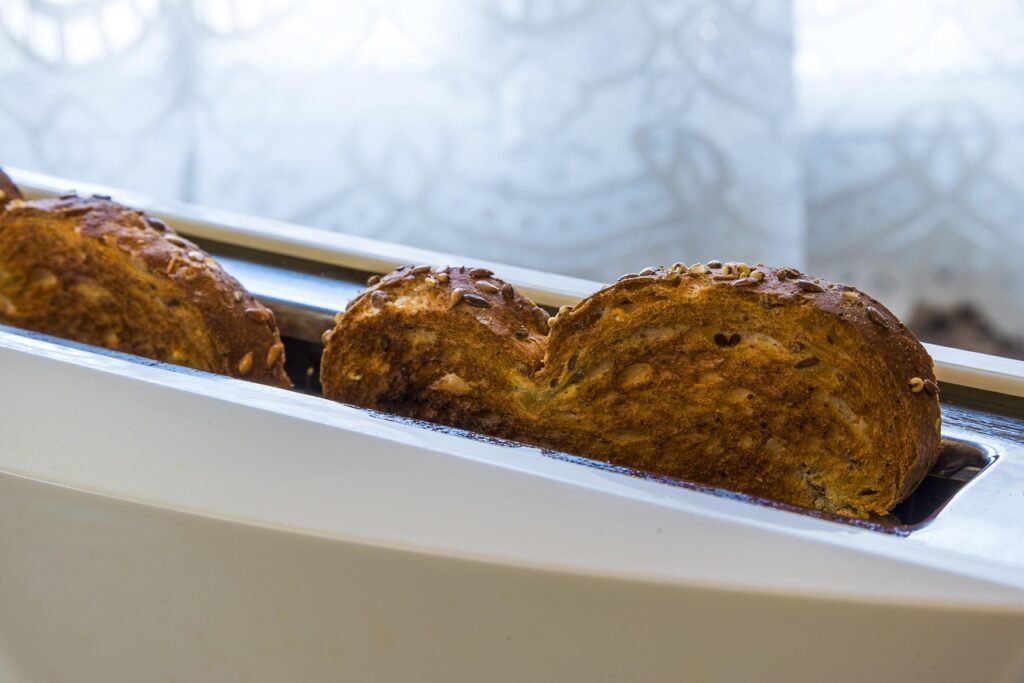
What is the one appliance that can turn a perfect breakfast into a smoke alarm at 7 a.m.? If you have ever scraped a blackened slice over the sink, you already know the answer. The toaster is small, cheap, and easy to ignore, which is exactly why so many kitchens end up with a model that browns one side, swallows bagels, and hides a crumb drawer that never gets emptied.
Finding the best toaster is less about chasing a brand name and more about matching a handful of design details to how you actually eat. This guide walks through the categories, the test criteria that separate good from bad, the safety standards worth checking, and the mistakes that catch almost everyone. No hype, no mystery picks, just the things that matter when you are standing in a store aisle or scrolling a product page.
Start With the Type, Not the Model
Most buying regret comes from choosing the wrong category before comparing individual products. There are three main kinds of toaster on the market, and each one solves a different problem.
Two-slot pop-up toasters
These are the classic countertop boxes. They are compact, cheap to run, and fast. A typical two-slot model draws roughly 700 to 1,000 watts, so it heats up in under a minute. The catch is capacity: two slices at a time, and slot width varies a lot between models. If your household eats thick-cut sourdough or bagels, narrow slots are a dealbreaker.
Four-slot pop-up toasters
Same mechanism, double the slots. These suit families and anyone who feeds a crowd on weekends. They take up more counter space and draw more power, and on cheaper four-slot models the two pairs sometimes brown unevenly because each pair has its own heating element. Look for independent controls if you want to run one pair light and the other dark.
Toaster ovens
A toaster oven is a small countertop oven with a toast setting. It is slower to preheat and takes up far more room, but it can also melt cheese, reheat leftovers, and roast vegetables. If counter space is tight or you only ever make toast, a pop-up model wins. If you want one appliance to do several jobs, a toaster oven earns its footprint.
| Type | Best for | Main trade-off |
|---|---|---|
| Two-slot pop-up | Singles, couples, small kitchens | Limited capacity, narrow slots on budget models |
| Four-slot pop-up | Families, batch toasting | Bigger footprint, uneven pairs on cheap units |
| Toaster oven | Multi-purpose cooking | Slow preheat, large footprint |
The Criteria That Actually Predict a Good Toast

Reviewers who test toasters for a living tend to grade the same handful of things. Knowing them lets you judge a product page or a store demo the way a tester would.
Evenness of browning is the headline metric. A good toaster produces a slice that is roughly the same shade from corner to corner and from side to side. Cheap units scorch the center and leave the edges pale, because the heating elements are arranged poorly or the cage sits too close to one side.
Browning-range control matters more than raw power. The best models offer a dial with a genuine spread from barely warmed to deep brown, so you can dial in your preferred shade and repeat it. A toaster that jumps from pale to burnt in one click is frustrating no matter how fast it is.
Slot width and depth decide what you can actually toast. Wide, deep slots handle bagels, English muffins, and thick artisan loaves. Shallow slots leave the top of a tall slice sticking out, which is both uneven and a burn risk.
Bagel and defrost settings are standard on mid-range and premium pop-up toasters and usually missing on budget models. The bagel setting heats only one side, which is exactly what a cut bagel needs. Defrost adds time for frozen bread so the outside does not burn before the middle thaws.
Crumb tray access is the most overlooked feature. A tray that slides out from the back or requires tipping the whole appliance is a cleaning nightmare, and reviewers consistently flag it as both a hygiene and a fire-risk drawback. A front-sliding tray that comes out in one motion is worth paying for.
Cord storage and footprint round out the practical picture. A toaster that cannot tuck its cord away becomes a permanent clutter source on the counter.
Safety: The Part Nobody Reads Until Something Smokes
Toasters combine high heat, dry food, and crumbs in a small box, which is a genuine fire risk. The classic failure mode is simple: a piece of bread gets stuck, or crumbs pile up on the bottom element, and the next cycle ignites them.
In the United States, household electric toasters are covered by the UL 1026 standard for electric household cooking and food serving appliances. Internationally, they fall under IEC 60335-2-9, which covers grills, toasters, and similar portable cooking appliances. A UL or ETL mark on the product is a reasonable signal that the appliance has been tested to a recognized safety standard. Independent fire-safety research consistently attributes a meaningful share of home cooking fires to small appliances, with stuck food and accumulated crumbs among the recurring causes.
Practical safety habits matter as much as the certification:
- Never use a fork or knife to pry out a stuck slice while the toaster is plugged in. Unplug it first, and even then use a wooden or plastic tool.
- Empty the crumb tray weekly, or more often if you toast daily.
- Keep the toaster away from the sink, curtains, and paper towels.
- Never lay a toaster on its side to toast a sandwich. Heating elements and crumb paths are not designed for it.
- Replace any toaster with a frayed cord or a cracked body rather than repairing it yourself.
Before buying any specific model, it is also worth a quick check of the consumer product recall database for that brand and model number. Recalls happen, and a five-minute check beats a kitchen fire.
Matching the Toaster to Your Bread
Here is where hair type and bread type have something in common: the right tool depends entirely on the material. A toaster tuned for thin white sandwich bread will mangle a dense, crusty loaf, and a toaster built for thick slices will leave a flimsy slice dry and brittle.
If you bake or buy dense, high-protein loaves, look for wide slots, a lower heat setting, and a model with a manual lift lever so you can check progress mid-cycle. For delicate pastries and thin slices, a toaster with a gentle low range matters more than maximum wattage. Bagel households should insist on a one-side setting. And if you regularly toast frozen bread straight from the freezer, a defrost mode is not a luxury.
The same logic applies to texture-specific communities. People who care deeply about the structure of their ingredients, whether that is the tight coils of 4c hair or the open, wavy pattern of 2b hair, know that one product rarely suits every variation. Bread is no different. A toaster that handles a soft milk bun will not necessarily handle a seeded rye, and pretending otherwise is how people end up with a drawer full of appliances.
What the Price Tiers Really Buy You
Prices shift constantly, so treat any figure as a rough shape rather than a quote. Broadly, the market splits into three bands.
| Tier | Typical price band | What you get |
|---|---|---|
| Budget | Roughly $20 to $40 | Basic browning dial, narrow slots, no bagel or defrost mode, rear crumb tray |
| Mid-range | Roughly $40 to $100 | Even browning, wider slots, bagel and defrost settings, front crumb tray, cancel button |
| Premium | Roughly $100 to $300+ | Precise browning control, extra-wide or long slots, motorized lift, sturdy build, longer warranty |
The jump from budget to mid-range is where most of the real improvement lives. Even browning, a usable crumb tray, and a bagel setting are the features people actually notice every morning. The jump from mid-range to premium buys refinement, build quality, and convenience features, which is nice but rarely transformative. Spending more does not automatically mean better toast.
Common Mistakes That Ruin the Experience
A few habits undermine even a well-chosen toaster.
Buying on slot count alone. Four slots mean nothing if the pairs brown unevenly or the slots are too narrow for your bread.
Ignoring the crumb tray location. This is the single most common regret. Check where the tray sits and how it slides before you buy.
Overloading the slots. Forcing a thick slice down compresses the bread, blocks the cage, and creates a stuck-slice hazard. If it does not drop in freely, slice it thinner.
Never cleaning the interior. Crumbs accumulate faster than people expect, and a layer of toasted crumbs at the bottom is both a smell and a fire risk.
Skipping the recall check. Model numbers matter. A brand with a good reputation can still have a specific recalled batch.
Assuming wattage equals quality. Higher wattage means faster toasting, not better toasting. Control and element placement matter far more.
How to Test a Toaster in the Store or in the First Week
If you can see a display model, open the crumb tray, lift the lever, and check the slot depth with your hand. Those three moves reveal more than any spec sheet.
Once you get the toaster home, run a calibration test before you trust it. Toast one slice at the middle setting and look at it. Then try the lightest and darkest settings. You are checking for even browning and for a genuine range. If the middle setting already scorches, the toaster is running hot, and you will need to work one or two clicks lower than the dial suggests. Many people never adjust and conclude the appliance is broken when it is simply calibrated differently than expected.
Finally, time a full cycle. A toaster that takes four minutes for a single slice will test your patience every morning, no matter how evenly it browns.
Conclusion
The best toaster is not the most expensive one on the shelf. It is the one whose slots fit your bread, whose dial gives you a repeatable shade, whose crumb tray slides out without a fight, and whose safety mark you actually checked. Start with the category, grade the evenness and controls, verify the certification and recall status, and ignore the marketing noise. Do that, and the smoke alarm goes back to being a background detail instead of a breakfast ritual. The same discipline applies whether you are choosing a toaster or untangling the needs of the row of products on a crowded shelf: match the tool to the job, and the rest follows.
Frequently Asked Questions
What is the best toaster for thick slices of bread?
Look for a pop-up model with wide, deep slots and a manual lift lever so you can check browning mid-cycle. A lower heat setting with a longer timer works better for dense bread than high wattage, which tends to scorch the crust before the center warms through. If thick slices are your daily routine, slot depth matters more than any other spec.
Are toaster ovens better than pop-up toasters?
They solve different problems. A toaster oven is more versatile and can melt, reheat, and roast, but it preheats slowly and takes up significant counter space. A pop-up toaster is faster, cheaper to run, and better at plain toast. If you only make toast, a pop-up wins. If you want one appliance for several jobs, a toaster oven earns its place.
How often should I clean the crumb tray?
Weekly is a sensible baseline, and more often if you toast daily or use thick, seedy bread that sheds heavily. Crumbs that collect near the heating elements are a documented fire risk as well as a mess. A front-sliding tray makes this a ten-second job, which is why it is worth prioritizing when you buy.
Do I need a bagel setting?
If you eat bagels, English muffins, or anything you cut in half, yes. The bagel setting heats only one side, so the cut face toasts while the crust stays soft. Budget toasters usually omit it, which is one of the clearest reasons to step up to the mid-range tier.
What safety certification should a toaster have?
In the US, look for a UL or ETL mark indicating testing to the UL 1026 standard for household cooking appliances. Internationally, toasters fall under IEC 60335-2-9. The mark is a baseline signal, not a guarantee, so pair it with basic habits like unplugging before removing stuck bread and never using metal utensils inside the slots.
Why does my toaster brown unevenly?
Uneven browning usually comes from poor element placement, a cage that sits too close to one side, or a slice that is too small for the slot. On four-slot models, each pair may have its own element with slightly different output. Try a middle setting with a full-size slice to diagnose it. If the pattern persists, the toaster itself is the problem.














