


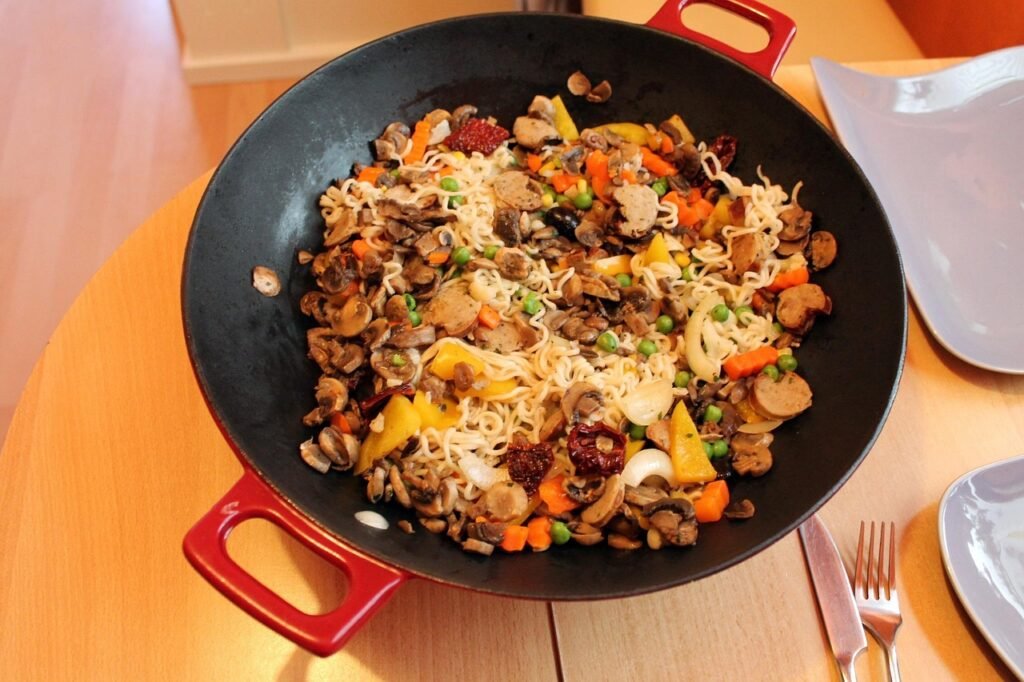
What if the biggest reason your stir-fries taste flat has nothing to do with your sauce and everything to do with the pan? In any restaurant kitchen that cooks well, you will see the same tool repeatedly: a thin, dark, well-used wok. That is not a coincidence. A wok is one of the few pieces of cookware that changes how food cooks, not only where it cooks. But “best wok” depends on the situation. The right pick for a gas burner is often wrong for induction, and the pan that suits a family of two is a nuisance for a household of five. This guide breaks down what matters, where people go wrong, and how to match a wok to the way you cook.
What Makes a Wok Worth Buying
A wok is a high-heat tool. Its job is to get food searing fast while you keep it moving. Three things determine whether a wok does that well: material, thickness, and shape.
Material sets the ceiling. Carbon steel is the standard in restaurant kitchens for good reasons. It is thin, so it heats fast and responds quickly when you adjust the flame. It is light enough to toss food with one hand. And it seasons over time into a dark, slick patina that behaves almost like a non-stick surface without any coating to scratch off.
Cast iron woks hold heat beautifully but take much longer to heat up and respond slowly when you turn the burner down. They are heavy, which makes tossing harder. Non-stick coated woks are generally a poor match for wok cooking, because the coatings are not built to survive the very high heat that makes stir-frying work.
Thickness is a trade-off. Thin carbon steel (around 1.5 to 2 mm) heats fast and is light. Slightly thicker steel holds heat more evenly but adds weight. For home burners, thin to medium carbon steel usually wins.
Shape matters more than most buyers realize. A traditional round-bottom wok concentrates heat at the center and lets you push food up the sides to control doneness. A flat-bottom wok sits stable on a flat cooking surface. Which one you want depends entirely on your stove.
Match the Wok to Your Stove Before Anything Else
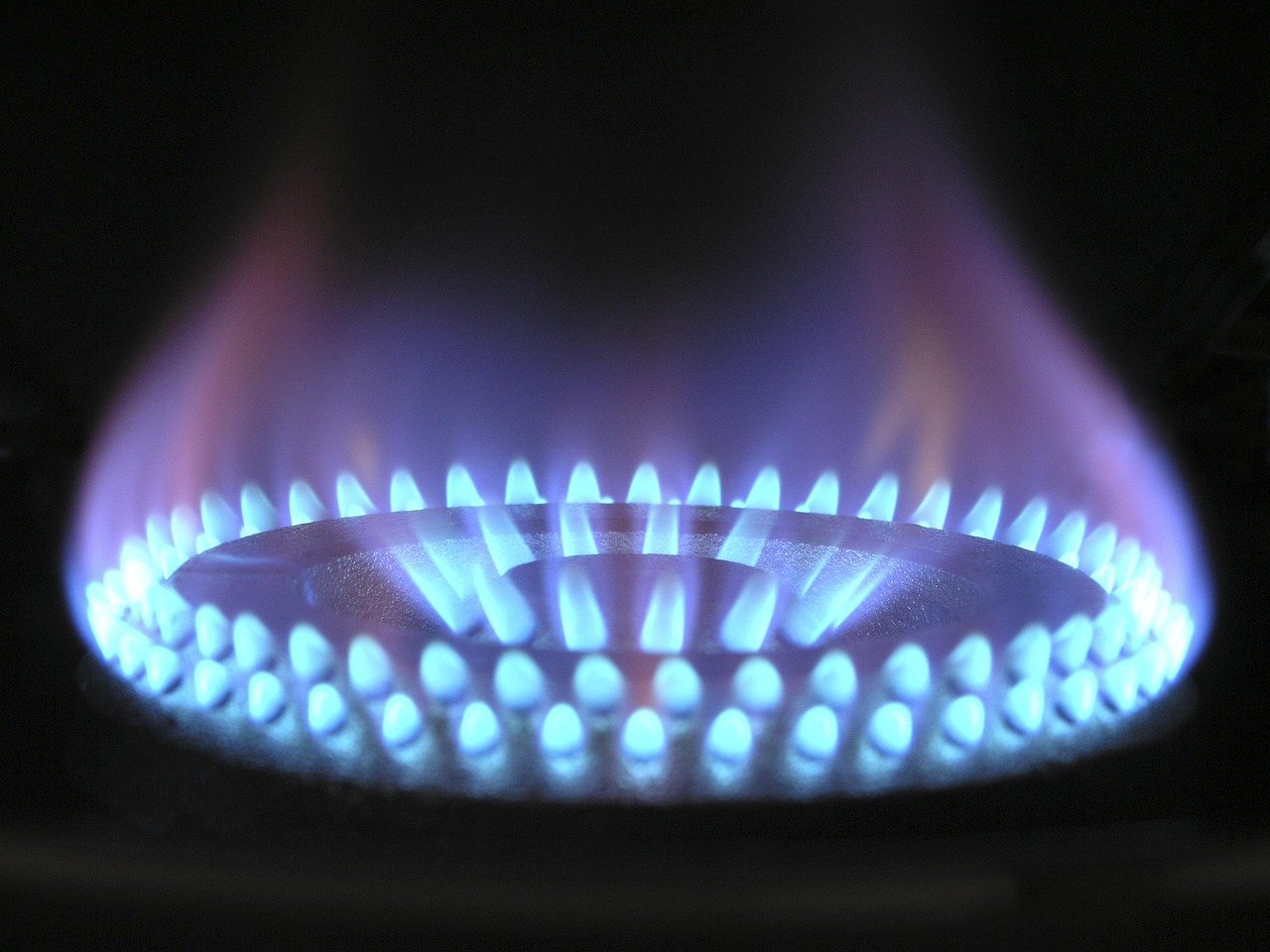
This is the mistake that sinks more wok purchases than any other: buying a beautiful traditional round-bottom wok and discovering it wobbles on a flat electric or induction cooktop. Heat source should drive the decision, not aesthetics.
| Stove type | Best wok shape | What to watch for |
|---|---|---|
| Gas | Round bottom, used with a wok ring | The ring keeps the wok stable; flames lick the curved base for even heat |
| Induction | Flat bottom with a magnetic base | Many round carbon steel woks will not work without a special induction ring |
| Electric coil or ceramic | Flat bottom | Contact matters; a round base leaves most of the pan unheated |
| Portable butane | Round bottom or flat | Check burner size; small burners struggle with wide woks |
Induction compatibility deserves special attention. Induction needs a flat, magnetic base to generate heat. A traditional round carbon steel wok often fails that test. If you cook on induction, look specifically for a wok labeled induction-ready with a flat base, or budget for an induction adapter ring and accept that performance will be uneven.
Gas remains the ideal pairing. The flame wraps the curved base, and a wok ring holds the pan steady while you toss. If you have gas, a round-bottom carbon steel wok is the classic answer and still the best one for most people.
The Wok Hei Question, Handled Honestly
You have probably heard the phrase wok hei, often translated as “breath of the wok.” It describes the smoky, seared character of food cooked over fierce heat, the thing that makes restaurant stir-fries taste different from home versions.
Here is the honest version: the exact chemistry behind wok hei is debated and not well documented in accessible research. What is clear is that it depends on very high surface temperatures, rapid tossing, and food that is dry enough to sear rather than steam. Home burners rarely reach restaurant intensity, which is why home stir-fries often taste flatter.
You can close some of that gap. Cook in smaller batches so the pan stays hot. Pat ingredients dry before they hit the wok. Get the wok properly hot before adding oil. And do not crowd the pan, because a full wok drops in temperature and starts steaming instead of searing. A thin carbon steel wok on the highest flame your stove allows gives you the best shot at that seared character.
Carbon Steel vs. Cast Iron vs. Non-Stick
| Feature | Carbon steel | Cast iron | Non-stick coated |
|---|---|---|---|
| Weight | Light | Heavy | Light to medium |
| Heat-up speed | Fast | Slow | Fast |
| Heat response | Quick | Sluggish | Quick |
| Tossing comfort | Easy | Tiring | Easy |
| High-heat tolerance | Excellent | Excellent | Poor |
| Seasoning needed | Yes | Yes | No, but coating wears |
| Best for | Most home cooks | Slow, steady heat | Low-heat dishes only |
For most people, carbon steel is the sensible default. Cast iron makes sense if you want maximum heat retention and do not mind the weight, or if you mostly cook in a way that benefits from a heavy, steady pan. Non-stick woks are best treated as a niche tool, not a primary wok.
Size, Handles, and the Details That Annoy You Later
Diameter is the spec people most often get wrong. Home woks commonly run 12 to 14 inches, roughly 30 to 36 centimeters. Larger woks are built for high-output commercial burners and overwhelm a home stove, because the heat source cannot cover the base. A 13- to 14-inch wok suits most households cooking for two to four people. If you regularly cook for a crowd, size up only if your burner can keep up.
Handle type changes how the wok feels in use. A long handle, often wood or heat-resistant material, gives leverage for tossing and keeps your hand away from the heat. Two metal loop handles are typical of restaurant-style woks and are easier to lift with both hands but harder to toss one-handed. For home cooking, a long handle plus a small helper handle on the opposite side is a practical combination.
Weight is the sleeper issue. A wok you cannot toss comfortably will sit on the burner while you stir with a spatula, which defeats much of the point. If you have wrist or shoulder issues, favor thinner steel and a lighter build.
Seasoning: What It Is and What Actually Works
Seasoning is a layer of polymerized oil bonded to the steel. It is maintenance, not a permanent coating. It builds up with use and can be stripped by acidic foods, harsh scrubbing, or long simmering.
What works in practice:
- Wash a new carbon steel wok to remove factory oil, then dry it completely.
- Heat it over medium-high heat until it just starts to darken.
- Rub a thin film of neutral oil across the entire interior with a paper towel.
- Keep heating until the oil smokes lightly and the surface turns glossy, then let it cool.
- Repeat a few times before first use, then simply cook with it often.
Common mistakes: using too much oil, which leaves a sticky residue instead of a hard patina; skipping the dry step, which causes rust; and scrubbing with soap and steel wool after every meal, which strips the layer you just built. After cooking, rinse with hot water, scrub gently, dry thoroughly on the stove, and wipe a whisper of oil across the surface.
A well-seasoned wok becomes effectively non-stick over time, which is why cooks grow attached to them. Treat seasoning as an ongoing relationship rather than a one-time task.
Ventilation and Safety at High Heat
Very high-heat cooking produces smoke and airborne compounds, so ventilation matters. Turn on the range hood before the wok gets hot, not after the kitchen fills with smoke. Crack a window if your hood is weak. Keep a lid nearby for flare-ups, and never leave hot oil unattended. These are small habits that make high-heat cooking far more pleasant.
Practical Buying Tips That Save Regret
- Bring your stove type to the decision. Write it down before you shop.
- Check the base diameter against your burner; rim diameter alone is not enough.
- Skip sets with glass lids and extra gadgets; a wok needs a wok, a lid, and maybe a spatula.
- Look for a wok that feels balanced when you hold it by the handle with one hand.
- Avoid painted or coated interiors if you plan to cook hot.
If you are also shopping for other hair and beauty topics between kitchen upgrades, that is a different aisle entirely, but the same principle applies: match the product to your actual conditions rather than the marketing. (The row)
Who Should Buy What
If you cook on gas and want one do-everything pan, a 14-inch round-bottom carbon steel wok with a long handle is the safest bet. If you cook on induction, prioritize a flat-bottom, induction-ready carbon steel wok and accept a slightly less traditional experience. If you want minimal maintenance and rarely cook above medium heat, a non-stick wok can work, but expect a shorter lifespan.
Readers who follow textured-hair care guides, from 4c hair routines to looser patterns like 2b hair, already know the pattern of matching a product to a specific need. Woks reward the same discipline: know your conditions, then buy for them.
Conclusion
The best wok is not the most expensive one or the one with the longest feature list. It is the one that fits your stove, feels light enough to toss, and is made of a material that can take serious heat. For most home cooks, that means thin carbon steel, the right shape for the burner, and a willingness to season and maintain it. Get those three things right and the pan will outlast several rounds of trendier cookware. Get them wrong and even a premium wok will frustrate you. Start with your stove, choose your shape, then let material and size follow.
Frequently Asked Questions
Is carbon steel really better than non-stick for a wok?
For high-heat stir-frying, yes. Carbon steel tolerates the temperatures that make stir-frying work, seasons into a near non-stick surface, and will not flake or scratch. Non-stick coatings degrade under the heat a wok is designed for.
Can I use a round-bottom wok on an induction cooktop?
Usually not directly. Induction needs a flat, magnetic base. Some round woks work with a special induction ring, but performance is uneven. A flat-bottom, induction-ready wok is the safer choice.
How often do I need to season a carbon steel wok?
Seasoning builds with regular use, so daily cooking does most of the work. Re-season whenever the surface looks dull, food starts sticking, or you have stripped the layer with acidic food or harsh scrubbing. A quick oil rub and heat session usually restores it.
What size wok should a home cook buy?
Most households do well with a 12- to 14-inch wok. Larger woks need a powerful burner to heat properly, and a home stove often cannot cover a wide base evenly.
Why does my stir-fry taste steamed instead of seared?
Crowding the pan is the usual culprit. Too much food drops the wok temperature and releases moisture, so food steams. Cook in smaller batches, dry ingredients well, and preheat the wok until it is genuinely hot before adding oil.
Do I need a wok ring?
If you use a round-bottom wok on a gas stove, yes. A ring keeps the wok stable and holds it at the right height over the flame. Flat-bottom woks on flat cooktops generally do not need one.














