

How many portable toilets does a 200-person outdoor wedding actually need? Most organizers guess. They order three units, watch a line form by the second hour, and spend the rest of the reception apologizing. The fix is not more toilets. It is better planning, and that starts with understanding what a porta potty rental really includes, what the rules require, and where providers quietly add costs. (Rental property cash flow)
Portable sanitation is one of those unglamorous services that nobody thinks about until it fails. Get it right and guests never notice. Get it wrong and it becomes the only thing anyone remembers. This guide walks through sizing math, regulatory requirements, servicing schedules, accessibility obligations, and the contract details that separate a smooth rental from a costly mess. (Apartment rental rates)
What a Porta Potty Rental Actually Covers
A standard rental covers more than a plastic box dropped on grass. The typical package includes delivery, setup, a fresh charge of deodorizing chemicals and water in the holding tank, toilet paper, and pickup at the end of the term. Servicing, the process of pumping out waste and recharging the unit, is either bundled into the price or billed per visit depending on the contract.
That distinction matters more than most renters realize. A quote that looks cheap per unit can balloon once weekly servicing is added across a multi-month construction project. Ask directly whether the rate is “drop and go” or “full service,” and get the servicing frequency in writing.
Units come in a few common configurations:
| Type | Typical use | Notes |
|---|---|---|
| Standard unit | Construction sites, small events | No sink, no lighting |
| Deluxe or flushable | Weddings, festivals | Foot-pump flush, interior sink |
| Handicap-accessible | Any site with accessible units required | Wider door, grab bars, turning space |
| Restroom trailer | High-end events | Running water, lighting, mirrors, climate control |
| Hand-wash station | Paired with any unit | Standalone or attached to the unit |
The accessible and trailer options cost considerably more, but they solve problems that standard units cannot. If the event serves alcohol, runs past dusk, or draws a crowd that expects a certain polish, the upgrade often pays for itself in complaints avoided. For planners comparing venue-level amenities against sanitation costs, the same logic that applies to premium rental listings applies here: the headline price tells you little until you know what is included.
The Sizing Rule Everyone Quotes (and Misapplies)
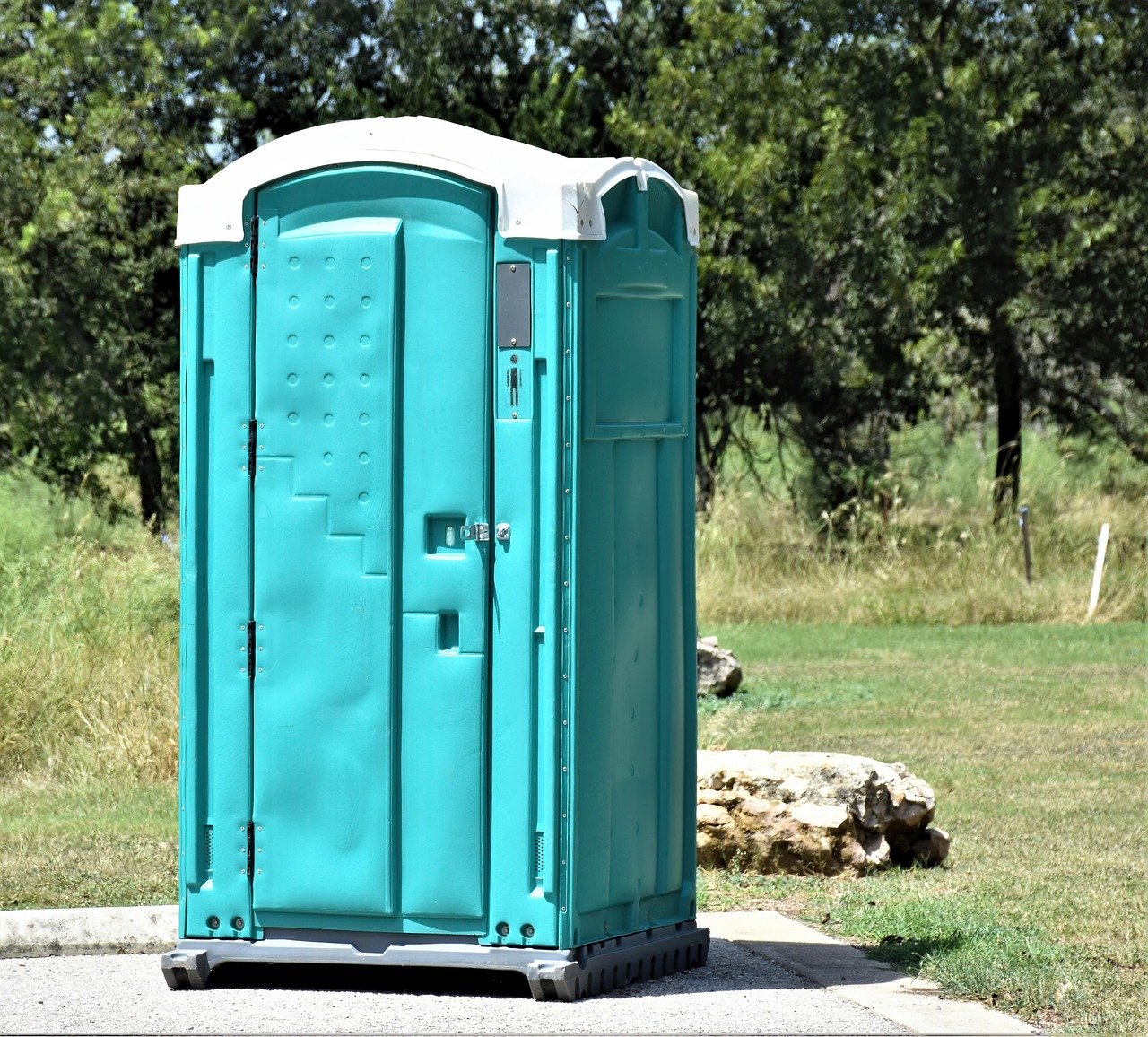
The most repeated number in the industry is roughly one portable toilet per 50 people for a four-hour event. It is a useful starting point and nothing more. It is guidance from providers, not a legal standard, and it breaks down quickly under real conditions.
Adjust upward when:
- Alcohol is served, since consumption increases restroom frequency
- The event runs longer than four hours
- Food is served on site
- Attendance skews toward children or older adults
- The weather is hot, which drives water intake and visits
A practical approach is to take the base ratio and add 15 to 25 percent for each complicating factor. A four-hour dry event with 200 guests fits the base math at four units. The same 200 guests with a bar, a plated dinner, and a six-hour run might need seven or eight. Under-ordering is far more visible than over-ordering, and the marginal cost of one extra unit is small compared with the reputational cost of a line snaking across a lawn.
For construction sites, sizing works differently. Crew size, shift length, and whether the site operates across multiple trades all affect the count. A site with 30 workers on a single shift has different needs than one running two shifts with a rotating subcontractor population.
What the Regulations Actually Require
Two federal standards shape portable toilet provision in the United States, and both are frequently summarized inaccurately.
For construction, the relevant rule is the sanitation standard at 29 CFR 1926.51. It requires employers to provide toilets at construction sites, and a 2010 interpretation letter clarifies that portable toilets are an acceptable way to meet that obligation and that, where feasible, facilities should be provided for each sex. The phrase “where feasible” does real work in that sentence, and site managers should read the letter rather than rely on secondhand summaries.
For general industry, 29 CFR 1910.141 covers sanitation and requires toilet facilities for employees, with separate facilities for each sex except where single-occupancy rooms are permitted. Temporary sites commonly satisfy this with portable units.
Beyond OSHA, the ANSI/PSAI Z4.3 standard sets minimum requirements for non-sewered waste-disposal systems, meaning chemical toilets. It is published by the Portable Sanitation Association International. Renters specifying equipment for a large project should confirm which edition a provider’s units conform to, since edition status changes over time and a supplier’s marketing language does not always reflect the current version.
One thing the regulations do not do is set a universal servicing interval. That is a contractual matter, and it is where providers differ most.
Servicing: The Cost Line Nobody Reads
Servicing means pumping the holding tank, rinsing the interior, and recharging it with fresh chemicals and water. Common practice runs to weekly servicing for construction units and considerably more frequent service, sometimes daily or per event, for high-traffic event units. Nothing in federal rules dictates the interval, so the schedule is whatever the contract says.
This is the single most common source of unpleasant surprises. A crew that signs a monthly servicing plan for a site with 40 daily users will have a unit that fails well before the next visit. Conversely, a homeowner renting one unit for a weekend party does not need a service visit at all if the unit starts clean.
Practical guidance that holds up:
- Match servicing frequency to estimated daily uses, not to calendar convenience.
- Confirm whether the service visit includes interior cleaning or only pumping.
- Ask what happens if a unit is reported full between scheduled visits, and whether that callout is billed separately.
- Keep a written log on site so the servicing record is verifiable.
The last point matters on regulated job sites, where documentation of sanitation conditions can become relevant during an inspection.
Accessibility Is Not Optional
Where portable toilets are provided at sites and events covered by the ADA, accessible units are required. The 2010 ADA Standards for Accessible Design address reach ranges, turning space, and grab bars, and those requirements carry over to portable units. An accessible portable toilet is not simply a wider door on the same box. Interior dimensions, grab bar placement, and the height of dispensers all matter.
A frequent mistake is ordering one accessible unit and placing it at the far end of a row on uneven ground. An accessible unit that cannot be reached by a wheelchair user is not accessible. Site it on firm, level ground with a clear path, and put it closest to the main route rather than at the back.
Event organizers should also confirm local requirements, which can exceed the federal minimum. Enforcement varies by jurisdiction, and a venue’s own rules may add obligations on top.
Where the Waste Goes
Pumped waste, called septage, is hauled to a wastewater treatment plant or a dedicated receiving facility. Handling is governed by the Clean Water Act and by state and local rules, which means the disposal chain is regulated even though the rental transaction itself often is not.
For renters, this matters in one practical way: ask where the hauler takes the waste. A reputable provider answers without hesitation. A provider who cannot answer is a risk, because improper dumping creates liability that can trace back to the site that generated the waste.
Matching the Rental to the Job
The same service looks very different depending on context. A construction site needs durable standard units, a reliable weekly service, and documentation. A wedding needs clean, well-lit units with hand-wash stations and a service visit timed before guests arrive, not during dinner. A disaster response needs volume, fast delivery, and flexible servicing.
The mistake people make is shopping on unit price alone. A quote comparison that ignores servicing frequency, delivery distance, pump-out fees, and accessibility is not a comparison at all. The same principle shows up in any rental comparison: the sticker number matters far less than the total cost of what is actually delivered.
Planners running recurring events should also think about seasonality. Summer weekends book out early in many markets, and holiday weekends are the first to go. Reserving weeks in advance is cheaper and easier than calling around in a panic.
Booking Checklist That Prevents Most Problems
Before signing anything, confirm each of the following in writing:
- Unit count and type, including any accessible units and hand-wash stations
- Delivery and pickup windows, with any after-hours surcharge stated
- Servicing frequency and what each visit includes
- Whether setup requires level ground, and who is responsible for site prep
- Overage and damage fees
- The cancellation policy and any restocking charge
- Whether the provider handles permits if the unit sits on public property
That last item catches people out. Placing a portable toilet on a sidewalk or street often requires a permit, and the rental company may or may not handle it. Ask early.
Site prep is the other quiet failure point. Units need firm, level ground and vehicle access for the pump truck. A unit placed at the bottom of a soft slope will lean, and a leaning unit with a full tank is a problem nobody wants to solve on a Saturday. Walk the delivery path before the truck arrives.
Conclusion
Porta potty rental is a logistics problem dressed up as a commodity purchase. The unit itself is simple. The planning around it is not. Size the order for the real conditions rather than the base ratio, confirm what servicing actually includes, place accessible units where people can reach them, and get every fee in writing before the truck rolls.
Do that, and the toilets disappear into the background where they belong. Skip it, and they become the story. The difference between those two outcomes is a short conversation and a checklist, and it costs nothing to have both before you book.
One final consideration deserves attention: timing on the day of delivery. The most carefully sized order still fails if the truck arrives after guests do. For events, schedule delivery at least two hours before the start time and confirm the driver has a contact number for someone who will actually be on site. Pickup matters too. A unit left standing for days after an event invites complaints from neighbors and, in some municipalities, citations. Build the pickup window into the contract rather than assuming it will happen promptly.
Weather adds a second layer of timing risk. Frozen ground can block access for the pump truck, and soft ground after heavy rain can strand it entirely. Providers in cold-weather markets often schedule winter service around forecasts, and renters should ask how the company handles a snowed-in site. Summer brings the opposite problem: heat accelerates odor and chemical breakdown, which is one more reason not to stretch servicing intervals during peak season.
None of this is complicated, but all of it is easy to overlook when the priority is simply getting a unit on site. Treat the rental like any other vendor contract—read the terms, ask the awkward questions, and write down the answers. The providers who welcome those questions are usually the ones worth hiring, and the ones who dodge them have just told you something useful. A five-minute conversation about servicing and site access now saves a very long afternoon later, and it is the cheapest insurance the project will ever buy.









