

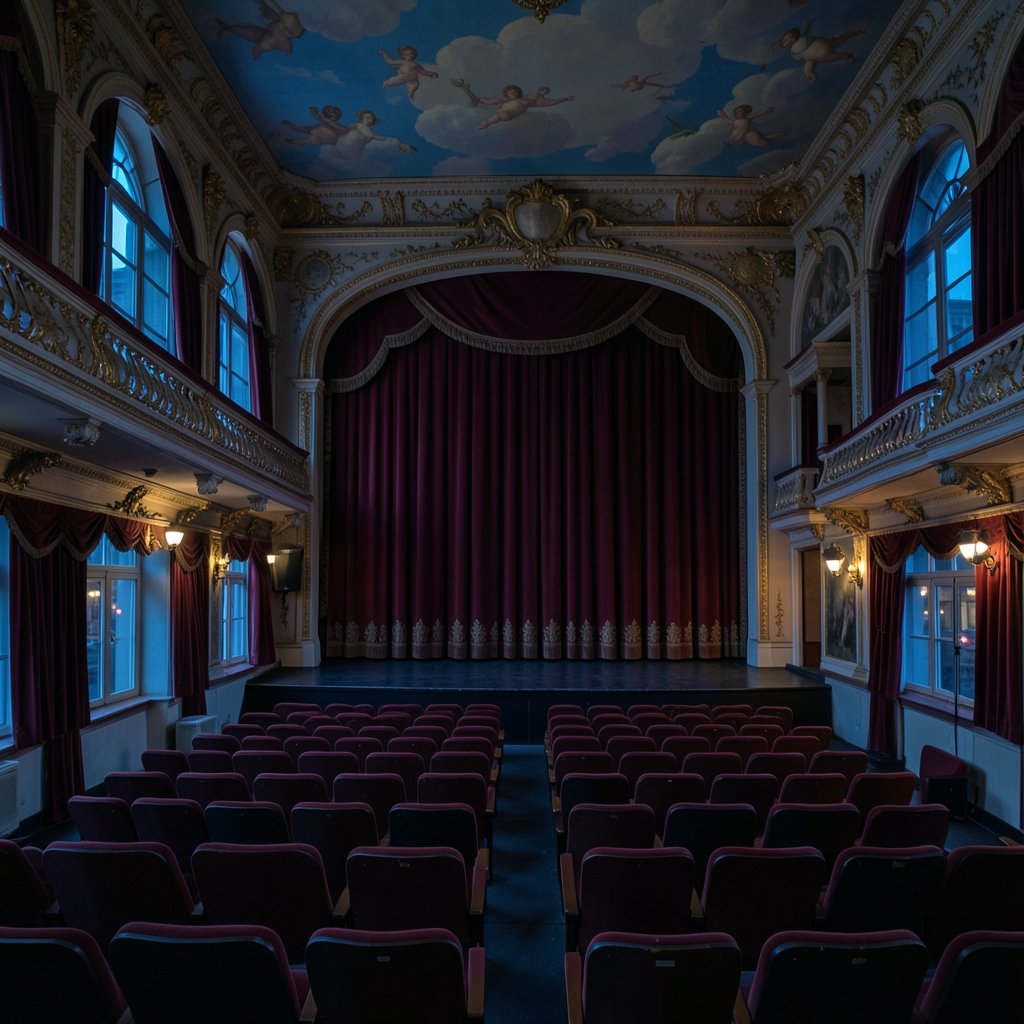
What comes to mind when someone mentions an “operetta house”? A grand European theatre with gilded balconies? A German venue that long staged musicals? Or simply a building where light opera once ruled the stage? The answer is all three, and that ambiguity is exactly what makes the term worth unpacking.
The phrase is not a fixed category in English. It works more like a descriptive label, and its meaning shifts depending on whether you are reading a German theatre history, a tourist guide, or a conversation about nineteenth-century entertainment. Understanding the term means understanding the genre it points to, the buildings that housed it, and the way both have evolved.
What Does “Operetta House” Actually Mean?
In everyday English, operetta house most often serves as a loose translation of the German word Operettenhaus. That term refers to a theatre built for, or strongly associated with, operetta repertoire. In German-speaking cities, several venues carried the name because operetta was their bread and butter for decades.
Outside that context, the phrase describes any theatre known for staging operetta. It is not an architectural style, a formal building type, or a legal classification. A nineteenth-century theatre in Vienna and a modern converted venue in Hamburg could both be called an operetta house without sharing much beyond repertoire.
That flexibility creates confusion. Someone searching for the term may want a specific venue, a genre history, or travel advice. The sections below cover all three, because the term genuinely spans them.
The Genre Behind the Name
To understand the buildings, you first need the art form. Operetta is a form of musical theatre that sits between opera and musical comedy. It typically features spoken dialogue, memorable melodies, dance numbers, and a lighter tone than grand opera. Plots often revolve around romance, mistaken identity, and social satire.
The genre took shape in the mid-to-late nineteenth century. Paris became an early hub through the work of Jacques Offenbach, whose satirical one-act pieces delighted audiences and scandalized critics. Vienna then developed its own tradition, associated with Johann Strauss II and later Franz Lehár, whose works became staples of the repertoire. London and New York developed their own variants, feeding directly into what eventually became the modern musical.
This history matters for the term because operetta houses were built around a living, popular genre. These were not museums. They were commercial venues competing for ticket sales against variety halls, drama theatres, and later cinema.
How Operetta Theatres Worked in Practice
A venue that called itself an operetta house faced a practical problem: the repertoire was not infinite. A handful of hit shows could sustain a theatre for years, but audiences eventually wanted novelty.
What actually worked, in practice, was repertoire rotation. Successful houses alternated proven favourites with new works, and they kept a permanent ensemble of singers, dancers, and orchestra players. This is a key difference from the modern touring model. A nineteenth-century operetta house was closer to a repertory company than a receiving house for travelling productions.
Common mistakes venues made, historically and today:
- Over-relying on one composer’s hits. A theatre that lived on a single smash show struggled badly when audience taste shifted.
- Treating operetta as a museum piece. Houses that froze their programming in the past lost younger audiences to revues and film.
- Neglecting the orchestra pit. Operetta depends on live music. Venues that cut orchestral size to save money often found the shows lost their spark.
The houses that survived typically diversified. They added musicals, concerts, and special events while keeping operetta as part of their identity rather than their entire business model.
The German Operettenhaus Tradition
The clearest use of the term comes from German-speaking theatre. Cities such as Hamburg, Leipzig, and Vienna hosted venues explicitly named Operettenhaus, and their histories track the genre’s rise and decline.
The Hamburg Operettenhaus is a useful example of how these buildings evolved. Over its long history it shifted from operetta toward musicals and popular entertainment, reflecting broader audience trends. That pattern repeats across the German-speaking world: a venue built for operetta gradually becomes a home for musical theatre, because the two forms share performers, infrastructure, and audience expectations.
This evolution is not a failure. It is adaptation. A building that once hosted Strauss now hosts contemporary musicals, and the physical space, with its proscenium stage and orchestra pit, suits both. The name often stays even after the repertoire changes, which is precisely why the term confuses English speakers today.
Operetta Houses Versus Opera Houses
People often mix up the two, but the distinction is real and practical. The table below sets out the main differences.
| Feature | Operetta house | Opera house |
|---|---|---|
| Typical repertoire | Light musical theatre with spoken dialogue | Grand opera, usually sung throughout |
| Tone | Comic, satirical, romantic | Often tragic or dramatic |
| Orchestra size | Moderate | Large, sometimes very large |
| Audience experience | Relaxed, entertainment-focused | Formal, ceremony-heavy |
| Modern equivalent | Musical theatre venue | Opera company residence |
The boundaries are not absolute. Some opera companies stage operetta, and some operetta houses host full opera. But the general split holds, and it explains why operetta houses were often smaller, more flexible, and more commercially minded than their grand opera cousins.
Why the Term Still Appears in Modern Search
If operetta peaked long ago, why do people still search for operetta houses? Three reasons stand out.
First, travel and tourism. Visitors planning trips to Vienna, Hamburg, or Budapest encounter the term in venue names and guidebooks. They want to know whether an Operettenhaus is worth a visit and what kind of show they will see.
Second, genre research. Students, writers, and theatre enthusiasts researching operetta history need to understand the buildings as well as the music. The venue history is part of the genre’s story.
Third, naming confusion. Because the word sounds formal, some people assume it refers to a specific architectural or institutional category. It does not. Clarifying that early saves a lot of misdirected reading.
For anyone interested in how performance spaces shape audience behaviour, the same logic applies across the arts. Venues built for one purpose often thrive by adapting to another, a pattern visible well beyond theatre. The house hacking strategy mindset, where a space is repurposed to serve new needs, is a useful analogy even though it comes from property rather than performance.
What to Expect When You Visit One
Practical expectations matter if you are planning a visit to a venue that still carries the operetta name. Here is what typically awaits.
- A mixed programme. Do not assume you will see pure operetta. Many venues now stage musicals, concerts, and guest productions alongside classic works.
- Surtitle or translation support. Operetta is often sung in German or French. Modern houses usually provide surtitles, and some stage translated versions.
- A less formal atmosphere than grand opera. Dress codes are usually relaxed, and the mood is closer to a night at the musicals.
- Historic architecture. Many operetta houses occupy older buildings with ornate interiors, which is part of the appeal.
Common visitor mistakes include booking assuming a specific show, arriving without checking the language of performance, and expecting opera-length running times. Operetta evenings are often shorter and lighter than a full opera.
The Aesthetic Legacy of Operetta Staging
Operetta houses also shaped visual culture. Their productions demanded lavish costumes, and the design language of nineteenth-century operetta fed directly into later theatrical and fashion aesthetics. Velvet, satin, bold colour, and theatrical exaggeration all trace part of their lineage to this repertoire.
That influence surfaces today in unexpected places. Runway collections and costume design frequently borrow from operetta’s visual vocabulary, and the crossover between stage and fashion is well documented. Readers curious about that connection can explore how high end fashion houses draw on theatrical history for inspiration, a link that runs deeper than most people realise.
The same is true of casting and representation. Operetta historically favoured a narrow range of performers and beauty standards, and modern productions increasingly push back against that. Discussions about natural presentation, including the growing visibility of 4c hair on stage and screen, reflect how far theatrical norms have shifted since the genre’s heyday.
Operetta Houses Today: Survival and Reinvention
The honest picture is mixed. Some venues that carried the operetta name have closed, been converted, or rebranded entirely. Others survive by broadening their programming.
Three strategies appear repeatedly among venues that endure:
- Blend repertoire. Pair classic operetta with musicals and concerts to attract different audiences across a season.
- Lean into heritage. Market the building’s history as an experience, with tours, archives, and themed evenings.
- Build education programmes. Schools, youth companies, and community projects keep the genre alive and fill seats with new audiences.
What does not work is nostalgia alone. A venue that relies purely on past glories tends to shrink its audience year by year. The successful ones treat operetta as a living tradition rather than a relic.
There is also a scholarly dimension. Theatre historians continue to study operetta houses as evidence of how cities organised leisure, how commercial theatre operated, and how popular taste shifted. The buildings are documents as much as venues.
How to Research a Specific Operetta House
If you are trying to learn about a particular venue, a sensible approach helps. Start with the venue’s own published history, then cross-check with general reference works on the genre. Pay attention to name changes, because many buildings have been renamed several times.
Watch for these pitfalls:
- Assuming the current name reflects the original purpose. Many venues were built for something else entirely.
- Confusing the building with the company. A theatre and the troupe that performs in it can have separate histories.
- Trusting tourist summaries over institutional records. Official archives and academic theatre histories are more reliable.
A little cross-checking prevents most errors, and it makes the history far more interesting once the timeline clicks into place.
Conclusion
The operetta house is a term with a split identity. In German-speaking Europe it names specific venues with rich institutional histories. In English it works as a descriptive phrase for theatres associated with a beloved, once-dominant genre. Both meanings point to the same underlying story: a form of entertainment that shaped buildings, cities, and audiences, then adapted to survive.
Understanding the term means accepting that it is not a rigid category. It is a label that travelled with a genre, stuck to buildings, and now sits at the intersection of theatre history, tourism, and cultural memory. Whether you are planning a visit, researching the genre, or simply untangling a confusing phrase, the key is to ask which meaning applies in context. Once you know that, the rest of the story falls into place.
Frequently Asked Questions
What is an operetta house?
An operetta house is a theatre built for or strongly associated with operetta, a lighter form of musical theatre with spoken dialogue. The term most often translates the German word Operettenhaus, but in English it can describe any venue known for staging operetta repertoire.
Is an operetta house the same as an opera house?
No. An opera house typically stages grand opera sung throughout, with a large orchestra and a formal atmosphere. An operetta house focuses on lighter works with dialogue, dance, and comedy, and usually has a more relaxed, entertainment-driven feel.
Do operetta houses still exist?
Yes, though many have broadened their programming. Several venues that carry the operetta name now stage musicals, concerts, and guest productions alongside classic operetta. Some have closed or been renamed, but the tradition continues in adapted form.
What should I expect at an operetta performance?
Expect spoken dialogue between musical numbers, a moderate-sized orchestra, and a comic or romantic plot. Performances are often shorter and less formal than grand opera. Many venues provide surtitles if the show is performed in German or French.
Why is the term confusing in English?
Because it is not a standard fixed category. It usually translates a German venue name, but English speakers often use it loosely for any theatre linked to operetta. The same phrase can refer to a specific building or a general type of venue.
Which composers are associated with operetta?
Jacques Offenbach in Paris, Johann Strauss II and Franz Lehár in Vienna, and Arthur Sullivan in London are among the best-known figures. Their works defined the genre and filled operetta houses across Europe and beyond.









