

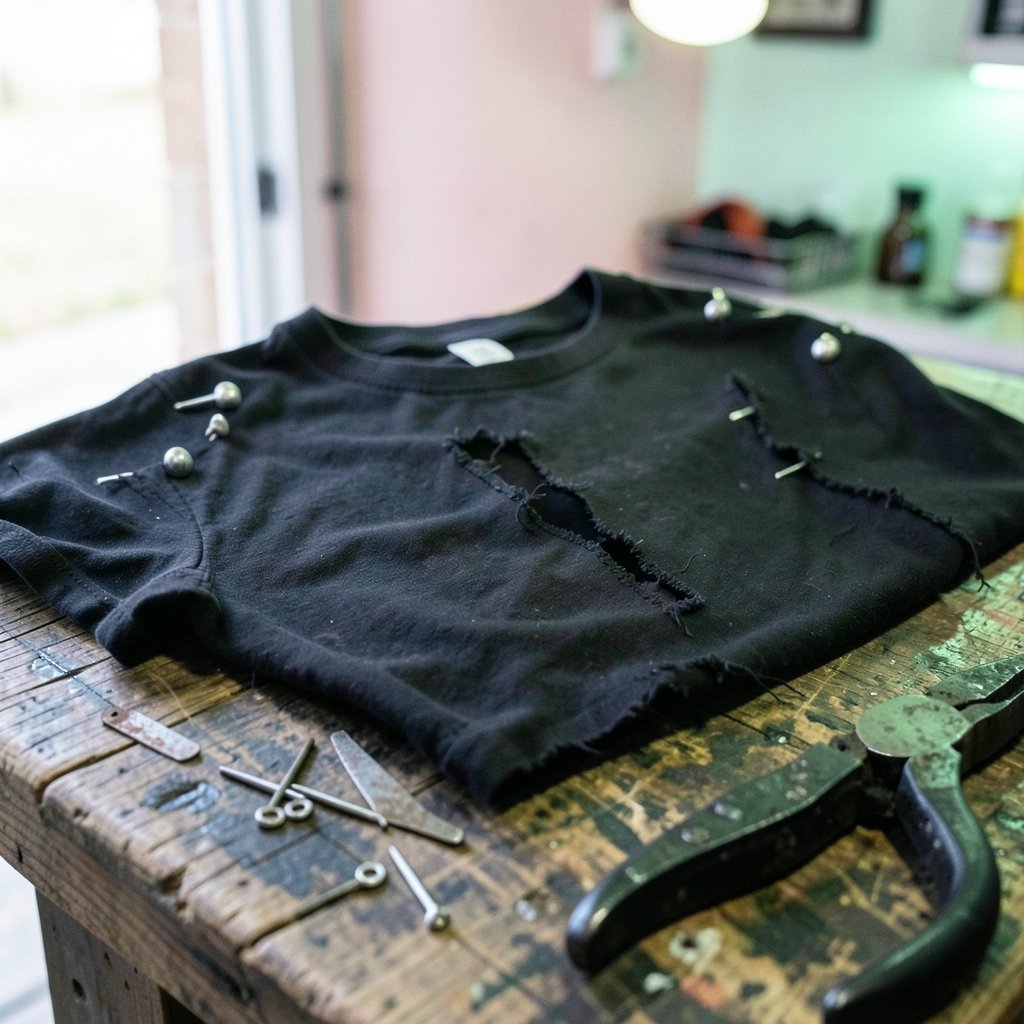
What makes a ripped T-shirt held together with a safety pin feel more dangerous than a designer gown costing thousands? Punk fashion raises that question: a style that started in grimy clubs and cheap boutiques and ended up on the world’s most exclusive runways. It is a story about rebellion, DIY creativity, and anti-fashion becoming high fashion.
Where Punk Fashion Began
Punk fashion emerged in the mid-1970s alongside punk rock, growing out of two scenes at once: London and New York. In London, the movement clustered around King’s Road, where Malcolm McLaren and Vivienne Westwood ran a shop called SEX, opened in 1971 and later renamed Seditionaries in 1976. In New York, the scene formed around CBGB, a club that hosted bands from roughly 1974 to 1976.
These two cities produced different looks. London punk leaned theatrical and confrontational, with bondage trousers, tartan, and deliberately shocking imagery. New York punk was often more stripped down, drawing on jeans, sneakers, and thrift-store finds. The movement was never one uniform, even if history sometimes flattens it into a single image.
Vivienne Westwood and the Making of the Look
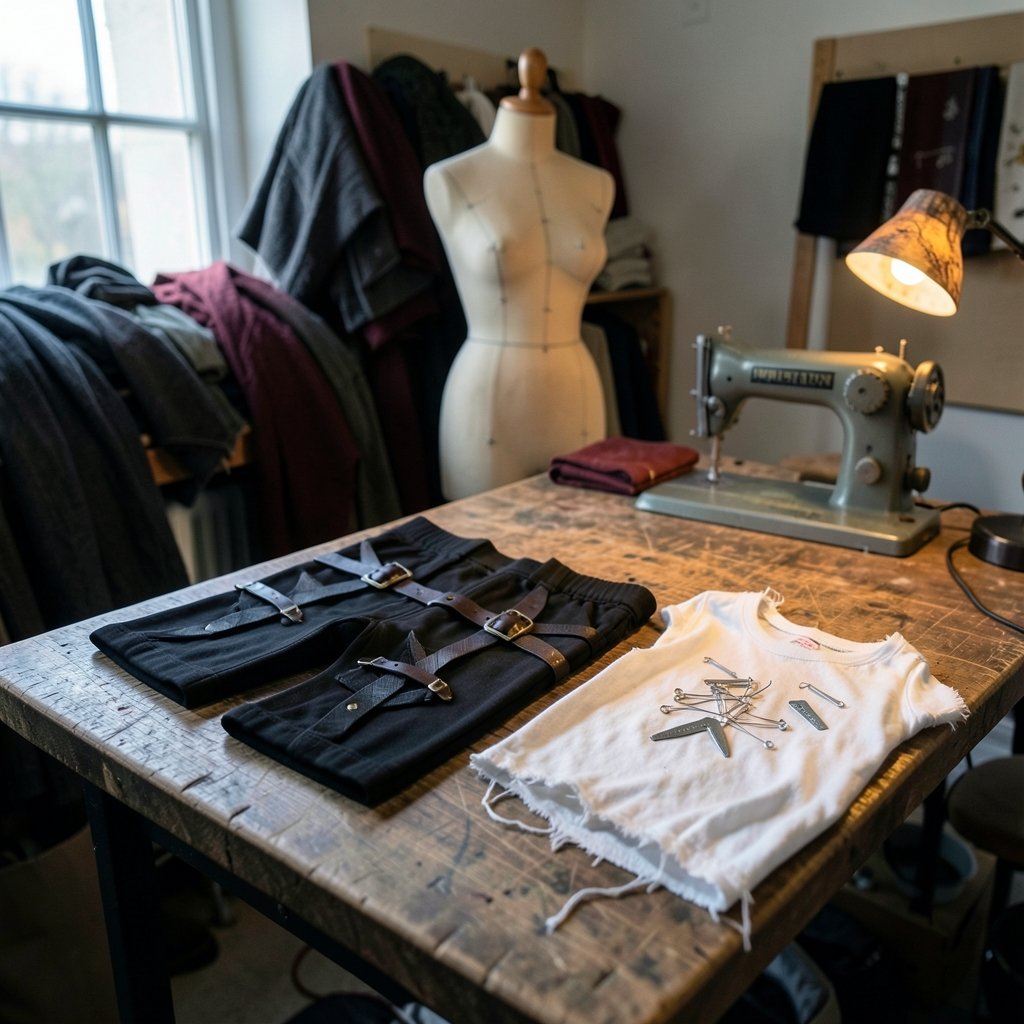
No figure shaped punk fashion more than Vivienne Westwood (1941–2022). Working with McLaren, she designed and sold much of the canonical London punk wardrobe: bondage trousers, ripped T-shirts, and garments decorated with safety pins and razor-blade motifs. Her shop was less a store than a laboratory where the look was invented and refined.
Westwood’s influence outlasted punk itself. She became one of the most important British designers of the late twentieth century, and her early punk pieces are now held in museum collections, including those of the Victoria and Albert Museum in London. When she died on 29 December 2022, obituaries around the world credited her with turning street rebellion into a lasting design language. That arc, from King’s Road shop to global fashion influence, is one reason punk sits so prominently in discussions of Italian luxury fashion and other high-fashion traditions that later absorbed its codes.
DIY and Bricolage: The Theory Behind the Chaos
Punk fashion’s defining feature was not any single garment but a method: do-it-yourself modification. Ripped clothing, safety pins, bin liners, painted jackets, and hand-scrawled slogans all said the same thing. You do not need money to look powerful. You need a pair of scissors and something to say.
The academic Dick Hebdige, in his 1979 book Subculture: The Meaning of Style, described this practice as bricolage: taking everyday objects and recombining them so their meaning flips. A safety pin is a baby-care item. Worn through an earlobe or a torn shirt, it becomes a threat. A bin liner is rubbish. Worn as a dress, it becomes a statement. This idea explains why punk style felt so electric and why it was so hard to control once fashion designers started copying it.
The Core Elements of the Punk Look
While punk dress was never monolithic, certain signifiers appear again and again. The most commonly cited elements include:
- Leather jackets, often painted or studded
- Dr. Martens boots and heavy footwear
- Tartan, especially in London punk
- Bondage trousers and fetish-wear borrowed from S&M subcultures
- Studs, spikes, and safety pins
- Mohawks, spiked hair, and unisex haircuts
- Heavy black eyeliner
- Band T-shirts
- Ripped and customized clothing
In practice, the look worked best when it felt personal rather than purchased. A common mistake people make when recreating punk style today is buying a fully styled “punk outfit” off the rack. That misses the point. The original scene was built on thrift-store finds, hand-painted jackets, and clothes altered at home. If you want the look to read as authentic, start with secondhand pieces and modify them yourself. Cut, pin, paint, and patch. The imperfections are the style.
How Punk Broke Gender Rules
Punk dress is often noted for blurring gender codes. Unisex haircuts, fetish-wear worn across genders, and DIY customization that ignored conventional menswear and womenswear rules all made punk one of the most gender-fluid style movements of its era. Men wore makeup and torn mesh. Women wore heavy boots and shaved heads. The point was not to look masculine or feminine but to look like a refusal.
This aspect of punk has aged remarkably well. Contemporary fashion conversations about gender-neutral clothing and fluid silhouettes routinely trace back to punk’s willingness to mix the categories. If you look at the 2026 fashion trends female landscape, you can see echoes of that punk logic in oversized tailoring, hardware details, and mixing of “men’s” and “women’s” pieces.
Punk Goes Mainstream: Trickle-Up and Commodification
Punk style was absorbed into mainstream fashion and music merchandising fast, within just a few years of its emergence in the late 1970s. This “selling out” pattern is a recurring theme in subculture studies, and historians debate exactly how quickly and completely the co-option happened.
The pattern is familiar. A subculture invents a look for its own reasons. The fashion industry notices, strips out the politics, and sells the surface. Punk’s surface, safety pins and ripped shirts and leather, was easy to sell. Its attitude was not. The result was a long line of watered-down versions that looked punk but said nothing.
This tension is not unique to punk. The 2010s fashion athleisure streetwear Instagram rewrote rules story follows a similar arc, with subcultural dress codes becoming mainstream product lines within a few seasons. Punk just did it first, and louder.
The Met’s 2013 Exhibition and Punk’s Legacy
In 2013, the Costume Institute at the Metropolitan Museum of Art staged “Punk: Chaos to Couture,” an exhibition tracing punk’s influence on high fashion. The show made an argument fashion historians had been making for years: punk shocked the establishment and rewrote its design vocabulary.
The exhibition placed original punk garments alongside luxury interpretations, showing how designers translated safety pins, rips, and hardware into expensive ready-to-wear. For anyone who cares about how style moves between street and runway, it remains a useful reference point. The same instinct to document and analyze runway-to-street translation shows up in projects like the work of Angelica Hicks, the fashion illustrator who turns runway moments into sharp visual commentary.
Revivals: From Pop-Punk to Luxury Reinterpretation
Punk fashion has resurfaced repeatedly. The early 2000s brought “pop-punk” and mall-punk aesthetics, with studded belts, checkerboard patterns, and band tees sold in suburban shopping centers. The 2010s and 2020s saw another wave, this time through luxury reinterpretations and fast-fashion copies. Revival dates are broad and hard to pin to a single source, but the pattern is clear: every generation rediscovers punk and remakes it.
Each revival raises the same question. Is this punk, or just punk-flavored? The answer usually depends on intent. A studded jacket worn as a costume is decoration. A studded jacket worn because you have something to say is punk. The clothes are the same. The meaning is not.
Punk Fashion in the 2026 Conversation
Punk’s fingerprints are all over current style. Hardware details, distressed denim, leather, and gender-fluid silhouettes keep appearing in seasonal collections, and the broader fashion trends 2026 conversation keeps returning to rebellion as a mood. For a fuller picture of what is actually wearable this season, the 2026 Fashion Trends Guide: What’s In, Out & Worth Wearing is a useful reality check, and the 2026 fashion trends guide covers the pieces worth investing in versus the ones that will date fast.
Punk’s endurance makes sense. It offers something fashion rarely provides: permission to look unfinished. In an era of polished, algorithm-friendly style, that permission still feels valuable.
Practical Tips for Wearing Punk Style Today
If you want to bring punk into your wardrobe without looking like a costume, a few practical rules help.
- Start with one anchor piece. A leather jacket, a pair of heavy boots, or a tartan skirt is enough. Build the rest of the outfit around it.
- Buy secondhand first. Thrift stores and vintage shops give you pieces with history. New “punk” items often look too clean.
- Modify something yourself. Add pins, patches, or paint to a garment you already own. The personal touch is what separates style from shopping.
- Mix hard and soft. Pair heavy boots with a delicate dress, or a studded jacket with tailored trousers. Contrast is what makes punk styling look modern.
- Skip the full uniform. Wearing every punk signifier at once reads as fancy dress. Choose two or three elements and let the rest of the outfit breathe.
- Lean into black, but not only black. Tartan, faded denim, and band-tee graphics add texture and keep the look from feeling flat.
The most common mistake is overdoing it. The second most common is buying a pre-styled outfit that does the thinking for you. What actually works is restraint plus one genuinely personal element, something you altered, found, or earned.
Why Punk Fashion Still Matters
Punk fashion matters because it proved that style could be made from nothing. It gave the world a visual language of resistance that cost almost nothing to produce and could not be fully controlled by the people selling it. Vivienne Westwood turned that language into a career. The Met turned it into an exhibition. Fast fashion turned it into a product line. But the original idea, that you can remake your clothes and yourself with a pair of scissors and a safety pin, survived all of it.
For anyone building a wardrobe or studying style, punk offers a lasting lesson. Fashion is not only what you buy. It is what you do with what you have. That idea keeps resurfacing, season after season, in the fashion trends 2026 cycle and beyond, because it never stops being true.
Frequently Asked Questions
When did punk fashion start?
Punk fashion emerged in the mid-1970s alongside punk rock, centered on London (around Malcolm McLaren and Vivienne Westwood’s shop SEX, opened in 1971 and renamed Seditionaries in 1976) and New York’s CBGB scene from roughly 1974 to 1976. Exact “first” dates are contested among historians.
Who is credited with creating the punk look?
Vivienne Westwood (1941–2022), working with Malcolm McLaren, designed and sold much of the canonical London punk wardrobe, including bondage trousers and safety-pin motifs. New York punk developed its own look in parallel, so no single person created punk fashion alone.
What are the key elements of punk fashion?
Commonly cited elements include leather jackets, Dr. Martens boots, tartan, bondage trousers, studs and spikes, safety pins, Mohawks and spiked hair, heavy black eyeliner, band T-shirts, and fetish-wear. The look was never a single uniform, and US and UK punk dress differed noticeably.
Why are safety pins associated with punk?
Safety pins became a symbol of punk’s DIY improvisation, strongly associated with the London scene and Westwood/McLaren designs. They turned an ordinary household object into a visible statement, which is exactly the bricolage idea described in subculture studies.
Did punk fashion influence high fashion?
Yes. The Metropolitan Museum of Art’s Costume Institute staged “Punk: Chaos to Couture” in 2013, tracing punk’s influence on luxury fashion. Punk style was absorbed into mainstream fashion and merchandising quickly in the late 1970s, a “selling out” pattern that historians still debate.
How can I wear punk style without looking like I’m in costume?
Choose one or two anchor pieces, such as a leather jacket or heavy boots, and build around them. Buy secondhand, modify something yourself, and mix hard elements with softer ones. Avoid wearing every punk signifier at once, which reads as fancy dress rather than personal style.














