


Can you really build a fashion career from a kitchen table in a small town, hundreds of miles from the nearest showroom? The short answer is yes, but not in the way most job listings suggest. Fashion has a complicated relationship with distance. Sample rooms, fit sessions, fabric fairs and factory floors have always demanded bodies in rooms. Yet a growing slice of the industry now runs on screens, spreadsheets and cloud-based design files. The trick is knowing which slice, and being honest about what “remote” means in a field built on touch and texture. (2026 fashion trends female)
This guide walks through the realistic remote-compatible roles, the skills that get you hired, the legal traps freelancers fall into, and the practical habits that separate people who thrive working from home in fashion from those who quietly drift back to the office. (Angelica hicks fashion illustrator turns runway moments into)
What “remote fashion jobs” actually means
There is no single authoritative definition of a remote fashion job, and that vagueness causes real confusion. Definitions range from fully remote to hybrid to freelance, and job platforms count these categories differently. A role labeled “remote” on one site may require three days a week in a Midtown showroom on another.
In practice, the term covers four distinct arrangements:
| Arrangement | Typical setup | Common fashion roles |
|---|---|---|
| Fully remote | No office requirement, often cross-border | E-commerce content, digital marketing, customer service, CAD/3D design |
| Hybrid | Two to three days on-site | Buying, merchandising, technical design, sourcing coordination |
| Freelance/contract | Project-based, location-flexible | Patternmaking, illustration, copywriting, fit consulting |
| Remote-first company | Company built around distributed work | DTC brand operations, social media, product photography direction |
The honest pattern, drawn from industry reporting rather than a single citable statistic, is that “remote” in fashion most often means hybrid. Roles in e-commerce, digital marketing, technical design using CAD, sourcing coordination and customer service are the most commonly remote-compatible. Design, buying and merchandising roles tend to stay tethered to physical product. Anyone promising a fully remote senior design job at a heritage house should be treated with mild suspicion.
Why fashion lags other industries on remote work
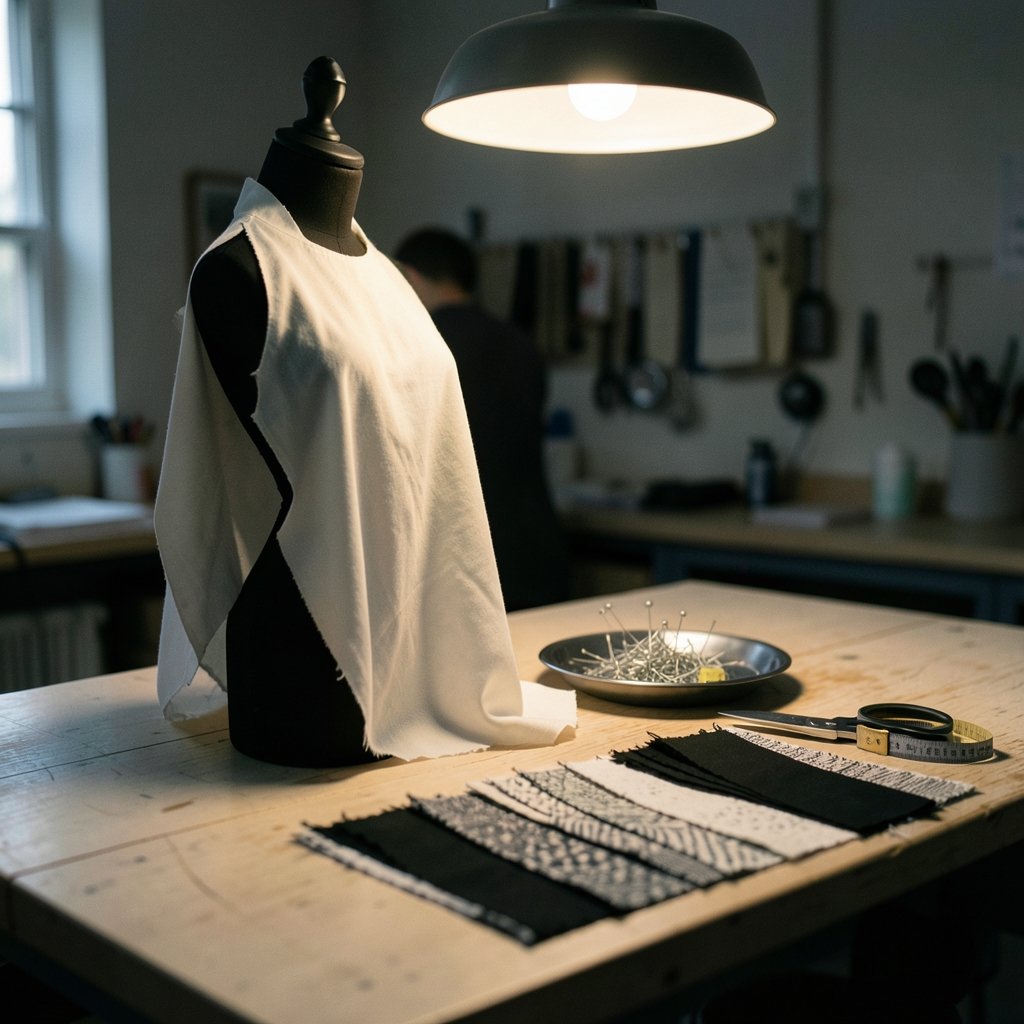
Office-based roles in design, merchandising and buying have historically been tied to showrooms, sample rooms and factories. You cannot feel a fabric’s drape through a webcam. You cannot pin a muslin on a fit model over Zoom. That physical reality explains a lot of the resistance.
The supply chain’s geography reinforces it. Garment production is heavily concentrated in Asia, while design and buying cluster in Europe and North America. That split shapes which roles can be remote and where. A sourcing coordinator who spends her mornings on calls with factories in Vietnam and her afternoons updating cost sheets is a natural remote candidate. A junior designer who needs to pull samples from a rack every hour is not.
Digital product creation is changing the calculus. 3D sampling and virtual prototyping are often cited as enablers of remote collaboration between designers and factories, since a design can be reviewed, adjusted and approved in a shared digital file rather than a physical sample. Adoption rates vary widely and vendor claims should be read skeptically, but the direction is clear: the more of the product development cycle that lives in software, the more of the job can live anywhere.
The roles that genuinely work remotely
Not every fashion job translates to a home office, but more do than most people assume. Here are the categories where remote work is most established.
E-commerce and digital content
Product descriptions, site merchandising, email marketing, paid social and marketplace management are all screen-based. These roles sit close to the commercial heart of a brand, which means they pay reasonably and hire continuously. If you can write a product page that converts, you have a remote fashion skill.
Digital marketing and social media
Brands live or die on their feeds, and the people running them are increasingly distributed. The shift is well documented in how the 2010s fashion athleisure streetwear Instagram rewrote rules for who gets seen and who gets hired. That legacy means social-native candidates often outcompete traditionally trained ones for remote brand roles.
Technical design and CAD
Technical designers write specs, measure garments and manage fit comments. Much of that work is documentation. Patternmaking software and 3D tools let technical designers collaborate across time zones, though most roles still expect periodic sample-room access.
Sourcing and production coordination
Purchase orders, timelines, factory communication and cost negotiation happen largely in email and spreadsheets. Time-zone overlap matters more than physical presence here.
Customer service and operations
Returns, sizing questions and order issues are handled remotely at almost every direct-to-consumer brand. It is often the easiest entry point into a remote fashion career and a genuine springboard into operations or merchandising.
Freelance creative work
Patternmakers, technical designers and illustrators have worked freelance for decades, long before remote became a buzzword. Platforms and agencies mediate much of this work now, which widens access but also compresses rates.
Hybrid reality: the roles that stay partly on-site
Buying is the clearest example. A buyer needs to see, touch and compare product, sit in vendor appointments and negotiate in person. Merchandisers need to walk floors and read stores. Senior designers need to handle fabric and direct fittings.
This does not mean these roles are office-bound five days a week. It means the remote portion is administrative: planning, analysis, vendor email, range building in spreadsheets. If your goal is a buying career, expect hybrid, and treat full remoteness as a later-career negotiating point rather than an entry assumption.
Skills that make you hireable from anywhere
Remote fashion hiring managers screen for two things: proof you can do the work without supervision, and proof you can communicate it in writing. The second is where most candidates fall short.
Practical skills that travel well:
- Writing clear, specific product copy and internal documentation
- Fluency in PLM, PIM or ERP systems used to manage product data
- CAD and 3D design software for technical roles
- Spreadsheet discipline for costing, timelines and range plans
- Async communication: concise updates, clear asks, no vague “let’s discuss”
Common mistakes candidates make:
- Applying to “remote” listings without checking whether the company means hybrid
- Sending a portfolio that only shows finished work, not process or problem-solving
- Ignoring time-zone requirements that make the role unworkable in practice
- Treating freelance platforms as a substitute for a direct network rather than a supplement
What actually works, in practice, is building a small public body of work that demonstrates judgment. A case study showing how you fixed a size-chart problem, reduced returns or rewrote a product page that converted is worth more than a list of software logos. If you want to keep up with how the industry is shifting while you job hunt, curating a short list of reliable newsletters helps more than doomscrolling job boards, and there are ways to find the best fashion substacks without wasting your inbox.
Freelance, contract and the legal traps
Freelance and contract work is a long-standing feature of fashion, and it is the most common route into remote work for patternmakers, technical designers and illustrators. It also carries the most risk, because the legal classification of freelancers varies by jurisdiction.
In the United States, the IRS and state agencies use multi-factor tests to decide whether a worker is an independent contractor or an employee. A wrong call can mean back taxes and penalties for the worker as well as the client. Misclassification is common in creative industries, where “freelance” is used loosely to avoid payroll costs.
Employment law for remote workers depends on where the worker is located, not where the employer is. In the U.S., state wage-and-hour, tax-withholding and workers’ compensation rules can follow the employee’s location. A remote worker in one state for a company headquartered in another may fall under rules neither party expected. Cross-border arrangements add another layer: the EU’s 2019 Directive on transparent and predictable working conditions applies to all workers, including remote ones, and sets minimum standards for employment terms across member states.
The practical takeaway: before signing a freelance contract, confirm which jurisdiction governs it, who handles tax withholding, and what happens if the relationship becomes effectively full-time. If a client controls your hours, tools and workflow, that looks less like freelance and more like employment, whatever the contract says.
How to find legitimate remote fashion roles
Job platforms publish labor-market insights, but their methodology and definitions of “remote” differ, so figures are not directly comparable. Treat any headline number as indicative only.
A more reliable approach is layered:
- Target remote-first brands. Direct-to-consumer labels built around distributed teams hire remotely by default. Check their careers pages directly rather than relying on aggregators.
- Filter aggressively for “hybrid” vs. “remote.” Read the fine print. If a listing mentions a studio, showroom or “occasional travel,” assume hybrid.
- Use trade-specific networks. Fashion recruiters, LinkedIn groups and industry associations surface roles that general job boards miss.
- Build a portfolio site with process work. Show a problem, your approach and the outcome. This is what remote hiring managers actually read.
- Apply to adjacent industries. Beauty, homeware and sportswear brands hire the same skills and are often more remote-friendly than traditional apparel houses.
If you are mapping out where the industry is heading before you commit to a niche, a broader view of the year’s direction helps. The 2026 fashion trends guide is a useful orientation, and following fashion trends 2026 coverage keeps you fluent in the vocabulary interviewers expect. For those drawn to the craft side, studying how an illustrator like Angelica Hicks turns runway moments into commercial work shows how visual storytelling becomes a remote-friendly career. And understanding Italian luxury fashion helps if you are targeting European houses, where hybrid norms differ sharply from American ones.
Conclusion
Remote fashion jobs exist, but they cluster in specific places: e-commerce, digital marketing, technical design, sourcing coordination, customer service and freelance creative work. The romantic version, where a designer sketches from a coastal cottage and emails finished collections to Milan, is rare. The realistic version, where a technical designer manages specs across three time zones and visits a sample room twice a quarter, is common and growing.
People who succeed at remote work in this industry tend to share three habits. They communicate better in writing than their peers. They document their process as well as their output. They read the fine print on contracts, because remote work shifts legal risk onto the worker faster than any office job does. Fashion will never be fully remote. But the screen-based half of it is now a genuine career path, and it rewards people who treat it as one.
The remaining frontier is measurement. Remote fashion workers are still judged by presence in an industry that equates hours at a desk with commitment. The brands that get this right set output-based expectations: fit comments closed, ranges costed, returns reduced. Those that don’t end up with distributed teams that feel disconnected and managers who mistake Slack activity for productivity. If you are negotiating a remote role, ask how performance is assessed before you ask about salary. The answer tells you whether the company has actually adapted or simply moved its old habits onto a video call.
For candidates, the practical move is to build evidence of output before you need it: a documented returns-reduction project, a costing template you improved, a fit-comment log you streamlined. These artefacts answer the assessment question for you. It also helps to track how remote-friendly hiring evolves year to year, since norms shift faster than most career advice admits; the same curiosity that keeps you fluent in seasonal direction should extend to how and where the work gets done. Remote fashion careers are not a loophole around the industry. They are a different way of doing it, and they reward the same things the industry always has: judgment, reliability and a clear point of view.














