

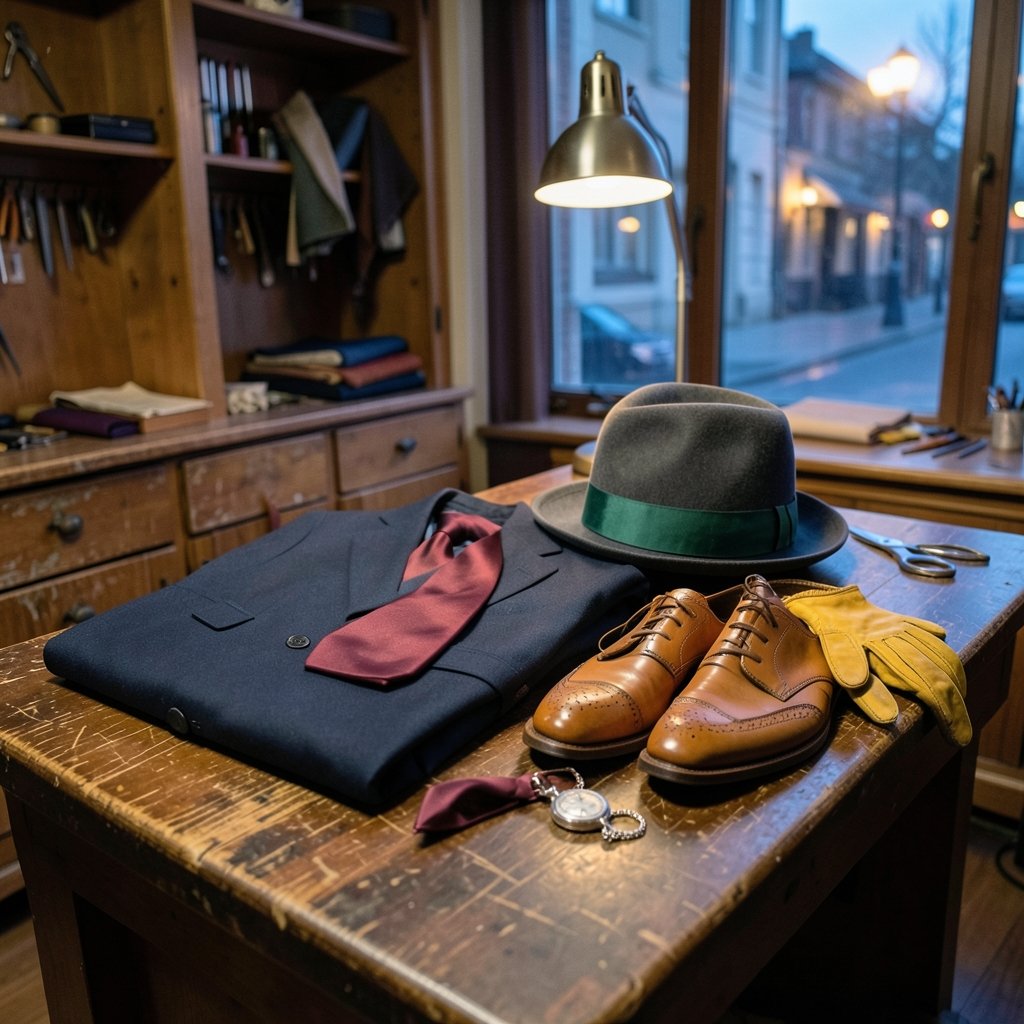
The sharpest menswear move this year may come from a hundred years ago. The Roaring 20s mens fashion story goes beyond a costume rail of pinstripes and fedoras. It is the moment men’s clothing got loose, comfortable, and quietly rebellious, and it still shapes what hangs in closets today.
This guide breaks down what men actually wore between roughly 1920 and 1929, why those choices happened, and how to wear the era’s best ideas without looking like an extra from a period drama.
Why the 1920s Changed Menswear for Good
The decade sits between the end of World War I and the 1929 stock market crash. That window matters. Factories that had been making uniforms switched to making suits. Mass production expanded, and ready-to-wear clothing became normal rather than a compromise. Department stores and mail-order catalogs spread standardized styles across the country, so historians can check what was actually sold and what designers sketched.
The result was a shift in silhouette. The fitted, waist-pinched jackets of the previous generation gave way to something softer and straighter. Men wanted clothes that looked modern and felt easy. That single change is the backbone of everything else in the decade’s style.
The Sack Suit: The Real Star of the Decade
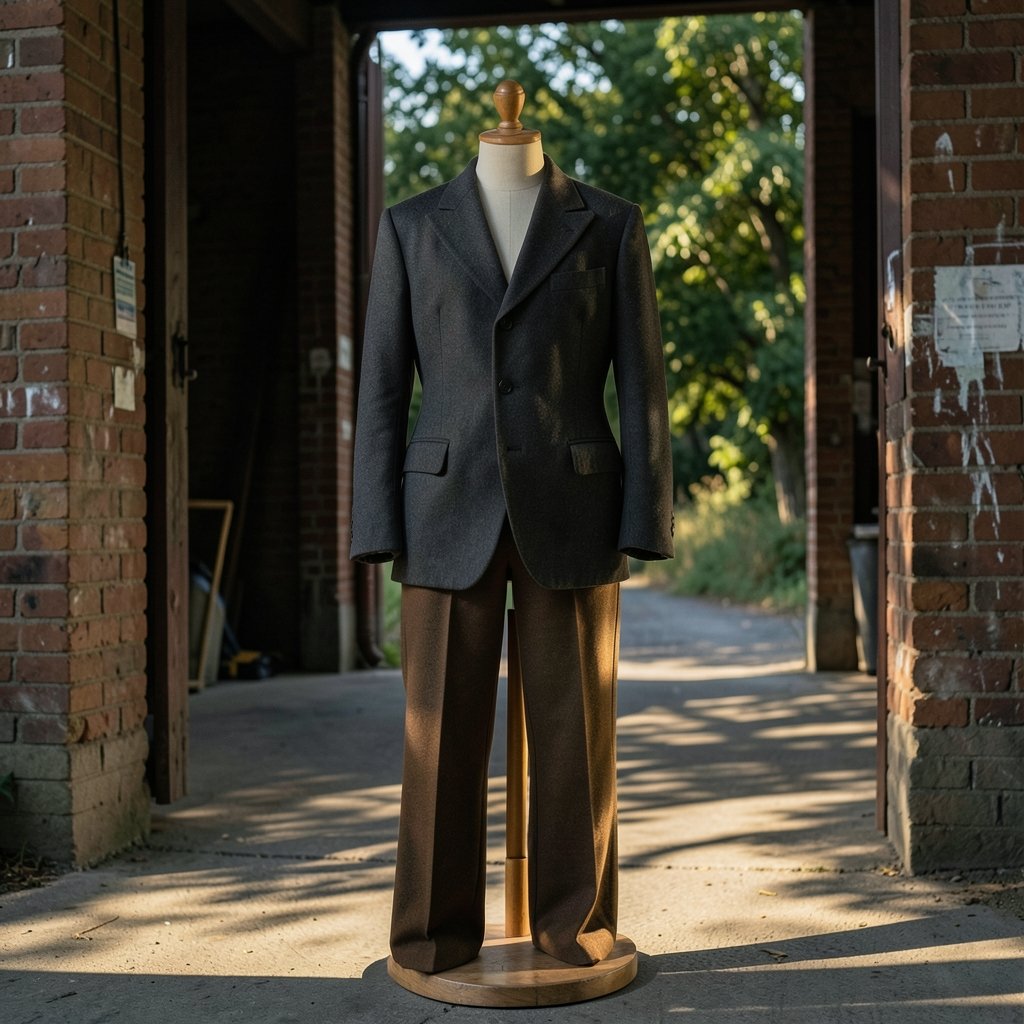
If you remember one garment, remember the sack suit. It had a straight, relatively loose jacket with minimal waist suppression, usually single-breasted with notch lapels. It was the dominant everyday business silhouette for men in the 1920s, and it displaced the more sculpted, waisted styles that came before.
Why it worked: the sack suit flattered more body types, cost less to produce well, and suited a growing class of office workers who needed to look respectable without looking aristocratic. It is also the direct ancestor of the modern business suit, which is why vintage-inspired tailoring feels familiar rather than strange.
What to look for today
- Jacket: soft shoulder, minimal waist suppression, notch lapel, single-breasted.
- Fabric: wool in navy, charcoal, brown, or mid-gray. Heavy enough to drape.
- Fit: roomy enough to close the jacket without pulling. The 1920s did not do skinny.
- Details: patch pockets and a slightly longer jacket length read more period-correct than a cropped modern cut.
The most common mistake is buying a sack suit two sizes too big and calling it vintage. Loose is not the same as oversized. The shoulders should still sit on your shoulders.
Wide Trousers and the Oxford Bags
Trousers ballooned in the 1920s. The famous example is Oxford bags, very wide-legged trousers reportedly originating at Oxford University around 1924. Treat the Oxford origin as tradition rather than documented fact, because the stories vary, including one about rowers hiding plus-fours. What is certain is that wide trousers became a genuine collegiate and youth style, worn with jackets and often with brogues.
For modern wear, the practical version is a high-waisted trouser with a single forward pleat and a leg that falls straight and full to the shoe. Aim for a hem that breaks once, not a puddle. Pair with a leather brogue or a sturdy derby, and skip anything with a tapered ankle. If you want to see how a full, generous leg can still look sharp, the 1950s fashion trends for men picked up where this silhouette left off, and the comparison is useful when you are choosing how wide to go.
Sportswear: Plus-Fours, Argyle, and the Prince of Wales
The 1920s made sportswear respectable daywear. Plus-fours and knickerbockers were standard for golf and country pursuits, worn with argyle or patterned socks. The Prince of Wales, later Edward VIII, was a widely copied style influence, and his taste for bold checks, Fair Isle, and relaxed country clothing filtered down fast.
You do not need to wear plus-fours to a modern office. But the era’s sportswear logic still works:
- Choose one bold pattern, not three.
- Keep the rest of the outfit quiet and solid.
- Use texture instead of color for interest: flannel, tweed, ribbed knit.
- Let the socks do the talking with tailored shorts or full trousers.
That last point is where most people go wrong. Patterned hose with a patterned jacket and a patterned shirt turns into noise. One loud element per outfit is the rule that survived the decade.
Hats: The Fedora Decade
The fedora became the default men’s hat of the 1920s, worn with business suits, while straw boaters stayed on for summer. Hat-wearing was close to universal for adult men in public during this period, which is hard to imagine now.
How to wear a fedora without looking like a costume
- Brim: moderate, not a dramatic wide brim.
- Crown: center dent with a pinch, felt in gray, brown, or navy.
- Angle: level or a slight tilt. A heavy tilt reads as cosplay.
- Context: it works best with tailoring or a topcoat. With gym shorts, it does not.
Summer offers an easier entry point. A straw boater or a lightweight Panama pairs naturally with linen and relaxed tailoring, echoing the seasonal logic covered in mens summer wedding attire guidance, where breathable fabric and a considered hat still solve the same problems they did a century ago.
Evening Wear: The Dinner Jacket Takes Over
By the 1920s the tuxedo or dinner jacket was well established for evening wear, and the tailcoat was retreating to only the most formal occasions. The dinner jacket’s rise is usually dated to the late 19th century, so by this decade it was standard rather than new. That matters for anyone building a period-correct look: the 1920s gentleman at a party was more likely in a shawl or peak-lapel dinner jacket than in tails.
Modern takeaway: a well-cut dinner jacket in midnight blue or black, with a proper bow tie and no long tie, is the most wearable piece of 1920s formalwear you can own. It never really left.
Shirts, Collars, and the Details That Sell the Look
Shirt collars in the 1920s were typically attached, though detachable collars were declining rather than gone. Soft collars with pinned club or tab styles were common for less formal wear, and wing collars persisted for evening dress. Details vary by source, so treat collar specifics as a spectrum rather than a rulebook.
The details that reliably read as 1920s:
| Detail | Period-correct choice | Modern shortcut |
|---|---|---|
| Collar | Soft attached collar with a pin or tab | Button-down or a pinned club collar |
| Cuff | French cuff with links | Double cuff on a dress shirt |
| Tie | Wide, muted, often knitted or striped | Knitted tie in navy or burgundy |
| Braces | Button-on suspenders | Clip braces hidden under a jacket |
| Shoes | Brogues, oxfords, two-tone spectator | Leather brogue or derby |
| Watch | Pocket watch on a chain | Slim dress watch on leather |
One warning: the zoot suit is often lumped into 1920s style, but its high-waisted, wide-legged, long-jacketed form is most firmly documented in the late 1930s and 1940s, especially among Black and Mexican-American youth. Some popular accounts push it earlier. If you are aiming for accuracy, leave the zoot suit out of a 1920s outfit.
The Gatsby Effect, Handled Honestly
The Great Gatsby, published in 1925, is frequently cited as a cultural touchstone for 1920s men’s style. Here is the balanced view: Fitzgerald’s descriptions are literary, not a fashion manual. The novel is not documentary evidence of what most men wore, and films based on it have invented as much as they have preserved.
Use Gatsby as mood, not as a sourcing document. The real evidence lives in museum costume collections, digitized newspapers, and mail-order catalogs from the decade, which show what was advertised, priced, and sold to ordinary men.
How to Wear 1920s Style Today Without Looking Dressed Up
This is where most attempts fall apart. The trick is to take one or two elements and let the rest of your wardrobe stay modern.
Practical rules that actually work
- Start with tailoring, not accessories. A soft-shouldered suit in a solid color does more than a hat and suspenders combined.
- Pick one era signal. A wide trouser, a knitted tie, a pinned collar, or a fedora. Not all four.
- Keep colors muted. Navy, charcoal, brown, cream, and olive. The decade was restrained in color and rich in texture.
- Upgrade your shoes. A good brogue carries an entire outfit.
- Skip the pocket watch chain unless you are attending a themed event. It is the fastest way to look like a rental.
If you are building a wardrobe from scratch, treat these as core pieces rather than costumes. The same logic behind mens wardrobe essentials applies: buy fewer, better items that work across outfits, and let the vintage influence sit in the cut rather than in novelty details. Anyone curious how a single name can signal a whole approach to modern dressing will find the story behind what the Helt menswear name actually means for modern mens style a useful parallel, because it shows how heritage branding and contemporary cuts borrow from each other.
Mistakes to avoid
- Buying a costume. Theatrical reproductions use shiny polyester and exaggerated cuts. Real vintage-inspired clothing uses wool, cotton, and linen.
- Ignoring proportion. Wide trousers need a jacket that balances them. A cropped modern jacket over Oxford bags looks broken.
- Over-accessorizing. Hat, suspenders, pocket watch, tie pin, and spats together is a fancy-dress outfit.
- Forgetting the shoes. Modern sneakers under 1920s tailoring create a jarring split.
- Chasing a film, not a photograph. Look at period photographs and catalog pages instead of movie stills.
For readers who enjoy seeing how runway ideas get translated into wearable drawings, this piece on how Angelica Hicks turns runway moments into fashion illustration is a good reminder that exaggeration is a tool for illustration, not a shopping list. The same applies to period style: the illustrations were always louder than the street.
Where 1920s Style Fits in a Modern Wardrobe
The decade’s influence shows up constantly in current collections. Loose tailoring, wide legs, muted palettes, and a return to proper hats all trace back to this period. If you follow 2026 fashion trends for women or the broader womens fashion 2026 conversation, you will notice the same interwar references appearing in womenswear: dropped waists, long strands of pearls, and relaxed tailoring. Menswear is running the same play with softer jackets and fuller trousers.
The luxury end of the market leans into this hardest. Houses with deep archives, particularly in the Italian luxury fashion tradition, have spent decades refining exactly the kind of soft-shouldered, unstructured tailoring that the sack suit pioneered. That is not coincidence. The 1920s made comfort respectable, and luxury menswear never went back.
Conclusion
Roaring 20s mens fashion was less about spectacle than most people assume. The real revolution was a jacket that stopped squeezing the waist, trousers that let a man walk, and a wardrobe built for a world that had just discovered mass production and leisure time. The fedoras and the argyle socks get the attention, but the sack suit and the wide trouser did the lasting work.
Wear it by picking one or two signals, investing in fabric and fit, and leaving the costume pieces on the rack. A hundred years on, the decade still offers the most comfortable route to looking sharp.
FAQ
What defined Roaring 20s mens fashion?
The dominant look was the sack suit: a straight, loose jacket with minimal waist suppression, often single-breasted with notch lapels. It replaced more fitted, waisted styles and became the everyday business silhouette, worn with wide trousers, a fedora, and brogues.
Did men really wear fedoras every day in the 1920s?
Largely, yes. The fedora was the default men’s hat of the decade for business dress, and hat-wearing was close to universal for adult men in public. Straw boaters remained the summer option.
What are Oxford bags and were they really from Oxford?
Oxford bags were very wide-legged trousers, reportedly originating at Oxford University around 1924. The origin story is tradition rather than documented fact, with several competing explanations, but the style itself was a genuine collegiate trend worn with jackets and brogues.
Was the zoot suit a 1920s style?
Usually not. The zoot suit’s high-waisted, wide-legged, long-jacketed form is most firmly documented in the late 1930s and 1940s, particularly among Black and Mexican-American youth. Some popular accounts place it earlier, but for accuracy it belongs outside a 1920s outfit.
How can I wear 1920s style without looking like I’m in costume?
Choose one or two era signals, such as a soft-shouldered suit, a knitted tie, a pinned collar, or wide trousers, and keep everything else modern. Stick to wool, cotton, and linen, muted colors, and good leather shoes. Avoid combining a hat, suspenders, and a pocket watch chain in one outfit.
Did The Great Gatsby accurately show 1920s menswear?
Not as a documentary. The novel, published in 1925, is a cultural touchstone but its descriptions are literary rather than a record of what most men wore. Film adaptations added further invention. Period photographs, museum collections, and mail-order catalogs are more reliable evidence.














