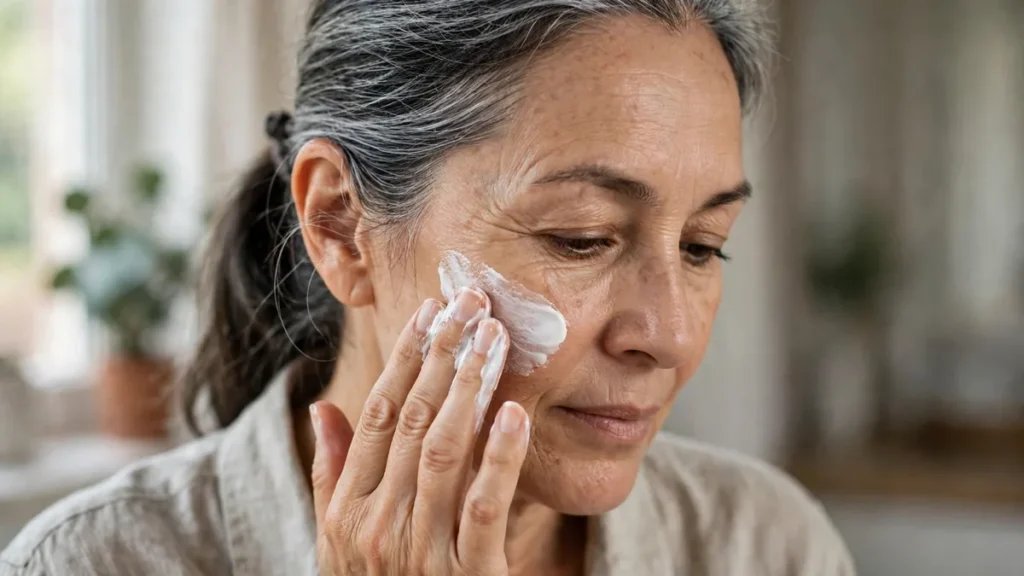
Your fifties are a turning point for skin, and not in the way the headlines suggest. The changes are quieter and more gradual than a single birthday: skin becomes drier, a little thinner, and slower to bounce back, fine lines settle in around the eyes and mouth, and the glow that once arrived on its own now needs a little help. It is not a crisis, and it is not a flaw to be fixed. It is a shift in what your skin needs, and a routine that respects that shift works far better than one that fights it.
A good skincare routine in your fifties is built on consistency rather than complexity. The essentials have not changed — cleanse gently, hydrate well, protect from the sun — but the proportions have. Richer moisture matters more, harsh exfoliation matters less, and a well-chosen treatment step can do more for firmness and radiance than a shelf full of impulse buys. The goal is skin that feels comfortable, looks rested, and holds its moisture through the day.
Below is a complete morning and evening routine for your fifties, in 2027, step by step. Each step explains what it does, what to look for, and what to watch out for, so you can build a routine that fits your skin, your budget, and the amount of time you actually have in the morning.
Key takeaways
- Cleanse gently, hydrate generously, and protect with sunscreen every morning, because those three habits do more than any single expensive product.
- Choose richer moisturisers and barrier-supporting ingredients such as ceramides, glycerin, hyaluronic acid and squalane, and introduce active ingredients slowly.
- Use one treatment at a time, patch-test new products, and give each change at least four to six weeks before deciding whether it suits you.
- Extend your routine to your neck, chest and hands, which show age just as readily as your face and are easy to forget.
- No routine reverses ageing overnight or restores skin to how it looked decades ago, and persistent redness, flaking or irritation is a reason to simplify and seek advice.
What this skincare routine covers
This guide covers a full routine for skin in its fifties: a gentle morning routine that hydrates and protects, and a slightly richer evening routine that repairs while you sleep. It is written for normal to dry skin, which is the most common pattern at this age, with notes throughout for skin that is sensitive, reactive, or still prone to breakouts. You do not need every product mentioned here, and you certainly do not need them all at once.
The routine is organised around seven steps, and each one earns its place. Cleansing removes the day without stripping the barrier. A hydrating layer replaces the water that mature skin loses so easily. A treatment serum targets the concern that bothers you most, whether that is dullness, fine lines, or uneven tone. Eye care, moisturiser and sunscreen finish the job, and a night treatment gives skin time to recover. If you are short on time, the non-negotiables are cleansing, moisturising and sunscreen in the morning, and cleansing and moisturising at night.
It also covers what not to do. Over-exfoliating, layering several strong actives at once, and chasing every new launch are the most common ways a good routine goes wrong in your fifties. A simple routine used every day will always beat an ambitious one used for a week and abandoned.
How we chose this routine and what to look for
Look first at how your skin feels an hour after cleansing, because that tells you more than any label. If it feels tight, it needs a gentler cleanser and a richer moisturiser. If it feels comfortable but looks dull, it probably needs hydration and a treatment step rather than a stronger wash. If it stings when you apply products, the barrier needs support before anything active is added. Choose products for the skin you have now, not the skin you had at thirty.
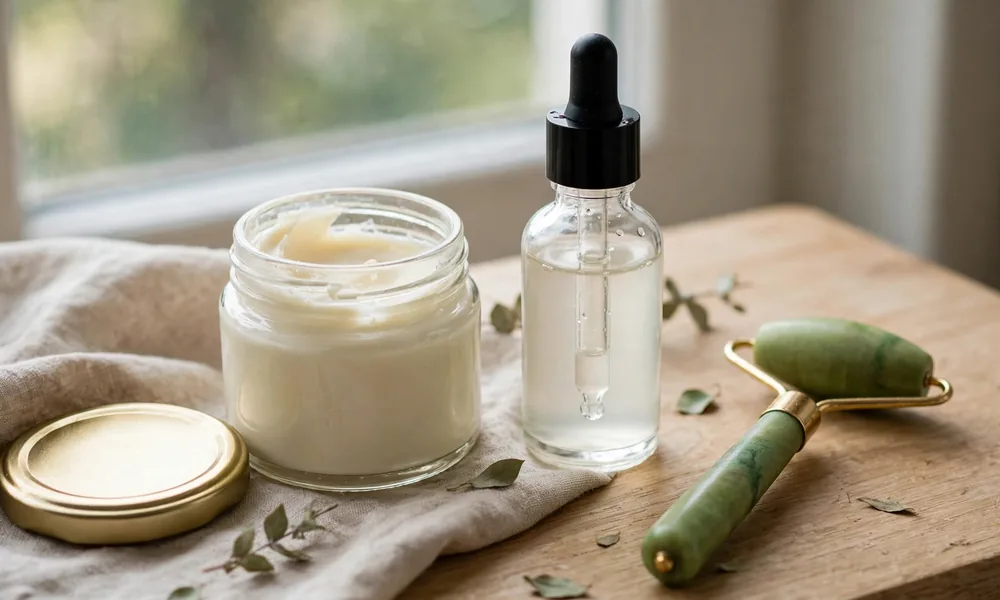
Look next at the ingredient list, and keep it short. Ceramides, glycerin, hyaluronic acid, squalane and niacinamide are reliable, well-tolerated choices for mature skin, and they work well together. Retinoids and vitamin C can be genuinely helpful for fine lines and dullness, but they need to be introduced slowly, on alternate nights at first, and never both at full strength on the same night when you are just starting. Our guide to the best moisturisers for mature skin explains how to choose a richer cream without ending up with a heavy, greasy finish.
Finally, look at texture and how it fits your day. A cream that feels luxurious but pills under makeup will not get used. A serum that smells beautiful but irritates your skin will not get finished. The best routine is the one you will actually follow, morning and night, for months, so choose textures you enjoy and packaging that is easy to use.
Step 1: Gentle cleansing, morning and night
What we like: A cream, milk or gentle gel cleanser removes sunscreen, makeup and the day without leaving skin tight or squeaky. It respects the barrier, which is thinner and drier in your fifties, and it leaves skin calm enough for the steps that follow.
What to consider: Avoid foaming cleansers that leave skin feeling stripped, and skip hot water, which dries mature skin further. In the morning, a simple rinse or a very gentle cleanse is often enough. At night, cleanse thoroughly, and double-cleanse only if you wear heavy makeup or water-resistant sunscreen.
Use lukewarm water, massage for about thirty seconds, and pat dry rather than rubbing. If your skin feels tight after washing, the cleanser is too strong for you, whatever the label promises.
Step 2: A hydrating toner or essence
What we like: A hydrating toner or essence with glycerin or hyaluronic acid adds a light layer of water back into the skin and helps everything applied afterwards absorb better. It is a small step that makes a visible difference to dull, dehydrated skin.
What to consider: Choose a hydrating formula, not an astringent one, and avoid toners with drying alcohol or strong fragrance. Apply it to slightly damp skin with your hands rather than a cotton pad, which can tug at delicate skin and waste product.
This step is optional if your skin is very oily, but for most skin in its fifties it is one of the easiest wins in the whole routine, and it takes less than a minute.
Step 3: A treatment serum for your main concern
What we like: A serum is where you target the one thing that bothers you most. Vitamin C in the morning can help with dullness and uneven tone, while a retinoid at night is the best-supported choice for fine lines and texture. Niacinamide suits almost everyone and helps with redness and the barrier.
What to consider: Pick one active to start with, use it consistently for four to six weeks, and only then consider adding another. Stronger is not better, and irritation is a sign to slow down, not to push through. Our guide to the best anti-ageing serums can help you compare textures and strengths before you choose.
Apply serum to clean, slightly damp skin, use a pea-sized amount for the face, and wait a minute before the next step so it can settle rather than pill.
Step 4: Eye care for fine lines and puffiness
What we like: A dedicated eye cream with peptides, caffeine or a gentle retinoid can help with the fine lines, dryness and puffiness that show first around the eyes, where skin is thinnest and moves constantly.
What to consider: Use a tiny amount, about a grain of rice per eye, and tap it gently around the orbital bone with your ring finger. Do not pull or rub, and do not apply a strong active right up to the lash line unless the product is made for that. If your moisturiser suits your eyes, using it there is perfectly reasonable too.
Eye care is a supporting step, not a miracle.
Step 5: A rich moisturiser, morning and night
What we like: A rich cream with ceramides, squalane or shea butter seals in the hydration from the earlier steps and keeps skin comfortable for hours. In your fifties, most skin needs more emollience than it did at forty, especially in winter and in dry or air-conditioned rooms.
What to consider: Choose a texture that suits the season and your day. A lighter cream may be enough in summer, while a richer balm is welcome in winter. Take moisturiser down over the neck and chest, which age alongside the face and are often left bare. Our guide to the best neck creams is useful if your neck needs more targeted care than your face cream provides.
Apply moisturiser while skin is still slightly damp, and do not forget the backs of your hands, which are exposed to sun and washing all day.
Step 6: Sunscreen every single morning
What we like: Sunscreen is the single most effective anti-ageing step in any routine, because it protects the collagen and elastin you still have. A broad-spectrum SPF 30 or higher, used daily, helps prevent further fine lines, dark spots and loss of firmness.
What to consider: Choose a formula you enjoy wearing, whether that is a light fluid, a tinted cream or a moisturiser with SPF, because the best sunscreen is the one you will use every day. Apply a generous amount to the face, neck and chest, and reapply if you are outdoors for long. A day cream with SPF can simplify the morning, but it is no substitute for a proper amount applied properly.
Make sunscreen the last step of your morning routine, after moisturiser, and let it settle for a few minutes before makeup.
Step 7: Night repair, while you sleep
What we like: Night is when skin does its repair work, and a slightly richer routine then pays off. A gentle retinoid on alternate nights, followed by a rich night cream or a thin layer of a plain occlusive on very dry areas, can leave skin softer and smoother by morning.
What to consider: Do not use a retinoid and a strong exfoliant on the same night, and skip actives altogether if your skin is irritated or sunburned. If retinoids are too much for your skin, a peptide or ceramide night cream is a gentler way to support repair without the adjustment period.
Keep the night routine simple and repeatable.
Skin in your fifties: what changes and why
From the late forties onwards, falling oestrogen levels affect the skin in several ways. Oil production slows, so skin feels drier. Collagen and elastin are produced more slowly, so skin loses a little firmness and fine lines become more visible. Cell turnover slows too, so the surface can look duller, and dark spots from years of sun exposure become more noticeable. None of this happens overnight, and none of it is the same for everyone.
That is why hydration and barrier support matter so much now. Mature skin loses water more easily, and a weakened barrier lets irritants in and moisture out. Ceramides, cholesterol and fatty acids help rebuild that barrier, while humectants such as glycerin and hyaluronic acid draw water in. A routine built around those ingredients is not glamorous, but it is the foundation everything else depends on.
Sun damage also becomes more visible in your fifties. Years of daylight add up, and the spots and uneven tone that appear now are often the result of exposure long ago. Daily sunscreen can stop it getting worse, and gentle, consistent treatment can soften its appearance over time.
The caveats that matter
A skincare routine can improve how skin looks and feels, but it cannot turn back time, and any product that promises that is overselling itself. Realistic expectations matter: better hydration, smoother texture and a healthier glow are achievable in weeks, while changes in firmness and deep lines take months and are usually subtle. If a product stings, burns or leaves skin red and flaking for more than a few days, stop using it and return to a simple cleanser and moisturiser until skin settles.
| Detail | What is known |
|---|---|
| Most important morning step | Sunscreen, broad-spectrum SPF 30 or higher, every day, on face, neck and chest |
| Most important evening step | Gentle cleansing followed by a rich moisturiser, with a treatment step if skin tolerates it |
| Best ingredients for dryness | Ceramides, glycerin, hyaluronic acid, squalane and shea butter |
| Best-supported actives | Retinoids for fine lines and texture, vitamin C for dullness and uneven tone |
| How to introduce actives | One at a time, slowly, on alternate nights at first, with a patch test |
| What to avoid | Harsh scrubs, drying alcohol, strong fragrance, and several strong actives at once |
| How long to judge a product | Four to six weeks of consistent use, unless it irritates your skin |
| When to see a dermatologist | Persistent redness, flaking, blistering, new or changing moles, or skin that does not improve |
See a dermatologist promptly about any new or changing mole, a sore that does not heal, or a spot that bleeds, itches or grows. That is not a matter for a skincare routine, however good it is, and early advice makes a real difference.
Checklist: building your routine honestly
Use these checks before you buy anything new, and again after a month of use.
- Check the basics first: a gentle cleanser, a rich moisturiser and daily sunscreen, before any treatment product.
- Check the ingredients: ceramides, glycerin or hyaluronic acid for hydration, and one active at a time for your main concern.
- Check for irritation: patch-test a new product on your jawline or behind your ear for two to three days before full use.
- Check the texture: choose creams and serums you enjoy using, that do not pill under makeup or feel greasy by midday.
- Check the neck, chest and hands: extend moisturiser and sunscreen beyond your face, every day.
- Check after four to six weeks: keep what works, drop what irritates, and change only one thing at a time.
Frequently asked questions
What is the best skincare routine for your fifties?
A gentle cleanser, a hydrating layer, one treatment serum, a rich moisturiser and sunscreen in the morning, with a slightly richer version at night. That is the core. Everything else is optional, and adding more products does not automatically mean better skin.
Should I use retinol in my fifties?
Many people find it helpful for fine lines and texture, but it is not right for everyone. Start with a low strength on alternate nights, use it only at night, and always use sunscreen in the morning. If it causes persistent redness or peeling, stop, simplify your routine, and consider a gentler peptide or ceramide product instead.
How often should I exfoliate in my fifties?
Once or twice a week at most, with a gentle chemical exfoliant rather than a harsh scrub. Over-exfoliating can damage the barrier, cause redness, and make skin more sensitive to everything else you apply. If your skin is dry or reactive, once a week or less is enough.
Do I need a separate eye cream?
Not necessarily. If your moisturiser is gentle and suits the skin around your eyes, it can do the job. A separate eye cream is worth considering if you have specific concerns such as puffiness, dark circles or fine lines that your usual moisturiser does not address.
Can skincare tighten sagging skin?
Only modestly. Moisturisers and serums can improve firmness, texture and hydration, which makes skin look smoother and more rested, but they cannot lift significantly sagging skin. Be wary of any product that promises a dramatic lift, and talk to a dermatologist if sagging is your main concern.
How long does it take to see results?
Hydration improves within days, and skin usually looks brighter and feels softer within two to four weeks. Changes in fine lines, tone and texture take longer, typically six to twelve weeks of consistent use. Take a photo in the same light once a month if you want an honest comparison, rather than relying on memory.
The bottom line
The best skincare routine in your fifties is not the longest or the most expensive. It is a gentle cleanse, generous hydration, one well-chosen treatment, a rich moisturiser and daily sunscreen, repeated morning and night. Choose products for the skin you have now, introduce changes slowly, and give them time to work.
Start with the basics, add one treatment at a time, and extend your care to your neck, chest and hands. That is the honest way to keep skin comfortable, healthy and radiant in your fifties, without spending more than you need to or irritating the skin you are trying to care for.
Note: This guide is general skincare information, not medical advice. Patch-test new products, introduce active ingredients slowly, use sunscreen daily, and speak to a dermatologist if you have persistent redness, flaking or irritation, or about any new or changing mole or sore that does not heal.