Gold vermeil is the jewellery you reach for when you want the warmth of gold without the weight of a solid-gold price tag. A thick layer of gold over sterling silver gives you real gold on the outside — and that is exactly why it needs more care in storage than a plain silver chain. The gold layer is much thicker than ordinary gold plating, but it is still a layer, and it can wear thin, scratch, or dull if pieces are tossed together in a drawer.
Storing gold vermeil well is not complicated or expensive. It is a short routine of cleaning, drying, and separating pieces, plus a storage spot that stays cool and dry. Most of the damage people blame on poor quality is actually storage damage: tangled necklaces, rings knocked against harder stones, and earrings left in a steamy bathroom.
Below are nine practical steps for storing gold vermeil jewellery in 2027, from the clean-and-dry habit that matters most to the simple routine that keeps a whole collection in good shape. Each step explains what to do, what to avoid, and how long it takes.
Key takeaways
- Always clean and fully dry gold vermeil before putting it away — moisture and leftover lotion, perfume, or sweat dull the gold layer fastest.
- Store each piece separately in its own pouch, slot, or compartment — vermeil scratches easily when it rubs against other jewellery.
- Keep gold vermeil in a cool, dry place away from bathrooms and sunlight, and never hang necklaces where they can tangle and pull.
- Check clasps, settings, and the gold layer every few months, and have a piece re-plated when the silver underneath starts to show.
- No storage method makes gold vermeil last forever — the gold layer wears with daily use, and storage only slows that wear.
What gold vermeil actually is
Gold vermeil is sterling silver coated with a thick layer of gold, at least 2.5 microns deep, and the gold must be at least 10 karat. That thickness is what sets it apart from ordinary gold plating. Vermeil feels substantial, it has the colour and lustre of real gold, and it costs far less than solid gold, which is why it has become so popular for everyday earrings, necklaces, and rings.
The catch is in the structure. The gold is a coating, not a solid piece of metal, so it responds to friction, moisture, and chemicals in a way solid gold does not. Rub it against a diamond ring or a rough stone and the gold layer can scratch. Leave it damp in a bathroom and tarnish can form on the silver beneath, showing through as dark patches. Perfume and lotion can dull the finish over time. Our guide to what gold vermeil jewellery is explains the construction in full, including how to tell genuine vermeil from thin gold plating when you buy.
Storage matters so much because most wear happens when pieces are not being worn. A necklace left in a pile will tangle, a ring left loose in a bag will be scratched by keys, and an earring left on a damp windowsill will tarnish. Good storage removes those risks with a few small habits that take minutes, not hours.
What you need before you start
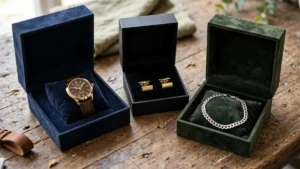
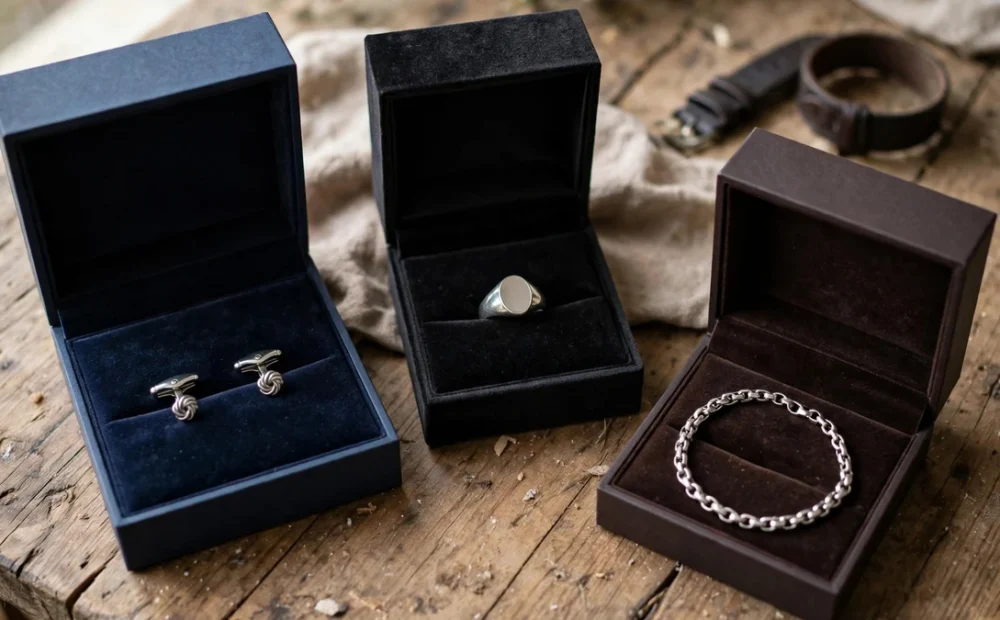
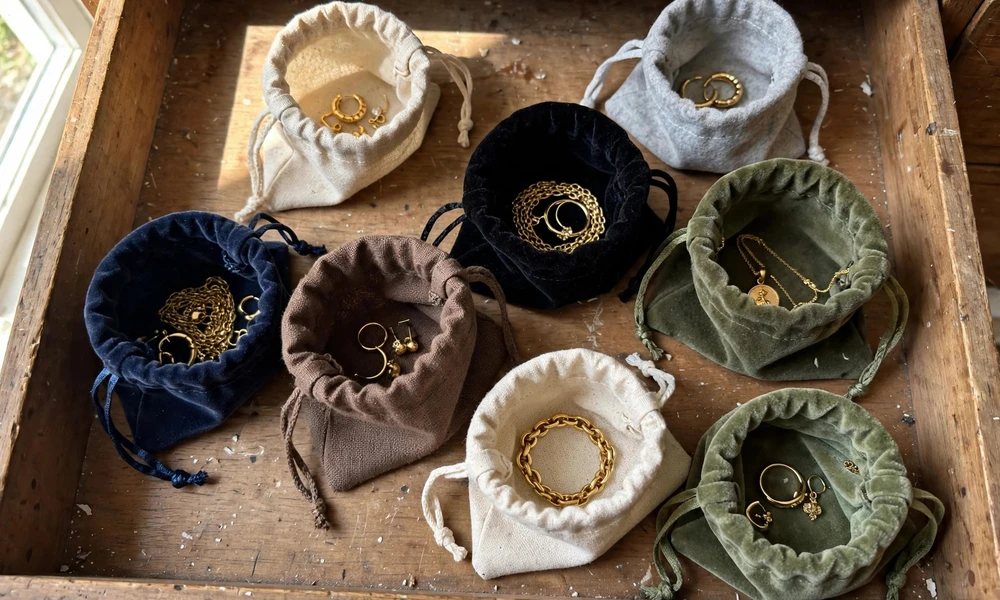
You do not need a luxury jewellery box for gold vermeil. What you need is separation, dryness, and a little softness. Individual soft pouches, a jewellery box with lined compartments, or a tray with dividers will all work, as long as no two pieces can rub against each other. Soft cloth, cotton, and velvet linings are ideal; hard plastic, rough wood, and bare metal trays can scratch the gold surface.
Two small extras are worth having: a few silica gel packets or anti-tarnish strips, which absorb moisture inside a closed box or drawer, and a soft, lint-free cloth kept beside your storage, so cleaning a piece before you put it away takes seconds. Avoid tissue paper for long-term wrapping, because it can trap moisture and some tissues are slightly abrasive.
Before you reorganise anything, take ten minutes to sort your collection. Separate vermeil from harder pieces such as diamond rings, gemstone jewellery, and steel watches, and put aside anything that needs cleaning, has a loose clasp, or already shows silver through the gold. Those pieces need attention first, not storage.
The 9 steps to store gold vermeil jewellery
1. Clean each piece before you put it away
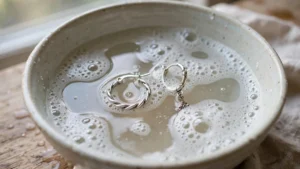
What to do: Wipe every piece with a soft, dry cloth after wearing, then wash it in warm water with a drop of mild soap if it has been against skin, lotion, or perfume. Rinse in clean water and pat dry. What to avoid: Do not store a piece straight after wearing it, and never use a silver polishing cloth, an ultrasonic cleaner, or a chemical dip, all of which can strip the gold layer. Best for: Every vermeil piece, every time you wear it. Time needed: 2 minutes. Standout tip: A quick wipe after wearing does most of the work; full washing is only needed when a piece is visibly dirty.
2. Dry every piece completely
What to do: Lay pieces on a clean, dry cloth and let them air-dry fully, paying attention to clasps, chain links, and behind stones where water hides. What to avoid: Do not put a damp piece into a closed pouch, and do not use a hairdryer or direct heat to speed drying, because heat and trapped moisture both encourage tarnish. Best for: Necklaces, bracelets, and any piece with a clasp or setting. Time needed: 5 to 10 minutes of air-drying. Standout tip: If the piece feels dry, give it five more minutes — hidden moisture is the kind that causes damage.
3. Give each piece its own pouch or slot
What to do: Store one piece per soft pouch or lined compartment, so nothing can rub, scratch, or tangle against anything else. What to avoid: Do not pile pieces in a single drawer, bowl, or bag, and do not store vermeil touching diamond, gemstone, or steel jewellery, which will scratch the gold surface. Best for: Rings, earrings, and delicate chains, which scratch and tangle most easily. Time needed: 1 minute per piece. Standout tip: Short on pouches? A small square of soft cotton cloth wrapped around each piece works just as well.
4. Lay necklaces flat, never hang them
What to do: Lay each necklace flat in its own compartment or pouch, with the clasp fastened so the chain cannot loop through itself. What to avoid: Do not hang vermeil necklaces on hooks or stands for long periods, because gravity stretches fine links and leaves pieces swinging against each other. Best for: Fine chains, pendant necklaces, and layered sets. Time needed: 1 minute. Standout tip: Threading a necklace through a drinking straw before storing genuinely stops tangling on very fine chains.
5. Keep gold vermeil away from harder stones and metals
What to do: Keep vermeil in its own section of your jewellery box, away from diamonds, sapphires, gemstones, and steel or titanium. What to avoid: Do not assume a piece is safe because it looks smooth — a diamond’s edge and a steel watch clasp are both harder than the gold layer. Best for: Mixed collections where vermeil sits beside fine and fashion jewellery. Time needed: 5 minutes to reorganise once. Standout tip: Sort by hardness as well as by type: soft gold pieces together, hard stones together, never mixed.
6. Store in a cool, dry place away from humidity
What to do: Choose a bedroom drawer, a wardrobe shelf, or a jewellery box in a dry room, and add a silica gel packet or an anti-tarnish strip inside. What to avoid: Do not store vermeil in a bathroom, near a sunny window, or in a damp room, because humidity and heat speed up tarnish. Best for: Your whole collection, but especially pieces you wear only occasionally. Time needed: 5 minutes to choose the spot and add a silica packet. Standout tip: In a humid home, an airtight box with a silica gel packet protects vermeil far better than an open display tray.
7. Keep clasps closed and chains fastened
What to do: Fasten every clasp and close every hook before storing, so chains cannot thread through each other and hooks cannot catch on fabric or other pieces. What to avoid: Do not store necklaces or bracelets with open clasps, and do not force a stiff clasp — have it checked rather than bending it. Best for: Chains, bracelets, and hoop earrings. Time needed: Under 1 minute. Standout tip: A fastened clasp is the simplest anti-tangle measure there is, and it also protects the clasp from being bent out of shape.
8. Check clasps, settings, and the gold layer every few months
What to do: Every two to three months, take each piece out, check that clasps close firmly and stones sit securely, and look for thinning gold or silver showing through. What to avoid: Do not keep wearing a piece with a loose stone or a failing clasp, and do not try to fix thinning gold at home with polish or a plating kit. Best for: Pieces you wear often, and anything with stones or a moving clasp. Time needed: 15 minutes for a whole collection. Standout tip: Check under good light and run a fingertip over the surface — thinning gold often feels rough before it is visible.
9. Keep a simple storage routine you will actually follow
What to do: Make the routine short and repeatable: wipe, dry, separate, and put away in the same place every time. Keep pouches and cloths where you get dressed, not in a cupboard you never open. What to avoid: Do not build a system with ten steps and special equipment — a routine you skip is worse than a simple one you follow. Best for: Anyone with more than a few vermeil pieces, or anyone who has lost pieces to tangles before. Time needed: 2 to 3 minutes a day. Standout tip: The best storage system is the one you use without thinking — if putting a piece away feels like a chore, simplify it.
Which storage suits your collection
A small collection is easy: a lined jewellery box with compartments, one piece per slot, kept in a bedroom drawer, will do the job for years. A larger collection needs more structure — a box with removable dividers, or labelled pouches in a drawer. The principle does not change with size, only the container does.
Daily-wear pieces deserve the most accessible spot, because a piece that is hard to reach gets left on a bedside table overnight, where most scratches and tarnish happen. Keep everyday earrings, chains, and rings at the front of the box or the top of the drawer. Occasional pieces can live further back, in sealed pouches with a silica packet, where they stay clean and dry between wears. Our guide to cleaning gold vermeil jewellery pairs with this one, because a piece that is cleaned properly before storage lasts noticeably longer than one that is put away dirty.
Travel needs its own approach. A small, soft jewellery roll or pouches inside a hard case is far safer than a plastic bag or a loose suitcase pocket, where pieces knock against each other for hours. Fasten clasps, separate each piece, and keep the roll in hand luggage rather than a checked bag, where temperature and humidity swing more.
The caveats that matter
Gold vermeil is durable for gold-coated jewellery, but it is not indestructible. The gold layer is measured in microns, and everyday friction wears it down over time, however carefully you store it. Swimming, showering, gym sessions, and sleeping in vermeil all speed up that wear. Storage slows the process, it does not stop it.
| Detail | What is known |
|---|---|
| Best storage spot | A cool, dry bedroom drawer or wardrobe shelf, never a bathroom |
| Separation | One piece per pouch or lined compartment; never pile pieces together |
| Before storing | Wipe after wearing, wash if dirty, and dry completely before putting away |
| Necklaces | Lay flat with clasps fastened; do not hang them long-term |
| What to keep away | Diamonds, gemstones, steel, and titanium — all harder than the gold layer |
| Moisture control | Silica gel packets or anti-tarnish strips inside a closed box or drawer |
| How often to check | Every two to three months for clasps, settings, and thinning gold |
| What storage cannot do | It cannot stop the gold layer wearing with daily use, or repair thinning gold |
If a piece shows silver through the gold, feels rough, or has a loose stone, take it to a jeweller rather than trying a home fix. Re-plating is a normal, affordable service for vermeil, and a jeweller can tighten settings and replace a worn clasp in the same visit. Think of it as maintenance, not failure.
Checklist: storing gold vermeil jewellery properly
Use these checks every time you put a piece away, and again when you reorganise your collection.
- Wipe each piece with a soft, dry cloth after wearing, and wash it if it has been against lotion, perfume, or sweat.
- Dry every piece completely, including clasps and behind stones, before it goes into a pouch or box.
- Store one piece per soft pouch or lined compartment, and never pile pieces together.
- Lay necklaces flat with clasps fastened, and keep vermeil away from diamonds, gemstones, and steel.
- Keep your jewellery box in a cool, dry room, with a silica gel packet or anti-tarnish strip inside.
- Check clasps, settings, and the gold layer every two to three months, and see a jeweller when the silver starts to show.
Frequently asked questions
Can I store gold vermeil jewellery in the bathroom?
It is best not to. Bathrooms are warm and humid, and that moisture speeds up tarnish on the silver beneath the gold layer. A bedroom drawer or wardrobe shelf is a much better home, and if a bathroom is your only option, use an airtight box with a silica gel packet inside.
Should I keep gold vermeil in its original box?
Yes, if the box is lined and the piece fits without being squeezed. Original boxes are usually designed for the piece, with a soft lining and a proper shape. If the box is unlined cardboard or too small, move the piece to a soft pouch or a lined compartment instead.
Is it safe to store gold vermeil with other gold jewellery?
Mostly yes, but with care. Solid gold is harder than vermeil’s gold layer, so a heavy solid-gold chain can still scratch a vermeil piece. Keep vermeil in its own pouch even among gold pieces, and never store it touching diamonds or gemstones.
How do I stop gold vermeil necklaces from tangling?
Fasten the clasp, lay the necklace flat in its own compartment, and keep it away from other chains. For very fine chains, threading the necklace through a straw before storing works well. Hanging necklaces lets them swing and tangle over time.
Do anti-tarnish strips really help gold vermeil?
Yes, they help by absorbing moisture and the gases that cause tarnish inside a closed box or drawer. They are cheap, they last for months, and they are most useful for pieces you wear only occasionally. Replace them every few months. Our guide to storing jewellery properly covers anti-tarnish strips and silica gel in more detail, for all types of jewellery.
When should I take gold vermeil to a jeweller?
Take it in when you can see silver showing through the gold, when a stone feels loose, when a clasp no longer closes firmly, or when the surface feels rough despite cleaning. A jeweller can re-plate the gold layer, tighten settings, and replace clasps, which is usually far cheaper than replacing the piece.
The bottom line
Storing gold vermeil well comes down to three habits: clean it, dry it, and keep it separate. Wipe each piece after wearing, dry it fully, give it its own soft pouch or lined slot, and keep the whole collection in a cool, dry place away from humidity and harder jewellery. Those four actions protect the gold layer far more than any expensive box or special product.
Start with the pieces you wear most, because they are the ones most at risk, then work through the rest of the collection one drawer at a time. A ten-minute sort, a few pouches, and a silica packet are enough to begin, and the routine takes two or three minutes a day once it becomes a habit.