
Platinum earrings are the quiet luxury of a jewellery box. They do not shout, they do not tarnish the way silver can, and they hold their white lustre for years with very little fuss. That is exactly why it is easy to forget they need cleaning at all, until one morning you notice the stones look dull, the metal has lost its brightness, or a favourite pair feels slightly grimy against the skin. Learning how to clean platinum earrings properly takes ten minutes, costs almost nothing, and keeps a piece you love looking the way it did on the day you bought it.
The good news is that platinum is a forgiving metal. It is dense, durable, and resistant to corrosion, so it tolerates gentle soap and water far better than many other precious metals. The parts that need care are the details around it: the stones, the settings, the backs and the posts that sit against your ears. A cleaning routine that is too rough can loosen a setting or scratch a soft stone, while a routine that is too timid leaves behind the lotions, hair products and everyday oils that make earrings look tired.
Below is a simple nine-step method for cleaning platinum earrings at home, using only warm water, mild soap and a soft brush. Each step explains what to do, what to avoid, and how long it takes, so you can clean a pair of studs before work or give a treasured pair a proper refresh at the weekend.
Key takeaways
- Platinum earrings need only warm water, a drop of mild soap, and a soft brush — no harsh chemicals, no abrasive cloths, and no ultrasonic cleaner at home.
- Soak for a few minutes first, then brush gently around settings and stones, rinse under clean water, and dry fully before storing.
- Studs, hoops and drop earrings all follow the same steps, but soft stones such as pearls and opals need a wipe only, never a soak.
- Check clasps, backs and prongs every time you clean, because a loose setting is far cheaper to fix early than after a stone is lost.
- Cleaning cannot repair deep scratches, worn plating or a bent post, and a jeweller should handle anything that feels loose, damaged or valuable beyond everyday wear.
What platinum earrings actually are
Platinum is a naturally white metal, dense and heavy for its size, and it is usually marked 950, which means the piece is 95 percent pure platinum. Unlike white gold, which is coated with rhodium to look white, platinum keeps its colour on its own.
What does change over time is the finish. Most platinum earrings start with a bright polish, and daily wear slowly develops a soft patina, a slightly matte surface that many people like. Cleaning does not remove that patina. It removes the film of skin oils, foundation, hairspray and moisturiser that sits on top of it, which is what makes earrings look dull. If you prefer a bright mirror finish, a jeweller can re-polish the metal, but that is a professional job, not a home clean.
The other thing to understand is that the earring is more than the metal. A diamond stud has prongs that can trap dirt underneath the stone. A hoop has a hinge and a clasp that can collect product. A drop earring has movement, which means more contact with hair and skin. Our guide to cleaning platinum jewellery covers the general method for rings and necklaces, and the steps below adapt it specifically to earrings, where small parts and close contact with skin make gentle handling especially important.
What you need before you start
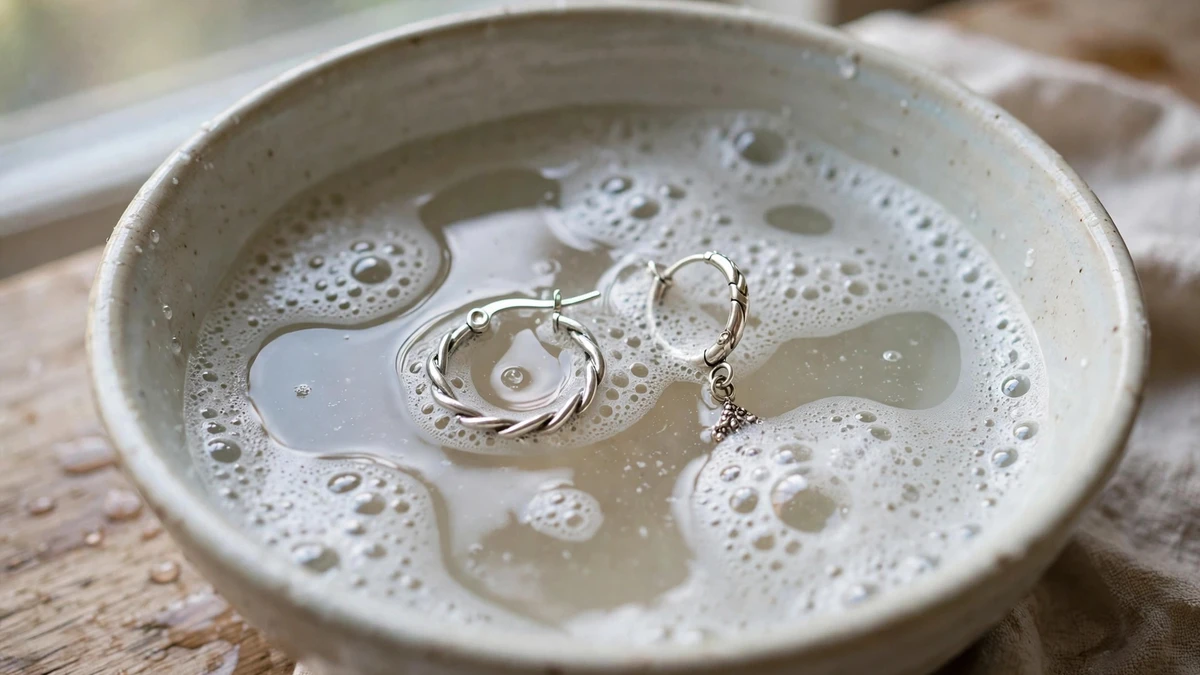
You need very little. A small bowl of warm water, a drop of mild washing-up liquid or a gentle hand soap with no moisturiser, a soft toothbrush or a soft jewellery brush, and a clean, lint-free cloth are enough. Choose a brush with genuinely soft bristles. A hard brush or an old toothbrush with splayed bristles can scratch the metal and, worse, catch on a prong and bend it.
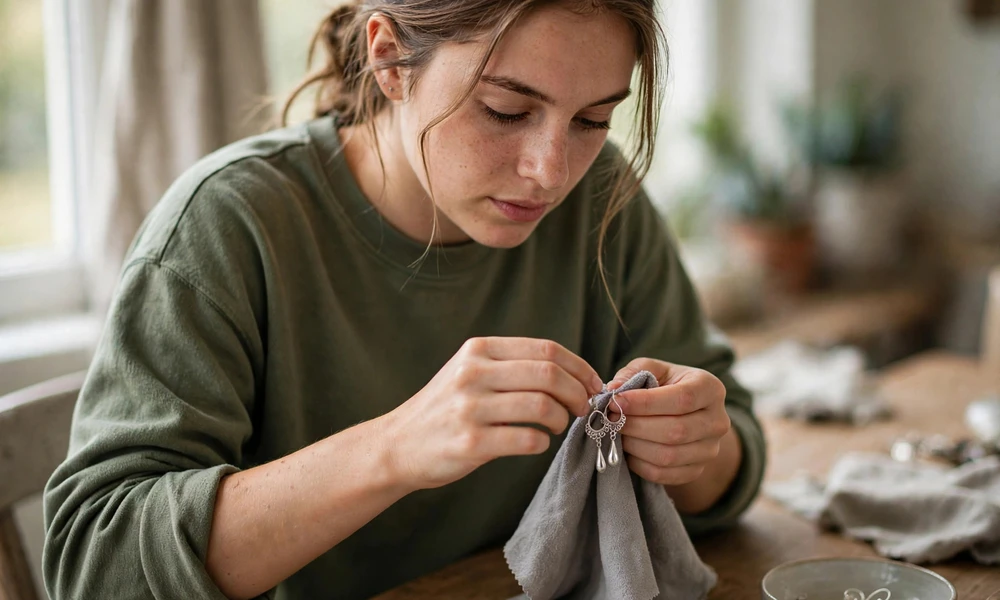
Work over a towel, not over an open sink. Earrings are small, and a dropped stud can disappear down a drain in a second. Lay a folded towel on a table, put the bowl on it, and keep the earring backs in a small dish so nothing rolls away.
Skip the shortcuts you may have read about. Toothpaste is abrasive and will scratch platinum. Baking soda pastes are too harsh for settings. Boiling water can damage soft stones and loosen glue. Ultrasonic cleaners are useful in a jeweller’s workshop, where a professional checks the settings first, but at home they can shake a loose stone out of its setting before you notice. Warm soapy water is slower, but it is the method that never causes a problem.
The 9 steps to clean platinum earrings
Take the earrings off and inspect them first
What to do: Hold each earring up to the light and look at the stone, the prongs and the post. Check that the stone sits straight, the prongs are even, and the back clicks or screws on firmly. What to avoid: Do not clean an earring with a visibly loose stone or a bent post at home. Best for: Every pair, every time. Time needed: One minute. Standout tip: A quick inspection is also the best moment to spot a problem early.
Wash your hands and lay out a soft surface
What to do: Wash and dry your hands, then lay a folded towel on a flat table and place your bowl, brush and cloth on it. What to avoid: Do not clean earrings over a bare sink, a hard worktop or a tiled floor. Best for: Studs and small hoops, which are the easiest to drop. Time needed: One minute. Standout tip: A light-coloured towel makes small backs and stones easy to see.
Mix warm water with a drop of mild soap
What to do: Fill a small bowl with warm, not hot, water and add a single drop of mild washing-up liquid or plain hand soap. Swirl it gently until it is lightly soapy. What to avoid: Do not use hot water, antibacterial soap, soap with moisturiser, or anything with bleach or ammonia. Best for: All platinum earrings with diamonds, sapphires and rubies. Time needed: One minute. Standout tip: If the water feels hot on your wrist, let it cool before the earrings go in.
Soak the earrings for a few minutes
What to do: Lower the earrings into the bowl and leave them for three to five minutes so the soapy water can soften the build-up. What to avoid: Do not soak earrings set with pearls, opals, turquoise or any glued stone, and do not leave earrings soaking for an hour. Best for: Diamond and sapphire studs and hoops with everyday build-up. Time needed: Three to five minutes. Standout tip: A short soak does most of the work, so the brushing can stay gentle.
Clean gently with a soft brush
What to do: Lift one earring out, hold it by the post, and brush lightly around the setting, under the stone and along the post, using small strokes. What to avoid: Do not press hard, scrub in circles, or push the bristles into a prong. Best for: Diamond studs, where dirt collects under the stone. Time needed: One to two minutes per earring. Standout tip: Brush the back of the setting too, because that is where most of the build-up hides.
Rinse under clean lukewarm water
What to do: Hold the earring over the towel and pour clean lukewarm water over it, or rinse it in a second bowl of clean water, until no soap remains. What to avoid: Do not rinse under a running tap without a plug and a strainer, and do not use hot water. Best for: Every pair, because leftover soap leaves a cloudy film. Time needed: One minute. Standout tip: Rinse twice if you used more than a drop of soap.
Dry fully with a soft lint-free cloth
What to do: Pat each earring dry with a clean, lint-free cloth, then leave it on the towel for a few minutes so any water trapped behind the stone can evaporate. What to avoid: Do not use a paper towel, a rough flannel or a hairdryer, and do not put damp earrings away. Best for: All earrings, especially hoops with hinges and drops with moving parts. Time needed: Two to three minutes. Standout tip: A glasses cloth works well, because it is soft and leaves no fibres behind.
Polish lightly and check the settings again
What to do: Give the metal a light polish with the dry cloth, then check the stone, prongs and backs once more, and test that the backs sit firmly on the posts. What to avoid: Do not use a silver dip, a polishing compound or an abrasive cloth on platinum. Best for: Earrings worn daily, which benefit from a quick check every few weeks. Time needed: One minute. Standout tip: If a back feels loose on the post, replace it before you wear the earrings again.
Store them properly straight away
What to do: Put the clean, dry earrings back in their box or pouch, keeping each pair separate so the metal does not scratch other pieces. What to avoid: Do not drop clean earrings loose into a drawer or a crowded jewellery box. Best for: Every pair, especially ones you rotate and wear less often. Time needed: One minute. Standout tip: Fasten the backs on while they are stored, so the pair stays together.
Cleaning is only half the job if the earrings go straight back into a tangle with other jewellery. Platinum is hard, but it can still scratch softer metals, and it can be scratched by them. A lined box with separate slots, or a small pouch per pair, keeps the clean finish intact. Our guide to storing platinum jewellery explains the full setup, including why separate pouches matter more than an expensive box.
Which platinum earrings need extra care
Diamond, sapphire and ruby earrings are the easiest to clean, because those stones are hard and cope well with warm soapy water. Pearl earrings are the opposite. Pearls are soft, porous and often glued to their settings, so they should never be soaked or brushed. Wipe them with a soft, barely damp cloth and dry them immediately, and keep perfume and hairspray away from them entirely.
Hoops need a little more attention than studs. The hinge and clasp collect product, and the inside of the hoop is easy to miss. Open the hoop carefully, clean the hinge area with the brush, and check that the clasp clicks shut firmly before you put the earring away. Drop earrings move against hair and skin all day, so they pick up more product than studs, and their settings deserve the same gentle brush under the stone.
If your earrings have pavé stones, tiny stones set close together, be especially gentle. The prongs are small and the gaps between stones trap dirt, but pressing a brush into them can loosen a stone. Light strokes and a good soak do the work. The best platinum earrings in our roundup include studs, hoops and drops, and the same care applies to all three, with the setting style deciding how much attention the small parts need.
The caveats that matter
Platinum is tough, but it is not indestructible, and home cleaning has limits. A jeweller should handle anything with a loose stone, a bent post, a damaged clasp, or a value that makes a mistake expensive. Professional cleaning also reaches the places a home brush cannot, and a jeweller will check the settings as part of the service, which is worth doing once or twice a year for earrings you wear every day.
| Detail | What is known |
|---|---|
| Best home method | Warm water, a drop of mild soap, a soft brush, then a full rinse and dry |
| How often to clean | Every two to four weeks for daily wear, less often for occasional pairs |
| What to never use | Toothpaste, baking soda paste, bleach, ammonia, silver dip, boiling water |
| Stones that can be soaked | Diamonds, sapphires, rubies — hard stones cope well with warm soapy water |
| Stones that must not be soaked | Pearls, opals, turquoise and any glued stone — wipe only with a damp cloth |
| Biggest risk at home | A loose stone shaken out by an ultrasonic cleaner, or a stud lost down a drain |
| When to see a jeweller | Loose stones, bent posts, worn backs, deep scratches, or a professional polish |
| What cleaning cannot fix | Deep scratches, worn settings, a bent post, or a stone that has lost its lustre |
If your ears are sensitive or you have recently had a piercing, clean the earrings and let them dry fully before wearing them again, and keep the posts free of soap residue. If an earring causes irritation after cleaning, check that no soap is left on it, and consider whether the back, rather than the platinum, is the problem, since backs are often made from a different metal.
Checklist: cleaning platinum earrings honestly
Use these checks each time you clean a pair, and again before you put them away.
- Inspect first: check the stone, prongs, post and backs, and stop if anything is loose or bent.
- Work over a towel: keep the bowl, brush and earring backs on a soft surface, never over an open drain.
- Keep it mild: warm water and a drop of mild soap only — no toothpaste, bleach, ammonia or boiling water.
- Soak briefly: three to five minutes for hard stones, and no soaking at all for pearls, opals or glued stones.
- Rinse and dry fully: rinse until no soap remains, pat dry with a lint-free cloth, and let the earrings air for a few minutes.
- Check and store: test the backs, check the settings again, and store each pair separately in a lined box or pouch.
Frequently asked questions
How often should I clean platinum earrings?
Every two to four weeks is right for earrings you wear daily, and every couple of months is enough for pairs you wear occasionally. If they look dull or feel sticky, they are ready for a clean, whatever the calendar says.
Can I use an ultrasonic cleaner on platinum earrings?
Only after a jeweller has checked the settings. Platinum itself copes well with an ultrasonic cleaner, but the vibration can shake a loose stone out of its setting. A home ultrasonic cleaner is not worth the risk unless the earrings have been checked first.
Will cleaning remove the patina on my platinum earrings?
No. Warm soapy water removes dirt and product build-up, not the patina, which is a change in the surface of the metal from wear. If you want the bright polish back, a jeweller can re-polish the metal.
Can I clean platinum earrings with pearls in them?
Yes, but differently. Never soak pearl earrings or brush the pearls. Wipe the pearls with a soft, barely damp cloth, dry them straight away, and clean the platinum setting around them with care.
Why do my platinum earrings look dull after cleaning?
It is usually soap residue, or dirt still trapped under the stone. Rinse again in clean water, dry fully, and give the back of the setting another gentle brush. If they are still dull, a jeweller’s clean will reach what a home brush cannot.
Is it safe to wear platinum earrings straight after cleaning?
Yes, once they are fully dry. Make sure the backs are dry too, and that no soap remains on the posts. If your ears are sensitive, give the earrings a few minutes of air before putting them in.
The bottom line
Cleaning platinum earrings is a ten-minute job with warm water, a drop of mild soap and a soft brush, and it is the single easiest way to keep a favourite pair looking bright. Inspect first, soak briefly, brush gently, rinse well, dry fully, and store each pair separately. That routine suits studs, hoops and drops alike, with only soft stones needing a gentler wipe instead of a soak.
Know the limits of a home clean. It removes dirt and product build-up, but it cannot fix a loose stone, a bent post or a deep scratch, and those belong with a jeweller. Clean regularly, check the settings every time, and your platinum earrings will keep their quiet, steady lustre for years.