The first time I priced a proper set of linen sheets, I laughed. Three hundred or more for sheets I would wash every week, when a good cotton set cost a third as much and felt softer on the very first night. On paper, linen looked like the worst deal in the bedroom.
A year later, the cotton set was thinning and pilling, while the linen set was softer than the day it arrived, cooler in summer, and comfortable in winter too. It is the rare purchase that improves with use instead of wearing out, and the price only looks unreasonable until you divide it by the number of nights.
This is an opinion, not a laboratory test. If you want a neat, pressed bed and instant softness, linen will disappoint you. If you want sheets that get better for a decade, it is hard to beat.
Key takeaways
- Linen costs two to three times more than a comparable cotton set upfront, but a good set commonly lasts ten to twenty years, so the cost per night often ends up lower.
- New linen feels crisp and can seem stiff; it softens dramatically over the first ten to twenty washes.
- Flax fibre is hollow and highly breathable, which is why linen sleeps cool and handles moisture well in warm rooms.
- Thread count is a poor guide for linen — fabric weight and flax origin matter far more.
- Buy 100% flax, preferably European, pre-washed or stonewashed, and accept the wrinkles: they are part of the fabric, not a flaw.
The first-night problem
Let us start with the honest objection, because it is the one that sends most shoppers back to cotton. New linen does not feel luxurious on night one. It feels crisp, dry, and textured, with a papery, almost scratchy hand. If you have spent your life on smooth cotton sateen, linen can feel like a downgrade you paid extra for.
That first impression is real, and it is also misleading. The stiffness is the fibre itself: flax is a long, strong bast fibre with a natural rigidity that only relaxes with washing and use. Washed and stonewashed linen closes much of the gap, but even untreated linen transforms. After ten or twenty washes, the same sheets feel entirely different: relaxed, supple, and lived-in, with a drape that cotton never develops. Most bedding is at its best the day you buy it and declines from there; linen runs the other way, breaking in like good leather. The mistake is judging it on night one, when its best nights are months away.
What linen actually is
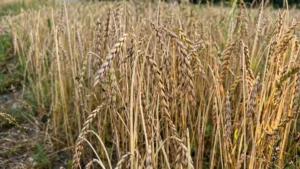
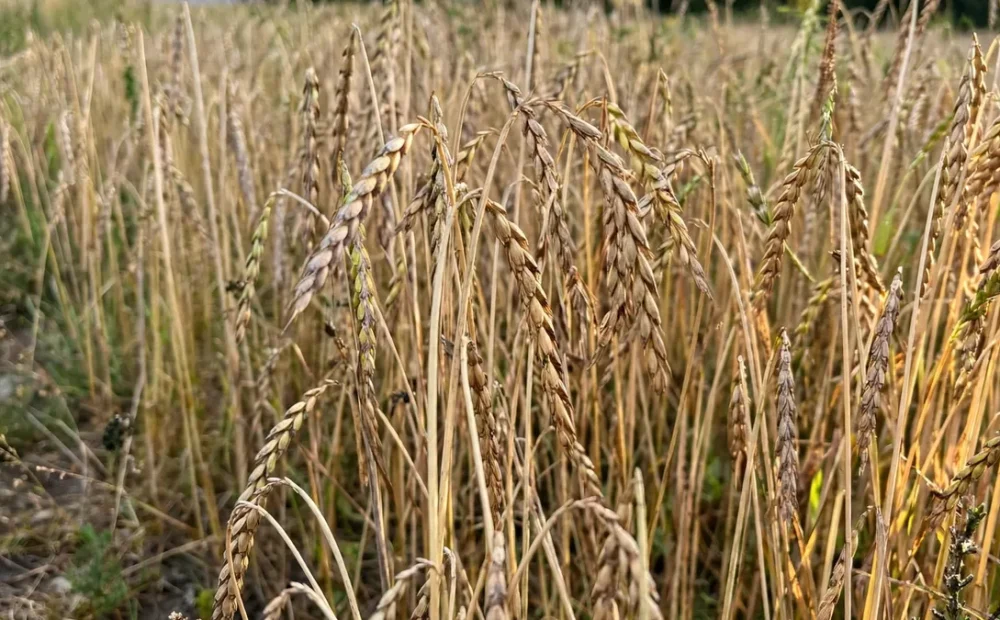
Linen is woven from the fibres of the flax plant, Linum usitatissimum, one of the oldest cultivated textile plants in the world. Turning flax into yarn is slow, labour-intensive work, and that is the first reason for the price. The plant has to be pulled from the soil with its roots attached, not cut, because cutting loses the bottom of the fibre — and fibre length is exactly what makes premium linen smooth and long-lasting. The stalks are then retted in the field for two to three weeks while dew and sun break down the woody stem, before the fibres are separated, spun, and woven.
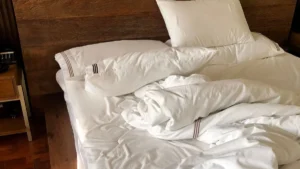
Most of the world’s premium flax grows in a narrow coastal strip running from northern France through Belgium into the Netherlands, where the mild, wet climate produces long, fine fibres. Roughly three-quarters of the world’s long flax fibre comes from those three countries, according to the European flax industry’s 2025 reporting, processed by workers paid Western European wages — that is the supply chain, and it is priced in. The fibre is long, strong, and hollow, so air moves through the weave and moisture is drawn away from the skin. Real linen shows its character at once: visible texture, soft creases, a slightly uneven surface called slub, and a relaxed drape no other sheet fabric copies. It looks undone on purpose, and in 2027 that undone look is why it sits at the centre of the relaxed, quiet-luxury bedroom — the mood our guide to what quiet luxury home decor means describes, where quality shows in materials rather than ornament.
The feel that only gets better
Here is the argument that matters most, because it is the one you live with every night. Linen softens with every wash. After about twenty washes, a quality set develops the buttery, lived-in drape that linen lovers chase. It keeps softening for years. Cotton, by contrast, starts soft and slowly thins, pills, and loses its finish. They trade places over time: cotton wins night one, linen wins year three, and by year five it is not close.
Linen has a visible slub, a slightly uneven surface, and a weight in the hand that reads as substantial rather than silky. Some sleepers love that dry, textured feel immediately; others need a month to convert. Stonewashing and garment-washing exist precisely for the second group, and they are worth paying for: they take the edge off the break-in period without weakening the fabric. If you are buying linen for the first time, a washed finish is the single best upgrade you can choose.
The temperature case
If you sleep hot, linen is the strongest argument in bedding, and it is not a marginal difference. The hollow flax fibre and the open weave let air move through the fabric, and linen absorbs moisture without feeling damp, releasing it as the night goes on. In a warm room, that keeps the air around your body noticeably drier and cooler. Hot sleepers are the most likely to become converts, and the least likely to go back.
It also works in winter: the same hollow fibre traps a little air, and heavier linen — around 190 grams per square metre or more — feels warm under a duvet. It will not fix a hot mattress or a room with no airflow, but it removes the sheet itself as a source of heat and dampness, and if you wake up sweaty, the sheet is the cheapest variable to change.
The durability and cost-per-use case
Now the maths, because this is where linen stops looking expensive. A quality linen set commonly lasts ten to twenty years with normal care; good cotton sheets usually last three to seven years. Flax fibre is roughly 30% stronger than cotton fibre, and unlike cotton it is actually stronger wet than dry. Linen’s one durability weakness is worth knowing: it is woven more loosely, so a sharp toenail or a pet claw can snag it more easily than tightly woven cotton percale.
Run the numbers on a mid-range purchase. A $360 linen set that lasts twelve years costs about 8 cents a night; a $180 cotton set replaced every four years costs about 12 cents a night. Stretch the linen to fifteen or twenty years, which good sets routinely manage, and the gap widens further. Linen does not just last, it stays attractive: the wrinkles read as intentional, and a ten-year-old set looks broken in and still beautiful, where ten-year-old cotton mostly looks tired.
What the price actually buys
Not all linen is equal: a queen set can cost $140 or $1,500, both labelled 100% linen. What you are paying for, in rough order, is the origin of the flax, the weight of the fabric, the finish, and the certification behind the claims. European flax costs more because it is better fibre, grown in the right climate and processed slowly. Fabric weight, in grams per square metre, tells you more than any thread count: around 150 gsm feels airy, 170 to 190 gsm is the versatile middle ground, and above 220 gsm feels substantial and warm.
Certifications help, but read them properly. European Flax, now also known as Masters of Flax Fibre, traces the fibre to its growing region. OEKO-TEX Standard 100 tests for harmful substances. GOTS covers organic textiles and their processing. None of them guarantees softness, and none replaces touching the fabric or checking the returns policy. Our roundup of the best linen bedding sets for 2027 covers nine specific sets across these tiers.
| Linen tier | Typical queen price | Weight | Feel on night one | Best for |
|---|---|---|---|---|
| Entry European flax | $140–$200 | About 150 gsm | Crisp and light | Hot sleepers on a budget |
| Mid-range garment-washed | $200–$350 | 155–190 gsm | Soft from early use | Most first-time buyers |
| Premium Belgian or French flax | $350–$600 | 170–200 gsm | Substantial, smooths with washing | Long-term buyers |
| Heavyweight or heritage | $500–$900 | 220–260 gsm | Weighty and warm | Cold rooms, heirloom buyers |
| Certified organic (GOTS) | $300–$600 | 160–190 gsm | Similar to mid-range | Chemically sensitive buyers |
| Stonewashed | $250–$450 | 160–190 gsm | Softest on night one | Buyers who hate breaking in |
| Linen-cotton blend | $120–$250 | Varies | Softer night one, less durable | Wrinkle-averse buyers |
| Open-stock luxury | $900–$1,500 | About 190 gsm | Finest finish, hemstitched | No-compromise buyers |
A quick checklist before you buy:
- The label says 100% flax — not a blend, unless you chose one deliberately.
- The flax origin is named — European, Belgian, French, or Lithuanian — not just “imported”.
- The finish is pre-washed, stonewashed, or garment-washed.
- The weight is stated — 150 to 190 gsm suits most sleepers.
- A certification is named: European Flax, OEKO-TEX Standard 100, or GOTS.
- The return window covers two washes and a fortnight of sleep.
Two warnings from the fine print. Linen shrinks around 4 to 8% on the first wash unless pre-shrunk, so check the fitted sheet depth against your mattress. Wash cool or warm, skip fabric softener, and line dry when you can.
Frequently asked questions
Are linen sheets worth the money?
In my view, yes — if you keep them for years. A mid-range linen set costs two to three times more than a comparable cotton set but commonly lasts ten to twenty years, so the cost per night often ends up lower. If you replace bedding every couple of years, it is harder to justify.
How long do linen sheets last?
A quality set commonly lasts ten to twenty years with normal care. Wash cool or warm, avoid harsh bleach, and keep pet claws trimmed, since the open weave can snag.
Do linen sheets get softer?
Yes, and this is the defining quality of the fabric. Linen softens dramatically over the first ten to twenty washes and keeps softening for years, which is the opposite of most bedding. Stonewashed sets start much softer.
Are linen sheets good for hot sleepers?
They are one of the best options available. The hollow flax fibre and open weave let air move through the fabric, and linen absorbs moisture without feeling damp. For hot sleepers, it is the most effective sheet change you can make.
Why do linen sheets wrinkle so much?
Because the fibre has almost no natural elasticity, so creases set where the fabric folds. It is a property of flax, not a defect, and it is why linen always looks relaxed rather than pressed. If crisp, smooth bedding matters to you, linen will frustrate you.
What should I look for when buying linen sheets in 2027?
Look for 100% flax with a named European origin, a stated weight of 150 to 190 grams per square metre, and a washed finish. Check for European Flax, OEKO-TEX, or GOTS certification, and buy where the return window covers two washes. If you are weighing linen against silk instead, our guide to buying silk bedding explains how the two fabrics differ in feel, care, and cost.
Linen is worth it for the same reason it always has been: it is one of the few bedroom purchases that gets better the longer you own it. The feel improves, the cost per night falls, and the look settles into something relaxed that no pressed cotton sheet can copy. Once you have slept on a broken-in set, the price stops looking like a luxury and starts looking like common sense.
It is not for everyone. If you want sheets that feel perfect on night one and cost very little, buy good cotton and enjoy it. But if you sleep hot, if you keep things for a decade, and if you would rather own one set that improves than three sets that wear out, linen is worth every cent of its asking price.
Note: Prices, weights, and lifespans cited here are ranges from published 2026 buying guides and textile references, and they can change with sales, sizes, and sellers. Check the label, the stated fabric weight, and the retailer’s returns policy before buying.