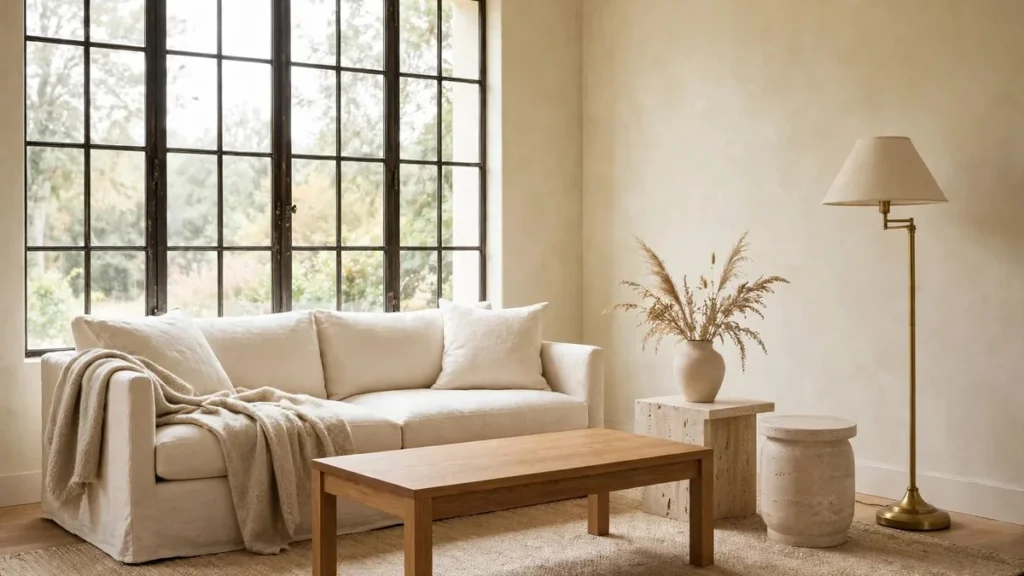
Walk into a quietly luxurious home and nothing shouts at you: no oversized logo, no glittering chandelier, no piece screaming about what it cost. Instead, the room feels calm, warm and quietly confident. The sofa invites you to sit down, the light is soft, everything you touch feels honest and well made.
That feeling is the whole point of quiet luxury home decor: quality over quantity, craftsmanship over branding, comfort over display. It grew out of fashion, where understated, beautifully made clothing became known as stealth wealth, but in the home it has older roots: fewer things, better materials, rooms to live in.
In 2027, quiet luxury is maturing rather than fading, as cool greys give way to warmer neutrals, richer textures and more personal, collected spaces. This guide explains what the style really is, how it differs from minimalism and old-money style, and how to bring it into your own home without overspending.
Key takeaways
- Quiet luxury is restraint with warmth: fewer, better pieces in natural materials, not empty rooms or showy wealth.
- The palette is warm and tonal: cream, oatmeal, taupe, mushroom and chocolate, with one deeper shade to ground it.
- Materials carry the room: linen, wool, solid oak or walnut, honed stone, plaster and unlacquered brass.
- Lighting should be layered and dimmable, with warm lamps doing more work than one overhead fixture.
- Start with one anchor piece per room, edit ruthlessly, and let a home look collected over time.
What Quiet Luxury Home Decor Actually Means
Quiet luxury home decor is the art of looking expensive without trying to. The luxury sits in the quality of the materials and the care of the details, not in anything that announces itself. A hand-thrown ceramic bowl, a solid oak table, a wool rug thick underfoot: these are the signals, and nothing needs a label to prove its worth.
Three values sit at its heart: quality over quantity (fewer objects, each well made and chosen on purpose), material honesty (real wood, stone, wool, linen, leather and metal, which age gracefully and gain patina), and comfort (rooms meant to be used, not admired from the doorway). It is not minimalism, which can feel cold and gallery-like, nor old-money style, which leans on heritage and formality. Nor is it simply beige: one flat shade of greige is unfinished, not luxurious.
The Quiet Luxury Palette: Warm Neutrals That Work in 2027
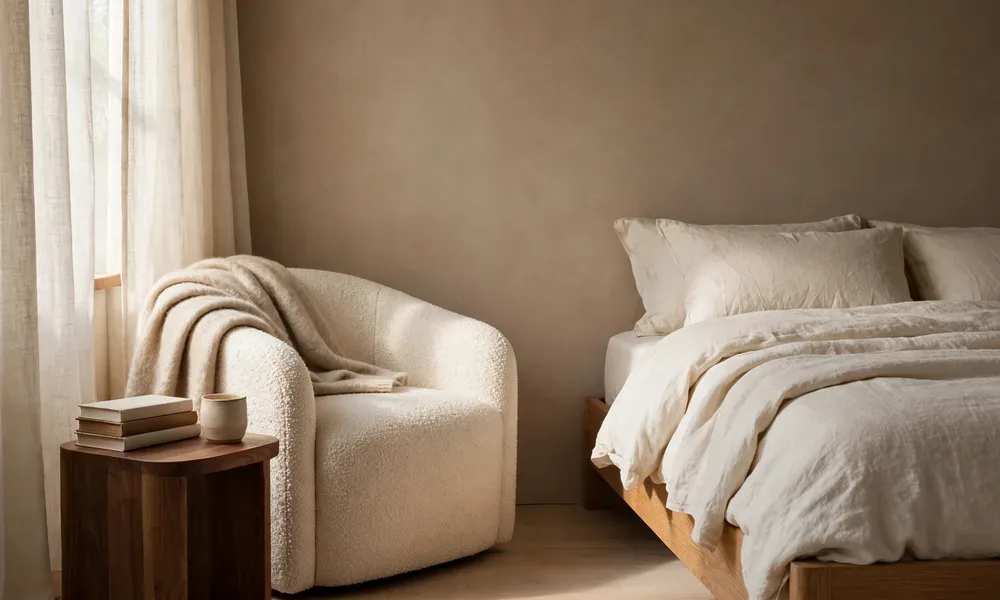
The change defining 2027 is the move from cool grey to warm neutral. Designers are leaving grey-on-grey schemes and stark, blue-toned whites behind, for colours drawn from nature: clay, oatmeal, mushroom, soft ochre, camel and deep olive. The palette is tonal, layering five or six shades of one warm family, from pale cream to deep espresso, instead of one bold pop of colour.
A useful guide is the sixty-thirty-ten rule: about sixty percent base (warm white, ivory or pale greige on walls and large surfaces), thirty percent secondary layer (oatmeal, sand, taupe or light camel in upholstery, rugs and wood), and ten percent depth (chocolate brown, cognac leather, espresso wood, charcoal or muted olive in a single chair, cushion or piece of art). That small share of darkness keeps a pale room from looking washed out.
Materials That Do the Talking
With a restrained palette, materials carry the whole design. Aim for at least five distinct textures visible in any room: a smooth plaster wall, a nubby wool rug, a chunky knitted throw, a honed stone tray, a brass lamp base. Texture stops a neutral room from feeling flat, and it is the fastest way to make a space feel expensive without adding a single object.
The material canon is short: heavyweight linen, wool, cotton, bouclé and cashmere; solid oak or walnut with a matte or oiled finish; honed marble, travertine or limestone; limewash or clay plaster; and matte metals that age, such as unlacquered brass. Leather softens, brass gains patina, wood deepens, stone wears in rather than out. Skip high-gloss lacquer, plastic-looking velvet and mirrored furniture: they shout rather than whisper. A single travertine tray or a secondhand oak side table brings the right texture for very little.
Furniture: Fewer Pieces, Better Pieces
Quiet luxury furniture is simple, substantial and classic enough to look right in five years: tailored sofas, solid wood dining tables, well-proportioned lounge chairs, beds with upholstered headboards in natural fabric. Curves are welcome in 2027, from a rounded sofa back to a kidney-shaped coffee table, because they soften a room more than hard geometry alone.
Furnish one anchor piece first and build around it: the sofa, the bed, the dining table. Choose it for comfort and craftsmanship, then add pieces slowly, mixing new and vintage so the room feels collected rather than matched. Mind scale, too: a rug should be large enough for the front legs of every seat to land on it. And keep storage honest, since a calm room needs somewhere for clutter to go. Our guide on how to organize your closet in 2027 covers the same edited, everything-in-its-place thinking.
Lighting: The Layer That Makes It Feel Expensive
Ask designers what makes a room feel expensive, and many will say lighting. Quiet luxury lighting is layered, dimmable and warm, with at least three sources in every room: ambient light from the ceiling, task light from reading lamps, and accent light from picture lights and sconces. No single overhead fixture should do all the work.
Warmth matters more than brightness: warm bulbs make wood glow and linen look soft, while cool white light makes beautiful materials feel clinical. Put dimmers on as many lights as you can, so a room shifts from bright in the morning to low and restful in the evening. Fixtures should be sculptural but restrained: a linen-shaded lamp, a brass sconce, a plaster pendant. Sheer linen curtains layered over blackout blinds soften daylight and frame a view.
Quiet Luxury Room by Room
In the living room, start with a comfortable sofa in natural fabric, a solid wood coffee table and a large wool or jute rug. Add one sculptural lamp, one piece of art you genuinely love and a few books, then stop. The test is that you can sit in it for an evening without noticing the decor at all. Our look at celebrity home decor in 2027 shows the same principles at work in real homes.
In the bedroom, prioritise rest and softness: linen bedding in tonal shades, a wool throw, a dimmable bedside lamp and natural fibres. The bathroom should borrow from a spa: honed stone, a wooden stool, folded cotton towels, one beautiful soap dish. In kitchens and dining rooms, a walnut table, linen napkins, ceramic plates, a stone worktop and unlacquered brass taps are quietly luxurious without trying.
Quiet Luxury vs. Minimalism vs. Old Money
The three styles are often confused. Quiet luxury borrows the editing of minimalism and some heritage from old-money style, but is warmer than the first and more relaxed than the second.
| Element | Quiet Luxury | Minimalism | Old Money |
|---|---|---|---|
| Palette | Warm neutrals: cream, oatmeal, camel, taupe, chocolate | White, grey, black, pale wood | Warm neutrals, deep green, navy, oxblood |
| Materials | Linen, wool, oak, walnut, honed stone, brass | Concrete, glass, steel, pale wood | Mahogany, silk, marble, gilt, leather |
| Furniture | Tailored, comfortable, classic silhouettes | Low, sparse, highly geometric | Antique, formal, inherited pieces |
| Feeling | Calm, warm, inviting, lived-in | Calm, cool, gallery-like, spare | Formal, grand, traditional, storied |
| Decor | Few meaningful objects, books, ceramics | Almost none, surfaces kept clear | Portraits, heirlooms, collections |
| Lighting | Layered, warm, dimmable lamps | Recessed, architectural, minimal | Chandeliers, candlesticks, sconces |
| Attitude to trends | Timeless, slow, collected over time | Rejects trends entirely | Ignores trends, values heritage |
| Budget approach | Invest in anchors, save on layers | Own very little, buy rarely | Inherit, restore, buy once |
What to Avoid: The Mistakes That Break the Look
The first mistake is buying everything at once: a room furnished in a single weekend looks new rather than collected. The second is matching too much: a sofa, chairs, cushions and curtains all in the same shade of beige look flat, not calm. Contrast in texture is what makes tonal colour work, so mix smooth with nubby, matte with shine, light with dark.
A Quiet Luxury Checklist
Before buying anything new, walk through your room with this checklist.
- Limit the room to three or four tonal colours; remove anything that breaks the palette.
- Count the textures you can see: aim for at least five, from wool and linen to wood, stone and brass.
- Check the lighting: a lamp or sconce for the evening, and a main light that dims.
- Choose one anchor piece per room; let everything else support it.
- Leave breathing space: clear one surface completely and feel the calm.
- Add one personal object, such as a vintage find or handmade ceramic, so the room tells your story.
How to Start on a Realistic Budget
Quiet luxury has a reputation for being expensive, but the style is about decisions, not spending. Start with what costs nothing: edit. Remove a third of what is on your surfaces, take down anything you do not love, and give what remains space around it. A room feels far calmer after a ruthless edit.
Next, spend where it shows. Paint is the cheapest transformation in any home, and a warm, chalky shade changes a room’s whole mood. A large rug, good curtains hung high and wide, and one beautiful lamp beat a dozen accessories. Buy secondhand where quality matters most: solid wood furniture, leather chairs and wool rugs are better bought used and well made than new and flimsy.
Frequently Asked Questions
What is quiet luxury home decor?
An understated style built on quality materials, warm neutrals and careful editing. Rooms use linen, wool, solid wood, honed stone and brass, with few objects and no visible branding. The luxury is felt in comfort and craftsmanship, not displayed through logos.
Is quiet luxury still popular in 2027?
Yes, but it is maturing: in 2027 the style is warmer, more layered and more personal, with earthier colours such as chocolate brown and deep green joining the classic cream palette. Fast, disposable decor and grey-on-grey rooms are fading; natural materials are gaining ground.
What colours are used in quiet luxury decor?
Warm neutrals — cream, ivory, oatmeal, sand, taupe, mushroom, camel — layered tonally from pale to deep. One darker shade, such as chocolate brown or charcoal, grounds the room. Deeper accents like oxblood or deep green can be added sparingly through art or upholstery.
How is quiet luxury different from minimalism?
Minimalism aims for spareness and can feel cool and gallery-like. Quiet luxury shares the edited eye but adds warmth, texture and comfort: layered textiles, soft lighting and rooms that invite you to stay. A quietly luxurious room is calm but never stark.
Can I create a quiet luxury look on a small budget?
Yes. Edit what you already own first, then spend on paint, a large rug, good curtains and one beautiful lamp. Buy solid wood furniture and wool rugs secondhand, choose one anchor piece to invest in, and add layers slowly. The style rewards patience more than spending.
What should I avoid in quiet luxury decor?
Avoid logos and anything designed to show off what it cost. Avoid matching everything in one flat shade of beige, buying a whole room at once, and shiny synthetic materials such as high-gloss lacquer. Also avoid a rug that is too small and a single harsh overhead light.
The Bottom Line
Quiet luxury home decor is not a trend to buy into; it is a discipline to practise. Fewer, better pieces. Warm, tonal colour. Natural materials that age gracefully. Layered, dimmable light. Rooms that feel calm, comfortable and personal rather than staged. In 2027 the style is becoming more individual, and the best homes reflect the people living in them. True luxury is felt, not announced, which is why the best luxury hotels in Paris in 2027 feel so restful the moment you walk in.
The goal is not a perfect room. It is a room that feels like a deep breath at the end of a long day, where the light is kind and nothing is asking for your attention. Start small: edit one room, choose one anchor piece, test one warm shade of paint, and let the rest follow slowly.
Note: Quiet luxury is a matter of taste and proportion, not fixed rules. Use this guide as a starting point, trust your own eye, and choose pieces you genuinely love and will keep for years.