Choosing a wedding guest dress should feel exciting, not stressful, yet most of us have wondered whether a dress is too formal, too casual, or too close to white. A wedding has its own unspoken rules, and the dress you choose is how you show respect for the couple, the setting, and the day itself, while still looking and feeling like yourself.
The good news is that the decision is simpler than it first looks. Once you know the dress code, the season, and the venue, almost every other choice falls into place. The colour, the fabric, the length, and the shoes all follow from those three facts, and a dress that fits the occasion will feel comfortable all day.
This guide walks through the process in order, from reading the invitation to the final checks before you leave the house. It covers dress codes, the colours to avoid and the ones that always work, fabrics for every season, and the small practical details, such as shoes for grass and layers for cool evenings, that make a long day comfortable.
Key takeaways
- Start with the dress code on the invitation, then adjust for the season, the time of day, and the venue.
- Never wear white, ivory, cream, or anything that photographs white, and avoid matching the wedding party exactly.
- Choose the fabric for the season: chiffon, linen, and cotton for warm weather, and velvet, crepe, and heavier satin for cold weather.
- When in doubt, dress slightly up rather than down, and choose a midi length, which suits more dress codes than any other.
- Comfort is part of the look: shoes you can stand in, a layer for the evening, and a dress you can move in.
Start With the Dress Code on the Invitation
The invitation is your best source of information, and it usually tells you exactly what the couple expects. Look for the dress code first, and if there is no code printed, check the couple’s wedding website, which often carries the same guidance in more detail. The venue and the time of day are useful clues too.
Black tie calls for a floor-length gown in a polished fabric such as satin, chiffon, or crepe, with elegant jewellery and a small clutch. Formal, or black tie optional, is a step down: a long gown or a very elegant midi dress both work. Cocktail is the most common wedding dress code, and the most flexible: a knee-length or midi dress in a dressy fabric is right, whether that is a satin slip dress, a structured A-line, or a softly draped style. Semi-formal allows a polished midi dress or dressy separates, while garden, daytime, and beach codes are the most relaxed. When no code is given, a midi dress in a jewel tone or a soft pastel, with dressy shoes and a small bag, is a safe choice. See our round-up of the best wedding guest dresses for 2027.
Choose a Colour That Flatters You and Respects the Couple

Colour is where most wedding guest worries begin, and the central rule is simple: do not wear white, ivory, cream, or anything that reads as bridal. That rule extends further than many people expect. Very pale champagne, light silver, and blush shades that photograph white all carry the same risk, and photographs are where the problem usually shows up.
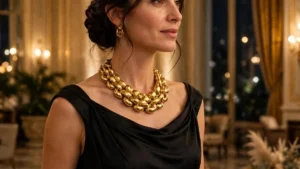
Black, once considered off-limits, is now widely accepted at evening and formal weddings, especially black tie. For a daytime wedding, black can feel heavy, so soften it with colourful accessories or choose a deep jewel tone instead. In some cultures, black is linked to mourning and red is the bride’s colour, so ask before choosing either colour at a wedding in an unfamiliar tradition. The safest territory is jewel tones and soft, grounded colours: emerald, sapphire, burgundy, plum, navy, dusty blue, sage, and terracotta photograph well and are unmistakably not bridal.
Dress for the Season, Not Just the Day
The same dress code means different things in July and January, and the fabric matters more than the silhouette. In spring, pastels, soft florals, and light fabrics such as chiffon, cotton, and georgette suit the season, but bring a layer, because spring evenings often turn cool again. Summer calls for fabric that moves and breathes: chiffon, linen blends, and cotton voile keep you cool through a long outdoor ceremony, while heavy satin can show sweat. Our guide to the best summer dresses for 2027 is a useful place to start.
Autumn is often called the easiest season to dress for: jewel tones, a midi length, a sleeve, and a coat that clears the hem make a reliable formula, with velvet for warmth and satin for polish. Winter asks for the richest fabrics of all, velvet, wool crepe, and heavier satin, in dark colours such as burgundy, navy, and forest green, with metallics as an accent rather than a full outfit. Bring a proper coat you are happy to be photographed in.
| Season | Colours that tend to fit | Fabrics to choose | Practical tip |
|---|---|---|---|
| Spring | Pastels, soft florals, dusty blue, sage | Chiffon, cotton, georgette | Bring a layer for cool evenings |
| Summer | Brights, coral, cobalt, emerald | Linen blends, cotton voile, chiffon | Choose breathable, forgiving shapes |
| Autumn | Burgundy, plum, rust, forest green | Velvet, satin, crepe, jacquard | Add a sleeve and a coat |
| Winter | Deep jewel tones, navy, metallics | Velvet, wool crepe, heavy satin | Wear a proper coat for photos outside |
| Garden or daytime | Florals, pastels, sage | Chiffon, cotton blends | Block heels work best on grass |
| Beach | Coral, aqua, bright prints | Linen, light chiffon | Flat sandals and wind-friendly lengths |
| Evening or formal | Black, plum, ruby, navy | Satin, crepe, velvet | Keep jewellery to one focal point |
| Church or religious ceremony | Muted tones, solid colours | Any, with covered shoulders | Pack a shawl or cropped jacket |
Match the Dress to the Venue
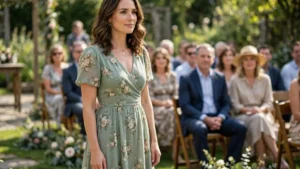
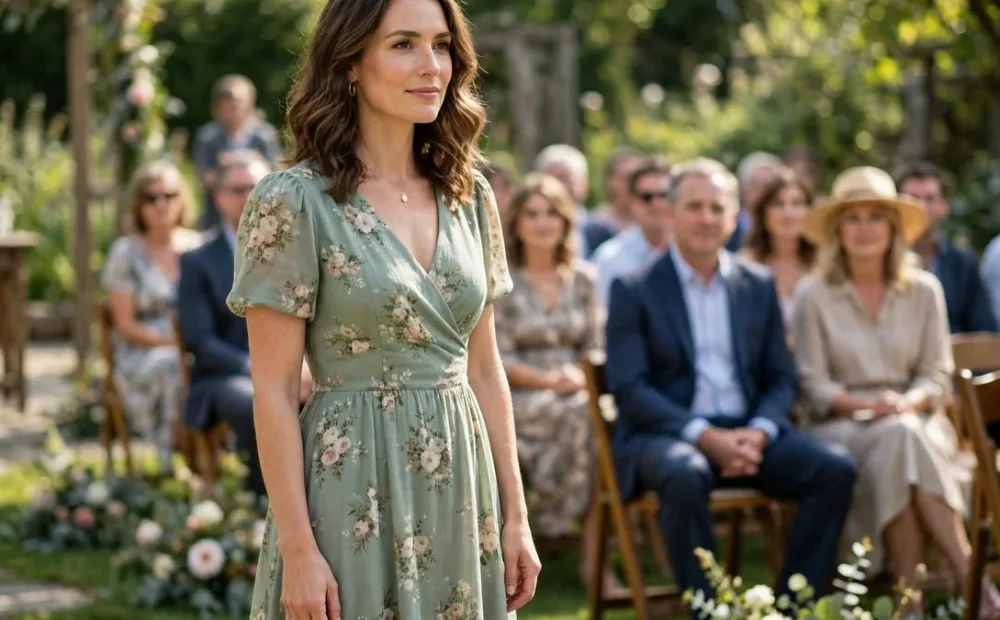
The venue changes the answer as much as the dress code does. A ballroom or a hotel usually sits at the dressiest end of the stated code, with hard floors that suit heels. A garden, vineyard, or lawn wedding is lighter in every way: lighter colours and fabrics, floral prints welcome, and shoes that can handle grass. A stiletto sinks into a lawn, while a block heel, a wedge, or a dressy flat does not,
A beach ceremony calls for light, flowing fabric in a midi or maxi length, with flat sandals and a style that moves well in the wind. A city hall wedding is usually semi-formal or cocktail, and a smart midi dress with simple accessories fits the scale of the occasion. A church or other religious ceremony sometimes expects covered shoulders, so pack a shawl, a wrap, or a cropped jacket you can wear for the ceremony and remove for the reception.
Find a Silhouette That Suits You and the Occasion
Once the code, colour, and season are settled, the silhouette is about fit, comfort, and proportion. The midi dress is the most versatile wedding guest length there is: it suits cocktail, semi-formal, garden, and many formal weddings, it works in every season with the right fabric. A wrap dress flatters most body shapes because the tie waist defines the waist without clinging, and it is easy to adjust through the day. An A-line dress skims the body and moves well.
For 2027, the defining guest silhouettes are draped midi dresses in satin or crepe, sleek column dresses for formal and black tie optional weddings, and long-sleeve maxi dresses for autumn and winter. Delicate lace adds a romantic touch for spring and summer. A tailored jumpsuit is a polished alternative to a dress at city and evening weddings, Fit matters more than fashion: try the dress sitting down as well as standing up, check that the neckline stays comfortable when you lean forward, and make sure the hem does not ride up when you walk. A proper slip keeps the line smooth on fluid fabrics.
Finish the Look With Shoes, Accessories, and a Layer
Shoes decide whether you enjoy the day, so choose them with the venue in mind. Block heels or wedges are the safe choice for outdoor venues, since stilettos sink into lawns, while elegant heels or embellished flats suit indoor venues with hard floors. Comfort matters more than height: if you cannot stand in the shoes for several hours, choose a lower heel or a dressy flat, See our guide to the best wedding shoes for heel shapes and comfort.
Accessories should support the dress, not compete with it. One focal point is enough: a statement necklace, dramatic earrings, or a wide cuff, with everything else kept simple. A small clutch or a structured mini bag is more practical than a large tote, and it keeps the look polished in photographs. Bring a coat, wrap, or cropped jacket you are happy to wear in photographs.
Mistakes to Avoid as a Wedding Guest
The most common wedding guest mistakes are easy to avoid once you know them. Wearing white or anything close to it is the first, and the one guests are most often remembered for, so check your dress in a photograph before the day, not just in the mirror. Overdressing is the second: a floor-length gown at a cocktail wedding, or heavy sequins at a daytime garden wedding, pulls the eye in every photograph. Underdressing, such as denim or trainers, is the third, and it is just as noticeable.
Your Wedding Guest Dress Checklist
- Read the invitation and the wedding website for the dress code,
- Check the colour in a photograph: avoid white, ivory, cream, and anything that reads white under flash.
- Match the fabric to the season and the venue, with a layer ready.
- Choose shoes for the surface you will walk on, and wear them in before the day.
- Try the dress sitting, standing, and walking, and arrange any hemming or alterations in good time.
- Pack the finishing touches: a small bag, a wrap or coat, and comfortable shoes for dancing.
Frequently Asked Questions
Can I wear black to a wedding?
Yes, in most cases. Black is widely accepted at evening and formal weddings, especially black tie, where a black gown looks entirely appropriate. For a daytime wedding, black can feel heavy, so choose a deep jewel tone instead.
Can I wear red to a wedding?
Red is welcome at many weddings, and rich reds and burgundy are among the most popular guest colours for formal and evening celebrations in 2027. In some cultures, though, red is the bride’s colour, so check first.
What length should a wedding guest dress be?
It depends on the dress code. Black tie calls for floor length, formal and black tie optional suit a long gown or a very elegant midi, cocktail and semi-formal suit knee length or midi, and garden, beach, and daytime weddings suit midi or maxi lengths in light fabrics.
What should I wear to a summer wedding?
Choose a breathable fabric such as chiffon, a linen blend, or cotton voile, in a bright or pastel colour, with a midi or maxi length that moves well. A breezy sundress, a floral midi, or a flowing maxi all work for outdoor venues.
What should I wear to a winter wedding?
Choose a richer fabric such as velvet, wool crepe, or heavier satin, in a deep colour such as burgundy, navy, or forest green, with long sleeves if you like them. A long-sleeve midi or a velvet gown works well, with closed-toe heels or heeled boots,
Can I wear a jumpsuit to a wedding?
Yes, a tailored jumpsuit in a dressy fabric is a polished alternative to a dress, particularly at city and evening weddings. Choose a clean cut, a dressy fabric such as crepe or satin, and elegant shoes and accessories,
The Bottom Line
Choosing a wedding guest dress comes down to three questions: what does the invitation ask for, what season and venue are you dressing for, and what will you feel comfortable in from the ceremony to the last dance. Answer those three and avoid white, and the rest will follow naturally. The best guest dress is the one that lets you celebrate without thinking about your outfit.
Try the dress properly, check it in a photograph, wear the shoes in, and pack a layer for the evening. A little planning means you can relax and enjoy the day.
Note: Dress codes and customs vary between families, cultures, and venues, so if you are ever unsure about a colour or a level of formality, a quick message to the couple is always better than guessing.