Why Silk Blouses Are Worth the Price
A silk blouse is one of those pieces that stops you in a shop. The fabric catches the light as you lift it from the rail, and it slips through your fingers like water. Then you turn over the price tag and pause. It costs several times more than a similar blouse in polyester. Is it really worth it?
The honest answer is that a good silk blouse is worth its price for many women, but not for every wardrobe. The value comes from real things you can feel: the way mulberry silk drapes, breathes and holds colour, and the slow work behind every metre of fabric. A well-made blouse can also look beautiful for years when it is cared for properly.
This guide explains where the money goes, what silk gives you that cheaper fabrics cannot, and how to tell a good blouse from an overpriced imitation. By the end, you will know whether a silk blouse deserves a place in your wardrobe in 2027, and what to check before you buy.
Key takeaways
- Mulberry silk, made by silkworms fed only on mulberry leaves, is the benchmark for blouse fabric.
- The high price reflects slow, labour-intensive production: thousands of cocoons, careful reeling, grading, weaving and skilled garment-making.
- A silk blouse earns its price through comfort and versatility: it breathes in warm weather, layers neatly in cooler weather, and moves from office to evening with ease.
- Check the label, the weave, the seams and the hand-feel before you buy, and be wary of vague terms such as silky, which usually signal a synthetic fabric.
- With gentle washing or dry cleaning and careful storage, a quality silk blouse can stay beautiful for many years.
What Makes a Silk Blouse Different
Silk is a natural protein fibre, and that explains most of what makes a silk blouse feel different. The fibre, called fibroin, is produced by the domesticated silkworm, Bombyx mori, as one long, continuous filament. Because the filament is so fine and smooth, woven silk has almost no surface roughness.
The best blouse silk is mulberry silk. These silkworms eat only mulberry leaves, and the controlled diet produces fibres that are long, even and consistent. Mulberry silk accounts for more than nine in ten of the silk produced commercially.
The weave matters just as much as the fibre. Charmeuse is the classic blouse weave, glossy on the face and matte on the back, with a fluid drape. Our guide to the best silk blouses for 2027 shows how different cuts and weaves work across the seasons.
How Silk Is Made, From Leaf to Blouse
Understanding why silk costs more starts with how it is made. The process, called sericulture, has changed very little in thousands of years and still depends on patient hand work. It begins with white mulberry trees, grown specifically to feed silkworms.
When fully grown, the silkworm spins its cocoon over two or three days, secreting liquid fibroin that hardens into a single continuous thread. That thread can stretch to around 900 metres, yet it takes roughly two to three thousand cocoons to produce a single pound of raw silk. The cocoons are softened in hot water so the thread can be unwound, or reeled, without snapping.
After reeling comes grading, dyeing and weaving. Only a small share of raw silk reaches the top grades, so the finest fibre is genuinely scarce. Silk takes dye exceptionally well, which is why silk blouses so often have a deep, clear colour. Cutting and sewing silk demands real skill, too, because the fabric slips under the needle and frays easily.
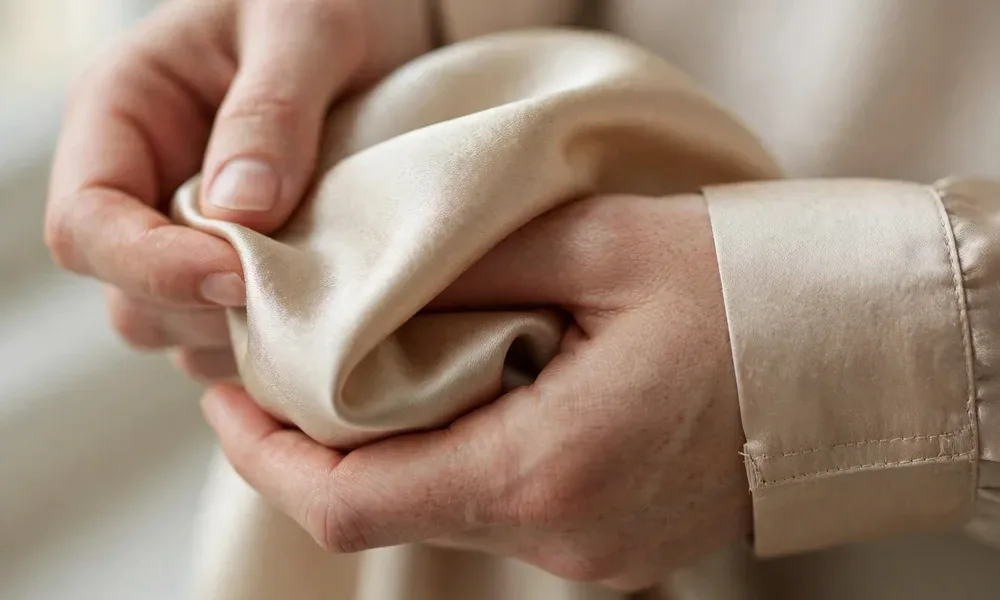
Why the Price Is Higher Than Other Blouses
The raw material itself is expensive, because mulberry cultivation, silkworm rearing and cocoon harvesting all need land, labour and careful timing. The yield per cocoon is small. One widely cited estimate is that around 140 kilograms of mulberry leaves are needed to produce a single kilogram of raw silk, which shows how much farming goes into every blouse.
Labour is the second large cost. Each stage, from feeding the worms several times a day to reeling the filaments and weaving the cloth, needs trained hands and close attention. Garment construction adds further cost, since silk is delicate to cut and sew
What You Actually Get for the Money
The first thing silk gives you is comfort. Silk breathes, so it feels cool against the skin in warm weather, and it adds a light layer of insulation when the temperature drops. That makes it unusually useful across the seasons. The smooth fibres are gentle on skin, which is one reason silk is so often chosen for pieces worn close to the body.
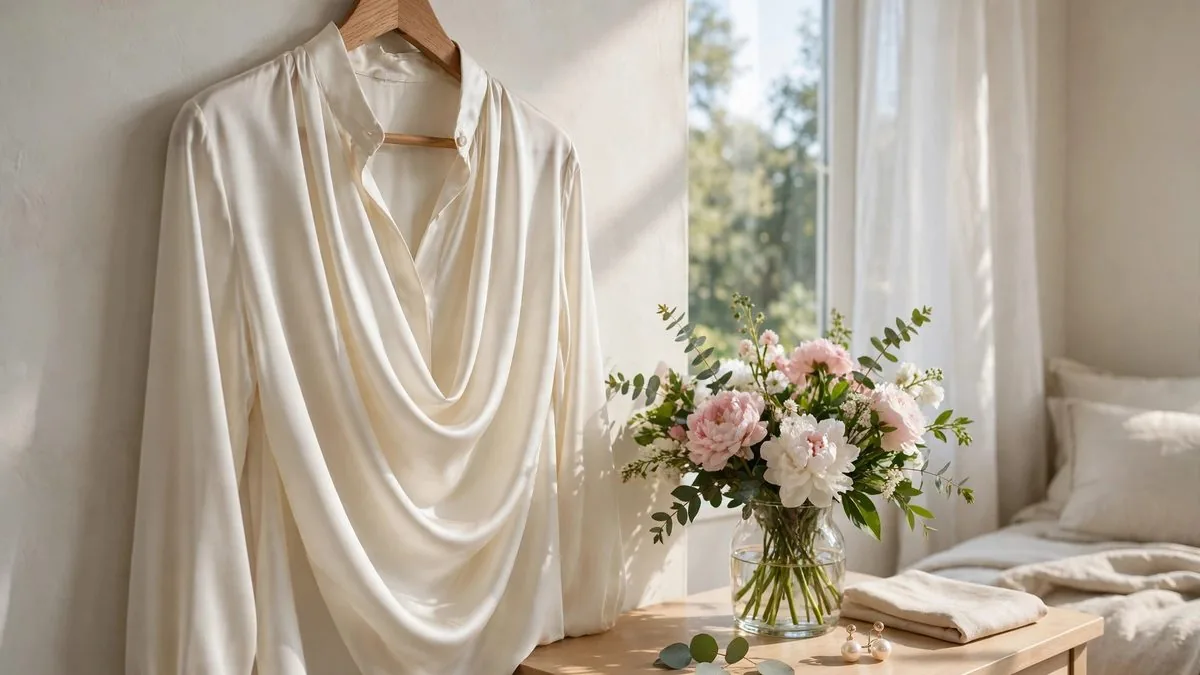
The second thing is drape and lustre. Silk falls in soft, fluid folds and reflects light with a gentle sheen, quite different from the flat shine of polyester satin. That quality makes a silk blouse look polished with very little effort: tucked into tailored trousers for work, worn loose over jeans at the weekend, or dressed up with a skirt and heels for dinner.
The third is colour. Silk absorbs dye deeply and evenly, so colours look rich and clear, from soft ivory and blush to deep emerald and navy. Finally, there is longevity. Silk is light but not weak, and a well-made blouse, cared for gently, can last for many years.
Silk pairs beautifully with other silk accessories, too. A blouse in a soft neutral becomes a complete outfit with a patterned scarf, and our guide to the best silk scarves for women in 2027 shows how to choose colours and prints that lift a simple blouse without overwhelming it.
How to Spot a Good Silk Blouse Before You Buy
Start with the label. It should state the fibre content clearly, ideally 100 percent silk or 100 percent mulberry silk, and it should give care instructions. If the label says silky, silk-like or silk touch without naming silk as the fibre, the blouse is almost certainly synthetic.
Next, feel the fabric. Genuine mulberry silk feels smooth and almost waxy-soft, with a subtle, even sheen on both sides. Polyester that imitates silk tends to feel slick, slightly stiff and prone to static. Hold the blouse up to the light and look for an even surface without streaks or thin patches.
Then inspect the construction. Seams should be straight, even and finished so the raw edges are enclosed, because silk frays easily and unfinished seams will not last. Check the fit, too, because silk has poor elasticity: if it stretches, it does not spring back, so a blouse that is tight across the bust or shoulders will sag over time.
The table below sums up the checks that matter most.
| What to check | Good sign | Warning sign |
|---|---|---|
| Fibre label | States 100% silk or 100% mulberry silk | Says silky, silk-like or silk touch |
| Hand-feel | Smooth, soft, almost waxy, cool to touch | Slick, stiff, static-prone surface |
| Sheen | Soft, even lustre on both sides | Patchy shine or dull, flat reverse |
| Weave | Even tension, no streaks or thin spots | Visible slubs, snags or uneven rows |
| Seams | Straight, enclosed, no fraying edges | Raw edges, puckering, loose threads |
| Fit | A little ease, clean drape, no pulling | Tight across bust or shoulders |
| Colour | Deep, clear, even dye throughout | Faded patches or uneven colour |
If a blouse passes most of these checks, it is probably a sound buy at its price. If it fails several, walk away, however pretty it looks on the hanger. Silk works beautifully with tailored trousers, a pencil skirt or dark denim, and for evenings, a flowing dress in a similar fabric is a lovely companion, as our guide to the best satin dresses for 2027 shows.
How to Care for a Silk Blouse So It Lasts
Care is where many silk blouses are lost, and it is also where the value of a good one is protected or wasted. If hand-washing is allowed, use cool water and a gentle detergent made for delicates. Swish the blouse softly without twisting or wringing it, rinse in cool water, then roll it in a towel to press out water and dry it flat, away from direct sunlight.
Heat is silk’s quiet enemy. Never tumble-dry a silk blouse, and iron it on a low setting, ideally from the reverse side or through a pressing cloth. Keep perfume, deodorant and hairspray away from the fabric, because they can mark or weaken it, and apply them before you dress.
Storage matters too. Hang a silk blouse on a padded hanger so the shoulders keep their shape, and give it space in the wardrobe so it is not crushed. Moths are fond of natural fibres, so keep the wardrobe clean and use cedar or lavender sachets rather than harsh chemical mothballs.
Your Silk Blouse Buying Checklist
- Read the label first and look for 100% silk or 100% mulberry silk with clear fibre content.
- Feel the fabric for a smooth, cool, almost waxy hand and an even sheen on both sides.
- Hold the blouse up to the light to check for streaks or uneven dye.
- Inspect the seams, hem, buttons and buttonholes for neat, enclosed finishing.
- Try it on and check the fit has a little ease, since silk does not spring back after stretching.
- Read the care label and be honest about whether you will hand-wash it or dry-clean it.
Frequently Asked Questions
Is a silk blouse worth the price?
For many women, yes, provided the blouse is genuine mulberry silk, well made and worn often. The value comes from comfort, drape, colour and longevity, and the cost per wear falls sharply when a blouse is worn weekly for years.
How can I tell if a blouse is real silk?
Check the label for 100% silk or 100% mulberry silk, feel the fabric for a smooth, cool, almost waxy hand, and look for a soft, even lustre on both sides. Synthetic imitations tend to feel slick and static-prone. A burn test on a spare thread can also help: real silk burns slowly and leaves a crushable ash, while polyester melts into a hard bead. Only test a loose thread, never the garment itself.
What is mulberry silk, and why is it the best for blouses?
Mulberry silk comes from Bombyx mori silkworms fed only on mulberry leaves. The controlled diet produces long, uniform, fine fibres that weave into smooth, strong, lustrous fabric with a beautiful drape. It accounts for more than 90% of commercial silk and is the only type routinely graded to the highest standards.
Do silk blouses wrinkle easily?
It depends on the weave. Charmeuse drapes fluidly and resists deep wrinkling, while crepe de Chine is the most forgiving silk weave and recovers well from creasing. Habotai and very fine silk can crease more readily.
Can I wash a silk blouse at home?
Many silk blouses can be hand-washed in cool water with a gentle detergent for delicates, but always follow the care label, because some are dry clean only. Never twist or wring silk, never tumble-dry it, and dry it flat or on a padded hanger away from direct sunlight.
How long should a good silk blouse last?
A well-made blouse in quality mulberry silk can last for many years, sometimes decades, with gentle care. Its lifespan depends on the fibre grade, the weave, the construction and how it is washed and stored.
The Bottom Line
A silk blouse is worth the price when three things are true: the fabric is genuine mulberry silk, the blouse is well cut and well finished, and you will wear it often enough and care for it gently enough for its cost per wear to fall. When any of them is missing, the money is better spent elsewhere.
So shop slowly, check the label, feel the fabric, inspect the seams and try the blouse on with the pieces you already own. Bought well and cared for well, a silk blouse is not an extravagance. It is one of the hardest-working, most quietly luxurious pieces a wardrobe can hold.
Note: Silk care and fibre guidance in this article reflects general textile knowledge; always follow the care label on your own blouse, and ask a professional cleaner for advice if you are unsure about washing or stain removal.