
If your skin stings when you try a new cream, turns red after a hot shower, or flares up for no obvious reason, you are not imagining it. Sensitive skin reacts more quickly and more strongly than other skin types, and the usual advice to try the latest serum or a ten-step routine only makes things worse. The good news is that sensitive skin does not need a complicated routine. It needs a calm one, built around a healthy skin barrier, gentle products, and patience.
The skin barrier is the outermost layer of your skin, a wall of skin cells held together by lipids such as ceramides, cholesterol, and fatty acids. When that wall is intact, it keeps moisture in and irritants out. When it is weakened by harsh cleansers, over-exfoliation, or fragrance, water escapes, irritants get in, and the result is stinging, redness, and dryness. Once the barrier recovers, much of the reactivity fades.
This guide shows you how to build a skincare routine for sensitive skin from the ground up: the three steps that matter, how to choose a gentle cleanser, moisturiser, and sunscreen, which ingredients help and which to avoid, how to patch test properly, and when to see a dermatologist. The routine here is deliberately simple.
Key takeaways
- A sensitive skin routine needs only three essentials: a gentle cleanser, a fragrance-free moisturiser, and a broad-spectrum sunscreen with SPF 30 or higher.
- Protect the skin barrier with ceramides, glycerin, hyaluronic acid, niacinamide, and panthenol, and avoid fragrance, drying alcohol, and harsh sulfates.
- Introduce only one new product at a time, patch test it for seven to ten days, and wait four weeks of calm skin before adding any active ingredient.
- Use lukewarm water, pat skin dry, and apply moisturiser to slightly damp skin to lock in hydration.
- See a dermatologist if redness, itching, or breakouts persist, spread, or keep returning despite a gentle routine.
What sensitive skin really means
Sensitive skin is not a medical diagnosis on its own. It describes skin that reacts easily to products, weather, water temperature, or friction with stinging, burning, redness, tightness, or itching. Some people are born with naturally reactive skin. Others develop sensitivity after overusing exfoliating acids, retinoids, or strong cleansers, or alongside conditions such as eczema or rosacea. Irritation is usually a matter of dose, while an allergy reacts to a specific ingredient every time, so stop any product that causes the same reaction on every use.
The common thread is the skin barrier. Research has found that transepidermal water loss, the rate at which moisture escapes through the skin, is higher in sensitive skin. That is why a product that feels fine on someone else can sting on you within seconds, and why the fix is rarely a stronger product.
The simple core routine: cleanse, moisturise, protect
Dermatologists commonly describe three essentials for healthy skin: cleanse, moisturise, and protect from the sun. That is the whole foundation of a sensitive skin routine, and it is enough on its own for weeks or even months. Everything else is optional.
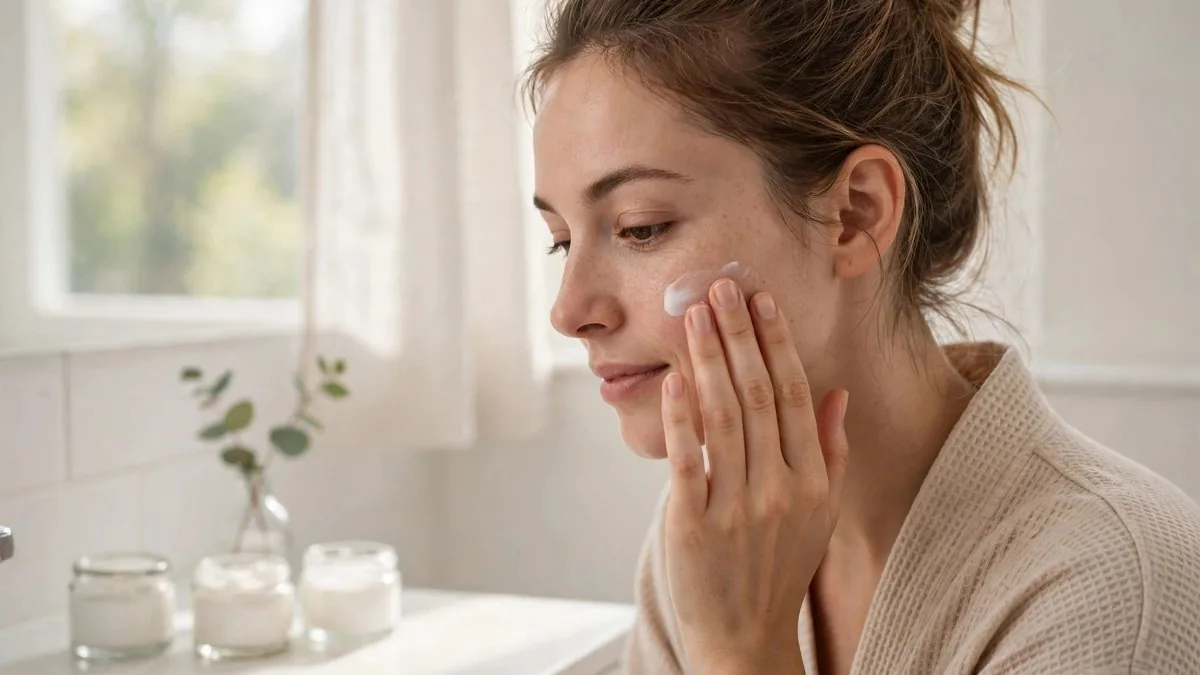
In the morning, use lukewarm water or a gentle cleanser, then moisturiser, then sunscreen last. In the evening, cleanse to remove sunscreen and makeup, then moisturise. Keep the technique gentle: massage cleanser with your fingertips for thirty to sixty seconds, rinse, pat dry with a clean towel, and apply moisturiser to skin that is still slightly damp, ideally within a minute of cleansing.

Step one: choose a gentle cleanser
The cleanser is the most important step in a sensitive skin routine, because it sets the condition of your skin for everything that follows. Its job is simple: remove dirt, excess oil, sunscreen, and makeup without damaging the barrier. Anything that leaves your skin feeling tight, squeaky, or dry has done too much.
Look for a cream, milk, lotion, or low-foam gel cleanser labelled gentle, fragrance-free, and suitable for sensitive skin. Mild surfactants based on amino acid derivatives or glucosides clean effectively without disrupting the barrier’s lipids. Avoid sodium lauryl sulfate, a surfactant so reliably irritating that researchers use it as a reference irritant in patch testing, along with strong foaming formulas, gritty scrubs, fragrance, menthol, and high levels of alcohol. A pH-balanced formula is also a good sign.
Most people with sensitive skin do best with one proper cleanse in the evening and a rinse with lukewarm water, or a gentle cleanse, in the morning. If you wear sunscreen or makeup, an evening cleanse is essential, and a double cleanse can help: first a gentle oil-based or micellar formula to dissolve build-up, then your regular cleanser. After washing and patting dry, your skin should feel comfortable, not tight or itchy. For a closer look at the gentlest options, see our guide to the best face wash for sensitive skin.
Step two: moisturise to repair the barrier
Moisturiser is the workhorse of a sensitive skin routine. It replaces the lipids the barrier needs, slows water loss, and creates a calmer surface for the rest of the routine. The best moisturisers for sensitive skin are fragrance-free, rich in ceramides, glycerin, and fatty acids, and free of essential oils and drying alcohol. Look for ceramide NP, AP, or EOP on the label. Glycerin and hyaluronic acid attract water, and niacinamide and panthenol soothe redness.
A light lotion may be enough in warm, humid weather, while a richer cream or balm suits cold, dry conditions. If your skin feels dry again within a few hours, the formula is probably too light; if it feels greasy, it may be too rich or you may be using too much. Be consistent: moisturiser works by being there every day. Our round-up of the best moisturisers for sensitive skin compares fragrance-free formulas built around ceramides and other barrier-supporting ingredients.
Step three: protect with sunscreen every day
Sunscreen is the step people with sensitive skin are most tempted to skip, because many sunscreens sting or cause breakouts. Skipping it is a mistake. Ultraviolet light damages the barrier, worsens redness, and accelerates the signs of ageing that many routines are trying to prevent. So the task is to find a sunscreen you can wear every day without dreading it.
Mineral sunscreens use zinc oxide or titanium dioxide to sit on the skin’s surface and block ultraviolet light. They are generally less irritating than chemical sunscreens, whose organic filters can sting reactive skin. A broad-spectrum mineral sunscreen with SPF 30 or higher is the safest starting point. Apply it as the last step of your morning routine, using enough to cover your face and neck evenly, and reapply if you spend a long time outdoors. For detailed recommendations, see our guide to the best sunscreen for sensitive skin.
Ingredients that help sensitive skin
Once the three core steps are working, it helps to recognise the ingredients that genuinely support reactive skin. The table below summarises the most useful ones.
| Ingredient | What it does | Where to find it |
|---|---|---|
| Ceramides | Rebuild the lipid structure of the barrier and reduce water loss | Moisturisers and barrier creams |
| Glycerin | Attracts water into the skin and keeps it hydrated | Cleansers, moisturisers, and serums |
| Hyaluronic acid | Holds water in the surface layers for a plumper, calmer feel | Serums and moisturisers, on damp skin |
| Niacinamide | Calms redness and supports barrier function over time | Serums and moisturisers |
| Panthenol (vitamin B5) | Soothes irritation and helps skin hold moisture | Moisturisers and calming creams |
| Centella asiatica | Calms inflammation and supports barrier repair | Calming serums and creams |
| Squalane | A light, skin-like oil that softens without clogging | Moisturisers and facial oils |
| Colloidal oatmeal | Soothes itching and irritation in reactive skin | Moisturisers for very reactive skin |
Ingredients to avoid with sensitive skin
Fragrance is the trigger people with sensitive skin report most often. It appears on labels as parfum or fragrance, or as components such as linalool, limonene, and citral. Essential oils, including lavender and tea tree oil, are also common irritants despite their natural image.
Drying alcohols such as alcohol denat, SD alcohol, and isopropyl alcohol can dry and irritate skin in high concentrations. Other ingredients to treat with caution include high-strength exfoliating acids, high-strength retinol, and the preservative methylisothiazolinone, which has caused allergic contact dermatitis often enough to be restricted in leave-on products in the European Union.
How to patch test a new product properly
Patch testing is the most useful habit for sensitive skin, and it is often done too briefly to mean anything. Dermatologists recommend a structured approach: choose a test spot about the size of a coin where the product will not be rubbed off, such as the inner forearm or the bend of the elbow. Apply the product twice daily for seven to ten days, using the same amount you would normally, and leave it on as long as you usually would. Stop if redness, itching, or swelling appears.
Never test more than one new product at a time, and never introduce a new product during a flare-up, because you will not be able to tell whether a reaction came from the product or from the flare-up itself. Wait until your skin is calm, test one product, and only then move on to the next.
Your sensitive skin routine checklist
- Cleanse once in the evening with a gentle, fragrance-free cleanser, and rinse or cleanse gently in the morning.
- Use lukewarm water, pat dry with a clean towel, and apply moisturiser to slightly damp skin within a minute of cleansing.
- Apply a broad-spectrum mineral sunscreen with SPF 30 or higher every morning as the final step.
- Patch test every new product on the inner forearm for seven to ten days before using it on your face.
- Introduce only one new product at a time, and wait four weeks of calm skin before adding any active ingredient.
- See a dermatologist if redness, itching, or breakouts persist, spread, or keep returning despite a gentle routine.
Frequently asked questions
How many steps does a sensitive skin routine really need?
Three: a gentle cleanser, a fragrance-free moisturiser, and a broad-spectrum sunscreen with SPF 30 or higher. That is enough for most people with sensitive skin. An optional calming serum can be added later, once your skin has been calm for at least four weeks.
Can I use retinol if I have sensitive skin?
Possibly, but not at the start. Wait until your skin has been calm for four weeks, then introduce a low-strength retinol gradually, twice a week at first, always over moisturiser. If redness or stinging appears, reduce the frequency or stop.
Should I exfoliate sensitive skin?
Only gently, and only once your barrier is healthy. Physical scrubs and high-strength acids are usually too harsh for reactive skin. A very mild formula once a week at most is the cautious approach, and you should stop if your skin feels tight or stings when you apply moisturiser afterwards.
Is fragrance-free the same as unscented?
No, and the difference matters. Fragrance-free means no fragrance ingredients have been added. Unscented means the product has no noticeable smell, but it may contain masking fragrances to cover the smell of its ingredients. For sensitive skin, always choose fragrance-free.
How long does it take for sensitive skin to calm down?
Most people notice their skin feeling more comfortable within two weeks of simplifying to a gentle routine, with visible redness and reactivity improving over four to six weeks.
When should I see a dermatologist about sensitive skin?
See a dermatologist if redness, itching, dryness, or breakouts persist despite a gentle routine, if reactions spread beyond the face, if skin blisters, swells, or cracks, or if you suspect an allergy or an underlying condition such as eczema or rosacea.
The bottom line
Building a skincare routine for sensitive skin is less about finding a miracle product and more about removing the things that hurt your barrier and keeping the things that support it. A gentle cleanser, a fragrance-free moisturiser rich in ceramides, and a mineral sunscreen worn every day will do more for reactive skin than a shelf full of actives ever will. Add new products slowly and let comfort be your guide.
Start today with the three essentials, give them a month, and pay attention to what your skin tells you. Sensitive skin rewards patience and consistency, and the calm, comfortable skin you are aiming for is usually the result of doing less, not more.
Note: This guide is general information, not medical advice. If you have a skin condition, persistent symptoms, or a reaction that worries you, please speak to a dermatologist before changing your routine.