

A silk duvet is one of those bedroom purchases that feels quietly extravagant the first night you sleep under it. It is lighter than it looks, drapes against the body instead of sitting on top of it, and keeps you warm without ever feeling heavy.
Yet not every duvet labelled silk is worth the investment. Some contain only a small percentage of silk blended with polyester, others use short, coarse fibres that clump within a season, and a few are little more than an ordinary duvet with a silky cover.
This guide walks through everything worth checking: the type of silk inside, the fill weight for your bedroom, the shell and stitching, and the simple care habits that keep it beautiful for years.
Key takeaways
- Look for 100% long-strand mulberry silk fill, ideally grade 6A, with the percentage stated on the label.
- Match the fill weight to your bedroom: 150 to 250 grams per square metre for summer, 300 to 400 for all-season use, 450 to 600 or more for cold rooms.
- A tightly woven cotton shell with box stitching keeps the silk evenly spread and stops it shifting.
- Silk suits hot sleepers, allergy-prone sleepers and anyone who dislikes heavy bedding.
- Never machine wash a silk duvet unless the maker says so; use a washable cover, air it regularly and spot-clean small marks.
What a Silk Duvet Actually Is
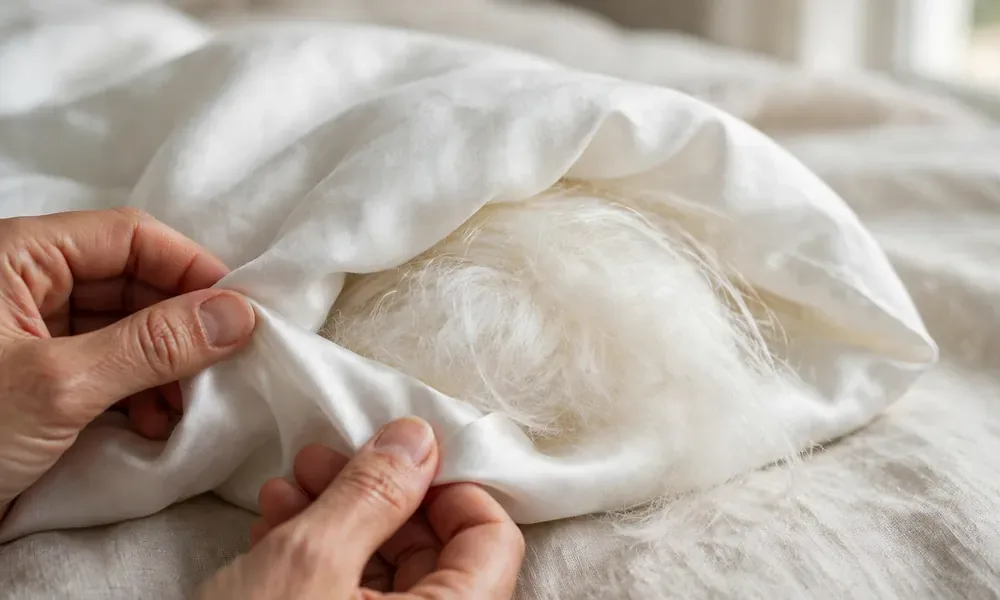
A silk duvet is a duvet filled with silk floss rather than down, feathers, wool or synthetic fibre. The fill is made by stretching layers of silk fibre into fine, even sheets inside a fabric shell, usually cotton. The result feels almost weightless yet still holds warmth, because silk fibres trap air between their layers while allowing moisture to pass through.
It is worth understanding the difference between a silk duvet and a silk-covered duvet. Some products have a silk outer fabric but a completely different filling, such as polyester or down. A true silk duvet has silk as the filling, and that is where most of its comfort comes from.
Mulberry Silk vs Tussah Silk: The Fill That Matters Most
The single most important detail is the type of silk inside. Mulberry silk is widely regarded as the finest option. It comes from silkworms raised in controlled conditions and fed only on mulberry leaves, producing long, even, unbroken filaments that feel soft, smooth and uniform. A duvet filled with long-strand mulberry silk drapes beautifully and resists clumping.
Tussah silk, sometimes called wild silk, comes from wild silkworms that feed on a variety of leaves. Its fibres are shorter, coarser and less uniform, and the fill usually feels slightly rougher and is more likely to shift over time. Tussah duvets are generally cheaper, but the comfort and lifespan are not the same as mulberry.
Within mulberry silk, grade matters too. Silk is graded from A to C, with grade A the longest and most uniform fibre, and 6A the top designation. Short-fibre silk, silk waste and silk blended with polyester are the cheaper alternatives, and the most common reason a silk duvet disappoints.
Fill Weight and Warmth: Choosing the Right Tog for Your Room
Silk duvets are sold by fill weight, usually measured in grams per square metre, and often labelled summer, all-season or winter. The right weight depends far more on your bedroom than on the season alone. A cool, draughty room needs a heavier fill than a warm, well-insulated one.
As a general guide, 150 to 250 grams per square metre suits warm rooms and hot sleepers. A fill of 300 to 400 grams per square metre is the all-season middle ground that suits most sleepers in moderate climates. A fill of 450 to 600 grams per square metre or more is the winter option, best for cold rooms and cold sleepers.
Compare fill weights only within the same bed size, because a king-size duvet naturally contains more silk in total than a single. Silk also feels lighter than its warmth suggests, so a duvet that seems surprisingly thin may still keep you perfectly warm. If you are between two weights, choose the lighter one if you tend to overheat and the heavier one if you often wake up cold.
How to Tell a Good Silk Duvet from a Poor One
Quality is something you can check with your eyes and hands. Start with the colour and feel of the fill. Good mulberry silk is pearl white with a soft sheen, and it feels very smooth and fine, finer than a human hair. Silk that looks artificially bright white may have been bleached, while yellow or brown tones suggest lower-grade or wild silk.
Look for an inspection opening. Many well-made duvets have a short concealed opening or zip in the shell so you can see and touch the silk inside. Check whether the fibres are long and continuous rather than short and fluffy. Long strands stay evenly spread, while short fibres are more likely to clump and leave thin, cold patches.
Smell matters too. Good silk has a faint, slightly tart scent from sericin, the natural protein in the cocoon, and it fades with airing. A strong chemical smell can suggest solvents or heavy processing. Finally, check for certification: an OEKO-TEX Standard 100 label means the finished textile has been tested for harmful substances.
The Shell and the Stitching That Hold It Together
The shell deserves as much attention as the fill, because it keeps the silk in place for years. Look for a tightly woven cotton shell, often a cotton sateen with a thread count around 300 to 400, which is breathable, soft and quiet. A loose or thin shell lets fibres escape and can feel scratchy.
Construction is the other half of the story. Box quilting divides the duvet into a grid of stitched compartments, holding the silk evenly in place so it cannot migrate or bunch. Some traditional long-strand duvets are made without quilting, relying on the interlocking filaments and secure edge seams instead. Avoid a duvet with no quilting and short-fibre fill, because that combination is the most likely to shift.
Small details are worth a glance as well. Corner ties or loops fasten the duvet inside its cover so it does not travel during the night. Double-stitched seams and neat, even stitching suggest careful making, while loose threads suggest corners have been cut.
Who Benefits Most from a Silk Duvet
Silk duvets suit a wide range of sleepers, but a few groups benefit most. Hot sleepers often love silk because it breathes and releases heat instead of trapping it, so you stay warm without waking up overheated. The light summer weights are especially good for anyone who throws the covers off in the night.
Allergy-prone sleepers often do well with silk too. Mulberry silk is naturally hypoallergenic, resists dust mites, mould and mildew, and contains sericin, a natural protein associated with fewer allergic reactions. That does not make it a medical product, and anyone with a diagnosed allergy should still follow their own doctor’s advice, but for many people with sensitive skin, silk is a gentler choice than down or feather.
Silk also suits anyone who dislikes heavy bedding. People with aching joints and restless sleepers often find that a silk duvet drapes against the body without pressing down on it. The same lightness makes silk a natural fit for a calm, uncluttered bedroom. If you are refreshing the room around the new duvet, our guide to celebrity home decor ideas is a good place to gather inspiration.
Caring for a Silk Duvet So It Lasts for Years
A silk duvet is an investment, and its care is simpler than its reputation suggests. The most important rule is to protect it with a washable duvet cover at all times. The cover takes the nightly wear and can be washed as often as you like, while the silk inside rarely needs cleaning at all.
Never machine wash or tumble dry a silk duvet unless the maker explicitly says it is safe. Water and agitation mat the fibres and shorten its life. Instead, air the duvet outdoors in gentle sunlight or shade for about an hour on each side, once or twice a year, to refresh its loft. Spot-clean small marks with a little cold water and a soft cloth, without soaking the silk, and dab rather than rub.
For a deeper clean, use a dry cleaner experienced with silk duvets. When the duvet is not in use, store it in a breathable cotton bag in a cool, dry place, away from direct sunlight and damp. Avoid vacuum-sealed bags, which can compress the fill. Treated this way, a good mulberry silk duvet can stay soft and comfortable for around a decade.
| What to check | Best choice | What to avoid |
|---|---|---|
| Silk type | 100% long-strand mulberry silk | Unlabelled silk or blends |
| Silk grade | Grade 6A, the top designation | No grade stated |
| Fill weight | Matched to your bedroom | One weight for every climate |
| Shell fabric | Tightly woven cotton, 300 to 400 thread count | Thin, loose or scratchy shell |
| Construction | Box quilting or secure edge seams | No quilting, short-fibre fill |
| Fill colour | Pearl white with a soft sheen | Yellow, brown or bleached white |
| Certification | OEKO-TEX Standard 100 | No testing mentioned |
| Inspection opening | Short zip to see the silk | Fully sealed, no way to check |
Your Silk Duvet Buying Checklist
- Confirm the label says 100% mulberry silk, with the grade and the percentage stated clearly.
- Choose the fill weight for your bedroom temperature, not just the season on the label.
- Check the shell is tightly woven cotton and the stitching is neat, even and double-stitched.
- Look for box quilting or secure edge seams that keep the fill evenly spread.
- Make sure the duvet fits your bed with a little overhang on each side.
- Buy a washable duvet cover at the same time, and check the corner ties fit it.
Frequently Asked Questions
Is a silk duvet good for hot sleepers?
Yes. Silk is naturally breathable and temperature-regulating, wicking moisture and releasing heat instead of trapping it. The lightweight summer weights, around 150 to 250 grams per square metre, suit hot sleepers best.
Are silk duvets good for allergies?
Mulberry silk is naturally hypoallergenic and creates less attractive conditions for dust mites than many traditional fillings, while resisting mould and mildew. Anyone with a diagnosed allergy should follow their own doctor’s advice.
Can you wash a silk duvet?
Most silk duvets should not be machine washed or tumble dried, because water and agitation damage the fibres. Use a washable cover, air the duvet once or twice a year, spot-clean small marks, and use a dry cleaner experienced with silk for a deeper clean.
How long does a silk duvet last?
With proper care, a good mulberry silk duvet can last around ten years. A washable cover, regular airing and careful storage help the fill keep its loft and softness.
Is a silk duvet warm enough for winter?
Yes, if you choose the right fill weight. A heavier fill of 450 to 600 grams per square metre or more suits cold rooms and winter nights. On the coldest nights, a luxury body butter in your evening routine can make winter bedtime feel especially cosy.
What size silk duvet should I buy?
Choose a duvet slightly larger than your mattress so it drapes over the edges, and check the maker’s size guide. A shared bed usually feels more comfortable with a duvet one size up. A good winter routine, including the best winter skincare routine, pairs well with the season when a heavier silk duvet earns its keep.
The Bottom Line
A good silk duvet is defined by a few clear details: 100% long-strand mulberry silk, a fill weight matched to your bedroom, a tightly woven cotton shell and stitching that keeps the fill where it belongs. Check those, look for an inspection opening and an OEKO-TEX label, and you will be able to tell a genuine luxury duvet from a disappointing imitation before you spend anything.
Silk is not the cheapest filling and it is not the easiest to clean, but for hot sleepers, allergy-prone sleepers and anyone who loves light, breathable bedding, it is hard to beat. Buy carefully, protect it with a washable cover, air it now and then, and it will repay the investment with years of quiet, comfortable sleep.
Note: Silk duvets vary between makers, so always read the care label on the duvet you buy and follow the maker’s instructions where they differ from general advice.