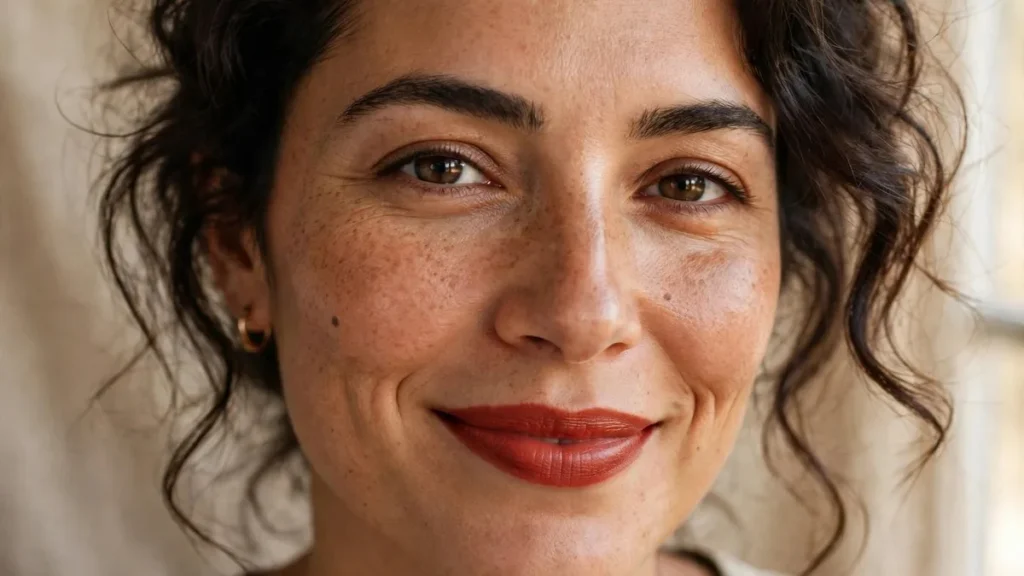
Red lipstick should be the easiest bold move in makeup: one swipe, and the whole face looks more awake. On olive skin, though, red has a reputation for being tricky. A shade that looks like a perfect crimson in the tube can turn muddy, too orange, or strangely pink on a green-golden undertone. That is not a flaw in your skin; it is a mismatch between the red and the undertone underneath it.
Olive skin is defined by that greenish, golden cast beneath the surface colour, and it changes how pigment reads. Blue-based reds can pull grey or purple, while orange-based reds can stack warmth on warmth and look sallow. The reds that work best sit in between: brick, terracotta, warm berry, and balanced true reds with enough depth to hold their own.
Everything here is organised around olive skin specifically: how to tell whether your undertone leans warm or cool, which red families flatter each side, and the small habits that keep a bold lip looking clean all day. If you want the wider picture first, our guide to the best lipsticks of 2027 covers finishes and formulas across every shade family.
Key takeaways
- Olive skin has a green-golden undertone, so reds built for plain warm or plain cool skin often shift colour once applied.
- Brick, terracotta, and warm berry reds are the most reliable red families for olive skin.
- Blue-based reds can look muddy or grey on olive skin, and orange-reds can look sallow or too bright, so test both in daylight.
- Warm olive skin usually suits terracotta and brick reds, while cool olive skin usually suits berry and wine-leaning reds.
- Finish matters as much as shade: satin and soft matte formulas are the most forgiving, and a matching lip liner keeps the edge clean.
Why red lipstick behaves differently on olive skin
Olive skin is not a depth of colour. It is an undertone that appears across fair, medium, and deep skin: a greenish, sometimes grey-green, cast mixed with gold beneath the surface colour. That cast acts like a filter, changing the colour of anything layered on top of it, and red is the shade where the shift is most visible.
A blue-based red is built on a cool, pink foundation. On skin with a cool pink undertone, that foundation blends in and the red reads as a clean, classic scarlet. On olive skin, the blue in the lipstick meets the green in the undertone, and the result often reads muddy, purple, or slightly grey.
An orange-based red has the opposite problem. It is built on warm gold, and olive skin already carries warmth and yellow, so layering more warmth on top can make the face look sallow and teeth look yellower. Some warm olive complexions carry orange-red beautifully, but it is a narrower lane than the tube suggests. The reds that sit reliably in the middle have brown or berry depth: brick, terracotta, rust, and warm berry.
Warm olive, cool olive, or neutral olive?
Before choosing a red, it helps to know which way your olive undertone leans, since the lean decides whether terracotta or berry will be your easiest red. A few simple checks at home, in daylight, will tell you.
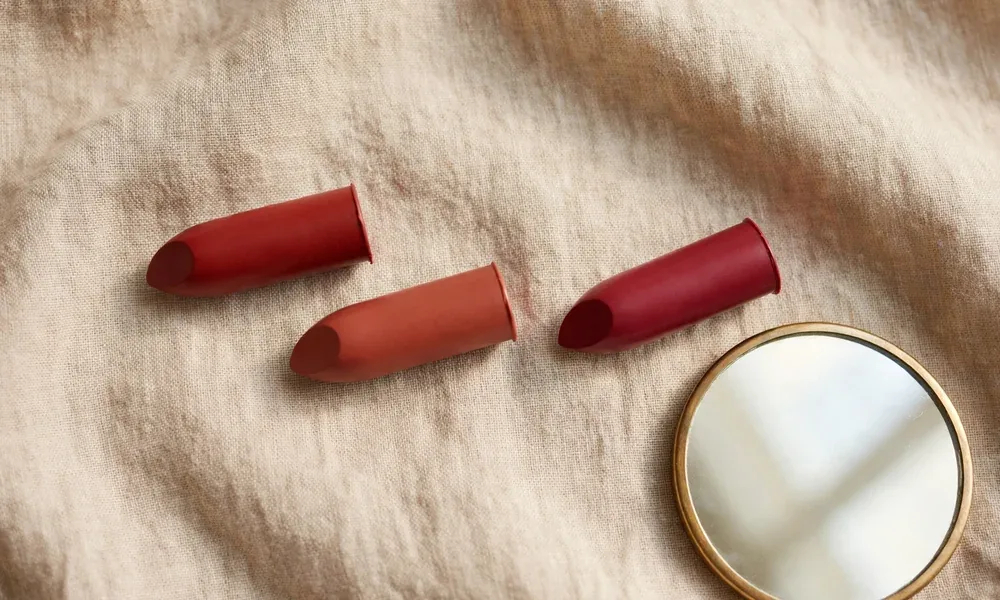
Look at the veins on the inside of your wrist. Green veins suggest a warm lean, blue or purple veins a cool lean, and a mix of both usually means neutral olive, which can wear the widest range of reds. Gold jewellery is another clue: if gold looks natural against your skin, you probably lean warm, and if silver looks better, you probably lean cool. If both look fine, you are likely neutral.
Sun is a third clue. Warm olive skin often tans to a golden brown, while cool olive skin is more likely to look greyish or ashy when pale, and may burn before it tans. None of these checks is a verdict on its own; two out of three pointing the same way is enough to guide your shade choice.
Your lean changes the shopping list. Warm olive skin usually finds its best reds in terracotta, brick, rust, and cinnamon red, where the brown warmth meets the gold in the skin. Cool olive skin usually suits berry, cranberry, deep cherry, and wine-leaning red, where the depth gives richness without the stark blue that turns grey. Neutral olive skin can start with a true red, then move warmer or cooler from there.
The red families that flatter olive skin
Not all reds are equal on olive skin. The table below sorts the main red families by how they usually behave on olive undertones, so you can narrow a whole wall of lipsticks down to three or four before you start swatching.
| Red family | What it looks like | How it usually reads on olive skin | Best for |
|---|---|---|---|
| Brick red | Muted red with brown depth | Harmonises well; reads as a true red | Warm and neutral olive |
| Terracotta red | Warm red with earthy, rust tones | Glows without turning orange | Warm olive |
| Warm berry red | Red with raspberry or cranberry depth | Rich and flattering, never grey | Cool and neutral olive |
| True red | Balanced red, neither blue nor orange | Usually safe; a good starting point | Neutral olive |
| Wine red | Deep red with plum or burgundy depth | Works well in deeper shades | Cool olive, evenings |
| Rust red | Red with burnt sienna warmth | Earthy and modern | Warm olive, autumn looks |
| Blue-based red | Cool cherry or crimson red | Can look muddy, grey, or purple | Test carefully first |
| Orange-red | Bright tomato or coral-leaning red | Can look sallow or too bright | Test carefully first |
Use the table as a filter, not a rule. The only test that counts is the one on your own lips in daylight, but starting from brick, terracotta, or warm berry saves most olive-skinned shoppers from buying a red, wearing it once, and leaving it in a drawer.
Blue-red versus orange-red on olive skin
The blue-red versus orange-red question causes most of the confusion. Blue-reds are cool, clean, and cherry-leaning. They are the classic Hollywood red, and they make teeth look whiter on many skin tones. On olive skin, they are the riskiest family. The blue in the formula meets the green in the undertone, and the red can come out looking purple-grey rather than scarlet. Deeper blue-reds with berry depth can still look rich on cool olive skin, but bright, light blue-reds are the ones that most often go wrong.
Orange-reds are warm, bright, and tomato-leaning. On warm olive skin they can look striking, especially on medium and deep complexions. The risk is that the warmth stacks up: the gold in your skin plus the gold in the lipstick can make the face look sallow and draw attention to any yellow in the teeth. If you love orange-red, look for versions with a touch of brown or brick in them.
Between the two, most olive skin is happiest with a red that leans neither way. A true red, a brick red, or a warm berry red gives you the drama of red without asking your undertone to fight the formula.
Finishes that work best on olive skin
Shade is only half the choice. Finish changes how a red reads, how long it lasts, and how forgiving it is. Matte reds look sharp and last the longest, but they show every dry patch and are the least forgiving on lips that are not perfectly smooth. On olive skin, a very flat matte can also make a red look harder than it is. A soft matte gives you most of the staying power without the dryness.
Satin and cream finishes are the easiest place to start. They look softer, are easy to reapply without a mirror, and let the shade show its true colour. A satin brick red is one of the most wearable red lips on olive skin. Sheer reds and red balms are the gentlest entry point, giving a wash of colour that is forgiving if the shade is slightly off.
Long-wear liquid reds have their place, especially for events, but they need the most care. They set quickly, they are hard to fix once they flake, and a slightly wrong shade looks more wrong in a dense liquid formula. If you are buying one, choose a brick or berry shade and test it on the lips, not the back of your hand. For more on how finishes behave on different lip types, our guide to the best lipsticks for mature skin in 2027 covers comfort and wear in detail.
How to test a red before you buy it
The most common mistake is choosing a red under shop lighting. Artificial light flatters almost everything and hides exactly the undertone shifts that matter on olive skin. Always test in daylight, on your lips, with the rest of your face as you would normally wear it. A swatch on the back of your hand tells you the colour of the bullet, not the colour on you.
- Test in natural daylight, near a window or outside, never only under shop lights.
- Apply the shade on your lips, not just on your hand, and wear it for at least ten minutes.
- Check your teeth in the mirror: a good red should not make them look yellow.
- Look at your whole face, not just the lips, and ask whether your skin looks brighter or more tired.
- Try the red with your usual base and blush on.
- Compare two or three reds side by side on different days, and keep the one you keep reaching for.
Blot once after applying, add a second light layer, and use a matching lip liner to keep the edge clean, since the contrast with skin makes any feathering obvious.
Frequently asked questions
What is the best red lipstick shade for olive skin?
Brick red is the most reliable starting point, because its brown depth harmonises with the green undertone. Terracotta suits warm olive skin, warm berry suits cool olive skin, and a balanced true red suits neutral olive skin.
Can olive skin wear blue-red lipstick?
Yes, but carefully. Bright, light blue-reds often look muddy or grey on olive skin. Deeper blue-reds with berry depth work better, especially on cool olive skin, but always test one on your lips in daylight before buying.
Can olive skin wear orange-red lipstick?
Yes, especially on warm olive skin in medium and deep tones. The risk is that the warmth can make skin look sallow or teeth look yellow, so orange-reds with a touch of brick or brown in them are usually safer than bright, pure tomato reds.
What red lipstick makes olive skin look brighter?
A red with depth and a little warmth usually brightens olive skin best. Brick, terracotta, and warm berry reds add colour without washing the face out. Very pale or very cool reds are most likely to make olive skin look tired.
Should olive skin wear matte or satin red lipstick?
Satin is the easiest starting point, because it is comfortable, forgiving, and shows the shade’s true colour. Soft matte formulas work well too, especially for events, as long as lips are moisturised first. Very flat, dry mattes can make a red look harsh, so save them for occasions when staying power matters most.
How do I stop red lipstick from feathering on olive skin?
Feathering is about application, not skin tone. Start with moisturised lips, line and lightly fill them with a matching liner, then apply the lipstick, blot once, and add a second light layer. Deeper reds tend to feather less visibly than bright ones. If you want a softer everyday option alongside your reds, our guide to the best nude lipsticks of 2027 covers shades that flatter olive undertones too.
The bottom line
The best red lipstick for olive skin is not the most famous red, or the red that looks best on someone else. It is the red that works with your undertone: brick and terracotta for warm olive, berry and wine for cool olive, and a balanced true red for neutral olive. Start there, test in daylight, and let your own mirror make the final call.
Red lipstick is supposed to be fun, not a chore. The right shade should make you feel like yourself, only a little more polished. If a red makes you hesitate every time you look in the mirror, it is the wrong red, however beautiful it looked in the tube.
Note: Shade names describe colour types, not specific products. Always test a lipstick on your own lips in natural daylight before committing to a shade.