
Wide-leg trousers are comfortable, elegant and firmly part of everyday style in 2027, yet many petite women hesitate before wearing them. The worry is familiar: all that fabric could swallow a shorter frame, shorten the legs and leave the whole outfit looking heavier than it should. It is a fair concern, because volume below the waist really can change how tall you look, especially when the waistline, hem and shoes are left to chance.
The good news is that wide-leg trousers do not have to make you look shorter. In fact, when the proportions are handled with intention, they can do the opposite. A high waist, a clean hem and a top that defines where your legs begin create one long, unbroken line from waist to floor, and that line is what the eye reads as height. The trousers themselves are rarely the problem. The styling around them is what decides the result.
This guide explains exactly how to wear wide-leg trousers as a petite woman in 2027, step by step. You will learn which rise and length to choose, how wide the leg should be, which fabrics fall best, what to wear on top, and which shoes keep the line long.
Key takeaways
- A high waist worn at your natural waist is the single biggest factor in looking taller in wide-leg trousers.
- The hem should skim the top of your shoes, never pool in folds around your ankles.
- Balance the volume below with a fitted, tucked-in or cropped top that defines your waist.
- Choose a moderate leg width and a fluid fabric that falls in one clean vertical line.
- Match your shoes to your hem length, and try trousers on with the shoes you will actually wear.
Why Wide-Leg Trousers Can Make Petite Frames Look Shorter
Petite is generally understood to mean 5 feet 4 inches and under, and on a shorter frame every centimetre of proportion counts more. Wide-leg trousers add width below the waist, and width without balance reads as shorter height. The eye takes in the whole shape at once, so when the lower half looks heavy and the waistline is unclear, the body can appear compressed, even when the trousers themselves fit well.
Three things usually cause the problem, and all three are fixable. First, a low waistline makes the legs read as starting at the hips, which costs several centimetres of apparent leg length. Second, excess fabric pooling at the hem adds horizontal folds exactly where the eye finishes reading the leg, breaking the vertical line. Third, shoes that cut across the ankle, or a sharp gap of bare leg before the hem, interrupt the flow and split the leg into shorter segments.
Start at the Waist: High-Rise Is the First Rule
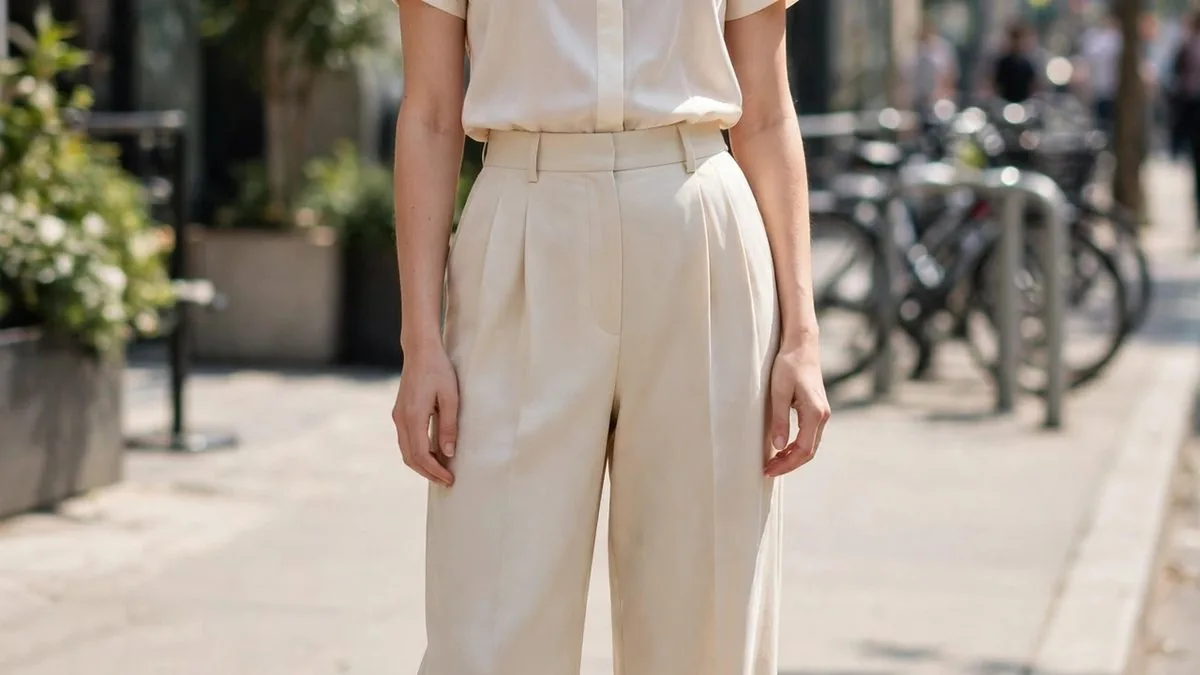
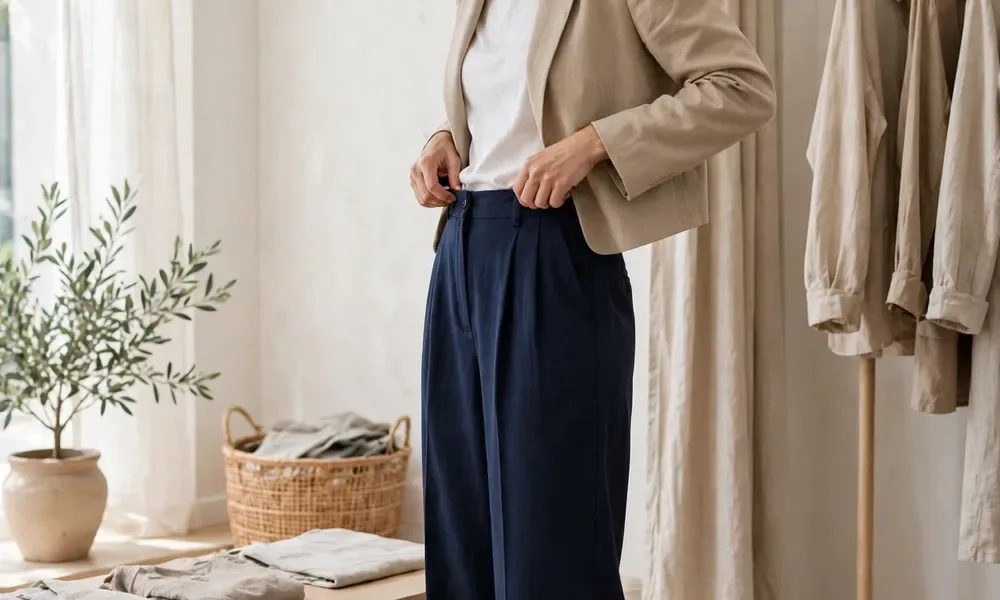
If you change only one thing about how you wear wide-leg trousers, change the rise. A high-rise waistband sits at or just above your natural waist, the narrowest part of your torso, roughly a thumb’s width above the navel. From that point down, everything is read as leg. A low-rise pair, by contrast, starts the leg at the hip and hands back the height you just gained.
Look for a rise of around 10 inches or more, and check where the waistband actually sits on your body rather than trusting the label alone, because brands vary. The waistband should feel snug without gaping at the back, and the front should lie flat. Pleats, bulky belt loops and gathered paperbag waists add visual weight exactly where a shorter frame can least afford it, so a clean, flat-front waist usually works best.
Get the Hem Right
The hem is where most wide-leg outfits succeed or fail. The cleanest finish for a shorter frame lands just at, or slightly above, the top of the shoe, with the fabric skimming the surface rather than pooling on it. The trouser should look as though it almost touches the ground without actually doing so. When fabric folds over itself at the ankle, the eye follows the fold line, and the fold line is not the floor.
Try trousers on with the shoes you plan to wear them with, because heel height changes everything. For most petite women, an inseam between 25 and 27 inches works well with heels.
Choose the Right Width and Fabric
Not all wide legs are equal. A moderate wide leg, with a hem around 20 to 22 inches wide, tends to suit shorter frames best. It creates the long vertical line without overwhelming the body. A very wide leg, at 26 inches or more, can read as dramatic on a taller frame but risks swallowing a petite one, especially when the fabric is stiff. The wider the leg, the more important the high waist and the cleaner the shoe become.
Fabric matters just as much as width. Lightweight, fluid materials such as crepe, soft wool, rayon blends and fluid linen fall in a clean line and move with you. Heavy denim, stiff cotton and bulky linen hold their shape away from the body, adding width where you do not need it. In warmer weather, drape beats stiffness every time, because a fluid fabric keeps the vertical line intact instead of boxing outwards.
A centre front seam, a sharp crease or a subtle pinstripe draws the eye down the leg. If you love winter weight fabrics, choose a smooth wool with a fluid drape and read our guide to how to wear wide-leg pants in winter for cold-weather layering that keeps the same long line.
Tops That Balance the Volume
Volume below needs definition above. The simplest rule is contrast: pair wide legs with a fitted, cropped or tucked-in top, and avoid pairing them with an equally loose, long top that hides your waist altogether. An oversized top over wide trousers creates a boxy, shapeless block that shortens the torso and makes the whole outfit look heavier.
A fitted knit, a tucked-in shirt or a bodysuit all work well, because each one shows exactly where your legs begin. A cropped top can work too, provided it ends right at the waistband rather than cutting across the middle of the torso. A structured blazer worn open over a tucked-in top adds polish without hiding the waist, and it is one of the easiest ways to make wide-leg trousers look office-ready. For tailored inspiration, see our guide to the best power suits for women, which shows how sharp tailoring frames a wide-leg silhouette.
Shoes That Keep the Line Long
Shoes are the final link in the vertical line, and the wrong pair can undo everything above it. Pointed-toe heels are the most reliable choice, because the pointed toe extends the foot and the heel lifts the hem to exactly the right place. A nude or tonal shoe that matches your skin or your trousers continues the leg line without a break, while a dark shoe against bare skin can cut it short.
Flats can work, but they need care. A pointed-toe flat in a similar tone to the trousers keeps the line clean, while a chunky sole, a thick ankle strap or a heavy platform interrupts it. Trainers are a useful casual option when the hem is cut to skim them, and a slim white trainer keeps the look fresh rather than heavy. Our guide to the best white sneakers for women shows which styles sit neatly under a wide leg without adding bulk at the ankle.
| Styling choice | What to choose | Why it lengthens |
|---|---|---|
| Rise | High-rise, at or above the natural waist | Moves the start of the leg higher |
| Hem | Skims the top of the shoe, no pooling | Keeps one unbroken vertical line |
| Leg width | Moderate, around 20 to 22 inches at the hem | Width without overwhelming the frame |
| Fabric | Fluid crepe, soft wool or rayon blend | Falls straight instead of boxing out |
| Top | Fitted, tucked-in or cropped to the waistband | Defines the waist and shows where legs begin |
| Shoes | Pointed toe, tonal or nude, matched to the hem | Extends the foot and continues the line |
| Colour | Monochromatic or close tonal shades | Creates a single continuous column |
| Details | Centre seam, sharp crease or fine stripe | Draws the eye down the length of the leg |
Mistakes to Avoid
The most common mistake is wearing a long, untucked top over wide-leg trousers. It erases the waist, hides the rise you chose so carefully, and leaves the outfit with no clear starting point for the leg. If a top feels too long, tuck it in fully or do a neat front tuck that still shows the waistband.
The second mistake is skipping the tailor. Trousers that pool at the ankle or drag on the floor do not look relaxed; they look too long, and they shorten the leg by adding folds where the line should end. A hem is a small alteration with a large visual return, and it is worth doing for every pair you plan to wear often.
Your Petite Wide-Leg Checklist
- Choose a high rise that sits at your natural waist, with a flat front and no gaping.
- Hem the trousers so they skim the top of the shoes you will actually wear.
- Pick a moderate leg width and a fluid fabric that falls in a straight line.
- Tuck in, crop or belt your top so the waistline is always visible.
- Wear pointed-toe shoes in a tonal shade, and avoid chunky soles and ankle straps.
- Keep the outfit to one strong feature, and let colour or a vertical detail do the lengthening.
Frequently Asked Questions
Can petite women wear wide-leg trousers at all?
Yes. Petite women can wear wide-leg trousers very well when the proportions are right. A high waist, a precise hem and a defined top create a long vertical line, and the width of the leg then adds elegance rather than bulk. The key is fit and styling, not avoiding the shape.
What length should wide-leg trousers be for a petite frame?
The hem should just skim the top of your shoes, with no fabric pooling at the ankle. Try the trousers on with the shoes you will wear, and have them hemmed if they drag.
Are high-waisted wide-leg trousers better for short women?
Yes, a high waist is the most reliable choice for a shorter frame. It sits at the narrowest part of the torso and moves the point where the legs appear to begin higher up the body, which lengthens the leg line. Low-rise styles cut the leg short and are best avoided for this look.
What shoes go best with wide-leg trousers for petites?
Pointed-toe heels in a tonal or nude shade are the safest choice, because they extend the foot and lift the hem to the right place. Avoid chunky soles and thick ankle straps, which break the line.
Should I tuck my top into wide-leg trousers?
In most cases, yes. Tucking in your top, or choosing a cropped top that ends at the waistband, defines your waist and shows where your legs begin. A long untucked top over wide trousers hides the waist and can make the whole outfit look shorter and shapeless.
What fabric is best for petite wide-leg trousers?
Fluid, lightweight fabrics such as crepe, soft wool and rayon blends fall in a clean vertical line and suit petite frames best. Stiff, heavy fabrics hold their shape away from the body and add width. Choose a fabric that drapes smoothly and moves with you, especially in warmer weather.
The Bottom Line
Wide-leg trousers are not a style petite women need to avoid. They are a style that rewards attention to proportion. Start with a high waist at your natural waist, get the hem tailored so it skims your shoes, balance the volume with a fitted or tucked-in top, and finish with a pointed-toe shoe that continues the line. Add a fluid fabric and a single colour column, and the trousers will lengthen rather than shorten you.
Try the formula with a pair you already own before buying anything new. Put on the shoes you would wear, tuck in the top, check the hem in a full-length mirror, and adjust one thing at a time until the line looks clean from waist to floor. Once you see how the proportions work, wide-leg trousers stop feeling risky and start feeling like one of the easiest, most flattering shapes in your wardrobe.
Note: Fit varies by brand, so always try wide-leg trousers on with your usual shoes and have the hem adjusted by a tailor when needed.