Suede shoes have a softness that smooth leather never quite matches. The velvety surface catches the light, feels gentle to the touch, and gives even a simple outfit a quiet, polished finish. That softness is also why suede needs more attention: its open fibres attract dust, absorb water, and show marks that would wipe off smooth leather.
The good news is that caring for suede is not difficult once you know the order of things. Most of the work is dry work: a quick brush after wearing, a protective spray before the first outing, and a calm response when something spills. You do not need a shelf of specialist products. You only need the right tools, a short routine, and the patience to let wet suede dry on its own.
This guide covers the whole routine, from the first spray on a new pair to removing mud, water marks, salt, and grease, and storing suede between seasons. Follow it, and a good pair can stay soft and even in colour for years rather than a single season.
Key takeaways
- Clean suede dry first: brush and erase before you reach for any liquid.
- Protect new suede with a spray made for suede before the first wear, and renew it in wet weather.
- Let wet suede dry slowly at room temperature, away from radiators, hair dryers, and direct sun.
- Treat stains by type: dry mud brushes away, grease needs an absorbent powder, and water marks need even dampening.
- Store suede with shoe trees in a cool, dry place, never in a sealed plastic bag.
What makes suede different from smooth leather
Suede is leather from the underside of the hide, sanded to raise a fine, velvety nap. Smooth leather has a sealed grain surface that water and dirt mostly sit on. Suede has no seal: dust settles between the fibres, liquids soak in quickly, and rubbing can flatten the nap into a shiny patch.
That structure explains every rule that follows. Brushing lifts dirt out of the nap and stands the fibres upright. Water mats the fibres and can leave a ring as it dries unevenly. Polish and cream for smooth leather clog the nap and leave dark, greasy patches. Heat dries the fibres out and makes them stiff, so drying and storage both favour shade and room-temperature air.
The small kit that covers almost everything
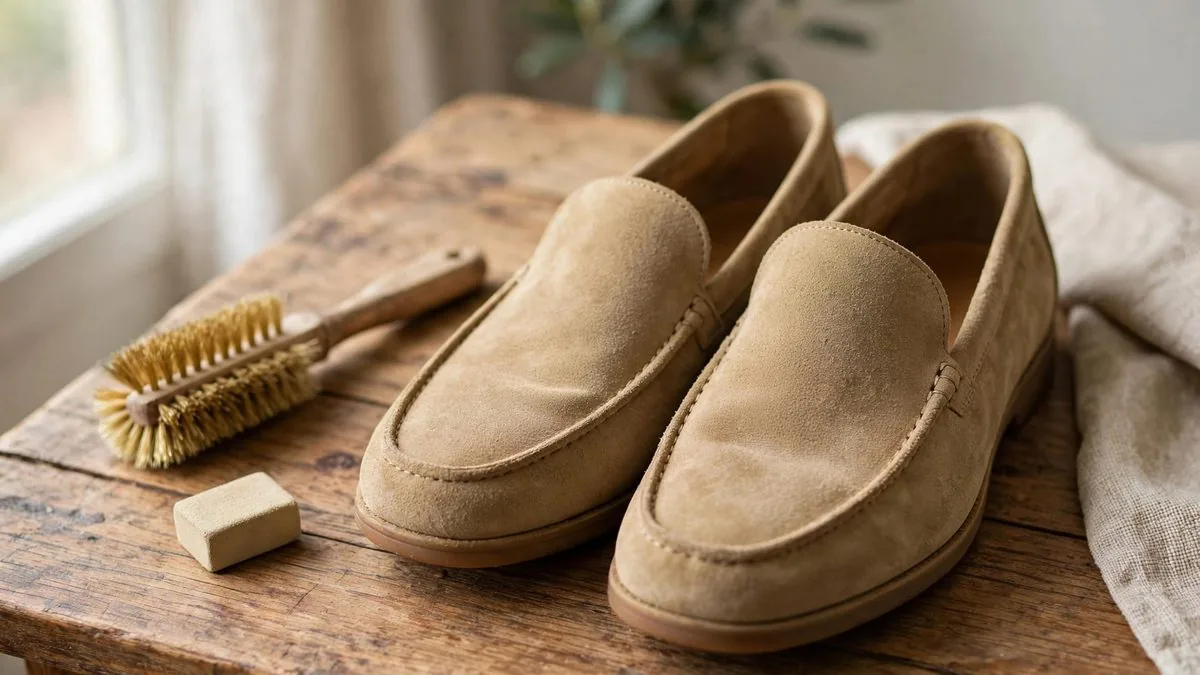
You need only four tools. A suede brush is the most important: look for soft brass or nylon bristles on one side and crepe rubber on the other. The bristle side lifts dust and restores the nap; the crepe side smooths the surface and removes light marks. A clean, soft toothbrush can stand in, but a proper brush works faster.
A suede eraser is a small rubber block that works like a pencil eraser on dry scuffs: rub it gently over the mark, then brush away the crumbs. A protective spray made for suede and nubuck adds water and stain resistance without changing the texture. Wooden shoe trees, cedar if possible, hold the shape and absorb moisture after each wear. Keep talcum powder or cornstarch on hand for grease, and a suede shampoo for occasional deep cleaning only.

Protect suede before the first wear
Protection is the single most valuable step in suede care, and it should happen before new shoes go outside. Start by brushing the shoes lightly to remove any dust from the shop or the box. Then test the protective spray on a hidden spot, such as the inside of the heel, and leave it to dry so you can check that it does not change the colour.
Spray in a ventilated room or outdoors, holding the bottle about 20 centimetres away, and apply a light, even coat. Let the shoes dry for several hours, ideally overnight, then apply a second light coat: two thin coats protect better than one heavy one. Renew it every few weeks in rainy months, and after a deep clean. No spray makes suede fully waterproof; it improves resistance and buys you time with a spill.
The weekly routine: brush, rest, and rotate
After each wear, once the shoes are dry, give them a short brush: work back and forth lightly to lift dust, then finish with strokes in one direction to settle the nap. Pay attention to the toe and sides, where dust gathers and the nap flattens first. Use the eraser on any scuff before it sets, then brush again.
Put shoe trees in as soon as you take the shoes off: they smooth creases, help the leather dry from the inside, and keep its shape. Let suede rest between wears, too, and avoid wearing the same pair two days in a row. Rotating pairs is one of the simplest ways to make suede last. If you need everyday styles to rotate with suede, our guide to the best sneakers for 2027 is a useful starting point.
How to remove stains, by type
Match the method to the stain, and start dry. Never scrub hard: rubbing pushes dirt deeper and can flatten the nap permanently. Work gently, test any product on a hidden area first, and accept that a very old stain may need a professional cleaner.
Dry dirt and mud are simplest. Let mud dry completely first, because wet mud smears and sinks in. Once dry, brush it away, then use the eraser on any mark left. Water marks appear as a pale ring where suede dried unevenly. Fix one by dampening the whole affected panel evenly with a lightly moistened cloth, so it dries as one shade. Stuff the shoe with plain paper, let it dry naturally, then brush the nap back up.
Grease needs speed and absorption, not water. Blot gently, cover the spot with talcum powder or cornstarch, and leave it for several hours or overnight so the powder draws the oil out. Brush it away and repeat if a faint mark remains. Do not use dish soap, vinegar, or household cleaners: they can strip natural oils, change the colour, or leave a sticky residue. For salt, brush off the dry salt first, then wipe very lightly with a damp cloth, working from the outside in.
Caught in the rain? Do this first
If suede gets wet, blot the excess with a clean cloth, pressing gently rather than rubbing. Remove the laces and insoles so air can reach inside. Stuff the shoes with plain white paper, not newspaper, which can transfer ink onto damp suede, and change the paper after an hour or two if it is soaked.
Let the shoes dry at room temperature, away from radiators, hair dryers, and direct sunlight. Drying usually takes a full day, and rushing it causes the most damage. Once fully dry, brush the nap back up and renew the protective spray. Wet suede can feel stiff at first, but gentle brushing usually softens it again.
How to store suede shoes properly
Good storage starts with clean, dry shoes. Brush them before you put them away, insert shoe trees, and store them in a cool, dry place out of direct sunlight. A breathable cotton shoe bag or the original box with the lid slightly open both work well, because air can move around the leather.
Do not store suede in a sealed plastic bag or a damp cupboard: trapped moisture encourages mildew, and plastic can stick to the nap in warmth. For longer storage, clean the shoes, add a fresh coat of spray, and check them every few weeks. For boots, which need more support, our round-up of the best fall boot trends for 2027 is worth a look when choosing styles that store upright and keep their shape.
Mistakes that damage suede
Most suede is damaged by a handful of avoidable mistakes. The first is treating it like smooth leather: polish, cream, and wax clog the nap, darken the colour, and are very hard to remove. Use only products labelled for suede or nubuck. The second is washing suede in a machine or soaking it in water, which can deform the shoe, stiffen the fibres, and leave uneven colour.
The third mistake is drying wet suede near heat: a radiator, a hair dryer, or strong sun hardens the fibres and can crack the leather over time. The fourth is brushing suede while it is damp, which pushes dirt in rather than lifting it out. Always wait until the shoes are fully dry, and do not ignore a stain for weeks: a fresh mark usually lifts with a brush or an eraser, while an old one may have set.
| Problem | First step | What to use | What to avoid |
|---|---|---|---|
| Loose dust | Brush while dry | Suede brush, light strokes | Brushing while damp |
| Dry scuffs | Rub gently, then brush | Suede eraser | Scrubbing hard |
| Mud | Let it dry fully first | Brush, then eraser | Rubbing wet mud |
| Water marks | Dampen the whole panel evenly | Lightly moistened cloth | Drying near heat |
| Grease or oil | Blot, then cover with powder | Talcum powder or cornstarch | Dish soap or water |
| Salt marks | Brush off dry salt | Lightly dampened cloth | Strong vinegar solution |
| Shiny, flattened nap | Brush against the nap lightly | Crepe side of the brush | Smooth-leather polish |
| Wet shoes | Blot and stuff with paper | Shoe trees, room-temperature air | Radiators and hair dryers |
Your suede care checklist
- Brush suede after wearing, once dry.
- Use the eraser on scuffs before they set into the fibres.
- Spray a suede protector before the first wear and renew it in wet weather.
- Insert shoe trees after every wear; let shoes rest a day between outings.
- Blot spills at once, match the treatment to the stain, and test products first.
- Store suede clean, dry, and aired, never sealed in plastic or near heat.
Frequently asked questions
Can suede shoes get wet?
Yes, but they should not stay wet or dry near heat. Blot the water, stuff the shoes with plain paper, and let them dry slowly at room temperature. Once dry, brush the nap and renew the spray. A protector improves water resistance, but it does not make suede waterproof.
How often should I brush suede shoes?
Brush them lightly after each wear, once they are dry. The routine takes only a minute or two and stops dust from settling into the nap. A deeper session with the eraser is only needed when you can see scuffs or shiny patches.
Can I use a normal brush on suede?
A soft brush can work, but a dedicated suede brush is better because its bristles lift the nap without damaging it. A clean, soft toothbrush is a reasonable substitute for small areas. Avoid stiff wire brushes, which can tear the fibres and leave permanent marks.
How do I remove a water stain from suede?
Dampen the whole affected panel evenly with a lightly moistened clean cloth, so it dries as one shade without a ring. Stuff the shoe with paper, dry it naturally at room temperature, and brush the nap once it is fully dry.
Can suede shoes be washed in a washing machine?
No. Machine washing can deform the shoe, stiffen the leather, and leave uneven colour. Clean suede dry first with a brush and eraser, and use a suede shampoo sparingly only when a deeper clean is really needed.
How should I store suede shoes for the summer?
Clean and brush them, insert shoe trees, and store them in a cool, dry place out of sunlight, in a breathable cotton bag or a box with air flow. Do not seal them in plastic. If you need lighter shoes for warmer months, our guide to the best white sneakers for women in 2027 covers fresh styles that give suede a rest.
The bottom line
Caring for suede comes down to a simple habit: protect first, brush dry, deal with stains gently and by type, and let shoes dry and rest properly. Together the steps take only a few minutes a week, and the reward is suede that keeps its soft texture, even colour, and shape far longer than a neglected pair.
Start with the kit, spray a new pair before its first outing, and make brushing part of taking your shoes off. Your suede will thank you every time you wear it.
Note: test every spray, shampoo, or eraser on a small hidden area first, and take valuable or badly stained suede to a professional leather cleaner rather than risking a home remedy.