
Solid vs Patterned Pocket Squares 2027: 9 Comparisons That Matter
A solid pocket square and a patterned pocket square do different jobs in a jacket. A solid square adds a quiet block of colour that finishes an outfit without drawing attention to itself. A patterned square adds movement, personality and a point of interest at the chest. The choice between them depends on the tie, the shirt, the jacket, and how much visual noise the rest of the outfit already carries.
The common mistake is to wear a patterned square with a patterned tie and a patterned shirt all at once. Each pattern fights the next, and the chest becomes a jumble. The rule that saves most outfits is simple: one pattern at the chest, or two patterns that differ clearly in scale.
This guide compares solid and patterned pocket squares across nine points that actually matter in 2027, from versatility and formality to pattern scale, care and price. Each comparison ends with what each style does well, what to watch for, and who it suits best.
Key takeaways
- A solid pocket square is the most versatile choice, and it works with almost any tie, shirt and jacket.
- A patterned pocket square adds personality, but it needs a plain tie or a plain shirt to avoid clashing.
- White is the safest solid colour for formal occasions, while burgundy, navy and forest green suit everyday wear.
- Pattern scale matters more than the pattern itself: a small, neat pattern reads as formal, a large, bold one reads as casual.
- Neither style is waterproof or stain-proof, and a pocket square will not rescue a suit that does not fit or a shirt that clashes.
What solid and patterned pocket squares actually are
A pocket square is a small square of fabric, usually 30 to 45 centimetres across, worn folded in the breast pocket of a jacket. Its job is decorative. It adds a small point of colour, texture or pattern at the chest, and it tells the eye where to rest. It is not a handkerchief, and it should not be used as one. A good pocket square stays in the pocket, shows just enough of itself, and never competes with the tie, the shirt or the jacket.
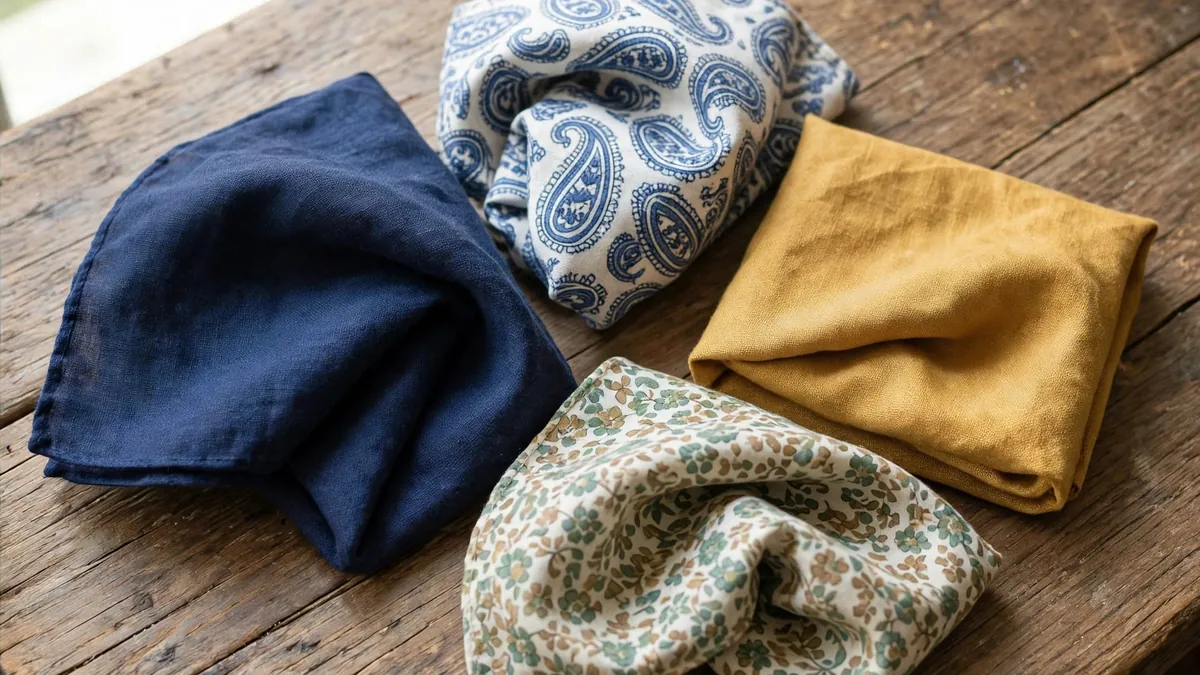
A solid pocket square is one colour throughout, with no print or woven pattern. White is the classic solid, followed by navy, burgundy, black and forest green. A solid square is quiet by nature, and that quietness is its strength.
A patterned pocket square carries a design on the cloth, such as paisley, polka dots, geometric shapes, florals or checks. The pattern can be printed or woven, and it can be bold or subtle. A patterned square adds movement and character to an outfit, and it gives the wearer a way to show personality without changing the suit.
How we chose these comparisons and what to look for
Look first at the cloth and the finish. A good pocket square, solid or patterned, should feel smooth and well made, with hand-rolled edges and a clean, even hem. Hold it up to the light and check the weave.

Look next at the pattern scale. A small, neat pattern, such as tiny dots or a fine paisley, reads as formal and works with a suit. A large, bold pattern reads as casual and suits relaxed jackets. The same rule applies to checks and florals. When in doubt, choose the smaller pattern, because it is easier to wear and harder to get wrong. Our guide to luxury fashion brands shows how the best makers handle pattern and colour, which is a useful reference when you are judging a square in a shop.
Finally, think about the rest of the outfit. A solid square suits almost anything, which is why it is the first square most men should buy. A patterned square needs a calmer outfit around it, a plain tie or a plain shirt, so the pattern has room to breathe. Judge the pairing, not just the square.
The 9 comparisons that matter in 2027
Versatility across outfits
What we like: A solid square works with almost any tie, shirt and jacket, from a formal suit to a relaxed blazer. A patterned square works best when the rest of the outfit is plain, and it adds personality to a simple suit. What to consider: A solid square can look plain if the whole outfit is plain, while a patterned square can clash if the tie or shirt already has a strong pattern. Best for: Solid for a first square and for formal wear; patterned for adding character to a plain outfit. Material: Solid, silk or linen; patterned, printed or woven silk. Price range: Solid, about £10 to £60; patterned, about £15 to £80. Standout feature: Solid, its go-with-anything ease; patterned, its instant personality.
Formality and occasion
What we like: A white solid square in a straight fold is the classic formal choice for weddings, evening events and business. A patterned square suits daytime events, parties and relaxed occasions where a little flair is welcome. What to consider: A patterned square can look too casual at a very formal event, while a solid square can look too plain at a celebration that calls for colour. Best for: Solid for formal and evening occasions; patterned for daytime and festive occasions. Material: Solid, white silk; patterned, printed silk or linen. Price range: Solid, about £10 to £60; patterned, about £15 to £80. Standout feature: Solid, its formal correctness; patterned, its celebratory feel.
Pattern scale and how it reads
What we like: A small, neat pattern reads as refined and works with a suit. A large, bold pattern reads as relaxed and works with casual jackets and open collars. What to consider: A very small pattern can disappear at a distance and look plain, while a very large pattern can dominate the chest and distract from the face. Best for: Small patterns for suits and formal wear; large patterns for casual jackets. Material: Small pattern, fine printed silk; large pattern, bold printed silk or linen. Price range: Solid, about £10 to £60; patterned, about £15 to £80. Standout feature: Small patterns, their quiet refinement; large patterns, their confident ease.
Matching with a tie
What we like: A solid square pairs easily with any tie, patterned or plain, because it does not compete. A patterned square pairs beautifully with a solid tie, where the pattern has room to stand out. What to consider: A patterned square with a patterned tie needs the two patterns to differ clearly in scale, or they will clash. A solid square with a solid tie can look flat if both are the same colour. Best for: Solid for patterned ties; patterned for solid ties. Material: Solid, silk or linen; patterned, printed silk. Price range: Solid, about £10 to £60; patterned, about £15 to £80. Standout feature: Solid, its easy pairing; patterned, its contrast with a plain tie.
Matching with a shirt
What we like: A solid square works with any shirt, plain or patterned, because it adds colour without adding a competing design. A patterned square works best with a plain shirt, where its design can be seen clearly. What to consider: A patterned square with a checked or striped shirt can look busy, while a solid square with a plain white shirt can look a little stark if the colour is too bright. Best for: Solid for patterned shirts; patterned for plain shirts. Material: Solid, silk or linen; patterned, printed silk. Price range: Solid, about £10 to £60; patterned, about £15 to £80. Standout feature: Solid, its calm against any shirt; patterned, its clarity against a plain shirt.
Colour range and choice
What we like: Solid squares come in every colour, from classic white to burgundy, navy and forest green, and each one is easy to match. Patterned squares combine colours, which lets one square pick up several colours from the outfit at once. What to consider: A solid square in a bright colour can look loud on its own, while a patterned square with too many colours can look messy and hard to match. Best for: Solid for single-colour outfits; patterned for outfits with several colours to tie together. Material: Solid, silk or linen; patterned, multi-colour printed silk. Price range: Solid, about £10 to £60; patterned, about £15 to £80. Standout feature: Solid, its clean single colour; patterned, its ability to link colours together.
Folding and how each style sits
What we like: A solid square folds into a crisp straight edge that looks neat and formal. A patterned square folds into a puff or a peaked shape that shows off the pattern and looks relaxed. What to consider: A solid square in a puff fold can look shapeless, because there is no pattern to give it interest, while a patterned square in a straight fold can hide the pattern and waste its best feature. Best for: Solid for straight, formal folds; patterned for puff and peaked folds. Material: Solid, silk; patterned, silk or linen. Price range: Solid, about £10 to £60; patterned, about £15 to £80. Standout feature: Solid, its clean straight line; patterned, its visible design in a puff fold.
Durability and ageing
What we like: Solid silk and linen squares age gracefully, keeping their colour and sheen for years. Patterned squares age well too, though printed patterns can fade with washing and sun over time. What to consider: A printed pattern can fade unevenly if it is washed often or left in strong sun, while a solid square shows stains and marks more clearly because there is no pattern to hide them. Best for: Solid for long-lasting, everyday wear; patterned for occasional wear and special occasions. Material: Solid, pure silk or linen; patterned, woven pattern for longer life, printed for lower cost. Price range: Solid, about £10 to £60; patterned, about £15 to £80. Standout feature: Solid, its lasting, even colour; patterned, its woven designs that outlast prints.
Price and value
What we like: Solid squares are usually cheaper, and a good white silk square is one of the best-value buys in menswear. Patterned squares cost a little more, especially woven ones, but one good patterned square can lift several outfits. What to consider: Very cheap patterned squares are often printed on poor cloth and fade quickly, while very cheap solid squares can be thin and poorly finished. Best for: Solid for affordable, everyday value; patterned for a versatile piece that links outfits together. Material: Solid, pure silk or linen; patterned, woven or printed silk. Price range: Solid, about £10 to £60; patterned, about £15 to £80. Standout feature: Solid, its low cost and high use; patterned, its ability to lift many outfits.
Which pocket square is right for you
If you are buying your first pocket square, buy a solid white silk square. It works with almost every dark suit, it is correct at formal occasions, and it costs little. Add a solid burgundy or navy square next, for days when white feels too stark. These three squares cover most formal and business occasions a man will meet.
If you already own the solids and want more personality, add a patterned square. Choose a small, neat pattern in colours that match your suits, such as a navy and burgundy paisley or a small polka dot. Wear it with a solid tie and a plain shirt, so the pattern has room to breathe. A patterned square is at its best when it is the one patterned thing at the chest. Our guide to trench coats is useful here, because the same rule about one statement piece applies: a patterned square, like a bold coat, works best when the rest of the outfit stays calm.
Most men end up owning both. A small collection of three solid squares and two or three patterned squares covers almost every occasion, from a formal evening to a relaxed weekend.
The caveats that matter
Neither style is a shortcut to a good outfit. A pocket square cannot fix a suit that does not fit, a shirt that clashes, or a tie that fights the jacket. It is a finishing touch, and it works best when the rest of the outfit is already right. A square that is too bright, too large or too busy will draw the eye for the wrong reasons.
| Detail | What is known |
|---|---|
| Most versatile choice | Solid, especially white silk, works with almost any outfit |
| Best for adding personality | Patterned, when the tie and shirt are plain |
| Best for formal occasions | Solid white in a straight fold |
| Pattern scale rule | Small patterns read as formal; large patterns read as casual |
| Best tie pairing | Solid square with a patterned tie; patterned square with a solid tie |
| Best shirt pairing | Solid square with any shirt; patterned square with a plain shirt |
| Typical price range | Solid about £10 to £60; patterned about £15 to £80 |
| What neither style does | Neither is waterproof or stain-proof, and neither fixes a poor-fitting suit |
Check the label before you buy. Some squares sold as silk are blends with polyester, and they will not feel, fold or age the same way. If the label is vague or missing, treat that as a warning sign.
Checklist: choosing between solid and patterned
Use these checks before you buy, and again when you pair the square with a jacket.
- Check the occasion: solid for formal and evening, patterned for daytime and festive days.
- Check the tie: solid square with a patterned tie, patterned square with a solid tie.
- Check the shirt: patterned square needs a plain shirt, solid works with any shirt.
- Check the pattern scale: small patterns for suits, large patterns for casual jackets.
- Check the label: look for pure silk or linen, and hand-rolled edges.
- Check the fold: solid for straight folds, patterned for puff and peaked folds.
Frequently asked questions
Can I wear a patterned pocket square to a wedding?
Yes, for a daytime or summer wedding, especially if the tie is solid and the shirt is plain. A small paisley or polka dot in colours that match the suit looks festive without being loud. For a formal evening wedding, a white solid square is the safer choice.
Should my pocket square match my tie?
No, it should complement it, not match it. If your tie is navy with a small pattern, a square in a related but different colour, such as burgundy or soft blue, works better than an identical navy square. Matching exactly looks stiff and dated.
How much of the pocket square should show?
About a centimetre or two is enough for a straight fold, and a little more for a puff fold. The square should sit in the pocket without bulging, and it should not slip down during the day. If it keeps disappearing, the square may be too small for the pocket.
Can I wear a pocket square without a tie?
Yes. A pocket square without a tie looks relaxed and modern, and it works well with an open collar or a casual jacket. A patterned square suits this look particularly well, because it adds interest when there is no tie to do the job.
What is the best first pocket square to buy?
A solid white silk square. It works with almost every dark suit, it is correct at formal occasions, and it is inexpensive. A pocket square also makes a thoughtful present, and our guide to luxury gifts under £1000 has ideas for men who already own the basics.
Do printed patterns fade?
They can, with frequent washing and strong sun. A printed pattern sits on the surface of the cloth, so it fades faster than a woven pattern, which is part of the cloth itself. Hand-wash gently, dry away from direct sun, and choose a woven pattern if you want the square to last for years.
The bottom line
Solid and patterned pocket squares are both classics, and the choice between them comes down to the outfit around them. A solid square is quiet, versatile and correct at formal occasions, which makes it the right first buy and the safe default. A patterned square adds personality and colour, which makes it the right choice when the tie is plain, the shirt is plain, and the occasion calls for a little flair.
Own both if you can, and let the outfit decide. A white solid square and one well-chosen patterned square will cover most occasions a man will meet in a year.