


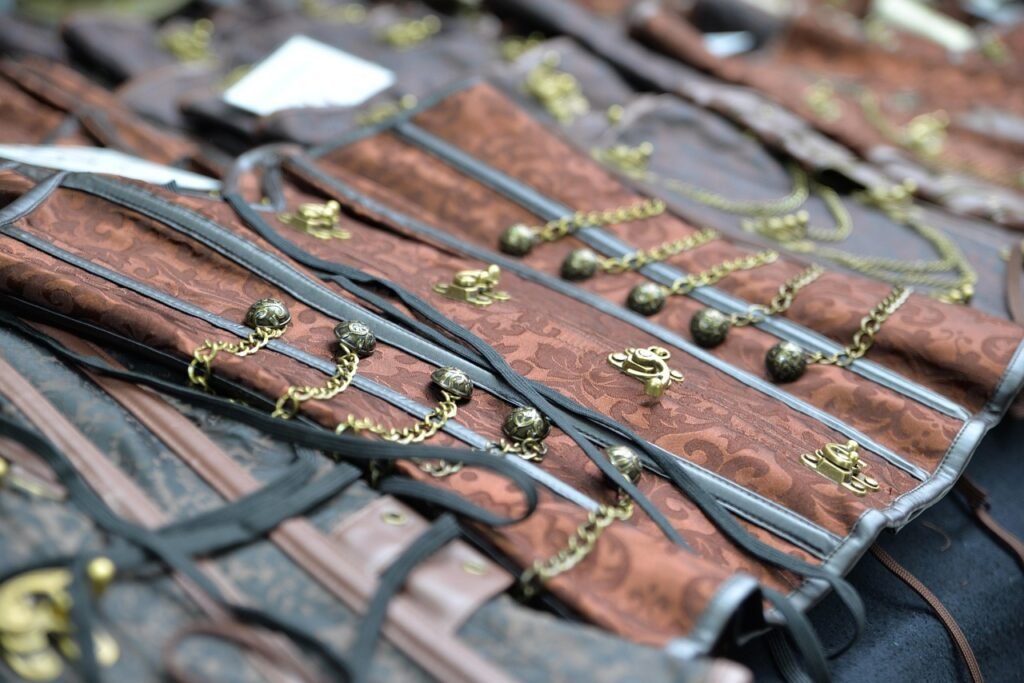
What happens when you take a Victorian waistcoat, bolt on a pair of brass goggles, and send the whole outfit through a time machine that never quite worked? You get steampunk fashion, a style that treats the nineteenth century as a starting point rather than a rulebook. It is part costume, part craft project, and part everyday wardrobe, and it has quietly influenced runways, festival wear, and even mainstream accessories for well over a decade.
The look is easy to recognize and surprisingly hard to define. That tension is exactly what makes it worth exploring.
What Is Steampunk Fashion, Exactly?
Steampunk fashion is a style movement that mixes Victorian and Edwardian clothing with industrial and mechanical details: brass, copper, leather, goggles, gears, clockwork, and pocket watches. Think frock coats and corsets, but also pressure gauges and rivets. The clothes borrow the silhouette of the 1800s and then add imaginary technology that the 1800s never had.
The word itself has a clear origin. Writer K.W. Jeter coined “steampunk” in a 1987 letter to Locus magazine, using it to describe Victorian-era speculative fiction by himself, Tim Powers, and James Blaylock. The term started as a literary label and then escaped the page. Once readers could picture airships and clockwork prosthetics, they wanted to wear them.
The literary roots run deep. The aesthetic draws on nineteenth-century science fiction and adventure writing, with Jules Verne and H.G. Wells as the usual touchstones, plus later retro-Victorian works that revived the mood. That is why steampunk clothing so often looks like expedition gear: it is dressing for a journey that only exists in fiction.
The Core Elements of a Steampunk Look

Most steampunk outfits are built from a handful of recognizable parts. You do not need all of them. In practice, two or three strong pieces carry a whole look.
| Element | What It Looks Like | Why It Works |
|---|---|---|
| Victorian tailoring | Waistcoats, frock coats, bustles, high collars | Provides the historical base |
| Industrial materials | Brass, copper, leather, dark wool | Signals machinery and craft |
| Signature accessories | Aviator goggles, pocket watches, gear jewelry | Instantly readable as steampunk |
| Footwear | Lace-up boots, tall leather boots | Grounds the outfit in utility |
| Headwear | Top hats, small tilted hats, leather caps | Frames the silhouette |
Goggles deserve their own note. Aviator-style goggles are widely treated as the genre’s most recognizable accessory, tied to the aviation and exploration imagery of early-twentieth-century fiction. If someone wears one steampunk item to a party, it is usually the goggles.
The materials matter as much as the shapes. Brass and copper give warmth that modern silver-toned metal lacks. Leather adds weight and age. Dark wool and cotton keep the palette grounded so the metal details pop instead of shouting.
Where Steampunk Fits in the Wider Fashion Conversation
Steampunk has never been a mainstream trend in the way athleisure was, but its fingerprints are everywhere. The 2010s fashion shift toward athleisure, streetwear, and Instagram-driven personal style pushed people toward dressing as characters rather than following a single seasonal rule, and steampunk benefited from that freedom. If you want to see how that decade rewrote the rules, the story of 2010s fashion, athleisure, and Instagram is a useful backdrop.
The style also overlaps with broader movements. It sits comfortably beside Italian luxury fashion in its love of leather, tailoring, and hardware, even though the two serve very different audiences. Designers borrow steampunk’s brass tones and goggle motifs for accessories and outerwear, then strip away the costume context.
In 2026 fashion trends for women, the aesthetic keeps returning as a vintage-industrial accent rather than a full look. A single brass-buttoned coat or a multi-strap leather belt can nod to the genre without committing to it. The 2026 fashion trends guide maps the directions worth watching for a wider view of where style is heading.
A Short History of a Style That Refused to Stay in Books
Steampunk’s profile rose sharply in the late 2000s and early 2010s. Conventions gave the subculture a physical home, and a major exhibition at the Museum of the History of Science in Oxford brought the aesthetic to a museum audience around 2009 and 2010. Mainstream fashion press followed, and the look moved from niche costuming into editorial spreads.
That rise tracked the growth of maker culture. Steampunk fashion is strongly associated with modification and craft: altering thrift-store clothing, building props, and modding objects. The maker movement’s rise is generally dated to the mid-2000s, and the two scenes fed each other. A steampunk costume is often a workshop project before it is a shopping list.
The subculture also developed an organized fan culture, with dedicated conventions and costuming communities where people compare builds, swap techniques, and show off finished outfits. That community spirit is part of why the style has lasted. It rewards participation over purchasing.
How to Build a Steampunk Outfit That Actually Works
Beginners usually make the same mistakes. They buy too much at once, they lean on plastic props, and they forget that comfort decides whether an outfit survives a full day. Here is a practical sequence that avoids those traps.
- Start with one real garment. Choose a waistcoat, a long coat, or a structured skirt in wool, cotton, or leather. A single well-made piece beats five cheap ones.
- Pick a character or a job. Are you an explorer, an inventor, an airship mechanic, or a society lady slumming it? A clear role keeps the outfit coherent.
- Add one mechanical focal point. Goggles, a pocket watch on a chain, or a brass cuff. One is enough. Three competing focal points look cluttered.
- Choose footwear you can walk in. Lace-up boots with a low heel work for most people. Test them for an hour before an event.
- Age the details deliberately. New leather looks new. A little wear on straps and buckles reads as authentic.
- Do a full dress rehearsal. Wear the complete outfit at home for an hour. You will find the loose buckle, the scratchy collar, and the hat that will not stay on.
Common Mistakes to Avoid
The biggest error is treating steampunk as a shopping problem. Off-the-rack “steampunk” costume kits often look flat because every piece is new and identical. Thrifted and altered clothing almost always reads better.
The second error is ignoring weight and heat. Brass, leather, and layered wool get heavy and warm. Costuming guides regularly raise practical and safety questions about metal against skin, heat, and the sheer weight of real gears. Keep metal off bare skin for long stretches, and build in a layer you can remove.
The third error is over-accessorizing. A gear glued to everything is a costume cliché. Restraint is what separates a strong look from a party-shop outfit.
Gender, Dress Codes, and Why Steampunk Feels Liberating
Steampunk fashion is often noted for flexible gender presentation compared with strict Victorian norms. Women wear trousers and waistcoats. Men wear corsets and long coats. The genre’s speculative framing gives people permission to ignore historical rules while borrowing historical shapes.
That flexibility is one of the style’s quiet strengths. It also makes steampunk welcoming to beginners, because there is no single correct silhouette to match. A person can build a look from whatever fits their body and budget, then add the industrial details that signal the genre.
The overlap with cosplay and historical reenactment is real, but the distinction matters. Steampunk costuming borrows from Victorian and Edwardian reenactment while adding speculative, anachronistic elements. A reenactor aims for accuracy. A steampunk wearer aims for plausibility inside a fictional world. That is a much looser brief, and it is why the style keeps evolving.
Steampunk in Everyday Wear
Full costume is not the only option. Plenty of people wear steampunk-adjacent clothing to work, concerts, and weekends without ever calling it that. The trick is to dial the volume down.
A brown leather belt with a brass buckle. A waistcoat over a plain shirt. A pocket watch instead of a wristwatch. Boots with visible lacing. A coat with a high collar. Each of these reads as ordinary clothing with a hint of another era, and none of them requires an explanation.
This is where steampunk quietly connects to broader style culture. Fashion illustration has always translated runway moments into something a person can actually picture wearing, and the same translation happens with steampunk. An elaborate convention outfit becomes a wearable idea once you remove the props. If you enjoy that process, Angelica Hicks turning runway moments into illustrations shows how a look gets distilled to its essentials.
The style also rewards people who follow niche fashion writing. Curated newsletters and independent publications are where a lot of subculture styling gets documented, and finding the good ones saves hours of scrolling. A guide to finding the best fashion substacks without wasting your inbox is a sensible starting point.
Materials, Budgets, and What to Buy First
Steampunk can be cheap or expensive, and the price does not always predict the result. A thrifted wool waistcoat with new brass buttons often beats a costly costume set.
| Budget Level | Best Approach | Watch Out For |
|---|---|---|
| Under $50 | Thrift stores, alterations, borrowed props | Plastic goggles that look shiny and fake |
| $50 to $150 | One quality garment plus real leather accessories | Buying too many small items instead of one good one |
| $150 and up | Custom tailoring, leatherwork, quality goggles | Spending on props before the base outfit works |
The single best first purchase is footwear or a coat, because those carry the most visual weight and get reused across many outfits. Goggles are the most fun purchase but the least versatile.
Conclusion
Steampunk fashion works because it solves a problem most styles ignore. It gives people a framework for dressing that is historical without being strict, creative without being chaotic, and personal without being lonely. The genre’s 1987 origin as a literary label explains its storytelling DNA, and its ties to maker culture explain why so many wearers build rather than buy.
The practical takeaway is simple. Start with one real garment, add one mechanical focal point, and rehearse the full look before you wear it in public. Skip the plastic kits and the gear-covered everything. What actually works is restraint, good materials, and a clear idea of who your character is supposed to be.
Whether you go full airship captain or just add a brass buckle to a favorite belt, the style rewards intention. That is a rare thing in fashion, and it is why steampunk keeps finding new wearers long after the trend cycle moved on.
Frequently Asked Questions
What is steampunk fashion?
Steampunk fashion is a style that combines Victorian and Edwardian dress with industrial and mechanical motifs such as brass, copper, leather, goggles, gears, clockwork, and pocket watches. It borrows the shapes of the nineteenth century and adds imaginary technology, creating outfits that look like expedition gear from a world that never existed.
Who invented the word steampunk?
Writer K.W. Jeter coined the term in a 1987 letter to Locus magazine. He used it to describe Victorian-era speculative fiction written by himself, Tim Powers, and James Blaylock. The label later spread from literature to fashion, art, and events.
Do you need goggles for a steampunk outfit?
No, but they help. Aviator-style goggles serve as the genre’s most recognizable accessory, tied to the aviation and exploration imagery of early-twentieth-century fiction. A pocket watch, a brass-buckled belt, or a set of leather straps can signal the style just as clearly with less fuss.
Can you wear steampunk fashion every day?
Yes, if you scale it down. A waistcoat over a plain shirt, a leather belt with a brass buckle, lace-up boots, or a pocket watch all read as ordinary clothing with a vintage-industrial edge. Save the full costume, props, and heavy metal pieces for conventions and events.
Is steampunk the same as cosplay?
They overlap but are not identical. Steampunk costuming shares tools and habits with cosplay and with Victorian and Edwardian reenactment, but it is distinguished by its speculative, anachronistic elements. A reenactor aims for historical accuracy, while a steampunk wearer aims for plausibility inside a fictional world.
What should you buy first when starting a steampunk wardrobe?
Start with footwear or a coat. Those pieces carry the most visual weight and get reused across many outfits. Add one mechanical focal point, such as goggles or a pocket watch, and avoid cheap costume kits, which tend to look flat because every piece is new and identical.














