

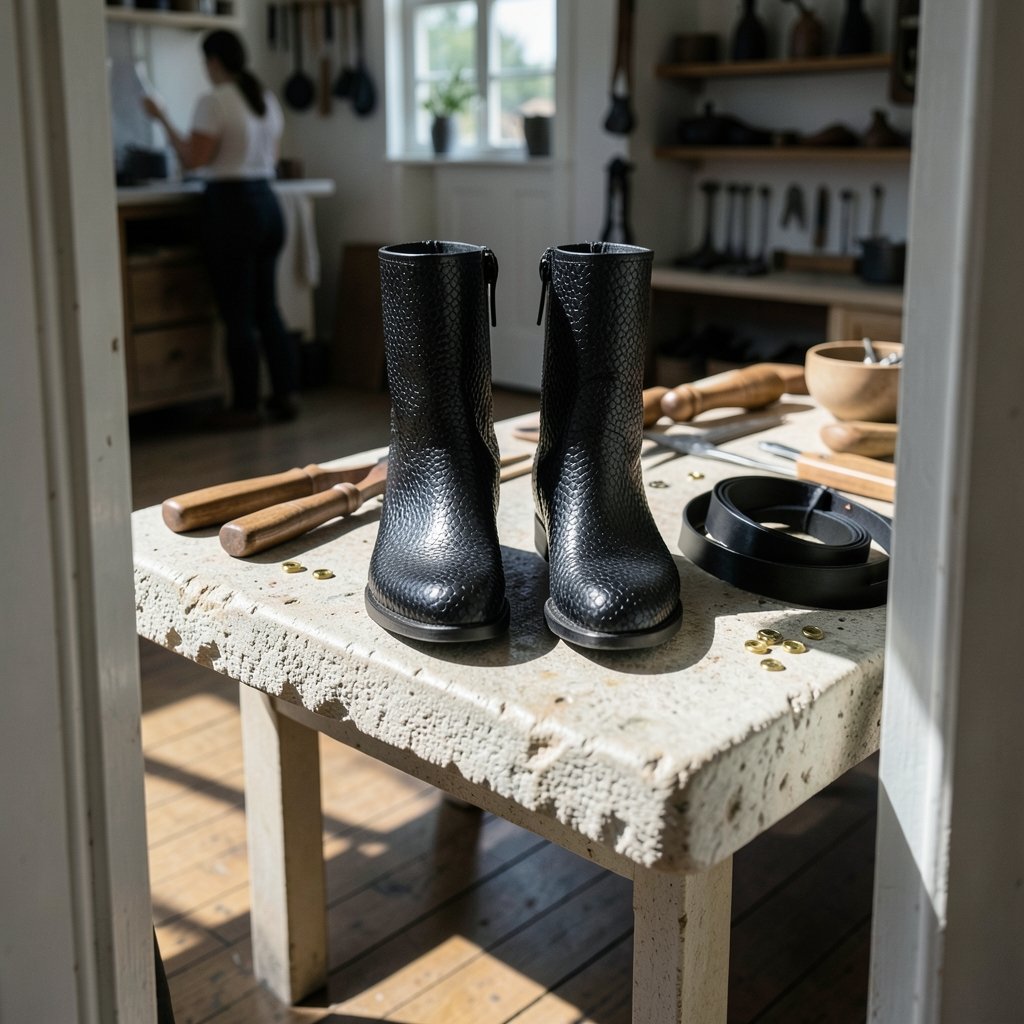
What do you picture when someone says stingray boots? Probably something that belongs on a reef, not in a closet. Yet a small, devoted corner of the footwear world swears by them, and the material has a pedigree stretching back centuries. The truth is stranger and more practical than the name suggests, and it involves a leather with a surface unlike anything else in a bootmaker’s workshop.
Stingray boots are made from the tanned hide of a ray, and the result is a pebbled, armor-like material historically known as shagreen. It is not the venomous barb that gets used. It is the skin, and that skin has a texture so distinctive that people either love it on sight or recoil from it. There is not much middle ground.
What Are Stingray Boots, Exactly?
Stingray boots are footwear built from the tanned skin of stingrays, most often in western silhouettes but also in dress boots and casual styles. The hide is prized for its surface: dense, round calcium deposits that create a pebbled pattern resembling tiny beads or a fine mosaic. Tanning these hides is difficult work, and the finished material is stiff, so makers typically reserve it for panels, vamps, and decorative sections rather than the whole boot.
The name causes confusion. People hear “stingray” and assume the barb, the venomous spine, is involved. It is not. The barb is a defensive weapon, and it has no role in leather production. The commercial product is the hide, and the pebbled texture comes from the skin’s natural structure, not from any added treatment.
Shagreen as a material has a long history in decorative arts, associated with European luxury goods and with earlier Asian and Middle Eastern craft traditions. The exact date of first use varies by source, but the material’s reputation as an exotic luxury good is not new. It predates the modern boot market by a wide margin.
The Texture Problem Nobody Warns You About

Here is the practical issue that separates stingray from every other exotic leather: the surface is not smooth, and it is not soft. Those calcium-rich pebbles are hard. Running a hand across a stingray boot feels closer to touching polished stone or a beaded purse than touching calfskin.
That texture cuts both ways. Fans say it resists scuffing and holds up to wear in a way that smooth leathers cannot match. Critics say it feels cold, looks reptilian, and takes real getting used to against the foot. Neither camp is wrong.
A few practical points that experienced wearers tend to raise:
- Break-in is real. Stingray does not drape and mold the way softer leathers do. Expect a firmer feel for the first several wears.
- Fit matters more than usual. Because the material flexes less, a boot that is slightly too small will not stretch into comfort the way a calfskin boot might.
- Socks change the experience. A thin sock against a stiff vamp can rub. Many wearers size up half a size or choose a cushioned sock.
- Conditioning is different. The pebbled surface does not absorb creams evenly. Over-conditioning can leave residue trapped between the beads.
The most common mistake people make is buying stingray boots online, sight unseen, expecting a soft exotic leather. They are not that. They are closer to a structured dress shoe in feel, and buyers who understand that up front tend to be much happier.
Stingray vs. Other Exotic Leathers
Comparing stingray to the exotics people already know helps set expectations. Each material has a different personality.
| Feature | Stingray (shagreen) | Ostrich | Crocodile | Calfskin |
|---|---|---|---|---|
| Surface | Hard pebbled beads | Quill bumps, soft | Scaled, pliable | Smooth, even |
| Flexibility | Low | High | Moderate | High |
| Break-in | Slow, firm | Quick | Moderate | Quick |
| Scuff resistance | High | Moderate | Moderate | Low to moderate |
| Typical use | Panels, vamps, accents | Full boots | Full boots, accents | Everything |
| Care difficulty | Moderate to high | Low | Moderate | Low |
The takeaway from that table: stingray is a specialty material, not an everyday workhorse. People who buy it usually own several pairs of boots and want one that stands apart. It is also worth noting that exotic leathers of all kinds sit in a different regulatory and ethical category than mainstream leathers, which matters for the next section.
Regulation, Conservation, and the Questions Buyers Should Ask
This is where stingray gets complicated, and where a lot of marketing material goes quiet.
Stingray skin falls under international trade rules. The whiptail stingray family, Dasyatidae, was added to CITES Appendix II at the 2016 Conference of the Parties in Johannesburg, with the listing taking effect in 2017. Appendix II listings mean trade is regulated and requires permits, though the specifics depend on the species and the listing text. Anyone repeating a blanket claim that all stingray leather is or is not CITES-regulated is oversimplifying. It depends.
Conservation status also varies by species. Several stingray species are assessed as Vulnerable or Endangered on the IUCN Red List, but assessments differ by species and by year. There is no single status for “stingray” as a category, and buyers should be skeptical of any seller who treats the whole group as one thing.
In the United States, stingray products fall under Fish and Wildlife Service import and export rules for CITES-listed species. That means legitimate importers deal with permits. A seller who cannot explain where the hide came from, or who brushes off the question, is a red flag.
Practical advice for buyers:
- Ask about species and origin. A serious maker knows what they are working with.
- Ask about documentation. Permits exist for a reason, and reputable sellers can speak to them.
- Be wary of “sustainable” claims with no substance. Marketing language about durability and exotic status is often repeated without verification.
- Check the maker’s care guidance. If they cannot tell you how to condition shagreen, they may not work with it often.
None of this makes stingray boots inherently unethical. It makes them a purchase worth asking questions about, the same way you would with any regulated material.
How Stingray Boots Fit Into a Wardrobe
Design-wise, stingray boots tend to fall into two camps. Western styles use the material on the vamp or shaft for contrast, often paired with smooth leather panels. Dress and casual styles use it more sparingly, sometimes just on a toe cap or heel counter.
The material’s stiffness actually helps in one respect: it holds shape. A stingray panel will not collapse or sag the way a soft leather panel might. Makers use that quality deliberately, placing shagreen where structure matters.
Style considerations that come up in practice:
- The texture is the statement. Pairing stingray with busy prints or heavy hardware usually looks chaotic. Let the material be the focal point.
- Color reads differently. Because the surface is pebbled, dark dyes can look almost black in low light and reveal depth in sunlight. Photographs often undersell this.
- Care routines differ by finish. Some shagreen is polished, some left more natural. The care advice for one may not apply to the other.
For readers who follow texture trends in hair and beauty, there is a parallel worth noting: the appeal of a distinct, tactile surface is the same instinct that drives interest in 4c hair or the defined pattern of 2b hair. People are drawn to materials and textures with visible character. Stingray is that instinct applied to footwear.
Caring for Shagreen Without Ruining It
Care is where most stingray boots meet their fate, and usually not a good one. The pebbled surface traps product, and the material does not forgive the way smooth leather does.
What actually works, based on how the material behaves:
- Wipe, do not scrub. A barely damp cloth removes dust from between the beads. Scrubbing drives dirt deeper.
- Use products sparingly. A tiny amount of conditioner, worked in with a soft brush, is plenty. Excess sits in the crevices and dries into a haze.
- Keep them dry. Water and stiff leather are a poor combination. Wet boots should dry away from direct heat.
- Store with structure. Boot trees help the panels keep their shape, which matters more with a rigid material.
- Address scuffs early. The surface resists scuffing, but when it does mark, a light touch works better than aggressive polishing.
The most common mistake is treating shagreen like calfskin: heavy conditioner, vigorous buffing, and a hope for the best. That routine is designed for soft leather and works against a pebbled hide.
What Stingray Boots Cost and Who They Suit
Stingray boots sit in the premium tier, and the price reflects both the material and the labor. Tanning these hides is slow work, and the stiffness means makers cannot cut corners on construction. Expect to pay well above mainstream boot prices, with western makers and specialty houses at the higher end.
Who should consider them:
- Collectors who already own the standard exotics and want something different.
- Wearers who value structure and do not need a boot to feel like a slipper.
- Buyers who ask questions and are comfortable with the regulatory side of exotic leather.
Who should probably skip them:
- First-time exotic buyers who expect softness and drape.
- Anyone needing an all-day, every-day boot. The stiffness works against long wear for many people.
- Shoppers who want a low-maintenance material. Shagreen rewards attention.
There is also a cultural angle worth mentioning. Exotic leathers carry status associations that some wearers embrace and others find off-putting. Stingray is no exception. It is a material that announces itself, and that is either the point or the problem, depending on the buyer.
For anyone tracking how texture and material choices play out across style categories, the same conversation shows up in unexpected places, from the way the row of a garment is finished to the way a boot’s surface catches light. Materials with visible character tend to attract strong opinions, and stingray is a textbook case.
Conclusion
Stingray boots are not for everyone, and that is precisely their appeal. The material is hard, pebbled, and unmistakable, with a history in luxury goods that stretches back centuries and a modern regulatory framework that buyers should understand before spending money. They resist scuffing, hold their shape, and demand more care than a standard leather boot. None of that is a dealbreaker. It is just information that marketing pages tend to leave out.
The smart approach is simple. Know that the texture is the point. Ask where the hide came from and whether the paperwork exists. Buy from someone who works with the material regularly and can explain how to care for it. Do those three things, and a pair of stingray boots can be a genuinely distinctive addition to a rotation. Skip them, and the boots become an expensive lesson in expectations. The material rewards buyers who do their homework, and it punishes the ones who do not.
Frequently Asked Questions
Are stingray boots made from the venomous barb?
No. The barb, the venomous spine, plays no role in leather production. Stingray boots are made from the tanned hide, and the pebbled texture comes from the skin’s natural calcium-rich structure. The barb is a defensive feature of the living animal, not a material used in footwear.
Are stingray boots legal to buy and import?
It depends on the species and the listing. The whiptail stingray family was added to CITES Appendix II in 2016, effective 2017, which means trade is regulated and permits are required. In the United States, imports and exports fall under Fish and Wildlife Service rules for CITES-listed species. Reputable sellers can speak to documentation, and buyers should ask.
Why do stingray boots feel so stiff?
The stiffness comes from the calcium deposits that create the pebbled surface. Unlike soft leathers that drape and mold to the foot, shagreen holds its shape. That quality makes it useful for structured panels, but it also means a longer break-in period and a firmer feel underfoot. Sizing up slightly or choosing a cushioned sock helps.
How do you clean stingray boots?
Wipe them with a barely damp cloth rather than scrubbing, since the pebbled surface traps dirt and product between the beads. Use conditioner sparingly and work it in with a soft brush. Keep the boots dry, store them with boot trees to hold their shape, and treat scuffs early with a light touch rather than aggressive polishing.
Are stingray boots more durable than other exotic leathers?
The surface resists scuffing well, and the material holds its shape, which many wearers count as a durability advantage. However, claims about durability in marketing materials are often repeated without independent verification. The material’s real strengths are structure and scuff resistance, not indestructibility. Proper care matters more than any label.
Who should avoid buying stingray boots?
First-time exotic buyers who expect a soft, pliable feel should probably skip them, as should anyone who needs a low-maintenance everyday boot. Stingray rewards wearers who understand its stiffness and are willing to follow a different care routine. Collectors and buyers who value structure tend to get the most from them.














