The Best Chokers for Teens 2027
A choker is the smallest piece of jewellery with the biggest effect on an outfit. It sits close to the neck, frames the face, and turns a plain top into a finished look in seconds. For teens, that is a large part of the appeal. A choker costs less than most jewellery, it works with school outfits, party dresses and weekend looks, and it can be swapped in a moment when the mood changes.
The hard part is choosing well. A choker that is too tight feels uncomfortable by lunchtime, a cheap clasp breaks after a week, and a style that looks perfect online can sit badly on a real neck. Teens also have different needs from adults. Skin can be more sensitive, budgets are smaller, and a piece that is worn to school, to a party and to a family dinner has to be versatile as well as pretty.
Below are nine chokers worth considering in 2027, from a classic black velvet band to a layered set that covers a whole week of outfits. Each one is described by what it is good at, what to watch for, and who it suits best, so you can choose with your neckline and your budget in mind, not just a trend.
Key takeaways
- A choker should sit snugly without pressing into the skin; two fingers should fit flat between the band and the neck.
- Velvet, ribbon and leather are the most comfortable materials for all-day wear, while metal chains suit shorter outings and parties.
- Measure the neck before buying, and look for an extender chain, which makes one choker fit more necklines.
- Hypoallergenic metals and lined bands matter for sensitive skin, and nickel is the most common cause of irritation.
- No choker suits every outfit, and a choker that leaves marks, pinches, or causes a rash should be taken off and replaced.
What a choker actually does for a teen outfit
A choker changes the balance of an outfit. Because it sits at the base of the neck, it draws the eye upward, frames the jawline, and makes a plain neckline look deliberate. A simple white T-shirt with a thin gold choker looks styled. The same shirt without one looks unfinished. That is why chokers have stayed popular through so many fashion cycles, from the nineties velvet band to the pearl chokers of recent years.
For teens, the choker is also one of the easiest ways to try a trend without committing to it. A dress is expensive and hard to change. A choker is small, affordable, and easy to take off. It lets a teenager test a look, such as gothic velvet, soft pearls or a bold pendant, and decide whether it feels right before spending more. It also works across occasions. The same gold chain can go from a school day under a shirt collar to a party with a slip dress.
Comfort is what separates a good choker from a bad one. A choker is worn against the throat, so the material, the width and the fit matter more than with a longer necklace. A wide velvet band feels soft and stays in place. A thin metal chain can twist and catch on hair. A stiff leather cord can feel fine for an evening and irritating after eight hours. The best chokers for teens are the ones that are comfortable enough to forget about, because a piece you keep adjusting is a piece you will stop wearing.
How we chose these chokers and what to look for
Look first at the fit. Measure the neck with a soft tape, add one to two centimetres for comfort, and check that the choker has an extender chain or an adjustable tie. A fixed-length choker is a gamble. An adjustable one fits more people and more necklines. The two-finger test is a quick check once it is on: two fingers should slide flat between the band and the neck. If they cannot, it is too tight. If the choker slides down onto the collarbone, it is too loose.
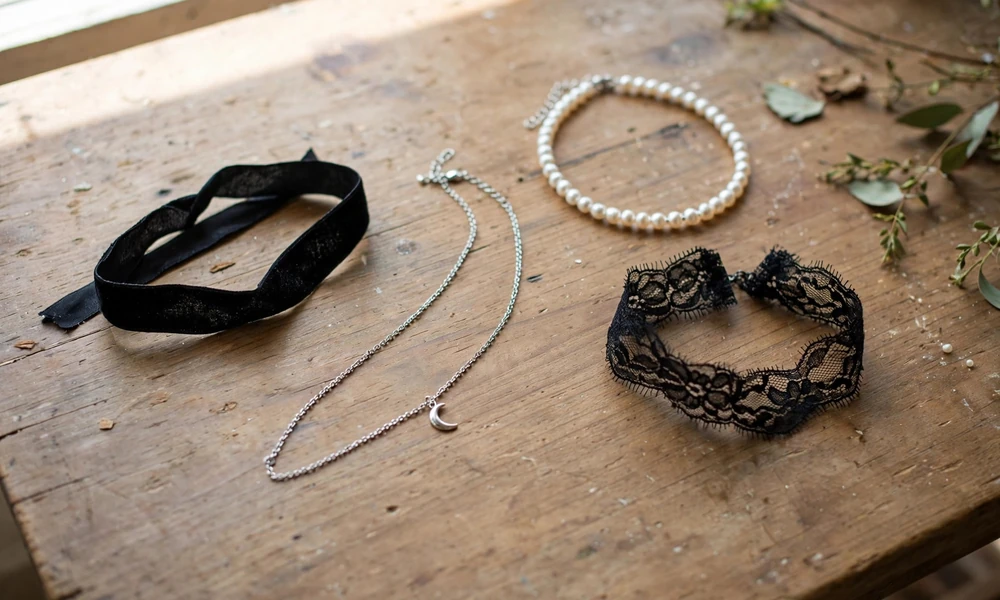
Look next at the material and the metal. Velvet and ribbon are soft against the skin and suit all-day wear. Leather is durable and gives a bolder look, but it needs a lined back if the skin is sensitive. For metal, look for stainless steel, sterling silver or gold-plated pieces described as hypoallergenic or nickel-free. Cheap alloy can cause redness and itching within hours, especially in warm weather. A layered necklace can be a useful alternative when a single choker feels too plain, because it adds length and movement without changing the fit at the neck.
Finally, look at the clasp and the finish. A lobster clasp is secure and easy to use. A ribbon tie is adjustable but needs retying during the day. A magnetic clasp is quick but can open if it catches on hair. Check the edges of the band too. A rough edge will rub the skin raw by the end of the day, while a lined or rolled edge stays comfortable. Price is a poor guide on its own. Some of the best teen chokers are inexpensive, and some expensive ones are uncomfortable.
The 9 best chokers for teens in 2027
The Classic Black Velvet Choker
What we like: Soft, comfortable and endlessly versatile, with a rich black that suits every skin tone and every outfit from a school shirt to a party dress. What to consider: Velvet picks up dust and lint, and it can look tired after a season of heavy wear. Best for: Everyday wear and parties. Material: Velvet with a lined back and a metal clasp. Price range: About £8 to £25. Standout feature: The softest band in this list, comfortable for a full day.
The Gold Chain Choker
What we like: A thin gold chain that catches the light, suits warm skin tones, and layers neatly with longer necklaces. What to consider: Thin chains can twist and tangle with hair, and gold plating wears off over time. Best for: Parties, photos and dressing up. Material: Gold-plated stainless steel with an extender chain. Price range: About £12 to £40. Standout feature: The most polished look in this list for the price.
The Pearl Choker
What we like: Small, even pearls that look neat and classic, suit formal occasions, and soften a sharp neckline. What to consider: Pearls need gentle care, and imitation pearls can peel if they get wet. Best for: Family events, proms and formal dinners. Material: Glass pearls on a knotted silk thread. Price range: About £15 to £45. Standout feature: The most timeless piece in this list.
The Ribbon Tie Choker
What we like: A soft ribbon that ties at the back, fits any neck size, and comes in every colour, so it can match a dress exactly. What to consider: It needs retying during the day, and a long bow can catch on a collar. Best for: Matching an outfit colour and one-off occasions. Material: Satin or grosgrain ribbon with a small charm. Price range: About £5 to £18. Standout feature: The most adjustable fit in this list.
The Leather Cord Choker
What we like: A slim leather cord with a small metal bead or charm, durable, unfussy, and easy to wear with jeans and boots. What to consider: Leather can feel stiff at first and may irritate very sensitive skin. Best for: Casual days and festival looks. Material: Leather cord with a lined back and a lobster clasp. Price range: About £10 to £30. Standout feature: The toughest choker in this list.
The Beaded Choker
What we like: Small colourful beads that add pattern and personality, light to wear, and easy to match with bracelets. What to consider: Beads can feel bumpy against the skin, and a broken thread means beads everywhere. Best for: Summer, holidays and casual outfits. Material: Glass beads on a strong elastic or cord. Price range: About £6 to £20. Standout feature: The most playful option in this list.
The Satin Choker
What we like: A smooth satin band with a soft sheen, comfortable against the skin, and smart enough for a party without looking formal. What to consider: Satin shows marks easily and can slip if the clasp is weak. Best for: Parties and evening looks. Material: Satin with a lined back and a secure clasp. Price range: About £8 to £28. Standout feature: The smoothest feel in this list.
The Silver Pendant Choker
What we like: A fine silver chain with a small pendant, light to wear, suits cool skin tones, and adds a focal point to a plain neckline. What to consider: Silver tarnishes and needs polishing, and a heavy pendant can pull the chain forward. Best for: Everyday wear and gifting. Material: Sterling silver chain with a small pendant. Price range: About £20 to £60. Standout feature: The best gift option in this list.
The Layered Choker Set
What we like: Three thin bands in one set, so one purchase covers a plain day, a party and a layered look. What to consider: The bands can tangle if stored together, and the set only works if all three lengths suit you. Best for: A full week of outfits and trying different styles. Material: Mixed velvet, chain and beads with extender chains. Price range: About £15 to £35. Standout feature: The best value in this list.
Which choker is right for you
Start with the neckline. A high neckline suits a thin chain or a ribbon, because a wide band will fight with the collar. A low or open neckline suits a wider velvet or satin band, which fills the space and frames the collarbone. A strapless dress suits a pearl or pendant choker, because the neck is the only place for jewellery to sit. A shirt collar suits a slim cord or chain worn just above the collar, so it reads as part of the outfit rather than an afterthought.
Then think about skin and comfort. Sensitive skin does best with lined velvet, ribbon or satin, and with nickel-free metal. Oily skin in warm weather can make a leather cord feel sticky, while a thin chain stays comfortable. If the choker will be worn for a full school day, choose the softest option. If it is only for an evening, a bolder metal or beaded piece is fine. A statement necklace is worth considering instead when the outfit already has a strong neckline, because a choker and a busy collar can compete with each other.
Finally, think about how often it will be worn. A choker worn every day should be durable, washable or easy to wipe, and cheap enough to replace. A choker for one prom or party can be more delicate and more expensive. Teens who wear jewellery daily often end up with two or three favourites: one soft band for every day, one chain for dressing up, and one fun piece for weekends. That small rotation covers almost every occasion without a large collection.
The caveats that matter
Chokers are safe for most teens, but the fit deserves attention. A choker that is too tight can leave marks, cause discomfort, and make swallowing feel odd. That is a sign to loosen it or take it off. A choker should never be worn so tightly that it presses on the throat. The two-finger test is the simplest check, and it is worth doing every time a new choker is worn, because bands stretch and clasps shift.
| Detail | What is known |
|---|---|
| Right fit | Snug but comfortable, with two fingers fitting flat between the band and the neck |
| Best materials for sensitive skin | Lined velvet, ribbon, satin, and nickel-free stainless steel or sterling silver |
| Most common irritant | Nickel in cheap alloy clasps and chains, which can cause redness and itching |
| Best all-day choice | A soft velvet or ribbon band with an adjustable fastening |
| Best party choice | A thin gold or silver chain, or a pearl choker for formal occasions |
| Care | Wipe after wearing, keep away from perfume and water, store flat or hanging |
| When to stop wearing one | If it leaves lasting marks, pinches, causes a rash, or feels tight when swallowing |
| What it does not do | It does not suit every neckline, and it does not replace a longer necklace for every outfit |
Allergies are the other issue to watch. Nickel is the most common cause of a reaction, and it hides in cheap clasps, chains and charms. If a red, itchy patch appears where the metal touches the skin, stop wearing the piece and switch to stainless steel, sterling silver or a fabric band. A clear nail varnish on the back of a clasp can help in the short term, but it wears off and needs reapplying. For school, check the dress code too. Some schools limit jewellery, and a choker that has to come off at the gate is not a good everyday buy.
Checklist: choosing a choker honestly
Use these checks before you buy, and again after a full day of wearing it.
- Measure the neck with a soft tape and add one to two centimetres for comfort.
- Check for an extender chain or an adjustable tie, so the fit can be changed.
- Check the metal: look for nickel-free, stainless steel or sterling silver if skin is sensitive.
- Feel the edges: the band should be smooth and lined, not rough or scratchy.
- Try the two-finger test: two fingers should fit flat between the band and the neck.
- Check the clasp: it should close securely and open easily without help.
Frequently asked questions
How tight should a choker be?
Snug, not tight. It should sit close to the neck without pressing into the skin, and two fingers should fit flat between the band and the neck. If it leaves a deep mark, feels uncomfortable when you swallow, or makes you want to adjust it constantly, it is too tight.
Can teens wear a choker to school?
Usually yes, but check the school dress code first. A thin, simple choker in a plain colour is the safest choice for school. Save wide, bold or pendant chokers for weekends and parties, and avoid anything that jingles or catches on clothing.
Are chokers safe for sensitive skin?
Often yes, if the material is right. Lined velvet, ribbon and satin are gentle, and nickel-free stainless steel or sterling silver are the safest metals. Avoid cheap alloy, especially in clasps, and stop wearing a piece if the skin underneath turns red or itchy. Our guide to gold jewellery for everyday wear covers hypoallergenic options in more detail.
How do I stop a choker from twisting?
Choose a band rather than a thin chain for everyday wear, because bands stay flat. For chains, use the extender to set the right length, keep the clasp at the back, and store the choker hanging or flat so it does not tangle in a drawer.
Can I wear a choker with a longer necklace?
Yes, and it usually looks best when the two pieces are different in texture or length. A velvet choker with a fine gold chain, or a pearl choker with a longer pendant, works well. Avoid two wide bands at once, which can look crowded.
How should I store chokers?
Hang chains and cords on hooks, lay velvet and satin bands flat in a pouch, and keep pearls in a soft cloth away from other jewellery. Wipe each piece after wearing, and keep them away from perfume, hairspray and water.
The bottom line
The best choker for a teenager in 2027 is not the trendiest or the most expensive. It is the one that fits comfortably, suits the outfits already in the wardrobe, and is easy to wear every day without thinking about it. For most teens, that means a soft black velvet band first, a thin gold or silver chain second, and a fun beaded or ribbon piece for weekends.
Measure the neck, choose nickel-free metal and lined materials, and check the fit with the two-finger test before committing. A choker that is comfortable, versatile and well made will be worn far more than a bold piece that pinches by lunchtime, and it will cost less in the long run than replacing cheap pieces that break.