An anklet is a small piece of jewellery with an outsized effect. It draws the eye to the ankle, adds polish to a bare leg in summer, and turns a simple pair of sandals into an outfit. The problem is not finding an anklet. It is wearing one well, so it sits comfortably, suits the shoes and the occasion, and does not look like an afterthought.
That is why this guide is organised by fit, footwear and occasion, not just by style. A delicate gold chain can be perfect for an evening and far too fragile for a long day on your feet, while a sturdy silver curb chain can be worn every day but look wrong with a fine dress. How you wear it matters as much as which one you choose.
Below are nine practical ways to wear an anklet in 2027, from getting the length right to layering, matching metals, and dressing it up or down. Each tip explains what works, what to watch for, and who it suits best.
Key takeaways
- Measure your ankle before you buy: most anklets fit 22 to 25 centimetres, and a 1-centimetre extender makes the difference between comfortable and too tight.
- Match the anklet to your shoes first, then to your outfit: open sandals and bare feet show it off, while trainers and closed shoes hide it and rub against it.
- Keep the metal consistent with your other jewellery, and let the anklet be the only statement piece at the ankle.
- Take an anklet off before swimming, showering, or exercise, and keep it away from perfume, sunscreen and salt water.
- No anklet suits every ankle, every outfit and every occasion at once, and a chain that is too tight will chafe no matter how good it looks in the box.
What wearing an anklet actually involves
An anklet, also called an ankle bracelet, is a chain worn around the ankle, usually fastened with a lobster clasp, a spring ring, or a toggle. Most are 22 to 25 centimetres long, with a small extender chain that lets you adjust the fit by a centimetre or two. The chain can be plain, or it can carry a charm, a pendant, a row of stones, or a string of pearls.
What makes wearing an anklet different from wearing a bracelet is the wear it takes. An ankle moves constantly, the chain rubs against shoes and socks, and it sits close to the ground, where dust, sand and water reach it first. A chain that is too fine will snap at the clasp, and a soft metal will scratch and dent within weeks.
Fit is the first thing to get right. An anklet should sit flat against the ankle bone, loose enough to slide a fingertip underneath, but not so loose that it slips over the heel. With closed shoes, choose a flatter chain that sits close to the skin; with sandals or bare feet, a slightly looser fit with a charm works well.
How we chose these tips and what to look for
Look first at the metal. Solid gold and sterling silver are the most reliable choices for something worn against the skin every day. Gold vermeil, a thick layer of gold over sterling silver, is a good middle ground, but it will wear through in one to three years with daily use. Plated brass is the metal to avoid for sensitive skin, because the thin plating wears quickly.
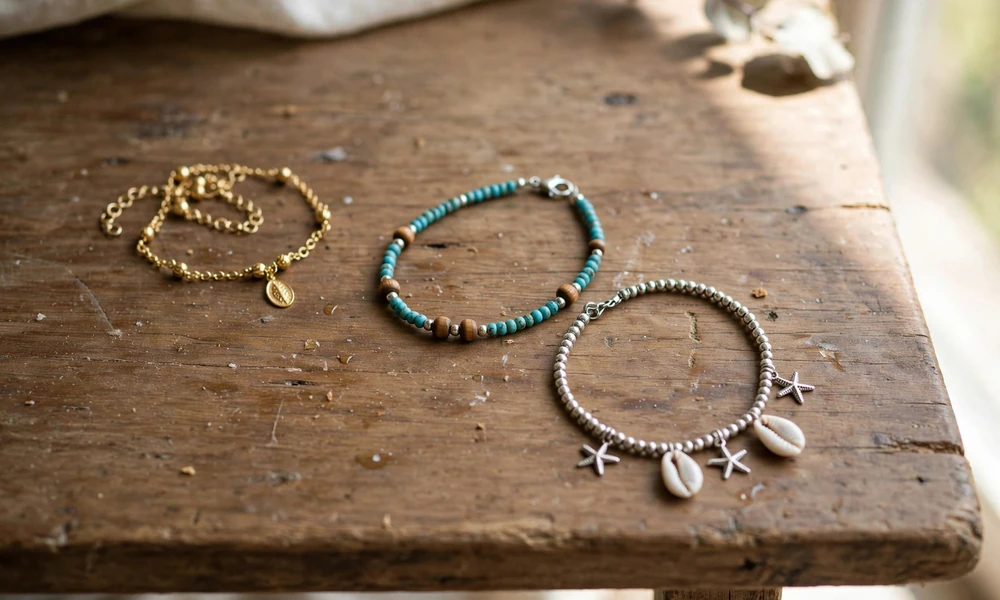
Look next at the shoes you will wear it with, because the shoes decide whether the anklet is seen at all. Open sandals, mules and bare feet show it off, while trainers, boots and closed shoes hide it and rub against the chain. If you do wear one with closed shoes, a flat chain that sits close to the skin is the only sensible choice.
Finally, look at the occasion. A fine chain with a small charm suits daytime, work and holidays, while a diamond, pearl or heavier gold chain suits evenings, weddings and formal dinners. Our guide to the best everyday anklets is a useful starting point if you want one anklet that covers most days.
The 9 ways to wear an anklet in 2027
Measure your ankle first
What we like: A tape measure takes thirty seconds and removes all the guesswork, so the anklet you order actually fits. What to consider: Ankles swell slightly in heat and after a long day, so measure in the evening. Best for: Anyone buying an anklet online. Cost: Free, with a tape measure or a piece of string. Time needed: One minute.
Wrap the tape around the narrowest part of your ankle, just above the ankle bone, and add half a centimetre for comfort. Most anklets fit 22 to 25 centimetres, and a 1-centimetre extender chain covers the difference between brands. If you are between sizes, choose the larger one, because a tight anklet chafes and a loose one can be adjusted.
Choose the right length
What we like: The right length sits flat against the ankle bone and stays put all day. What to consider: A chain that is too long slips over the heel and catches on shoes. Best for: Daily wear, holidays, and anyone on their feet all day. Cost: Nothing extra, if you choose well. Time needed: A few minutes of trying it on.
You should be able to slide a fingertip underneath the chain, but not much more. If it leaves a red mark after an hour, it is too short. An extender chain is the simplest fix, and it is worth having on any anklet you plan to wear often.
Wear it with the right shoes
What we like: Open sandals, mules and bare feet show an anklet at its best. What to consider: Trainers and boots hide it and rub the chain against the skin. Best for: Summer days, holidays, and evenings out. Cost: Nothing, if you already own sandals. Time needed: A moment to check the mirror.
The shoes decide whether the anklet is jewellery or a secret. A flat sandal lets the chain sit on show, while a chunky trainer covers it completely and wears the plating away. If you love an anklet, wear it on days when your shoes leave the ankle bare, rather than forcing it under closed shoes.
Match the metal to your other jewellery
What we like: One metal across anklet, rings, necklace and earrings looks calm and deliberate. What to consider: Mixed metals can work, but they need to look intentional, not accidental. Best for: Evenings, weddings, and anyone who wears a full set of jewellery. Cost: Nothing extra. Time needed: A minute when you get dressed.
If your rings are gold, wear a gold anklet; if your watch and earrings are silver, wear a silver one. This is the simplest styling rule in jewellery, and it matters most at the ankle, because a clashing metal is the first thing the eye catches. A two-tone chain is the exception, because it is designed to sit with either metal.
Let the anklet be the only statement piece
What we like: One focal point at the ankle looks elegant and uncluttered. What to consider: A chunky anklet plus a bold shoe plus a patterned hem is too much at once. Best for: Formal outfits, simple dresses, and minimal styling. Cost: Nothing extra. Time needed: A moment of restraint.
An anklet is a small detail, and it works best when it is the only detail at the ankle. If your shoes are heavily embellished, choose a plain chain. If your anklet carries a large charm or a row of stones, choose plain shoes. The eye needs one place to rest, and the ankle is a small place.
Layer it with a second chain
What we like: Two fine chains at different lengths look soft and intentional, and they catch the light as you move. What to consider: Two chains tangle easily, and a heavy chain will pull a fine one out of place. Best for: Holidays, festivals, and relaxed summer evenings. Cost: The price of a second fine chain. Time needed: A few minutes to arrange.
Layering works when the two chains differ in length by about a centimetre and both are fine and light. A delicate gold chain with a fine silver one can work, but keep the metals close in tone, or the pairing looks accidental. Take both off before swimming, because tangled wet chains are hard to separate without kinking them.
Dress it up for evenings
What we like: A diamond, pearl or heavier gold anklet turns a simple evening dress into a finished outfit. What to consider: A fine daytime chain looks lost against a formal dress. Best for: Weddings, dinners, and formal occasions. Cost: More than a daytime chain, but it is worn less often. Time needed: A few minutes to change.
Evenings are when an anklet earns its place. A pearl anklet with a silk dress, or a diamond tennis anklet with an open heel, reads as deliberate and polished. Keep the rest of the jewellery simple, so the anklet is the detail people notice, and choose a heel that leaves the ankle on show.
Keep it simple for daytime
What we like: A plain chain is comfortable, practical, and suits almost every daytime outfit. What to consider: A heavy or embellished anklet feels fussy by midday and catches on everything. Best for: Work, errands, school runs, and long days on your feet. Cost: Less than an evening piece. Time needed: None, once it is on.
Daytime is not the moment for a statement anklet. A flat curb, rope or cable chain in gold or silver sits close to the skin, does not catch on hems or shoelaces, and survives a full day without attention. If you only own one anklet, make it a plain one, because it is the one you will actually wear.
Check the fit at the end of the day
What we like: A quick evening check catches a loose clasp or a worn link before the chain is lost. What to consider: A clasp that has loosened will fail at the worst moment, usually outdoors. Best for: Anyone who wears an anklet daily. Cost: Free. Time needed: Thirty seconds.
Take the anklet off at night and look at it. Check that the clasp closes firmly, that no link has stretched open, and that the extender chain is still secure. A chain that has rubbed against a shoe all day wears fastest at the clasp, and that is where it will break.
Which anklet is right for you
Start with your life, not with a picture. If you are on your feet all day, choose a flat, sturdy chain in solid gold or sterling silver, with a lobster clasp you can fasten yourself. If you mostly wear an anklet on holiday, a lighter chain with a charm is fine. If your skin is sensitive, avoid plated brass entirely, whatever the price.
Then match the anklet to the shoes you actually wear. Open sandals suit almost any chain, while closed shoes suit only a flat one. A beach anklet is designed for sand and salt water in the short term, but even those should be rinsed in fresh water and dried after a swim, because salt and sand wear any chain down over time.
Finally, think about how often you will wear it. A daily anklet should be plain, sturdy, and easy to fasten, while an occasion anklet can be finer and more decorative, because it is worn for a few hours at a time. Most people end up with two: one plain chain for every day, and one special piece for evenings.
The caveats that matter
Anklets are simple jewellery, but they take more wear than almost any other piece. The chain sits against skin that sweats, rubs against shoes, and meets sand, salt water, sunscreen and perfume every day in summer. That is why the metal matters more than the design, and why a cheap plated chain rarely survives a full season.
| Detail | What is known |
|---|---|
| Most common fit | 22 to 25 centimetres, with a 1-centimetre extender for adjustment |
| Safest metals for daily wear | Solid gold and sterling silver; gold vermeil is a good middle ground |
| Metal to avoid for sensitive skin | Plated brass, because the thin plating wears quickly and the brass can irritate |
| Best shoes for showing an anklet | Open sandals, mules, and bare feet |
| When to take it off | Before swimming, showering, exercise, and sleep |
| What damages it fastest | Salt water, sand, sunscreen, perfume, and rubbing against closed shoes |
| How to check the fit | A fingertip should slide underneath, and it should not slip over the heel |
| What it does not do | It does not suit every outfit, and no chain survives daily salt water without care |
If you are pregnant, have swollen ankles, or have a skin condition around the ankle, check with your clinician before wearing a tight chain, and choose a looser fit with an extender. A chain that was comfortable in spring can feel tight by late summer, and that is normal. Loosen it, rather than wearing through the discomfort.
Checklist: wearing an anklet well
Use these checks before you buy, and again after a week of wear.
- Measure your ankle in the evening, when it is at its largest, and add half a centimetre.
- Check the metal: solid gold or sterling silver for daily wear, and no plated brass on sensitive skin.
- Check the clasp: a lobster clasp you can fasten yourself, with an extender chain for adjustment.
- Match the shoes: open sandals or bare feet for showing it off, and a flat chain only under closed shoes.
- Match the metal to your other jewellery, and keep the ankle the only statement piece.
- Take it off before swimming, showering, or exercise, and check the clasp and links every evening.
Frequently asked questions
Can I wear an anklet every day?
Yes, if it is a sturdy chain in solid gold or sterling silver, with a secure clasp. Take it off before swimming, showering, or exercise, and check the clasp each evening. A fine or plated chain is better kept for occasions.
Which ankle should I wear an anklet on?
Either. There is no rule, and most people wear it on the ankle that feels more comfortable, or the one their shoes leave more visible. Choose the ankle, and keep it there, so the chain settles into a comfortable fit.
Can I wear an anklet with trainers or boots?
You can, but it will be hidden, and the shoe will rub the chain. If you do, choose a flat chain that sits close to the skin, and expect the plating to wear faster. Most people save their anklet for days when they wear sandals or go barefoot.
Can I wear an anklet to work?
Yes, if your workplace dress code allows it and the chain is plain and discreet. A fine gold or silver chain with flat shoes is usually fine in most offices. A heavy or heavily embellished anklet is better kept for evenings and holidays.
How do I stop my anklet from turning my skin green?
Choose solid gold or sterling silver, and avoid plated brass and cheap alloys. The green mark comes from copper in the metal reacting with sweat, and it is a sign the plating has worn through. Keeping the chain dry helps, but the metal is the real fix. Our guide to gold jewellery for everyday wear explains which metals hold up best against the skin.
Can I swim with an anklet on?
It is best not to. Salt water, chlorine and sand all wear a chain down, loosen clasps, and dull the finish. If you do swim with one on, rinse it in fresh water afterwards, dry it thoroughly, and check the clasp before you wear it again.
The bottom line
The best way to wear an anklet in 2027 is simple: get the length right, match it to your shoes and your other jewellery, and choose a metal that can take daily wear. A plain chain in solid gold or sterling silver, worn with open sandals and checked each evening, will look good for years.
Start with one good everyday anklet, wear it on days when your ankle is on show, and add a finer piece for evenings only when you know you will wear it. That is the honest way to enjoy an anklet, without losing it, chafing your ankle, or watching it turn green by August.