What Is an Anklet? 2027
An anklet is a piece of jewellery worn around the ankle, and it is one of the oldest accessories in the world. It sits just above the ankle bone, where it catches the eye with every step, and it can be as simple as a fine gold chain or as bold as a beaded strand with bells. In 2027 it is everywhere again, from beach holidays to evening looks, and it works because it is small, personal, and easy to wear.
The appeal is simple. An anklet adds a finishing touch without demanding attention the way a necklace or a statement earring does. It works with bare feet, sandals, trainers and heels, and it suits almost every style, from a delicate chain worn with a summer dress to a chunky beaded anklet worn with denim shorts. It is also one of the most affordable ways into fine jewellery, because a small amount of gold or silver goes a long way around an ankle.
This guide explains what an anklet actually is, how it is made, how to choose one, and what to watch out for before you buy. Below are nine facts that cover fit, materials, history, styling and care, so you can choose an anklet that suits your ankle, your wardrobe and your budget.
Key takeaways
- An anklet is a chain, cord or strand worn around the ankle, just above the ankle bone, and it is one of the oldest forms of jewellery.
- Fit matters more than anything else: an anklet should sit snugly without pressing into the skin, with enough slack to move comfortably.
- Gold, silver, pearls, beads and leather all work well, and the right material depends on your skin, your budget and how often you will wear it.
- Anklets suit bare feet, sandals, trainers and heels, and they work with shorts, skirts, dresses and cropped trousers.
- No anklet suits every ankle or every occasion, and cheap plated chains can tarnish, irritate skin, or break if they are worn in water every day.
What an anklet actually is
An anklet, sometimes called an ankle bracelet, is a loop of metal, beads, cord or fabric worn around the ankle. It is usually closed with a small clasp, a sliding knot, or an extender chain, and it is sized to sit above the ankle bone so that it stays in place without slipping down over the heel. Most anklets measure between 22 and 26 centimetres, and many come with an extender of two to five centimetres so the fit can be adjusted.
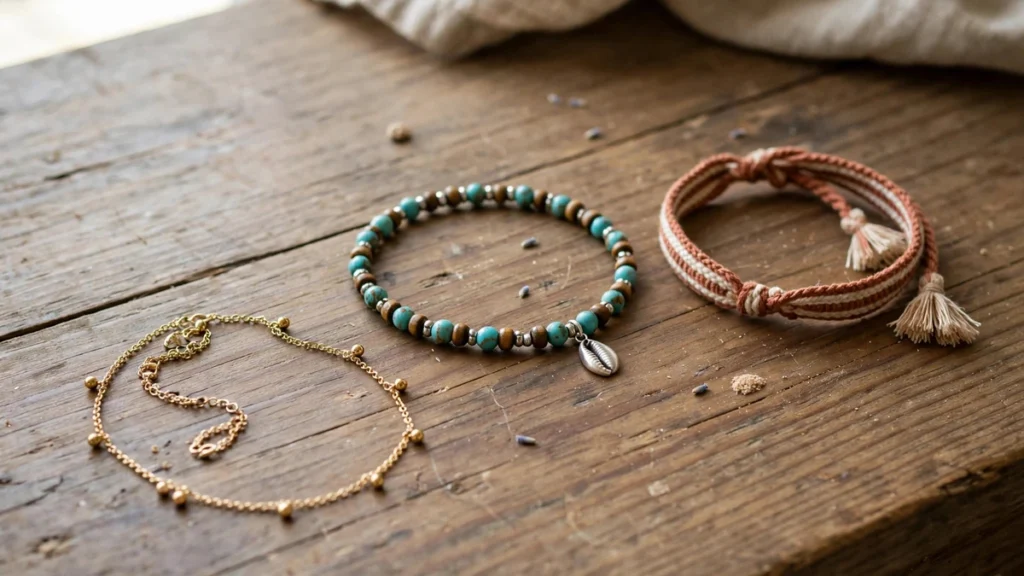
The simplest anklets are fine chains in gold or silver, sometimes with a single charm or a small pendant. Beaded anklets use glass, stone, wood or crystal beads threaded on cord or wire, and they can be colourful or understated. Leather and fabric anklets are softer and more casual, often tied or knotted rather than clasped. Pearl anklets, usually made with freshwater pearls, are the dressiest option, and they are often worn for weddings and formal occasions.
An anklet is different from a bracelet in one practical way: it gets more wear and tear. It brushes against shoes, socks, sand and water, and it is often put on and taken off in a hurry. That is why the clasp, the chain strength and the finish matter more than they do on a necklace, and why a well-made anklet is worth more than a pretty one that breaks in a week.
How we chose these facts and what to look for
Start with the material. Solid gold and sterling silver last longest and are kindest to sensitive skin, but they cost more. Gold-filled and gold-plated anklets look the same at first and cost far less, although the plating wears over time, especially with water and sweat. Stainless steel is a good budget choice because it does not tarnish easily, and glass beads are light, colourful and cheap to replace.

Look next at the clasp and the length. A lobster clasp is secure and easy to fasten with one hand, while a spring ring is smaller and lighter but can be fiddly. An extender chain is worth having, because ankles change size slightly through the day and in hot weather. Measure your ankle with a soft tape, add one centimetre for comfort, and check the stated length before you buy. Our guide to the best anklets for women shows how different lengths and materials look when worn, which helps if you are choosing between a fine chain and a bolder beaded style.
Finally, think about where you will wear it. A delicate chain is right for everyday wear and for the office, while a beaded or shell anklet suits the beach and holidays. If you swim or shower with it on, choose stainless steel, solid gold, or glass beads, and avoid plated chains and leather, which do not cope well with water. A little thought here saves the disappointment of a tarnished or broken anklet after a single holiday.
The 9 facts about anklets in 2027
It sits high on the ankle
What we like: An anklet worn just above the ankle bone stays in place, shows off the line of the leg, and looks neat with every shoe. What to consider: If it sits too low it slips over the heel and catches on shoes. Best for: Anyone wearing sandals, open shoes or bare feet. Cost: Nothing extra, it is about fit. Time needed: A minute to measure your ankle before buying.
Many materials, from gold to beads
What we like: There is an anklet material for every budget and every style, from solid gold to coloured glass beads. What to consider: Plated metal tarnishes faster, and leather does not like water. Best for: Matching the anklet to how often you will wear it. Cost: From under £10 for beads to several hundred for solid gold. Time needed: Ten minutes to compare materials before buying.
Fit is the whole point: snug, not tight
What we like: A well-fitting anklet is comfortable all day and never needs adjusting. What to consider: Too tight and it digs in; too loose and it slips and catches. Best for: All-day wear, walking and warm weather. Cost: Free if you measure first. Time needed: Two minutes with a tape measure.
Works with almost every shoe and hemline
What we like: Anklets work with sandals, trainers, heels, shorts, skirts, dresses and cropped trousers. What to consider: They are hidden under long trousers and boots, and they can rub inside tight shoes. Best for: Summer outfits and open footwear. Cost: Nothing, it is a styling choice. Time needed: A minute to try it with your usual shoes.
Long history, from ancient Egypt to the 1990s
What we like: Anklets have been worn for thousands of years, so the style has real depth behind it. What to consider: Some traditional meanings vary by culture, so it is worth knowing the background. Best for: Anyone who likes jewellery with a story. Cost: Nothing, it is knowledge. Time needed: A few minutes of reading.
Anklets appear in ancient Egyptian tombs, in Indian jewellery traditions where they are called payal, and in South Asian bridal dress, where they are often made in silver with small bells. They reached the West in the early twentieth century, became a beach staple in the 1970s, and had a big revival in the 1990s, when beaded and shell anklets were everywhere. The 2027 version is more refined, with finer chains and better clasps, but the idea is the same.
A quiet accent or a whole statement
What we like: One anklet can be subtle or bold, depending on the design you choose. What to consider: A very bold anklet can clash with a busy outfit. Best for: Dressing up a simple outfit or adding colour to a plain one. Cost: From a few pounds for a simple chain. Time needed: A minute to decide how much you want it to show.
Short hair and long hair both work
What we like: Anklets do not depend on your hairstyle, so they suit everyone. What to consider: None, this is one of the easiest accessories to wear. Best for: Anyone who finds necklaces or earrings fussy. Cost: Nothing. Time needed: None.
The right clasp and the right length
What we like: A good clasp keeps the anklet secure all day and is easy to fasten alone. What to consider: Tiny spring rings are hard to fasten, and weak clasps open on their own. Best for: Everyday wear and anyone who puts jewellery on without help. Cost: A lobster clasp adds little to the price. Time needed: A minute to test the clasp before buying.
Ask about the clasp before you buy, especially online. A lobster clasp is the safest everyday choice, and a sliding knot is the most adjustable on cord anklets. Magnetic clasps are easy but can open if they catch on something, so they are better for occasional wear than for all-day use.
Keeps value best in real gold, silver and pearls
What we like: Solid gold, sterling silver and real pearls hold their value and can be repaired, resized or passed on. What to consider: They cost more upfront, and pearls need gentle care. Best for: A gift, a keepsake, or a piece you plan to wear for years. Cost: From around £50 for silver to several hundred for gold. Time needed: A few minutes to check hallmarks before buying.
Plated and costume anklets are fine for fashion and holidays, but they are not investments, and they cannot usually be repaired once the plating wears. If you want an anklet to last, buy solid metal with a hallmark, keep the receipt, and have it cleaned and checked once a year. That is how a small piece of jewellery becomes a keepsake.
Which anklet is right for you
Start with your skin. If your skin reacts to cheap jewellery, choose solid gold, sterling silver, or stainless steel, and avoid nickel-plated chains. Warm skin tones often suit yellow gold and warm beads, while cool skin tones suit silver and white gold, although the rule is a guide, not a law, and the metal you love is the one you will wear. Gold anklets are a good place to start if you want one piece that goes with everything, because gold suits most skin tones and most outfits.
Think next about your life. If you swim, run, or walk a lot, choose a sturdy chain with a lobster clasp and skip delicate beaded designs. If you mostly wear an anklet on holiday, a beaded or shell anklet is perfect and cheap to replace. If you want one for a wedding or a formal event, a pearl anklet or a fine gold chain with a small diamond is the right choice. Our guide to gold anklets covers the main styles in more detail, from fine chains to bolder curb links, which helps if you are choosing between a subtle everyday piece and something dressier.
Finally, consider your budget honestly. A good stainless steel or beaded anklet costs very little and can look lovely, so there is no need to stretch for gold unless you want a piece to keep. If you do buy gold or silver, check for a hallmark, buy from a jeweller you trust, and keep the receipt. A hallmark is the simplest guarantee that the metal is what the seller says it is.
The caveats that matter
Anklets are easy to wear, but they are not trouble-free. The most common problems are tarnishing, skin irritation, broken clasps, and anklets that are simply the wrong size. Plated chains tarnish fastest, especially with sweat, sea water and perfume, and once the plating is gone the base metal underneath can irritate sensitive skin. Leather and cord anklets absorb water and sweat, which shortens their life, and beaded anklets can snap if the cord wears through.
| Detail | What is known |
|---|---|
| Where it sits | Just above the ankle bone, measured with a soft tape plus about 1 cm for ease |
| Typical length | 22 to 26 cm, often with a 2 to 5 cm extender chain |
| Best materials for sensitive skin | Solid gold, sterling silver, stainless steel |
| Materials to avoid in water | Plated chains, leather, waxed cord |
| Most secure clasp | Lobster clasp, with an extender chain for adjustable fit |
| Best for everyday wear | A fine or medium chain in gold, silver or steel |
| When to take it off | Before swimming in the sea, before sport, and before tight boots |
| What it does not do | It does not suit every outfit, and cheap plated anklets do not last |
If your skin turns green or itchy under an anklet, stop wearing it and switch to solid gold, silver or steel. If the clasp feels loose, have it checked before the anklet is lost. And if you are buying an anklet as a gift, check the recipient’s ankle size first, because an anklet that does not fit is rarely worn, however pretty it is.
Checklist: choosing an anklet honestly
Use these checks before you buy, and again after a week of wear.
- Measure your ankle standing up, add about 1 cm, and check the stated length and extender.
- Choose the material for your skin and your life: solid metal for sensitive skin, steel or beads for water and holidays.
- Check the clasp: a lobster clasp is the safest everyday choice, and it should close firmly.
- Look for a hallmark on gold and silver, and keep the receipt if you want it to be a keepsake.
- Try it with your usual shoes, because an anklet can rub inside tight trainers or boots.
- Plan the care: take it off before swimming, dry it after wear, and store it flat so the chain does not tangle.
Frequently asked questions
How tight should an anklet be?
Snug but not tight. You should be able to slide one fingertip under it, and it should stay above the ankle bone when you walk. If it leaves a mark after an hour, it is too tight, and if it slips over your heel, it is too loose.
Can I wear an anklet every day?
Yes, if it is well made and the right material. Solid gold, sterling silver and stainless steel cope well with daily wear. Take plated and leather anklets off before showering or swimming, and check the clasp regularly so you do not lose it.
Can I wear an anklet with trainers?
Yes, and it looks best with low-cut trainers and no-show socks. A slightly chunkier chain or a beaded anklet reads better with trainers than a very fine chain, which can disappear against the shoe. Our guide to chain anklets shows the different chain styles, which helps if you are choosing between a fine cable chain and a bolder curb link.
Do anklets suit older women?
Yes. Anklets suit every age, and a fine gold or pearl anklet is a classic, elegant choice at any age. The key is the design, not the age of the wearer: choose a refined chain rather than a novelty design, and it will look right.
Are anklets still in style in 2027?
Yes, they are firmly back. Fine gold chains are the most popular style, followed by beaded and pearl anklets, and they are worn with everything from beachwear to evening dresses. The trend is towards finer, better-made anklets rather than the chunky costume styles of the past.
Can men wear anklets?
Yes. Men’s anklets are usually thicker leather cords, steel chains, or beaded designs in dark colours, and they are worn in the same way, just above the ankle bone. The fit and clasp rules are exactly the same.
The bottom line
An anklet is a small piece of jewellery with a long history and a simple job: it adds a finishing touch to the ankle, it works with almost every shoe and hemline, and it suits every age and most budgets. The best anklet is the one that fits well, suits your skin, and is made well enough to survive daily wear, whether that is a fine gold chain, a pearl strand, or a simple beaded cord.
Measure your ankle, choose the material for your life rather than just for the look, and check the clasp before you buy. Do that, and an anklet becomes one of the easiest pieces of jewellery you own, worn every day without a second thought, and kept for years rather than a single season.