

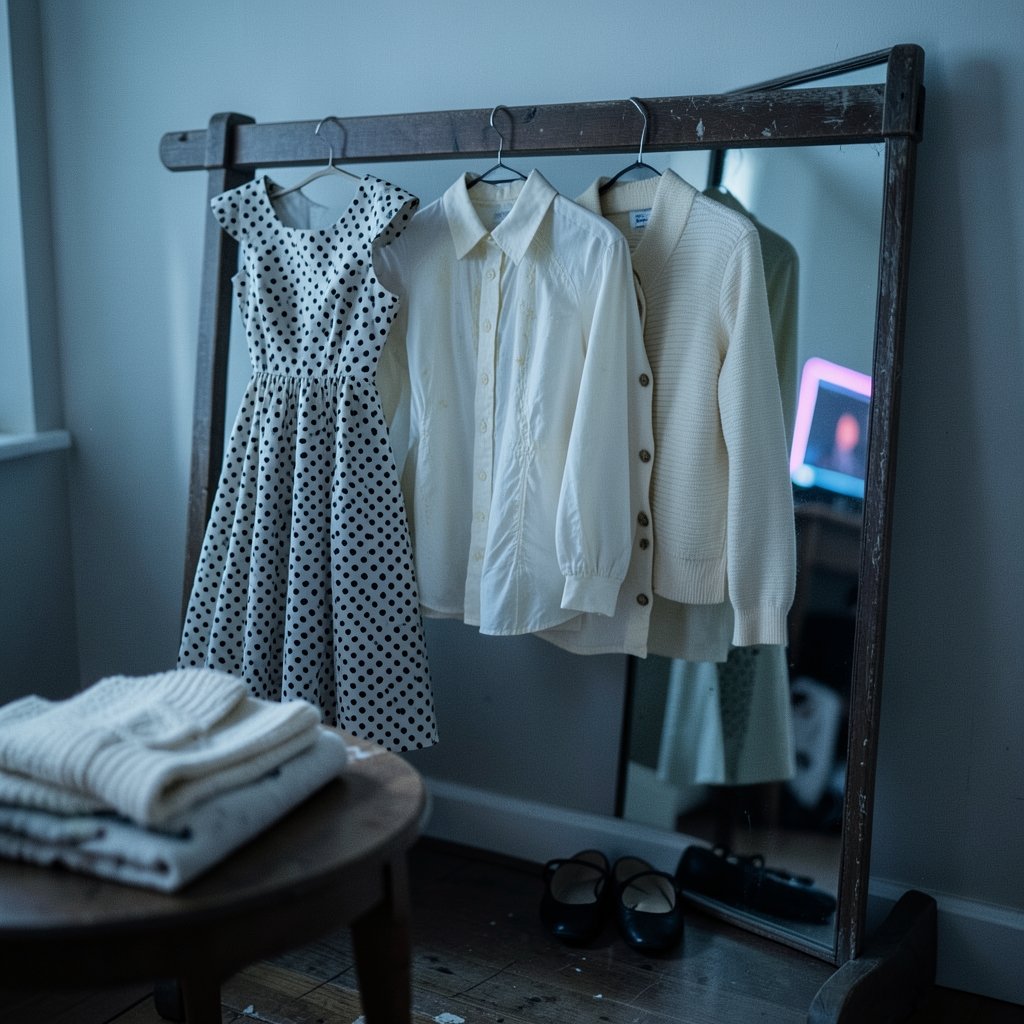
What do Peter Pan collars, ballet flats, and a cardigan buttoned all the way up have in common? They were all declared dead around 2018, and they are all quietly back on the rail. That is the strange life cycle of twee fashion, a style so sweet it once made critics reach for the word “cloying” and so stubborn that it keeps returning in new packaging. Understanding it means looking past the bows and into how fashion labels actually work.
What Does Twee Actually Mean?
Start with the word itself. Twee is a British English adjective describing something quaintly, excessively, or affectedly sweet and sentimental. It predates the fashion use by decades, and it has always carried a faint whiff of judgment. Calling a dress twee is rarely a neutral compliment. It suggests cuteness that has tipped into something a little too precious.
That linguistic baggage matters, because twee fashion inherited it. The style is built on 1950s and 1960s “kitsch-cute” dressing: Peter Pan collars, pinafores, cardigans, pastel colors, novelty prints, Mary Janes, and hair bows. Each element is charming on its own. Stacked together, they create a look that reads as deliberately childlike, and that is exactly where the debate begins.
Where Twee Fashion Came From

The named revival is usually dated to roughly 2013 to 2016 in UK and US fashion press, though the exact starting point is contested. The look drew on mid-century references and on a longer British tradition of whimsical, nostalgic dressing.
Alexa Chung is the figure most often credited with popularizing the look in the early to mid-2010s, partly through her 2013 book It. Her formula was simple and endlessly copyable: a pinafore over a collared shirt, a neat flat shoe, a slightly oversized cardigan. It photographed well, it was affordable to imitate, and it felt like a rejection of the body-con, logo-heavy aesthetic that had dominated the years before.
It is worth being precise here. The claim that Chung “popularized” twee is press consensus, not a documented fact. Fashion trend attribution is rarely provable. What can be said with confidence is that her style became a reference point that other people organized their wardrobes around.
Twee vs. Its Cousins
Twee gets confused with several neighboring aesthetics. They overlap, but they are not the same thing, and mixing them up is one of the most common mistakes people make when trying to dress in the style.
| Aesthetic | Core Reference | Key Pieces | Main Difference From Twee |
|---|---|---|---|
| Twee | 1950s–60s kitsch-cute | Peter Pan collars, pinafores, cardigans, novelty prints | Nostalgic and bookish rather than overtly feminine or costume-like |
| Lolita fashion | Japanese subculture dating from the late 1970s–80s | Bell skirts, petticoats, bonnets, strict silhouette rules | Highly codified with its own rules; twee is loose and press-defined |
| Coquette | Peak popularity around 2022–2023 | Bows, ribbons, lace, soft pink | More overtly romantic and flirtatious; less school-uniform |
| Balletcore | Named as a trend around 2022–2023 | Wraps, leg warmers, ballet flats, tulle | Built around dance studio references rather than childhood nostalgia |
The Lolita comparison deserves a caution. Lolita is a distinct subculture with its own conventions, and it is not simply “twee with more petticoats.” Treating the two as interchangeable is both inaccurate and mildly disrespectful to the people who practice Lolita seriously.
The Backlash Years
By roughly 2017 to 2019, the twee look was widely declared over. Fashion commentary framed the shift as a reaction against the style’s perceived childishness and against its association with a particular mid-2010s internet culture. This is commentary rather than a measurable event, so it should be read as a mood rather than a fact.
Still, the mood was real. Twee became shorthand for a certain kind of online femininity that later audiences found embarrassing. The same clothes that had felt charming in 2014 read as costume by 2018. This is the normal fate of any aesthetic built on visible markers: once the markers become recognizable enough to mock, the trend is already halfway out the door.
Why Twee Came Back
Renewed interest in twee-adjacent dressing arrived in the 2020s, with bows, cardigans, and ballet flats returning through the balletcore trend named around 2022 to 2023. The revival did not arrive as a wholesale return of 2014 twee. It arrived in pieces.
That is how revivals usually work. Nobody reissues a look intact. They extract the parts that still function and quietly drop the rest. The Peter Pan collar stayed. The novelty print t-shirt stayed. The full head-to-toe pastel coordination mostly did not. For a wider view of how these cycles are playing out now, the 2026 fashion trends guide maps the broader direction, and the 2026 fashion trends female tag collects the womenswear side of the same story.
There is also a practical reason for the return. Twee is unusually easy to source secondhand. Cardigans, collared shirts, and Mary Janes are thrift-shop staples, which makes the aesthetic accessible in a way that trend-driven luxury is not. The broader conversation around Italian luxury fashion runs on a different economic track entirely, but the two worlds feed each other: runway references filter down, and thrifted interpretations filter back up.
How to Wear Twee Without Looking Like a Costume
This is where most attempts go wrong. The failure mode is not wearing twee. It is wearing all of it at once.
Pick one focal piece. A single Peter Pan collar shirt, one pinafore, one pair of Mary Janes. Let everything else in the outfit be quiet. Twee works best when it looks like a personal habit rather than a themed outfit.
Ground it with something plain. A collared blouse under a pinafore reads twee. The same blouse with straight-leg denim and a plain knit reads like someone with a preference. The plain pieces are what stop the look from becoming a costume.
Watch the color count. Pastels are central to the aesthetic, but three pastels in one outfit tips into nursery palette. Two is usually enough, and one pastel plus neutrals is safer still.
Choose the right shoe. Ballet flats and Mary Janes carry the look. Chunky sneakers fight it. A simple loafer splits the difference if flats feel too sweet.
Skip the novelty print on top of a novelty print. One whimsical element per outfit. A printed cardigan with plain trousers, or a plain cardigan with a printed skirt. Never both.
Get the fit right. Twee is not oversized in a slouchy way and not tight in a body-con way. It sits neatly: collars that lie flat, cardigans that close properly, hems that fall where they should. Sloppy fit is what makes the look read as a mistake rather than a choice.
A common error worth naming: buying vintage pieces that are the wrong size because the print is charming. A twee cardigan two sizes too large loses the crispness that makes the style work. Fit first, print second.
The Twee Reading List
Twee has always been a literary-adjacent aesthetic, which is part of why it attracts people who like clothes but distrust fashion. The cardigan-and-collar uniform borrows from school stories, library settings, and mid-century children’s illustration. Anyone who wants to understand the visual language would do well to look at how illustrators translate runway references into line drawings, which is exactly the territory covered in Angelica Hicks’ fashion illustration work.
The style also has a documented media history. The Barbie world tour book is a useful case study in how a single property can carry a whole aesthetic vocabulary, and the 2010s fashion story explains the decade that both produced twee’s peak and then turned against it.
For people who want to follow the conversation rather than the trend cycle, the guide to finding the best fashion substacks is a practical starting point, and the fashion trends 2026 tag keeps the wider picture in view.
Is Twee a Real Style Category?
Honestly, no one agrees. There is no standard definition, no industry body, and no academic consensus to point to. Sources disagree on whether twee is a coherent style category or a loose press label applied after the fact to a group of unrelated dressing habits.
This uncertainty is worth sitting with rather than resolving. Most named aesthetics are press labels first and coherent categories second. “Twee” is useful shorthand for a recognizable cluster of garments and references. It is not a rulebook, and anyone who treats it as one will end up dressing for a definition rather than for themselves.
The practical takeaway: use the label to find clothes and inspiration, then ignore it when it stops being useful. Fashion writing has a habit of declaring styles dead and then resurrecting them a few seasons later, and twee has now been through that cycle at least twice.
Conclusion
Twee fashion is a small, stubborn aesthetic built on collars, cardigans, and a very specific kind of nostalgia. It peaked in the mid-2010s, was declared finished by the end of the decade, and has since returned in fragments through ballet flats and bows. It has never been cool in an obvious way, which is probably why it keeps coming back: it does not depend on being cool. Wear one piece, keep the rest plain, and the look holds up. Wear all of it at once and you are in costume. That is the whole trick.
Frequently Asked Questions
What is twee fashion in simple terms?
Twee fashion is a style built on 1950s and 1960s kitsch-cute dressing. It includes Peter Pan collars, pinafores, cardigans, pastel colors, novelty prints, Mary Janes, and hair bows. The word “twee” itself is a British English adjective meaning quaintly or excessively sweet, and the fashion use borrows that slightly critical tone.
When did twee fashion become popular?
The named revival is generally dated to roughly 2013 to 2016 in UK and US fashion press, though the exact starting point is contested. Alexa Chung is the figure most often credited with popularizing the look in that period, partly through her 2013 book It. The attribution is press consensus rather than a documented fact.
Why did people stop wearing twee fashion?
By roughly 2017 to 2019, fashion commentary widely declared the look over, framing it as a reaction against its perceived childishness and its association with a particular mid-2010s internet culture. This is commentary rather than a measurable event, so it reflects a shift in mood more than a single moment when the style ended.
Is twee fashion the same as Lolita fashion?
No. Lolita is a distinct Japanese subculture dating from the late 1970s and 1980s, with its own codified rules about silhouette, petticoats, and accessories. Twee is a loose, press-defined label with no formal rules. They overlap visually in places, but treating them as interchangeable is inaccurate.
How is twee different from coquette and balletcore?
Coquette, which peaked around 2022 to 2023, leans more overtly romantic and flirtatious with bows, ribbons, and lace. Balletcore, named around the same period, is built around dance studio references like wraps, leg warmers, and tulle. Twee is more bookish and school-uniform in its references, closer to mid-century children’s illustration than to either.
How do you wear twee fashion without looking childish?
Pick one focal piece and keep the rest of the outfit plain. Limit yourself to two pastel colors at most, choose ballet flats or Mary Janes over sneakers, and use only one novelty print per outfit. Most importantly, get the fit right: neat collars and properly closing cardigans carry the look, while oversized or sloppy pieces make it read as a mistake.














