Benzoin is one of the most important materials in perfumery, and one of the least talked about. It is a resin from the Styrax tree, sweet, warm and vanilla-like, and it has been burned as incense and blended into scent for centuries. It is the warm, golden depth in amber perfumes, the soft sweetness that rounds off a spicy oud, and the gentle powderiness that makes a vanilla perfume feel grown-up rather than sugary. Yet most perfume lovers could not tell you what it is, or where it comes from.
That is a pity, because understanding benzoin makes it much easier to choose a perfume. Once you know what it smells like, what it does in a blend, and which notes it pairs with, you can read a note list and predict how a perfume will feel on your skin.
This guide explains benzoin plainly: where it comes from, what it smells like, how it works in a perfume, and how to choose a benzoin perfume that suits you.
Key takeaways
- Benzoin is a resin from the Styrax tree, and it smells sweet, warm and vanilla-like, with powdery, smoky or slightly medicinal facets.
- It is a fixative, which means it slows the evaporation of other notes and helps a perfume last longer on skin.
- Benzoin is one of the building blocks of amber, but it is not the same thing as amber, which is a family of warm accords.
- It pairs best with vanilla, labdanum, woods and spices, and it is usually found in the base of a perfume.
- No two benzoin perfumes smell the same, and a blend that is warm and soft on one person can feel heavy or powdery on another, so always test on skin first.
What benzoin actually is
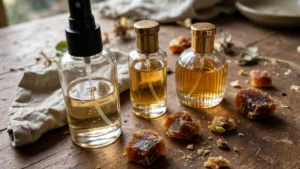
Benzoin comes from trees in the Styrax genus, most commonly Styrax benzoin, which grows in Southeast Asia, and Styrax tonkinensis, which grows in Laos, Vietnam and parts of China. The resin forms when the bark is cut. A thick, sticky, balsamic substance seeps out and hardens on exposure to air, and it is collected, cleaned and processed into a resinoid or absolute, a concentrated material that perfumers can blend into a perfume.
The name is a little confusing. It has nothing to do with benzene, the chemical, and it is not the same as benzoic acid, although benzoin does contain benzoic acid and related compounds. The name comes from the Arabic luban jawi, meaning incense of Java, which travelled through trade routes and changed shape along the way.
Today, benzoin is used in two main forms. Benzoin Siam, from Styrax tonkinensis, is the sweeter, softer, more vanilla-like form, and it is the one most often used in fine perfumery. Benzoin Sumatra, from Styrax benzoin, is darker, smokier and slightly more medicinal, and it is often used when a perfumer wants more depth and edge.
How benzoin works in a perfume
Benzoin does two jobs in a perfume at once. The first is scent. It adds a sweet, warm, vanilla-like character, with hints of cinnamon, soft powder and sometimes a faint smokiness.

The second job is fixing. A fixative slows down the evaporation of lighter, more volatile notes, so the perfume lasts longer and smells rounder as it dries down. Without a fixative, a citrus opening fades in minutes and the perfume feels thin. With benzoin in the base, the dry-down holds together for hours, and the perfume still smells like itself on a coat the next morning.
It is also why benzoin is so often confused with amber. Amber is not a single material. It is a family of warm, resinous accords built from materials such as benzoin, labdanum, vanilla and styrax. Benzoin is one of the building blocks of amber, not a synonym for it. A perfume described as amber may contain benzoin, but a perfume built around benzoin can also smell quite different from a typical amber, especially when it is paired with smoke, leather or spice. Our roundup of the best myrrh perfumes is a useful comparison here, because myrrh is another ancient resin that plays a similar fixing role, with a cooler, more medicinal character than benzoin.
9 facts about benzoin perfume
Benzoin comes from the Styrax tree, not from amber
What it shows: Benzoin is a natural resin, harvested from Styrax trees in Southeast Asia, and it is a raw material, not a finished accord. Amber is a family of warm blends built from materials including benzoin.
What to consider: A perfume that lists benzoin is not automatically an amber perfume. The other notes decide the character. Best for: Anyone who wants to understand what they are smelling. Material: Benzoin resinoid or absolute from Styrax benzoin or Styrax tonkinensis. Price range: Benzoin itself is relatively affordable, so it appears in perfumes at every price level. Standout feature: One of the oldest perfume materials still in everyday use.
It is a resin, harvested by tapping the bark
What it shows: The resin forms when the bark is cut, seeps out as a thick, sticky substance, and hardens in the air. It is then collected, cleaned and turned into a concentrated material for blending.
What to consider: Harvesting is labour-intensive, and quality varies by origin and by how the resin is processed. Best for: Lovers of natural materials and traditional perfumery. Material: Styrax tree resin, processed into a resinoid or absolute. Price range: Natural benzoin is moderately priced, so it does not push a perfume into the ultra-luxury bracket on its own. Standout feature: A material with a direct line back to ancient incense.
It smells sweet, warm and vanilla-like
What it shows: The core scent of benzoin is sweet and warm, with clear vanilla tones, a soft powderiness, and hints of cinnamon and soft spice. It is gentle and golden rather than sharp.
What to consider: The vanilla-like character can make a perfume feel sweet, even when the perfumer intended warmth rather than sweetness. Best for: Anyone who likes vanilla but finds it too sugary on its own. Material: Benzoin Siam is the sweeter, softer form; Benzoin Sumatra is darker and smokier. Price range: Found in perfumes from around £40 to over £250. Standout feature: A vanilla-like warmth that feels grown-up rather than sugary.
It is a fixative, which is why amber perfumes last so long
What it shows: As a fixative, benzoin slows the evaporation of lighter notes, so a perfume stays present on skin for hours and the dry-down smells rounder and more complete.
What to consider: Longevity is not the same as strength. A benzoin perfume can last eight hours while still smelling close to the skin. Best for: Anyone who wants a perfume that lasts from morning to night. Material: Benzoin resinoid, used in the base of the perfume. Price range: Longevity is a property of the material, not the price, so affordable benzoin perfumes can last just as long. Standout feature: The reason many amber perfumes are still detectable on a coat the next day.
Benzoin and vanilla are cousins, not the same thing
What it shows: Benzoin and vanilla share a sweet, warm character, and they are often blended together, but they come from different sources and smell different. Vanilla is softer and creamier; benzoin is warmer, drier and more resinous.
What to consider: A perfume that lists both will usually feel warmer and less sweet than a pure vanilla perfume. Best for: Anyone choosing between a vanilla perfume and a benzoin perfume. Material: Benzoin resin and vanilla, usually vanilla absolute or vanillin. Price range: Vanilla is often the more expensive material, so a benzoin-led perfume can be better value. Standout feature: Two warm materials that are better together than either is alone.
It pairs best with woods, spices and amber
What it shows: Benzoin is at its best with vanilla, labdanum, sandalwood, cedar, cinnamon, cardamom and clove. Woods make it drier, spices make it warmer, and labdanum makes it deeper and more leathery.
What to consider: Floral notes can work with benzoin, but they are often overwhelmed by it, so most benzoin perfumes are built on woods and resins instead. Best for: Anyone reading a note list and trying to predict a perfume. Material: Benzoin with vanilla, labdanum, sandalwood or spices. Price range: Woody and spicy benzoin blends appear at every price level. Standout feature: A material that makes almost any warm blend better.
It can smell powdery, smoky or medicinal depending on the blend
What it shows: Benzoin is not one smell. With iris and vanilla it is powdery. With labdanum and smoke it is dark and resinous. With certain spices it can take on a slightly medicinal, almost balmy quality.
What to consider: The medicinal facet surprises some people, especially in Benzoin Sumatra, which is darker and smokier than the Siam form. Best for: Anyone who has tried one benzoin perfume and thought they did not like benzoin. Material: Benzoin Siam for soft and powdery; Benzoin Sumatra for dark and smoky. Price range: Both forms appear across all price levels. Standout feature: One material with several distinct personalities.
Real benzoin resinoid costs more than synthetic copies
What it shows: Natural benzoin resinoid is moderately priced, but synthetic substitutes and benzoin-like accords are cheaper, and they are often used in affordable perfumes. The natural material has more depth and a warmer, more rounded character.
What to consider: A cheap perfume can still smell good, but it may lack the depth and longevity of a natural benzoin base. Best for: Anyone comparing perfumes at different price levels. Material: Natural benzoin resinoid versus synthetic benzoin accords. Price range: Natural benzoin perfumes typically start around £80, while synthetic-led versions can cost much less. Standout feature: The depth of the dry-down is the clearest sign of natural benzoin.
How to test a benzoin perfume before buying
What it shows: The right way to test is one spray on the wrist, then wait at least an hour before judging. The opening can be sweet or sharp, and the real character appears in the dry-down.
What to consider: Testing on paper tells you very little about benzoin, because paper does not show how the resin warms on skin. Best for: Anyone about to buy a benzoin perfume. Material: Your skin, a single spray, and an hour of patience. Price range: Testing costs nothing, and it saves the cost of a blind buy. Standout feature: The dry-down, not the opening, is the real perfume.
Which benzoin perfumes are worth trying first
If you are new to benzoin, start with a classic. Guerlain Shalimar is the most famous benzoin perfume ever made, and it shows you the powdery, classic side of the note. Maison Francis Kurkdjian Grand Soir shows you the smooth, modern side. Between them, you will learn whether you like benzoin powdery or polished, and that will guide every choice after.
Serge Lutens Ambre Sultan is the best choice for people who like spice with their amber, and Parfums de Marly Oajan is the warmest, most gourmand option on most lists. If you prefer dry, woody perfumes, Chanel Coromandel and Nasomatto Pardon show how benzoin can feel restrained and modern rather than sweet.
A look at the best frankincense perfumes is a useful next step too, because frankincense is benzoin’s closest resin cousin, and many people who love one end up loving the other. And if longevity matters to you, our guide to how to make perfume last longer explains the application habits that help a warm, resinous perfume perform at its best.
The caveats that matter
Benzoin is generally well tolerated, but it is a rich, warm material, and rich perfumes can be overwhelming. The most common mistake is spraying too much. One spray of a benzoin-heavy perfume is often enough, and two can be too much in a small room or on a warm day. Start light, wait an hour, and add more only if the scent has faded more than you expected.
| Detail | What is known |
|---|---|
| What it is | A resin from the Styrax tree, used as a fixative and a warm, sweet base note |
| What it smells like | Sweet, warm and vanilla-like, with powdery, smoky or slightly medicinal facets |
| Where it sits in a perfume | Usually in the base, where it adds depth and helps the scent last longer |
| Best pairings | Vanilla, labdanum, woods, spices and amber accords |
| When to wear it | Cooler weather and evenings suit it best; it can feel heavy in heat |
| How much to spray | One to two sprays; benzoin-heavy perfumes are often very strong |
| Who should test carefully | Anyone sensitive to sweet or powdery scents, or to resinous materials |
| What it does not do | It does not make a perfume sweet on its own; the blend decides the character |
If you have sensitive skin or a known sensitivity to fragrance materials, patch-test a new benzoin perfume on your inner arm before wearing it on your neck or chest, and give it a full day before you decide. A perfume that smells beautiful in the bottle can still feel too warm or too powdery on your skin, and the only way to know is to wear it.
Checklist: choosing a benzoin perfume honestly
Use these checks before you buy, and again after a full day of wear.
- Decide the direction first: powdery and classic, sweet and gourmand, or dry and woody.
- Check the note list: vanilla makes benzoin softer, labdanum makes it deeper, spice makes it warmer, woods make it drier.
- Test on skin, not on paper: benzoin changes a lot as it dries down, and paper does not show that.
- Wait an hour before judging: the opening can be sweet or sharp, and the real character appears in the dry-down.
- Spray once, not three times: benzoin perfumes are usually strong, and one spray is often enough.
- Try it in cool weather first: heat makes warm, resinous perfumes feel heavier than they are.
Frequently asked questions
What does benzoin smell like?
Sweet, warm and vanilla-like, with a soft powdery quality. Depending on the blend, it can also smell smoky, leathery or slightly medicinal. On its own it is gentle and golden; in a perfume, the other notes decide which side of it you notice most.
Is benzoin the same as amber?
No. Amber is a family of warm accords built from materials such as benzoin, labdanum and vanilla. Benzoin is one of the building blocks of amber, not a synonym for it. A benzoin perfume can smell quite different from a typical amber, especially when it is paired with woods or spice.
Is benzoin a top, heart or base note?
Almost always a base note. It is heavy and slow to evaporate, which is why it works as a fixative. You will notice it most in the dry-down, an hour or more after spraying, when the lighter notes have faded.
Does benzoin make a perfume last longer?
Yes. As a fixative, benzoin slows the evaporation of the other notes, so the perfume stays present on skin for longer and the dry-down smells rounder.
Is benzoin suitable for men and women?
Yes. Benzoin perfumes are almost always unisex in practice, even when they are marketed to one gender. The warmth and sweetness work the same way on any skin, and benzoin blends are worn by men and women alike.
Can benzoin cause irritation?
It can, for some people, especially in a strong concentration or on sensitive skin. Benzoin is a resin, and resins can be sensitising. Patch-test on your inner arm first, and if you notice redness or itching, stop using it and choose a lighter, less resinous perfume.
The bottom line
Benzoin is the warm, golden backbone of amber perfumery, and it deserves to be better known. It is a resin from the Styrax tree, sweet and vanilla-like, and it does two jobs at once: it adds its own warmth, and it fixes the rest of the perfume so it lasts longer and smells rounder. Once you know what it is, you can read a note list and predict how a perfume will feel, and you can choose between powdery, sweet and woody benzoin blends with confidence.
Start with a classic such as Shalimar or Grand Soir, test on skin, wait for the dry-down, and spray lightly. Benzoin is a generous material, and a little of it goes a long way. Understood properly, it turns a good perfume into one you reach for again and again.