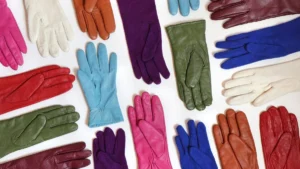
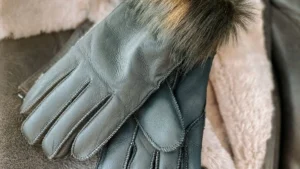
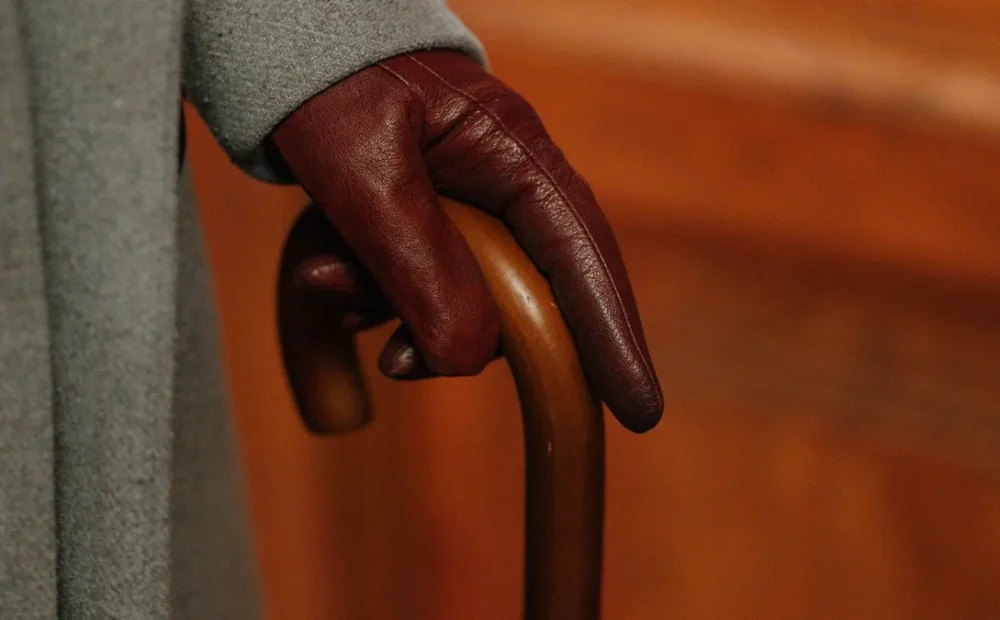
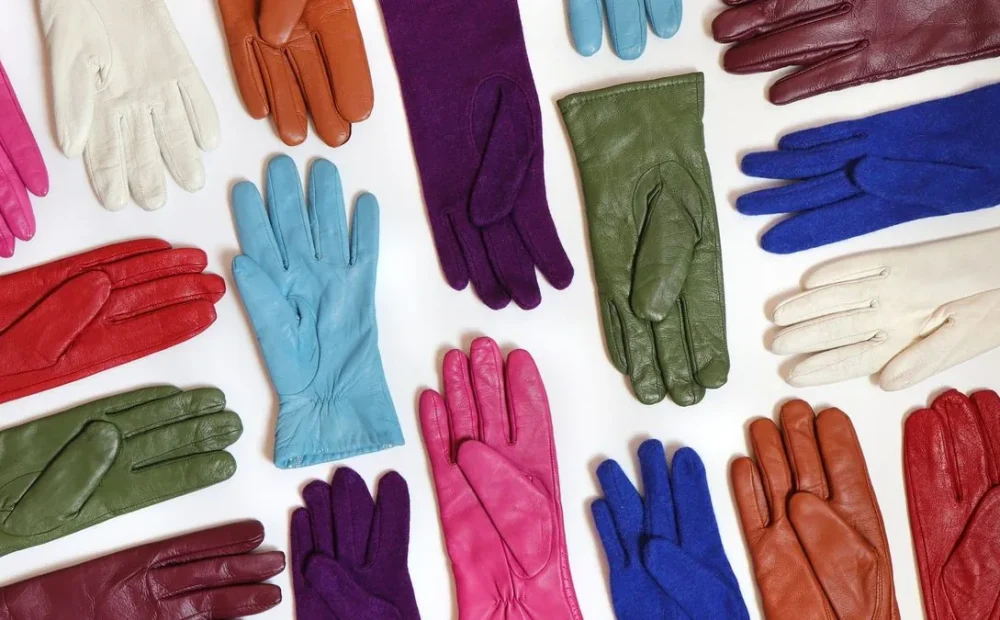
A leather glove is a glove cut from animal skin, shaped finger by finger, and stitched to fit like a second skin. It is one of the oldest accessories in a wardrobe, and the word leather on a label says far less than most people assume.
What makes it recognisable is the way it behaves on the hand. The material is firm enough to hold a shape, supple enough to follow the fingers, and smooth enough to fasten a button. A knit glove stretches and grips; a leather glove moulds to the hand.
The confusion comes from the range the name covers. A driving glove, a winter dress glove, a long evening glove and a work glove are all leather gloves, yet they use different skins and cuts. The name describes the material, not the purpose.
Key takeaways
- A leather glove is a fingered glove cut from animal skin, defined by its material and close fit, not by its length or lining.
- Lambskin is softest, deerskin, cowhide and peccary tougher, and each changes how a glove feels and ages.
- The lining decides the warmth: cashmere warmest, silk lightest, wool in between, unlined the most precise fit.
- Construction matters as much as leather: the cut, seams, points, and wrist fastening decide how a glove fits.
- No single leather glove suits every climate, and the word leather does not guarantee full-grain skin, a real lining, or a glove that lasts.
What a leather glove actually is
A glove covers the hand with a separate finger for each finger and a section for the thumb. A leather glove keeps that shape and makes it from tanned animal skin. Its parts are simple: outer skin cut into panels, a lining inside where one is fitted, and a wrist left open, elasticated, buttoned, or extended into a cuff.
The skin is tanned, not raw: tanning stabilises the fibres so they do not rot or stiffen as they dry. A tanned skin can be dyed, finished smooth or grained, and cut thin enough to follow a finger.
The leathers underneath the name
The animal the skin comes from decides how a glove feels and ages, and the label should name it plainly. Lambskin is the luxury standard: soft, smooth and light, with a fine grain that feels comfortable from the first wear. Its trade-off is durability, since it marks and wears through faster.
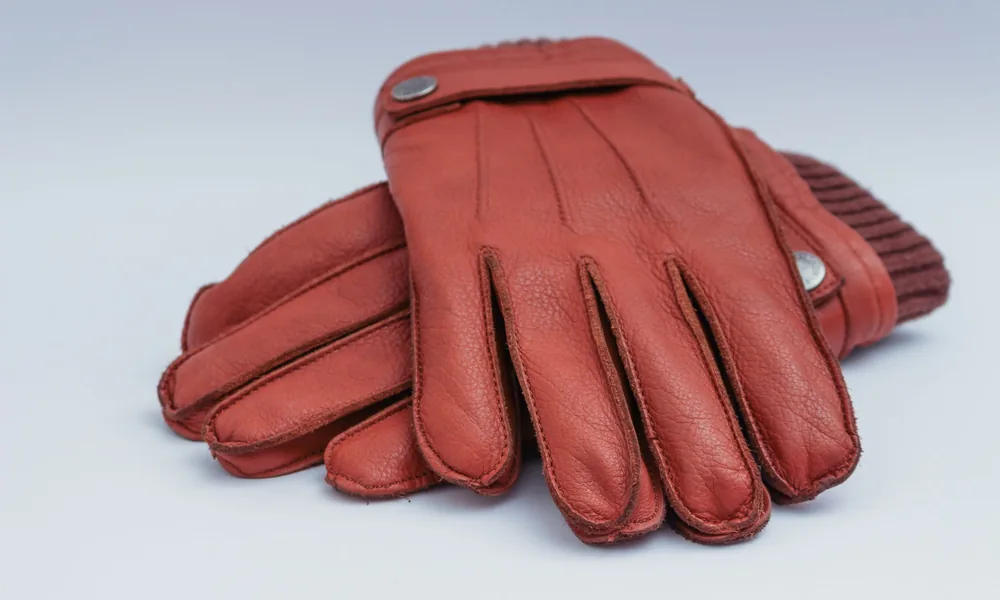
Deerskin is the tougher middle ground: slightly thicker, with a soft, pebbled texture, and it resists water and wear better while staying supple. Cowhide is the toughest, with a firmer hand and better water resistance, which makes it the usual skin for work gloves and wet-weather pairs. Peccary is the most prized of all: remarkably soft and strong, with a distinctive grain, and priced accordingly.
Suede is leather too, but worked the other way round. Where a smooth leather glove shows the grain side of the skin, suede shows the flesh side, brushed into a soft nap. It looks softer and more casual, and it marks and stains far more easily. Our comparison of suede vs leather gloves sets out how the two finishes behave differently. Grade matters too: full-grain keeps the skin’s surface intact, while genuine leather on its own guarantees almost nothing.
How a leather glove is made
A leather glove is cut, not knitted, and the cutting decides the fit. The panels are cut with the stretch running across the hand, so the glove gives where the fingers bend. The fingers are cut as separate panels, called fourchettes, that sit between the fingers, and the thumb is set into its own opening so it can move without pulling the palm.
The seams are the part most people never look at, and they tell you how a glove was made. The finest gloves are sewn by hand, with the seam turned inward so nothing rubs, and the stitches small, even and close together. Machine-sewn gloves are sturdier and cheaper, and their seams sit slightly prouder. Either way, a seam across a knuckle will be felt every time the hand closes, so a well-made glove places its seams where they will not rub.
The back of the hand carries the glove’s most recognisable detail: the points, three lines of stitching that run from the wrist toward the fingers on most dress gloves. They are partly decorative and partly structural, gathering the leather so the back fits closely, and they are the quickest way to tell a dress glove from a work glove. The wrist finishes it: open, buttoned, or long to the elbow for formal wear.
The linings and what they change
The lining decides the warmth more than the leather does. Leather on its own is not warm: it blocks wind well but holds little heat, and an unlined leather glove in cold weather can feel colder than a knit. What keeps a hand warm is the layer trapped between the leather and the skin.
Cashmere is the warmest lining, and the one most luxury houses use for winter gloves: soft against the skin, warm without bulk. Silk is lighter and smoother, and it suits a glove worn indoors or in milder weather, where warmth matters less than a slim fit. Wool sits between the two: warmer than silk, tougher than cashmere, and the usual lining for an everyday winter pair.
An unlined glove has no lining at all, and that is a deliberate choice rather than a saving. Without a lining, the glove is at its thinnest and most precise, which is why driving and evening gloves are often unlined: the hand can feel a steering wheel or a handshake through the leather. The trade-off is warmth, and an unlined glove is a mild-weather glove, not a winter one.
Leather gloves vs other gloves
A leather glove and a knit glove solve the same problem in opposite ways. A knit glove is made by looping yarn into stretchy fabric, so it grips the hand, insulates well, and costs little, but it looks casual and it pills and loses its shape. A leather glove is cut and sewn, so it holds its shape, looks finished, and lasts for years if it is looked after, but it costs more and needs more care.
Cashmere gloves are the closest rival, and the difference is one of material rather than purpose. A cashmere glove is knitted from the soft undercoat of the cashmere goat: warmer, lighter and softer than leather of the same weight, but more delicate, since it pills, thins, and needs hand-washing. Our comparison of cashmere vs leather gloves sets out the trade-offs: the two suit different days rather than competing for the same one.
Wool gloves sit between the two: warm, hard-wearing and inexpensive, and the practical choice for cold, wet, everyday wear. Leather wins on looks and on wind resistance, and on the way it finishes an outfit, since a leather glove sharpens a wool coat and adds polish to a tailored jacket in a way no knit can match. A work glove is different again: thick hide with a reinforced palm, built for protection rather than dress. A mitten is warmer than any glove but far clumsier.
The caveats that matter
Leather has honest limits, and most follow from the skin itself. It is not waterproof, and no glove made from it is either, whatever the label implies. Rain soaks in, the skin stiffens as it dries, and repeated soaking shortens its life. A membrane helps, but it is a layer inside the glove, not a property of the leather.
| Detail | What is known |
|---|---|
| What it is | A fingered glove cut from tanned animal skin, shaped to fit the hand closely |
| Softest leather | Lambskin, supple and elegant, moulds to the hand but marks and wears fastest |
| Toughest leathers | Cowhide and deerskin, firmer and more water-resistant, for daily and work wear |
| Warmest lining | Cashmere, warm without bulk; silk is lightest, wool sits in between |
| Most precise fit | Unlined gloves, thinnest and most sensitive, for driving and evening wear |
| Key construction | Cut panels, fourchettes between fingers, points on the back, finished wrist |
| What it is not | Not waterproof, not a knit, not a mitten, and not warm by the leather alone |
| Label warning | Genuine leather alone guarantees almost nothing; check skin, grade and lining |
Sizing is the second honest limit. Leather gloves are sized by the circumference of the hand, usually measured around the knuckles, and the half sizes matter more than they do for knits. Too large, it bunches at the fingertips; too small, it pinches across the knuckles and splits at the seams. Leather stretches slightly, so a new pair should feel close, but a pair that pinches on the first wear is the wrong size.
Checklist: reading a leather glove honestly
Use these checks to read what a glove is, not what its name suggests.
- Check the skin: the label should name lambskin, deerskin, cowhide, peccary, or goatskin, not just leather.
- Check the grade: full-grain keeps the skin’s surface intact; genuine leather alone means little.
- Check the lining: cashmere for warmth, silk for mild weather, wool for everyday winter, unlined for the most precise feel.
- Check the seams: they should be small, even and placed where they will not rub a knuckle or a fingertip.
- Check the fit: snug at the fingertips with no loose fabric, no pinching across the knuckles, and fingers cut with a slight curve.
- Check the wrist: open slips under a cuff, a button closes out the cold, and a long cuff is formal rather than practical.
Frequently asked questions
What is a leather glove made of?
A leather glove is made from tanned animal skin, most often lambskin, deerskin, cowhide, goatskin or peccary, cut and sewn to the shape of the hand. Many pairs also have a lining, usually cashmere, silk or wool. The skin, grade and lining together decide how the glove feels and lasts.
Are leather gloves warm?
Leather on its own is not very warm: it blocks wind but holds little heat, so the warmth comes mostly from the lining. A cashmere-lined pair is warm for a cold, dry day, a wool-lined pair suits everyday winter, and an unlined pair is a mild-weather glove. No leather glove is as warm as a mitten.
What is the difference between lambskin and deerskin gloves?
Lambskin is softer, smoother and lighter, with a fine grain that moulds to the hand quickly, but it marks and wears through faster. Deerskin is slightly thicker, with a soft pebbled texture, and it resists water and wear better while staying supple. Lambskin suits dress wear; deerskin suits daily wear.
What are the lines on the back of a leather glove?
They are called points: three lines of stitching running from the wrist toward the fingers on most dress gloves. They are partly decorative and partly structural, gathering the leather so the back of the hand fits closely without excess material. Work and driving gloves usually have none.
How should a leather glove fit?
It should fit snugly, like a second skin, with no loose fabric at the fingertips and no pinching across the knuckles. Measure the dominant hand around the knuckles, and remember leather stretches slightly, so a new pair should feel close rather than loose. A pair that pinches is the wrong size.
What is the difference between a leather glove and a suede glove?
Both are made from animal skin, but a smooth leather glove shows the grain side, while suede shows the flesh side, brushed into a soft nap. Suede looks softer and more casual, and it marks and stains far more easily than smooth leather. A suede glove is a leather glove with a different finish, not a different material.
The bottom line
A leather glove is a fingered glove cut from tanned animal skin, shaped to the hand and stitched to fit closely, with the skin, lining and construction each deciding what it can do. Lambskin is softest, deerskin and cowhide toughest, cashmere the warmest lining, and an unlined pair the most precise fit.
Once those parts are separated, the rest falls into place. Warmth follows from the lining, durability from the skin and grade, and the limits from the material itself. For pairs to consider, see our guide to the best leather gloves.
Note: This article defines what a leather glove is; it is not a picks, styling or care guide.
Meet Our Experts
Our fashion editors cover leather, fabrics, cuts and garment construction, and check skin, grade and lining claims against the label and the glove itself.
Why Trust BrassSmile
We describe garments from their construction, fibre and material, not from marketing copy, and we separate what a material is from what a label claims it is.
Sources
Leather types, grades and glove construction follow standard textile and leatherwork references; lining and fit guidance follows manufacturer care labels and published leather guides.