

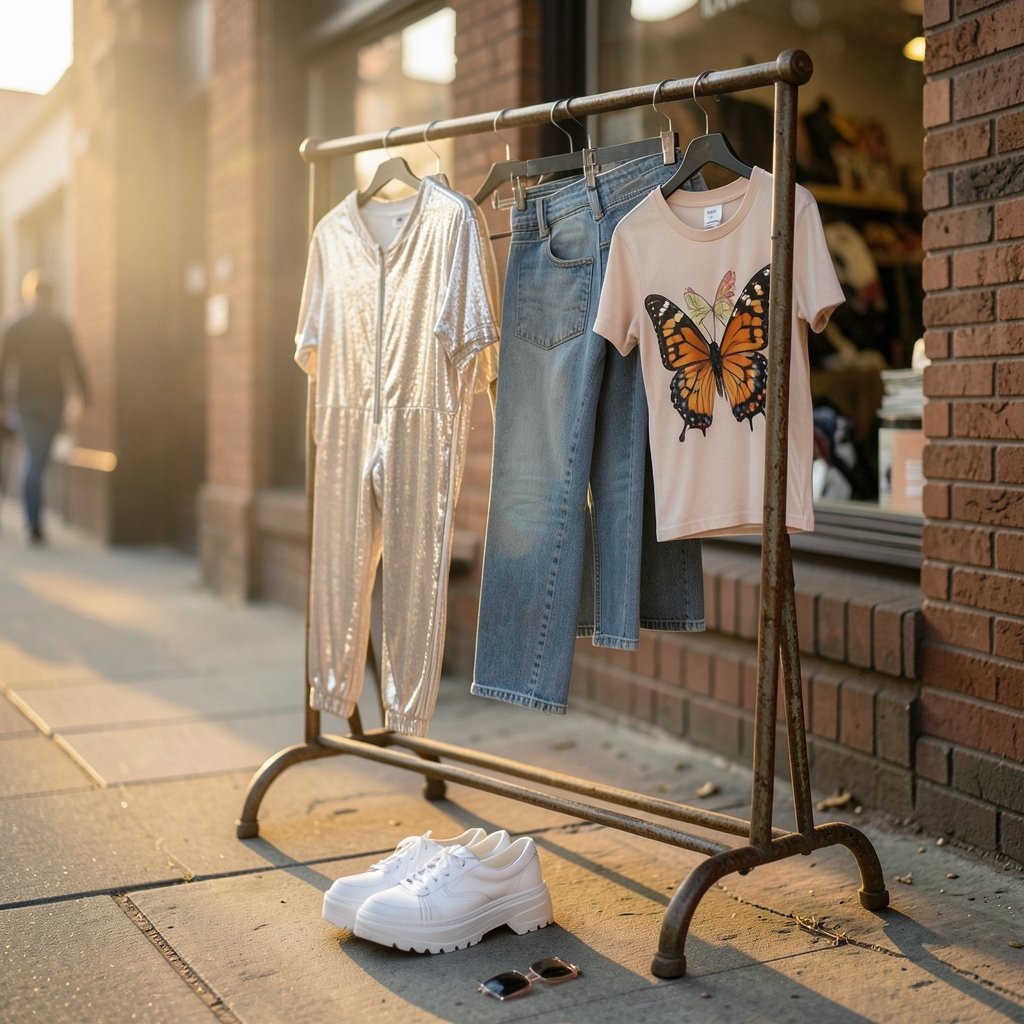
Quick Answer: What is y2k fashion?
Y2K fashion is the style of clothing and accessories that dominated roughly 1998 to 2003, named after the “year 2000” computer scare. In plain terms, it means shiny fabrics, low-rise jeans, velour tracksuits, baby tees, butterfly motifs, tiny rectangular sunglasses, and chunky platform shoes, and you can wear it through full outfits, single statement pieces, or thrifted vintage finds.
It is not the same as the broader Y2K aesthetic, which also covers interior design, early digital graphics, and tech visuals. It also differs from 2010s athleisure and streetwear, which grew out of Instagram culture rather than millennium-era pop.
Before buying or styling anything, check the fit and rise, fabric quality and stretch, authenticity of logos, shoe comfort, and how the piece mixes with your existing wardrobe.
Why Does Everyone Still Talk About the Year 2000?
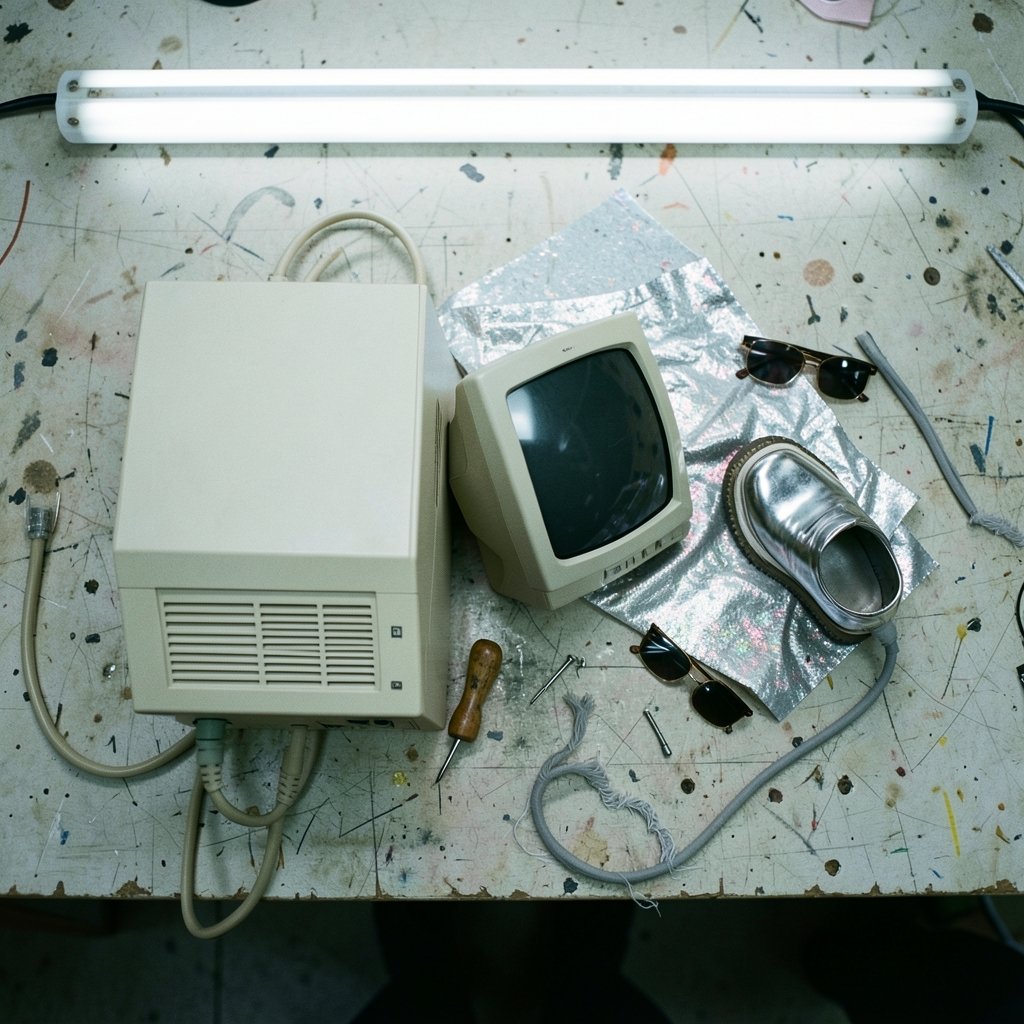
Walk into any mall in 2026 and you will spot them: tiny sunglasses, low-slung jeans, and a baby tee with a butterfly on it. So how did a look from a quarter-century ago crawl back into the spotlight? The answer starts with the name itself.
The abbreviation Y2K (Y for year, 2K for 2000) spread in the late 1990s alongside the millennium bug, the widely publicized worry that computers storing years as two digits might fail when the calendar rolled over on 1 January 2000. That anxiety came wrapped in optimism about technology, and fashion absorbed both moods. Designers and high-street brands reached for metallic fabrics, holographic finishes, and anything that looked like it belonged in a music video filmed on a spaceship.
What makes Y2K fashion unusual is that nobody wrote the rulebook at the time. Unlike punk or grunge, it was not codified by a single designer or manifesto. The label is a retrospective one, applied by later fashion writers and historians looking back at a messy, joyful, logo-heavy decade. That matters for anyone trying to understand it today: there is no “correct” Y2K, only a cluster of recognizable signals.
What Actually Counts as Y2K Fashion?
The era’s style markers are remarkably consistent across photos, music videos, and red carpets of the period. The core pieces include:
- Low-rise and flared jeans, often with embellished pockets or distressed finishes
- Crop tops and baby tees, frequently with slogans or cartoon graphics
- Velour tracksuits, popularized by Juicy Couture from the late 1990s onward
- Butterfly motifs, printed on everything from tops to hair clips
- Metallic and holographic fabrics, including shiny pants and mini skirts
- Small rectangular sunglasses, often tinted
- Chunky platform shoes, from sneakers to sandals
- Logo-heavy accessories, including tiny shoulder bags and bedazzled belts
Notice what ties these together: shine, tight fits, and a playful, slightly futuristic attitude. The look was never about restraint.
The technology and pop-culture engine
Y2K fashion rode the same wave as music video channels, early internet culture, and celebrity-driven pop and R&B. This is a widely repeated explanation rather than a single documented fact, so treat it as informed analysis. Still, the connection is hard to miss. The clothes were built to look good in a three-minute video and in a flash photograph, which is exactly the environment that was exploding at the time.
What Y2K fashion is not
Here is where people get tangled. The Y2K aesthetic is a broader term that also covers interior design, early digital graphics, and tech visuals of the era. Y2K fashion is one slice of that pie. Similarly, the 2010s brought athleisure and streetwear shaped by Instagram, a genuinely different moment with different rules. If you want to see how that later chapter played out, the story of how 2010s fashion athleisure streetwear Instagram rewrote the rules is a useful contrast, because it shows how much the internet changed the way trends spread.
When Did Y2K Fashion Come Back, and Why?
The revival is generally dated to roughly 2020 to 2023, though sources disagree on the exact peak. Social media did most of the heavy lifting. TikTok and Instagram turned archived red-carpet photos into mood boards, and Gen Z adopted the look partly as irony and partly as genuine affection.
The timing made sense. After years of minimalist, neutral-toned wardrobes, shiny fabrics and loud accessories felt like a release valve. The revival also arrived alongside a wider reappraisal of early-2000s culture, from pop music to reality television. If you want the wider context of where style is heading now, a solid 2026 fashion trends guide shows how much of that Y2K DNA has been absorbed into current collections rather than left behind.
It is worth saying plainly: the revival did not simply copy the original. Modern versions tend to use better fabrics, more inclusive sizing, and softer construction. The silhouette is the same; the engineering is better.
How Do You Wear Y2K Fashion Without Looking Like a Costume?
This is the practical question most people actually have, and it is where things go wrong. The most common mistake is going all-in at once: full velour suit, tiny sunglasses, platform boots, and a bedazzled bag. The result reads as fancy dress rather than personal style. A second common mistake is buying cheap shiny fabric that pills or clings badly after one wash.
What works in practice is restraint and one strong anchor piece at a time. A few habits that consistently pay off:
- Pick one Y2K hero piece and build a normal outfit around it. Low-rise jeans with a plain fitted top and clean sneakers look current; the jeans carry the outfit.
- Check the fabric before you commit. Stretch velour and metallic knits should spring back when you stretch them gently. If the shine looks painted on or the fabric feels thin and scratchy, it will not survive a season.
- Try the rise before you buy online. Low-rise fits differently on every body. Sit down in the fitting room; standing alone tells you less.
- Mix eras deliberately. A Y2K top with tailored trousers looks intentional. A full 2003 outfit looks like a theme party.
- Watch the sunglasses sizing. Tiny frames are the most literal Y2K signal and the least forgiving. If they sit badly on your face, choose a slightly larger rectangular frame instead.
- Buy vintage where it counts. Original pieces from the era often have better hardware and heavier fabric than modern reissues, though sizing runs small and labels can be inconsistent.
For anyone who wants to see how runway moments get translated into wearable ideas, an illustrator’s take on turning runway moments into fashion illustrations is a good reminder that the pieces people actually copy are usually the simplest ones.
Y2K versus other revivals at a glance
| Style era | Signature pieces | Mood | How it differs from Y2K |
|---|---|---|---|
| Y2K (c. 1998–2003) | Low-rise jeans, velour tracksuits, baby tees, platforms | Playful, shiny, tech-optimist | The reference point itself |
| 2010s athleisure | Leggings, sneakers, oversized hoodies | Comfort-first, sporty | Built for daily movement, not shine |
| 2010s streetwear | Logo hoodies, limited drops, chunky trainers | Hype-driven, resale-focused | Driven by scarcity, not nostalgia |
| 1990s minimalism | Slip dresses, straight jeans, plain knits | Quiet, understated | Deliberately avoids logos and shine |
Where Does Y2K Fashion Fit in 2026?
The look has settled into something more interesting than a trend cycle: a permanent option in the wardrobe. Designers still send metallic pieces and low-rise cuts down the runway, but they now sit alongside tailored separates and quiet luxury rather than replacing them. That coexistence is the real story, and it shows up across current fashion trends for 2026.
There is also a growing appreciation for the craft behind the era’s most recognizable pieces. Italian luxury fashion houses, for instance, produced some of the most copied accessories of the period, and their influence still shapes how modern brands reinterpret logos and hardware. That lineage is worth understanding if you are shopping for vintage pieces, because it explains why some labels hold value and others do not.
A note on terminology
Be careful with the word “Y2K” itself. In 2026 it gets used for three different things: the original 1998–2003 style, the broader Y2K aesthetic covering design and tech, and the modern revival. When someone says a dress is “so Y2K,” they usually mean the third. Clarifying which one you mean saves a lot of confused conversations, especially when shopping secondhand listings where the term is applied loosely to anything with a butterfly on it.
Common Mistakes People Make With Y2K Style
Beyond the all-in costume problem, a few practical pitfalls come up again and again.
Buying for the photo, not the day. Platform shoes photograph beautifully and can be brutal on a commute. Test them indoors for an hour before committing.
Ignoring care instructions. Metallic coatings and stretch velour degrade fast in a hot wash. Cold water and air drying keep them alive far longer.
Assuming vintage means authentic. Logos from the era were heavily counterfeited even at the time. Check stitching, hardware weight, and label construction rather than trusting a seller’s description.
Overlooking proportion. Low-rise jeans work best with a top that ends where you want attention. Crop tops and baby tees are not the only options; a tucked fitted tank does the same job with less fuss.
Forgetting the styling details. Hair clips, tinted lenses, and small bags do more for a Y2K look than any single garment. They are also the cheapest way to try the trend before spending real money.
Conclusion
Y2K fashion is best understood as a specific window of style, roughly 1998 to 2003, defined by shine, tight fits, logos, and a cheerful faith in the future. The name came from a computer scare, the look came from pop culture and early internet energy, and the label itself came later, applied by writers looking backward. That is why it feels both dated and endlessly reusable.
The revival proved the look has staying power, but the smart way to wear it now is selective. One strong piece, checked fabric, a fit you have actually tested, and a few styling details will always beat a full costume. Whether you are hunting vintage velour or just adding a butterfly clip to a plain outfit, the point is to borrow the era’s confidence, not its entire wardrobe.
FAQs
What is the difference between Y2K fashion and Y2K aesthetic?
Y2K fashion covers clothing and accessories from roughly 1998 to 2003. The Y2K aesthetic is broader and includes interior design, early digital graphics, and tech visuals from the same period. Fashion is one slice of the larger aesthetic.
Was Y2K fashion a single designer’s creation?
No. Unlike punk or grunge, Y2K fashion was never codified by one designer or manifesto. It is a retrospective label applied by later fashion writers and historians to describe a cluster of trends that appeared across many brands at once.
When exactly did the Y2K revival happen?
The revival is generally dated to around 2020 to 2023, driven by TikTok and Instagram and led largely by Gen Z. Sources disagree on the precise peak, and the look has since settled into an ongoing wardrobe option rather than a short-lived moment.
Is it expensive to dress in Y2K style?
Not necessarily. Thrift stores and resale platforms are full of original pieces, and small accessories like hair clips, tinted sunglasses, and mini bags deliver the look cheaply. The expensive part is usually footwear and authentic vintage denim.
How can you tell if a Y2K piece is genuinely vintage?
Check the label construction, stitching quality, and hardware weight. Original pieces often have heavier fabric and older brand tags. Because logos were heavily counterfeited during the era itself, examine the item closely rather than relying on a seller’s description.
Can Y2K fashion work for everyday outfits?
Yes, if you use one anchor piece at a time. Low-rise jeans with a plain top, or a metallic skirt with a simple knit, reads modern rather than costume. The mistake is wearing every Y2K element at once.














