

What comes to mind when someone calls a person pious? A figure bowed in prayer, maybe, or a grandmother who never misses a service. That image is only part of the story. The word piety carries a much wider range of meaning than most people realize, stretching from devotion to God all the way to the way someone treats their parents. It has roots in ancient Rome, a second life in East Asian ethics, and a modern reputation problem that dictionaries quietly warn readers about. This guide unpacks the full definition of piety, shows how it differs from lookalike words, and explains why the term still matters today.
The Core Definition of Piety
At its heart, piety is a noun that names religious devotion and dutiful reverence toward God or the gods. It describes both an inner attitude and the outward habits that flow from it: prayer, worship, observance of religious obligations, and a general posture of respect toward the sacred. The adjective form is pious, the adverb is piously, and the opposites are impious and impiety.
That much is straightforward. The complication is that dictionaries do not all lead with the same emphasis. Some define piety first and foremost as devotion to God. Others begin with a broader idea of dutifulness, then extend it to family and country. Both approaches are correct. They simply reflect the word’s layered history, and any honest definition has to acknowledge that range rather than pretend a single narrow sense exists.
Where the Word Comes From

Piety entered English in the 14th century by way of Old French, but its ultimate source is Latin. The Latin noun pietas meant dutiful conduct and devotion, and it grew from the root pius, meaning dutiful or devout. That Latin backbone explains why the English word feels both religious and civic at once. It was never purely about private worship.
Pietas in ancient Rome
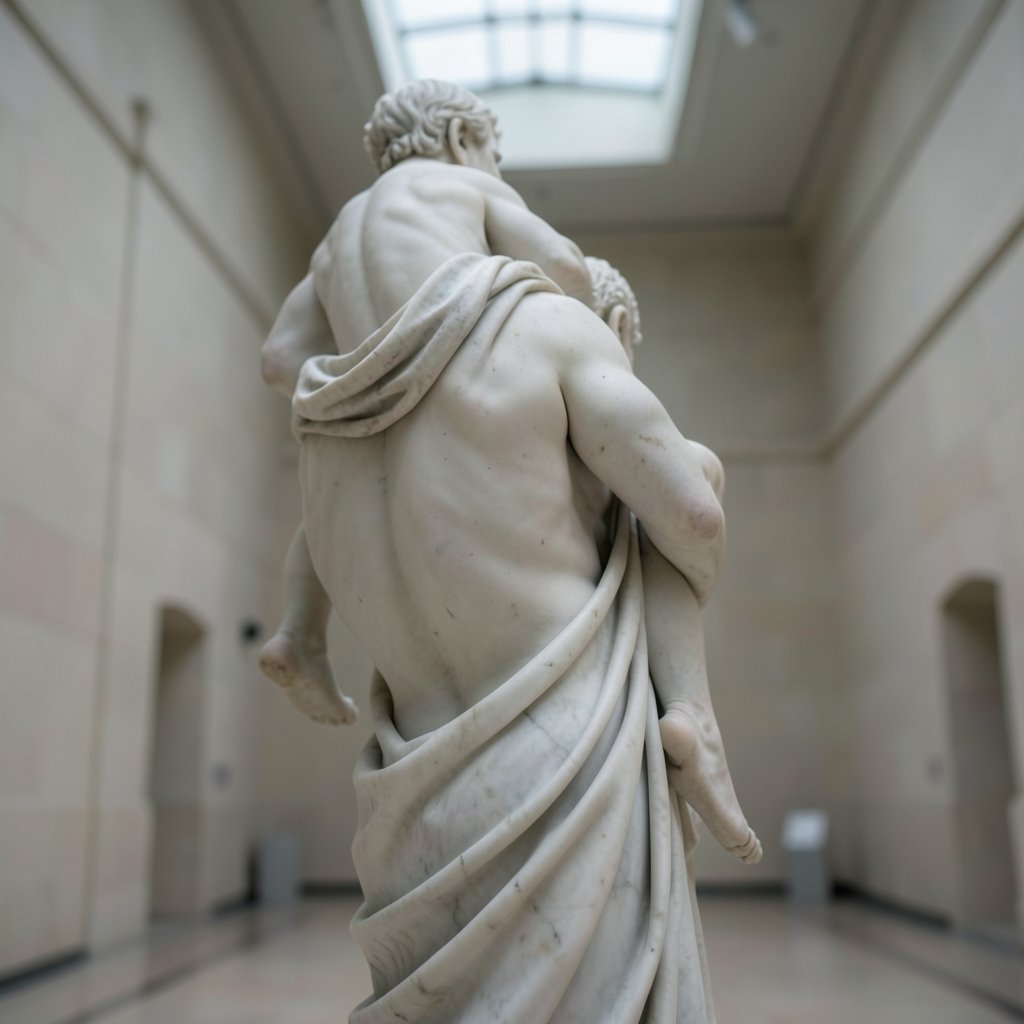
For the Romans, pietas was a civic-religious virtue covering duty to the gods, duty to family, and duty to the state, all bundled together. It was a public virtue as much as a private one. The most famous bearer of the label was Aeneas, the hero of Virgil’s Aeneid, who is repeatedly called pius Aeneas because he carries his father out of burning Troy and then obeys the gods’ command to found a new homeland. His piety is not quiet contemplation. It is action, sacrifice, and obligation fulfilled under pressure.
That classical sense lingers in English today. When someone speaks of piety toward one’s country, they are drawing on the Roman idea without necessarily knowing it.
Piety Beyond Religion: Filial and Patriotic Duty
The extended sense of piety is not a modern softening of the word. It is built into the definition. English dictionaries routinely include dutiful respect toward parents, family, and country as part of what piety means.
The clearest example is filial piety, the virtue of respecting, honoring, and caring for one’s parents and ancestors. In Confucian ethics, this concept, known as xiao, sits near the center of the moral system. It shapes expectations about how children treat aging parents, how families honor ancestors, and how individuals understand their place in a larger social order. Filial piety is not a fringe usage in English. It is a standard, well-established sense found in mainstream dictionaries, and it shows how naturally the word travels from the sacred to the familial.
This dual life is what makes piety such a useful word and such an easy one to misunderstand. A sentence about piety might be about church attendance or about caring for an elderly parent, and context is the only reliable guide.
Piety vs. Related Words: A Side-by-Side Comparison
English has several near-neighbors that get confused with piety. Each one points at something slightly different, and mixing them up changes the meaning of a sentence.
| Term | Core meaning | Tone |
|---|---|---|
| Piety | Devout religious duty, or dutiful respect toward family and country | Neutral to positive |
| Pious | Adjective form; devoted and dutiful | Neutral, but can turn negative |
| Pietism | A 17th-century Lutheran renewal movement; also a general emphasis on personal devotion | Historical or technical |
| Sanctimony | Affectation of moral or religious superiority | Strongly negative |
| Devotion | Deep love and commitment, religious or otherwise | Positive |
| Reverence | Deep respect | Positive |
The trickiest pair is piety and pietism. Pietism with a capital P names a specific movement that began in the 1670s within Lutheranism, sparked in part by Philipp Jakob Spener’s Pia Desideria, published in 1675. It stressed personal, heartfelt faith and practical renewal over dry doctrine. Lowercase pietism can describe a general devotional emphasis, but it is never simply a synonym for piety. Meanwhile, sanctimony is what piety looks like when it curdles into performance. It is devotion worn as a costume, and English speakers have been suspicious of it for centuries.
The Reputation Problem: When Pious Turns Negative
Here is a wrinkle worth knowing. The word pious can carry a pejorative edge. Dictionaries flag that it may suggest ostentatious or hypocritical devotion, the kind on display in the phrase “pious platitudes.” When someone describes a speech as full of pious sentiments, they are usually not complimenting the speaker. They are suggesting the words are hollow.
This is not a flaw in the language. It is a warning built into it. English has long been alert to the gap between visible devotion and actual character, and the vocabulary reflects that wariness. The practical upshot for writers is simple: if you mean sincere devotion, piety works fine on its own. If you want to signal that the devotion is fake or showy, sanctimony or sanctimonious does that job far more precisely. (The row)
How Piety Shows Up in Everyday Language
Piety rarely appears alone in modern English. It lives inside set phrases, and knowing those phrases is the fastest way to use the word correctly.
- Filial piety is by far the most common pairing, especially in discussions of family duty and East Asian traditions.
- Pious shows up in phrases like a pious hope, meaning a wish with little chance of coming true, or pious fraud, an old term for deception dressed up as religious zeal.
- Marian piety, popular piety, and folk piety describe devotional practices outside official liturgy.
- Patriotic piety echoes the Roman sense of duty to the state.
A common mistake is assuming piety always means going to church. In practice, a great many uses of the word have nothing to do with formal religion at all. Another frequent slip is treating piety and spirituality as interchangeable. Spirituality describes an inner orientation; piety describes dutiful observance, which may or may not feel spiritual to the person practicing it. Someone can be deeply pious in habit while privately wrestling with doubt, and someone can feel intensely spiritual while observing almost nothing.
There is also a stylistic trap. Because pious can sound old-fashioned or faintly ironic, writers sometimes reach for it when a plainer word would serve better. If the point is simply that someone is religious, saying so directly often lands harder than a word that carries centuries of baggage.
Why the Definition Still Matters
Words like piety do cultural work. They sort behavior into categories, and those categories shape how people judge one another. Understanding the full definition, from Roman civic duty to Confucian family ethics to modern religious devotion, keeps those judgments honest.
It also helps readers navigate texts from other eras. A 17th-century sermon, a translation of Virgil, and a contemporary essay on family obligation may all use the word piety, but they are not always pointing at the same thing. Recognizing the range prevents misreading. The same skill applies to descriptions of hair and beauty standards that borrow moral language; communities discussing 4c hair or the styling debates around 2b hair often inherit vocabulary freighted with older judgments about respectability. Words carry history whether or not speakers notice.
Finally, the definition matters because it is contested at the edges. Dictionaries disagree about which sense deserves top billing, and that disagreement is itself informative. It tells you the word sits at a crossroads between duty and devotion, between the sacred and the social.
Common Questions About Piety
What is the simple definition of piety?
Piety is a noun meaning religious devotion and dutiful reverence toward God or the gods, usually shown through prayer, worship, and observance of religious obligations. It also covers dutiful respect toward parents, family, and country, which is why the phrase filial piety exists.
What does filial piety mean?
Filial piety is the virtue of respecting, honoring, and caring for one’s parents and ancestors. It is a standard English sense of the word and a central concept in Confucian ethics, where it shapes expectations about family duty across generations. It has nothing to do with religious worship in its strict form.
Is piety the same as pietism?
No. Piety is the general noun for devotion and dutiful conduct. Pietism, usually capitalized, names a specific renewal movement that arose within Lutheranism in the 1670s and emphasized personal, practical faith. The two words are related in spirit but are not interchangeable.
Why can pious sound like an insult?
Because dictionaries note that pious can imply ostentatious or hypocritical devotion, as in the phrase pious platitudes. English has a long tradition of skepticism toward visible religiosity that seems performed rather than felt, and the word absorbed that skepticism over time.
Where does the word piety come from?
It comes from the Latin pietas, meaning dutiful conduct and devotion, rooted in pius, meaning dutiful or devout. It reached English through Old French in the 14th century. In Roman usage, pietas covered duty to the gods, family, and state all at once.
Can someone be pious without being religious?
In the strict sense, no, because piety centers on religious devotion. But the extended sense allows for dutiful reverence toward family or country that is not explicitly religious. Context decides which meaning is in play, so the surrounding sentence is always the best clue.
Conclusion
Piety is a small word with an unusually long reach. It begins in Latin as a civic and religious virtue, travels through Old French into English in the 14th century, and settles into modern usage with two strong senses: devotion to the divine and dutiful respect for family and country. Along the way it picked up a sharp edge, so that pious can now suggest hypocrisy as easily as sincerity.
That complexity is not a defect. It is a reminder that English often keeps the full history of a word alive inside it. Whether the topic is a Roman hero carrying his father from a burning city, a Confucian tradition of honoring ancestors, or a modern debate about visible devotion, the definition of piety holds. It names duty felt deeply and expressed outwardly, and it asks the reader to notice which kind of duty is meant. Used with that awareness, the word remains precise, useful, and quietly powerful.
That awareness is worth cultivating. When you meet piety in a sentence, pause to ask what duty is being honored and by whom. The answer will tell you whether the writer means worship, family loyalty, civic allegiance, or something in between. Read that way, the word stops being a vague compliment and becomes a precise instrument for describing how people bind themselves to what they revere.














