

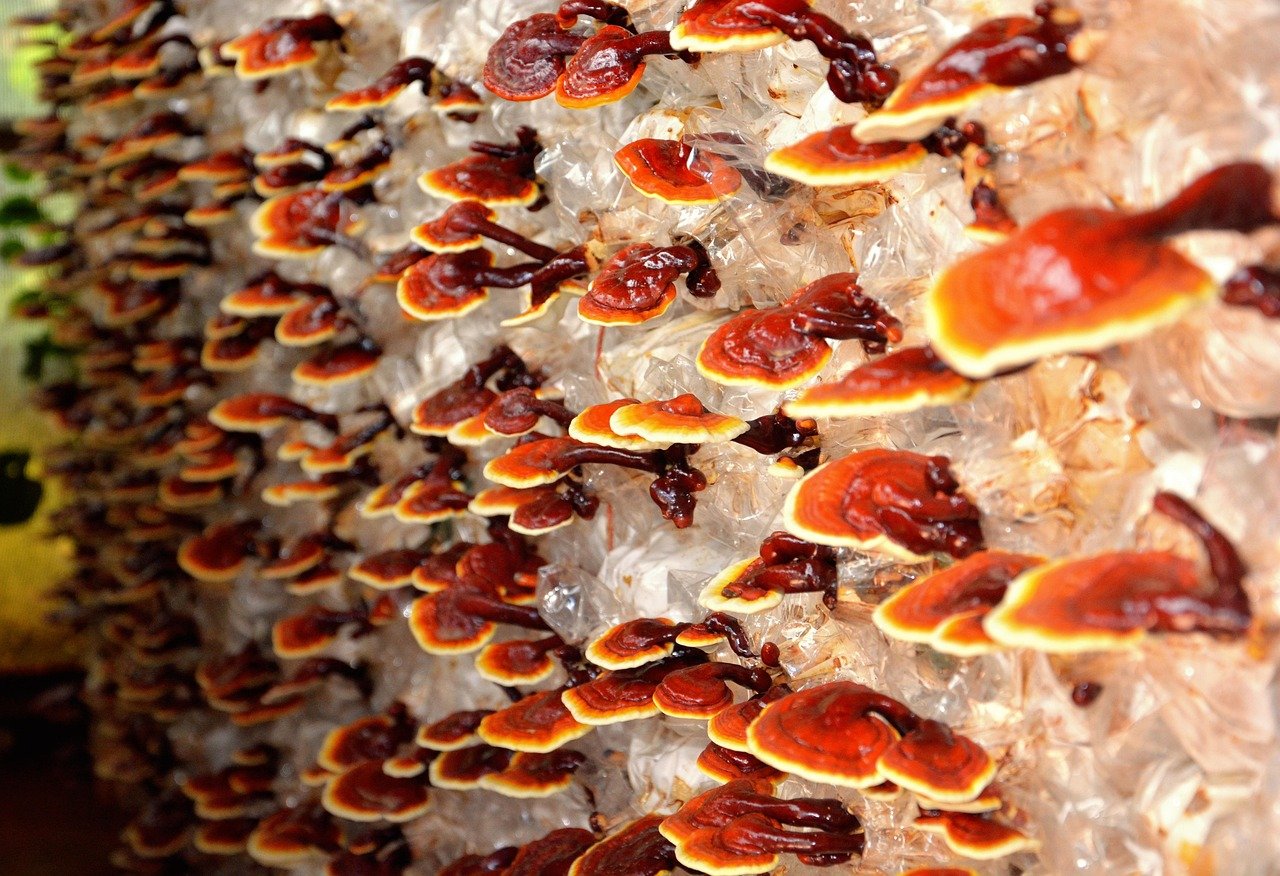
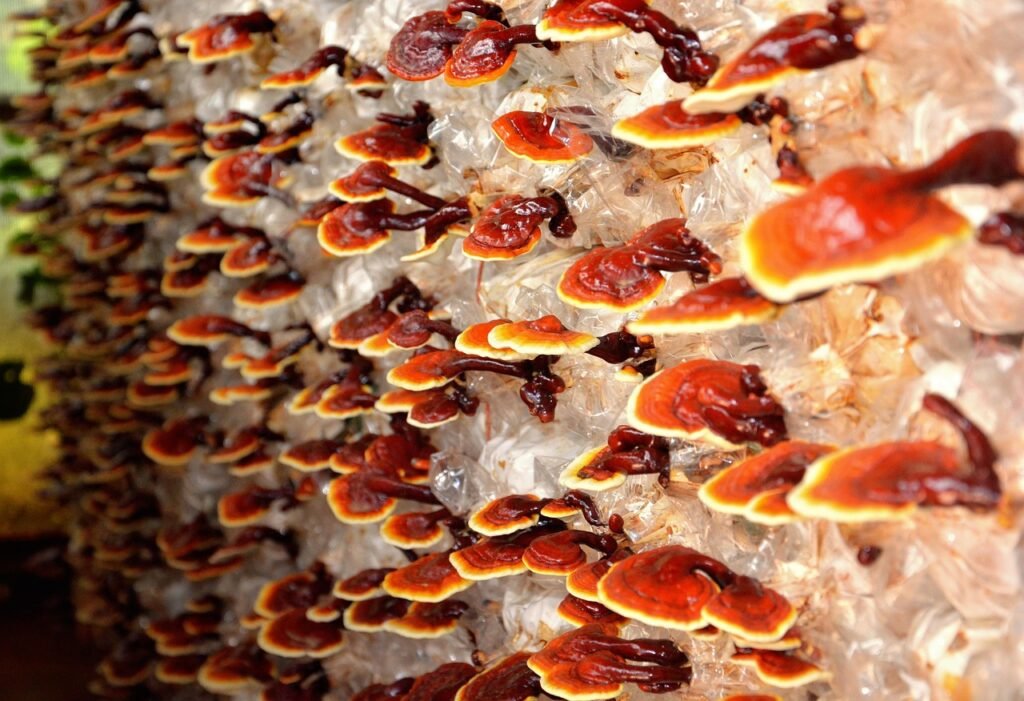
What if the most famous mushroom in traditional Chinese medicine turned out to be a family of lookalikes that scientists still argue about? That is exactly the situation with the linhzhi mushroom — a common romanization of the Vietnamese linh chi and the Chinese língzhī, better known in English as reishi and in scientific literature as Ganoderma lucidum. Walk into any supplement aisle and you will find glossy red-brown capsules promising calm energy and immune support. Look closer, and the label often says nothing about which species is inside, how it was grown, or what part of the fungus was used. That gap between marketing and mycology is where most of the confusion about this mushroom begins.
This article sorts out what the linhzhi mushroom actually is, what the research can and cannot say, and how to read a product label without getting fooled.
From Temple Walls to Supplement Shelves
Ganoderma lucidum is a polypore fungus in the family Ganodermataceae. Unlike button mushrooms, it has a tough, woody texture and a lacquered, reddish-brown cap that looks almost carved. It grows on hardwood, and in the wild it is uncommon enough that most commercial material comes from cultivation on sawdust blocks or logs rather than foraging.
Its cultural footprint is enormous. Lingzhi appears in Chinese art and medicine for centuries, where it was associated with longevity and vitality. That history is real and worth respecting — but it is historical and cultural, not clinical proof. A substance being used for a thousand years tells you people valued it. It does not tell you what a controlled trial will find.
The naming problem starts here. “Reishi” is used loosely for a species complex that includes G. lucidum, G. lingzhi, G. sinense and G. tsugae. Many studies and nearly all commercial products never state which species was tested or bottled. So when someone says “reishi works,” a fair follow-up question is: which reishi, grown how, extracted which way?
What Is Actually Inside the Mushroom
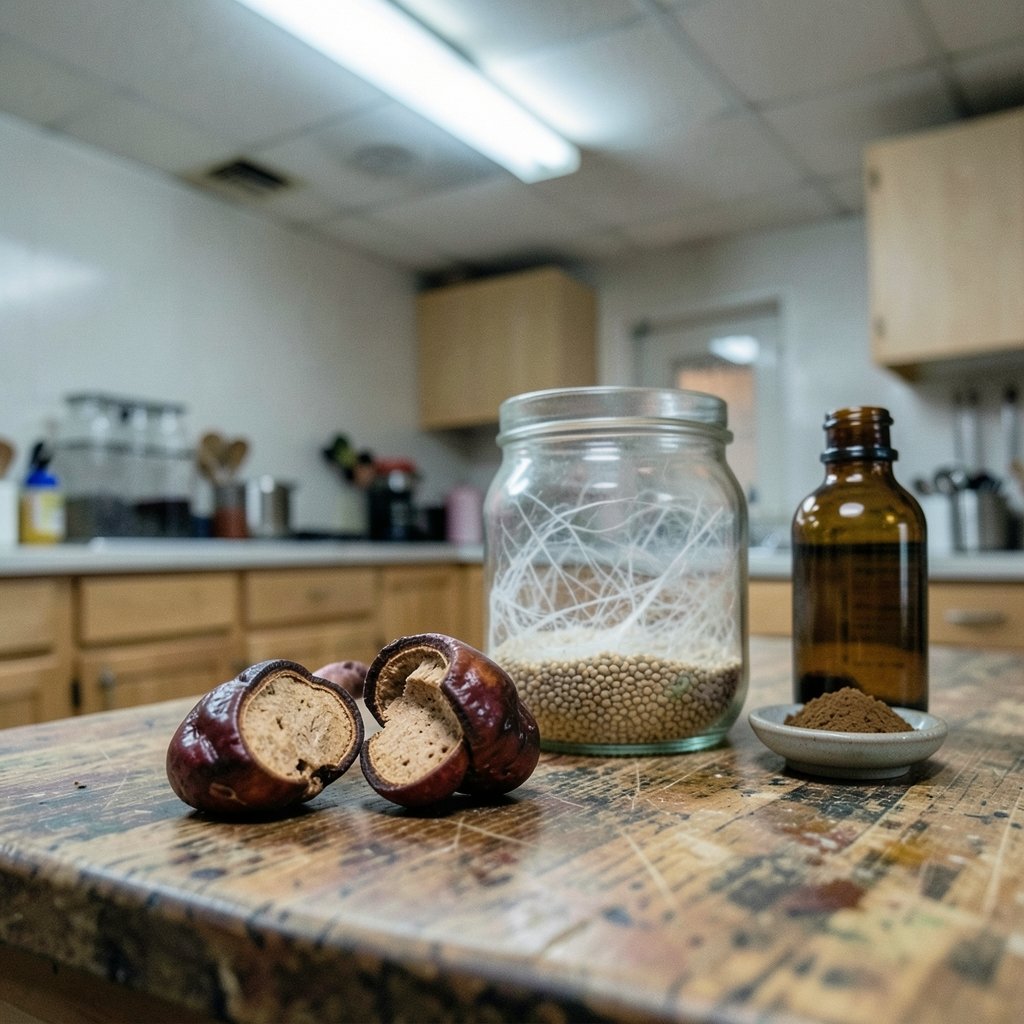
The compounds that draw research attention fall into a few main groups:
- Polysaccharides, especially beta-glucans, which are the most studied fraction and the basis for most immune-related research interest.
- Triterpenoids, including ganoderic acids, which give the mushroom its bitterness and are the focus of much laboratory work.
- Peptidoglycans, protein-sugar complexes that appear in some extracts.
Here is a practical point that trips people up: the fruiting body (the mushroom itself), the mycelium (the root-like network), and the liquid culture broth are three different raw materials with different chemistry. A product made from mycelium grown on grain may be mostly grain by weight. That is not automatically bad, but it is not the same thing as a fruiting-body extract, and labels rarely make the distinction obvious.
If you are the sort of person who cares about how a room feels and what goes into it, you probably already read labels carefully — the same instinct that leads people to compare a wool living room carpet against a synthetic one, or to study living room carpet styles before buying. Supplements deserve the same scrutiny.
What the Human Evidence Actually Shows
This is where balance matters most. The honest summary: human clinical evidence is limited and heterogeneous. Trials tend to be small, use different extracts at different doses, run for short periods, and often fail to report species. Reviews in this field generally call for larger, better-controlled studies rather than declaring benefits proven.
That does not mean nothing has been studied. It means the research base is preliminary. Anyone who tells you reishi “treats” a specific condition is going beyond what the data supports. The more defensible framing is that some early findings are interesting enough to justify further research, and that individual results vary.
In the United States, reishi is sold as a dietary supplement, not a drug. That distinction is not bureaucratic trivia. It means products are not pre-approved for efficacy before sale, and labels may vary considerably from what is actually in the bottle. In practice, this puts the burden of judgment on the buyer.
Reading a Linhzhi Label Like a Skeptic
Most mistakes with this mushroom happen at the point of purchase, not at the point of use. Here is what actually works in practice.
- Look for the species name. A serious product states Ganoderma lucidum or another species in full. “Reishi blend” with no species is a yellow flag.
- Check which part is used. Fruiting body, mycelium, or extract — ideally with the extraction ratio or beta-glucan percentage stated.
- Be wary of “proprietary blend” language. It usually hides doses. You cannot evaluate a number you cannot see.
- Prefer products with third-party testing. Heavy metals and contamination are genuine concerns with any fungal supplement, because fungi absorb what is in their substrate.
- Start low. If you decide to try it, a smaller dose for a short period tells you more about your own tolerance than any review can.
The most common mistake is buying the cheapest capsule on the shelf and expecting it to match a studied extract. The second most common is assuming that because it is natural, it is risk-free. Neither holds up.
Safety, Interactions, and Who Should Be Careful
Reported adverse effects in trials and case reports include digestive upset. There are also case reports raising liver-related concerns with certain herbal products, though causality is often unclear — which is precisely why clinicians take such reports seriously without treating them as proof.
The interaction picture is genuinely uncertain. Laboratory and animal studies suggest extracts may affect clotting or liver enzymes, which raises a theoretical concern for people taking anticoagulants or drugs metabolized by the liver. Human data are sparse. That is a precaution, not an established finding, and it should be described that way.
Practical guidance follows from that uncertainty:
- Anyone with liver disease should talk to a clinician before using reishi.
- Anyone on blood thinners or regular medication should do the same.
- Anyone preparing for surgery should mention every supplement they take.
- Pregnant or breastfeeding people have little data to rely on and should default to caution.
None of this is alarmism. It is the normal standard applied to any active botanical.
Species Confusion: The Issue Nobody Advertises
If there is one thing to remember from this article, it is that “linhzhi,” “lingzhi,” and “reishi” are umbrella words. The scientific literature is messy because the taxonomy is messy. G. lucidum was historically treated as a single global species; modern work recognizes regional species that look similar but are genetically distinct.
Why does that matter to a buyer? Because a trial on one species does not automatically transfer to another. A product sourced from a different region may contain a different fungus entirely. Until labels routinely name species and strains, consumers are partly guessing.
There is an aesthetic parallel worth noting. Just as a luxury living room sofa can look identical to a cheap imitation in a photo and reveal everything in the stitching, a reishi capsule can look identical to a quality extract until you read the fine print. Craft shows up in the details. So does cutting corners.
Traditional Use Versus Modern Claims
Traditional Chinese medicine used lingzhi within a broader framework of practice, and that context matters. Modern supplement marketing often strips the mushroom out of that framework and repackages it as a standalone cure-all — which serves neither tradition nor science.
A balanced position looks like this: the traditional use is a legitimate cultural and historical fact; the modern evidence is preliminary; the regulatory status is permissive rather than reassuring; and the safety profile is generally tolerable but not risk-free. Holding all four ideas at once is more honest than picking one.
How People Actually Use It
Reishi is typically consumed as a capsule, a powder, or a decoction. The mushroom is bitter — genuinely bitter, in the way strong coffee is bitter — and that bitterness comes largely from the triterpenoids. Practically, this means:
- Powder in hot water works but tastes medicinal; most people add honey or mix it into something stronger.
- Capsules are the easiest route and the hardest to evaluate, because you cannot taste or see the material.
- Extracts vary enormously in strength, which is why the ratio matters more than the bottle size.
A common practical error is assuming more is better. With a bitter, woody fungus, larger doses mostly produce more digestive discomfort. Moderation and consistency beat heroic dosing.
A Quick Comparison of Product Types
| Product type | What it usually contains | What to check |
|---|---|---|
| Fruiting body powder | Ground mushroom, often whole | Species name, beta-glucan content, testing |
| Mycelium product | Mycelium grown on grain | Ratio of grain to mycelium, species |
| Hot water extract | Polysaccharide-rich fraction | Extraction ratio, carrier content |
| Dual extract | Polysaccharides plus triterpenoids | Stated percentages, bitterness as a cue |
The table is not a ranking. It is a reminder that “reishi” on a label describes a category, not a specification.
Pairing Wellness Habits With a Calm Space
People who gravitate toward adaptogens and functional mushrooms often care about their environment too. A quiet, well-designed room supports rest, and rest is where most recovery actually happens. That is why some buyers treat their living space with the same care they apply to their supplement shelf — choosing a large living room rug that softens sound, or building a luxury living room set around comfort rather than display.
Scent is part of that picture. If you enjoy the ritual of a calming evening, exploring luxury home fragrances is a reasonable complement to a wind-down routine — though it is worth saying plainly that no fragrance treats anything. It just makes a room feel better, which is its own kind of value. For those who like options, a curated list of luxury home scents can help match a fragrance to a space without guesswork.
The same principle applies to furniture: elegant living room furniture is chosen for how it holds up over years, not how it photographs on day one. Supplements deserve that long view too.
Conclusion
The linhzhi mushroom is a genuinely fascinating fungus wrapped in a genuinely confusing market. It has centuries of cultural use, a plausible and actively researched chemistry, a preliminary human evidence base, a permissive regulatory status, and a real if modest safety profile. The species question remains unresolved on most labels, and that is the single biggest obstacle to knowing what you are buying.
The sensible approach is neither devotion nor dismissal. Read the species name. Check what part of the fungus is used. Prefer tested products. Start small. Tell your clinician. And treat claims of miracle benefits with the skepticism they deserve — the mushroom is interesting enough without the exaggeration.
Frequently Asked Questions
What is the linhzhi mushroom called in English?
It is most commonly called reishi, and scientifically Ganoderma lucidum. “Linhzhi” is a romanization of the Vietnamese linh chi and Chinese língzhī. The name is applied to several related Ganoderma species, so it functions as a category rather than a single organism.
Is reishi proven to boost the immune system?
No. The human evidence is limited and heterogeneous, with small trials using varied extracts and doses, and many studies not reporting which species was used. Reviews generally call for larger, better-controlled trials. Some early findings are interesting, but “proven” is too strong a word.
Can reishi damage your liver?
There are case reports raising liver-related concerns with certain herbal products, though causality is often unclear. Anyone with liver disease, or anyone taking medication that affects the liver, should consult a clinician before using it. The reports are a reason for caution, not a reason for panic.
Does reishi interact with medications?
Possibly, but human data are sparse. Laboratory and animal studies suggest extracts may affect clotting or liver enzymes, which raises a theoretical concern with anticoagulants and drugs metabolized by the liver. Treat this as a precaution and discuss it with a pharmacist or doctor.
How do I choose a quality reishi product?
Look for the full species name, the part used (fruiting body versus mycelium), a stated extraction ratio or beta-glucan content, and third-party testing. Avoid vague proprietary blends that hide doses. Start with a smaller amount to judge your own tolerance before committing to a larger supply.
Is it safe to take reishi every day?
Short-term use appears generally tolerable for most healthy adults, with digestive upset being the most commonly reported issue. Long-term daily use is less well studied. If you take it regularly, mention it at medical appointments, and stop if you notice unusual symptoms rather than waiting to see what happens.














