


What does it mean to call God a healer? Most people who grew up in church have sung the phrase “Jehovah Rapha” at some point, usually with hands raised and eyes closed. It sounds ancient, weighty, and deeply biblical. But here is the surprising part: the exact phrase “Jehovah Rapha” never appears in the Bible. Not once. The idea behind it is very much there, tucked into a single verse in Exodus, but the tidy compound title so popular in worship music is a much later invention. Understanding that gap between devotional tradition and the original Hebrew changes how the phrase reads, and honestly, it makes the verse more interesting, not less.
Where the Phrase Comes From: One Verse, One Moment
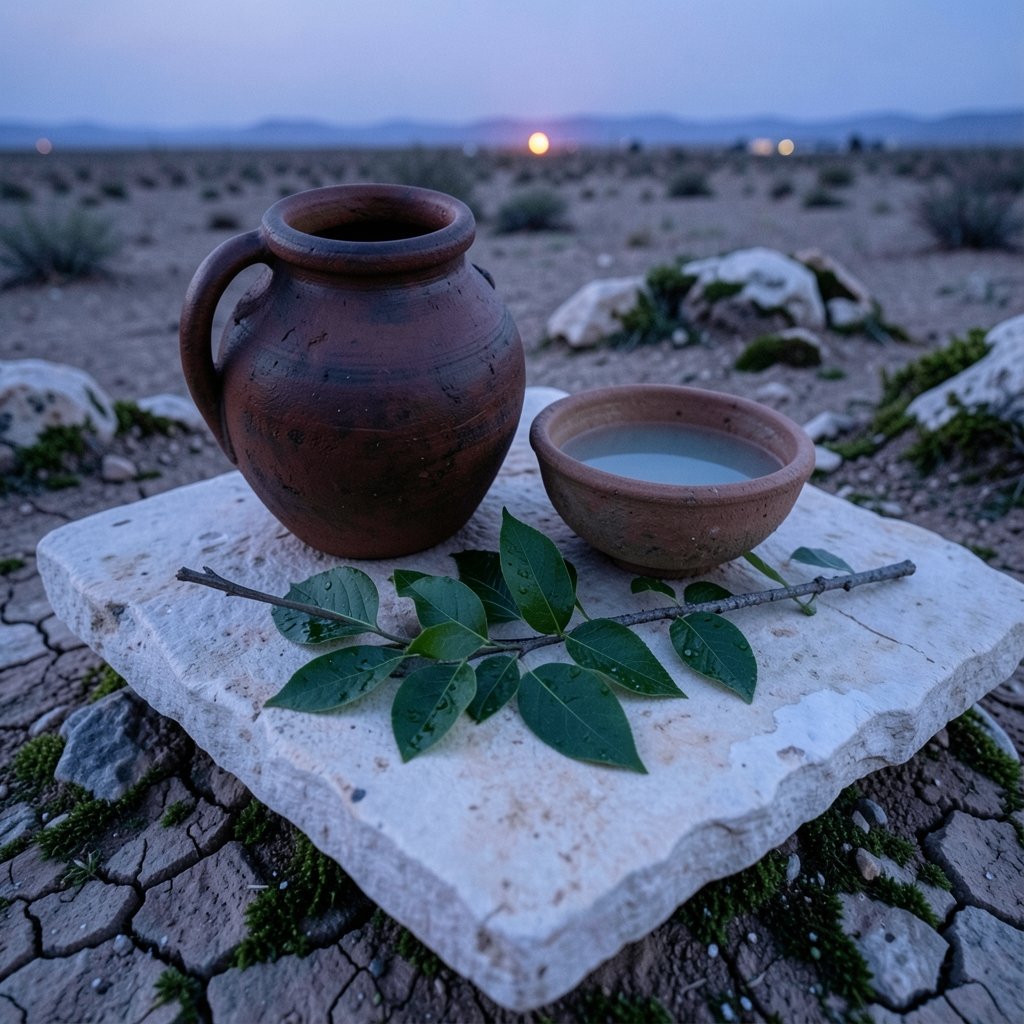
The concept traces back to Exodus 15:26, near the end of the famous story of the bitter waters at Marah. Israel has just crossed the sea, walked three days into the wilderness without water, and arrived at a spring so foul they named it Marah, which means “bitter.” The people grumble. Moses cries out. God shows him a piece of wood, he throws it into the water, and the water turns sweet.
Then God speaks. He tells the people that if they listen to his voice and keep his commands, none of the diseases he brought on Egypt will fall on them, and he closes with the declaration: “for I am the LORD who heals you.” In Hebrew, that final phrase is אֲנִי יְהוָה רֹפְאֶךָ, commonly transliterated as something like ani YHWH rof’ekha.
That is the entire biblical footprint of the idea. One verse, one wilderness moment, one promise attached to a condition.
The Hebrew Behind “Rapha”
The root word here is rapha (רָפָא), a Hebrew verb meaning “to heal, cure, or restore.” It shows up throughout the Hebrew Bible in medical, emotional, and national contexts. In Exodus 15:26 it appears as a participle with a second-person suffix, which literally means “your healer.” So a more precise rendering is “the LORD your healer” rather than a fixed compound name like “Jehovah Rapha.”
This distinction matters more than it might seem. A participle describes God doing something. A compound name treats “Jehovah Rapha” as a title, almost a badge. The Hebrew leans toward the first: God is describing his character through action, not handing Moses a label for a list.
Why “Jehovah” Is Itself a Later Form
Here is where things get linguistically tangled. The four-letter name of God in the Hebrew Bible, known as the Tetragrammaton (YHWH), was not pronounced aloud in Jewish tradition for centuries. Readers substituted Adonai, meaning “Lord,” and eventually scribes added the vowel points of Adonai to the consonants of YHWH as a reading cue.
Later, Latinized Christian tradition read those mixed consonants and vowels together and produced “Jehovah.” Scholars generally reconstruct the original pronunciation as something closer to Yahweh. So “Jehovah Rapha” is a layered construction: a medieval-ish Latin form of the divine name bolted onto a Hebrew participle. It is a Christian devotional coinage, not a phrase a Hebrew speaker in the ancient world would have recognized.
That does not make it worthless. It just means the phrase belongs to reception history, the story of how later communities read and loved the text, rather than to the text itself.
The Conditional Frame Nobody Talks About
Read the verse slowly and a detail jumps out. The healing promise is wrapped in an “if.” Israel is told that obedience brings protection from the diseases of Egypt. The “I am the LORD who heals you” line arrives after that condition, not before it. (The row)
Interpreters have argued about this for generations. Some read the healing as primarily physical, a promise of bodily health tied to covenant faithfulness. Others read it as covenantal and restorative, meaning God is promising to keep the people whole as a community, not to run a clinic. Many hold both together. There is no settled consensus, and honest teaching should say so rather than pick the tidy answer.
What is clear is that the verse sits inside a story about bitter water becoming sweet. The healing language is introduced in a setting of scarcity, thirst, and complaint. That framing is worth holding onto. The God described here is not presented as a distant physician dispensing cures from a distance but as one who enters a grumbling camp and fixes the water.
How “Jehovah Rapha” Became a Worship Word
If the phrase is not biblical, why is it everywhere? The answer is a long chain of devotional tradition. Starting roughly in the late nineteenth and twentieth centuries, evangelical and Pentecostal teaching popularized a set of compound names: Jehovah-Jireh (the LORD will provide), Jehovah-Nissi (the LORD is my banner), Jehovah-Shalom (the LORD is peace), and alongside them, Jehovah-Rapha.
These titles were often lifted from single verses and treated as a fixed list of “the names of God,” a framing that sells books and fills sermon series. Hymns, chorus songs, and study guides followed. The result is a phrase that feels ancient to modern ears but is actually a modern devotional packaging of an ancient idea.
None of this is dishonest, exactly. It is just imprecise, and precision is where the real richness lives. A worship leader singing “Jehovah Rapha” is echoing a genuine biblical claim, that God heals, even if the grammar has been smoothed into a slogan.
Related Hebrew Words That Get Confused
Because “rapha” gets tossed around loosely, it helps to separate it from its cousins. These are not synonyms, and conflating them muddies the text.
| Hebrew term | Transliteration | Meaning | Where it appears |
|---|---|---|---|
| רָפָא | rapha | to heal, cure, restore (verb) | Exodus 15:26 and many other passages |
| מַרְפֵּא | marpe | healing, a cure, health (noun) | Proverbs 4:22 and similar wisdom texts |
| רְפוּאָה | refu’ah | healing, medicine, remedy (noun) | Used for medical recovery and restoration |
The verb in Exodus 15:26 is doing the heavy lifting. The nouns describe the outcome or the remedy. Treating all three as interchangeable flattens a text that is actually quite careful with its vocabulary.
What This Means in Practice
For readers who want to engage the phrase seriously, a few practical habits make a real difference. These are the things that tend to trip people up, and the adjustments that actually help.
- Read the whole verse, not the title. Pull up Exodus 15:26 in a translation that reflects the Hebrew closely, and notice the “if” clause. The promise is framed, not free-floating.
- Check whether you are reading a name or a description. “The LORD your healer” is a statement about what God does. That is a different claim than a title on a list.
- Be wary of name-of-God lists. Many popular lists blend genuine biblical phrases with later devotional constructions. That is not a scandal, but it is worth knowing which is which.
- Notice the setting. The healing declaration comes in a story about bitter water and a complaining people. Context shapes meaning.
- Hold the interpretive question open. Physical healing, covenant restoration, or both? Serious readers disagree, and pretending otherwise oversells certainty.
A common mistake is treating “Jehovah Rapha” as a kind of formula, a phrase to invoke for a specific result. The text does not support that reading. Another mistake is dismissing the phrase entirely once someone learns it is not in the Hebrew. The idea is biblical even when the packaging is not, and the devotional tradition that produced it has genuinely comforted people for generations.
There is also a stylistic trap worth flagging. Writers on this topic often present a confident, single answer about what the phrase “really means,” when the honest position is layered. The Hebrew verb is clear. The pronunciation of the divine name is reconstructed, not certain. The function of the phrase as a name is debated. Good writing says all three things.
Where the Idea Shows Up Elsewhere
The theme of God as healer is not confined to one verse. It threads through the Hebrew Bible in psalms of restoration, prophetic promises of national healing, and wisdom literature that treats words themselves as medicine. The Marah story is the anchor, but it is not the whole harbor.
For readers interested in how divine names function more broadly in Jewish tradition, the topic opens into a much larger conversation about reverence, pronunciation, and the practice of substitution. The Tetragrammaton is not a casual word in Jewish thought; it is guarded, and that guarding is itself part of the meaning. Understanding that context makes the Christian devotional use of “Jehovah” forms look like what it is: one tradition’s reading of another tradition’s text.
Hair and texture language in scripture offers an odd but useful parallel for how translations shift over time. Descriptions of hair types in biblical poetry, from tightly coiled 4c hair to looser waves, get rendered differently across translations, and readers often inherit one rendering without knowing others exist. The same is true of divine names. What looks fixed is often a translation choice. (2b hair)
Conclusion
“Jehovah Rapha” is a phrase with two lives. In one life it is a beloved devotional title, sung in churches and printed on bookmarks, carrying real comfort to people who need it. In the other life it is a single Hebrew verse from a wilderness story about bitter water, where God describes himself as the one who heals, and does so inside a condition and a narrative rather than a slogan.
Both lives are worth knowing. The devotional tradition gave the phrase its warmth. The Hebrew text gives it its weight. Holding them together, without pretending the later form is the earlier one, is the most honest way to read it. The God of Exodus 15:26 is not a title to memorize but a healer who shows up in the middle of a thirsty, complaining camp and makes the water sweet. That is a claim worth taking seriously, whatever vowels you use.
FAQ
Is “Jehovah Rapha” actually in the Bible?
No, not as a compound phrase. The underlying Hebrew expression appears once, in Exodus 15:26, as “I am the LORD who heals you” (אֲנִי יְהוָה רֹפְאֶךָ). The form “Jehovah” itself is a later Latinized construction, so the exact title is a devotional coinage rather than a biblical phrase.
What does the Hebrew word “rapha” mean?
Rapha (רָפָא) is a Hebrew verb meaning “to heal, cure, or restore.” In Exodus 15:26 it appears as a participle with a second-person suffix, meaning “your healer.” It describes an action of God rather than functioning as a fixed name.
Why is “Jehovah” considered a later form of God’s name?
The four-letter name YHWH was read aloud with the vowels of Adonai as a substitution practice. Later tradition combined those consonants and vowels into “Jehovah.” Scholars generally reconstruct the original pronunciation as something closer to Yahweh, making “Jehovah” a later development rather than the ancient form.
Is the healing in Exodus 15:26 physical or spiritual?
Interpreters disagree, and there is no settled consensus. Some read it as a promise of bodily health tied to covenant obedience. Others read it as covenantal or communal restoration. Many hold both readings together. The verse is framed conditionally, which adds another layer to the debate.
How is “rapha” different from “marpe” and “refu’ah”?
They are related but distinct. Rapha is the verb meaning to heal. Marpe (מַרְפֵּא) is a noun for healing or a cure, and refu’ah (רְפוּאָה) is a noun for healing or medicine. Treating them as interchangeable blurs real distinctions in the Hebrew text.
Why do so many worship songs use “Jehovah Rapha” if it isn’t biblical?
Because devotional tradition adopted a set of compound titles, including Jehovah-Jireh and Jehovah-Shalom, and packaged them as “the names of God.” That tradition is much later than the biblical text, but it carries genuine meaning for the communities that use it. The idea of God as healer is biblical even when the phrasing is not.














