

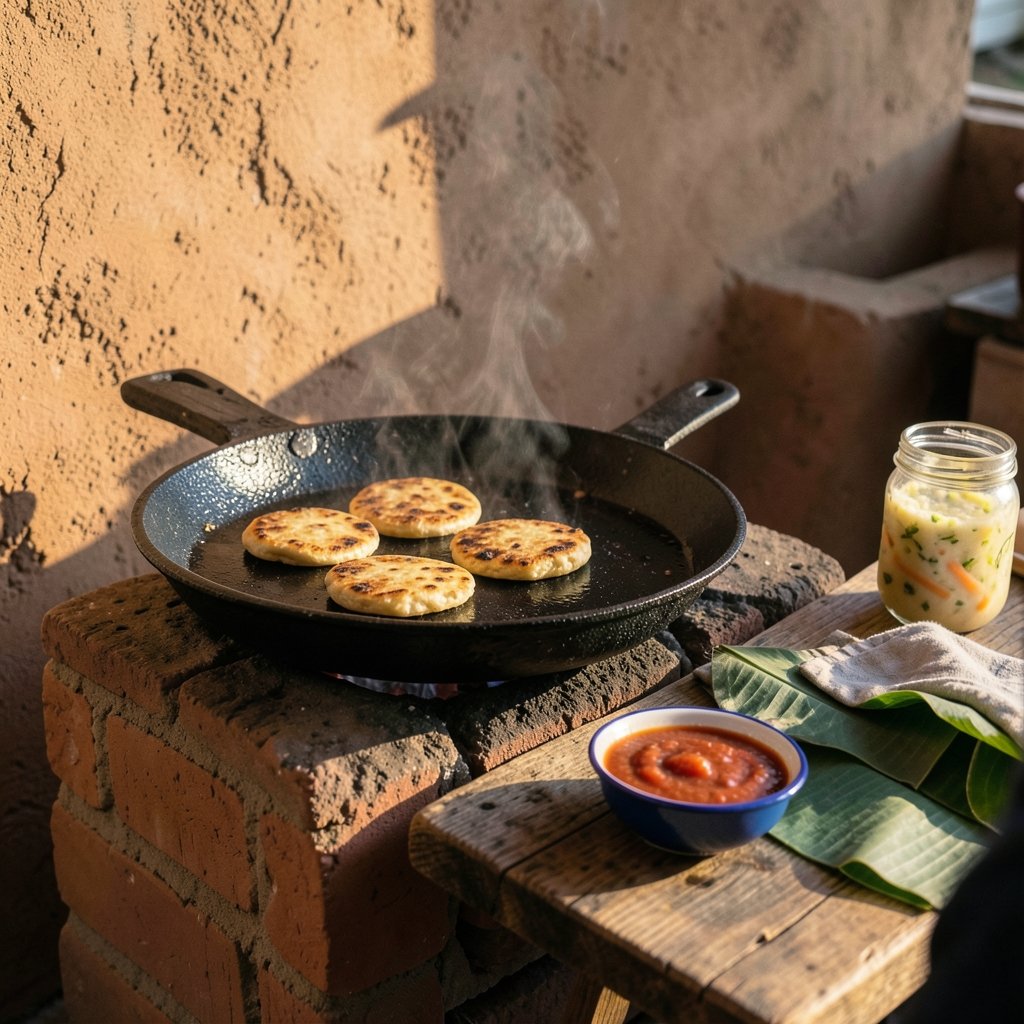
What if the best meal of your life costs about two dollars, comes off a hot griddle, and arrives with a pile of tangy cabbage slaw on the side? That’s a normal Tuesday in El Salvador. The country’s food is built on corn, beans, cheese, and patience, and it rewards anyone willing to eat the way locals do: simply, often, and with a little salsa roja on everything. This guide walks through the meals that define Salvadoran cooking, the dishes worth seeking out first, and the practical details that turn a good pupusa into a great one.
The Dish That Defines Salvadoran Meals
If you know one thing about Salvadoran food, it’s probably the pupusa. These are thick, hand-patted flatbreads made from corn masa (or sometimes rice flour), griddled until the outside blisters and the inside turns molten. The classic fillings are queso (cheese), frijoles (refried beans), and chicharrón (ground pork), and the combination of all three is called revuelta.
Pupusas are widely described as El Salvador’s national dish, and they’re usually credited to the Pipil people of western El Salvador, with some traditional accounts pointing to the town of Olocuilta. Treat the origin story as beloved folklore rather than settled history. Nobody has a signed certificate, and claims about the “first” pupusería tend to circulate online without documentation.
What’s not in dispute is the ritual around them. A pupusería is a dedicated stall or restaurant where pupusas are made to order on a hot comal, a flat griddle that also handles tortillas. You eat them by hand, tearing off a piece, topping it with curtido (pickled cabbage slaw, usually with carrot and oregano) and a spoonful of thin tomato salsa. The curtido is not a garnish. It’s the acidity that cuts through all that cheese, and skipping it is the most common first-timer mistake.
El Salvador even has a national Pupusa Day, celebrated on the second Sunday of November. The exact year of the legislative decree that established it is worth confirming against an official source before you cite it at a dinner party.
Breakfast: Where Salvadoran Meals Actually Start
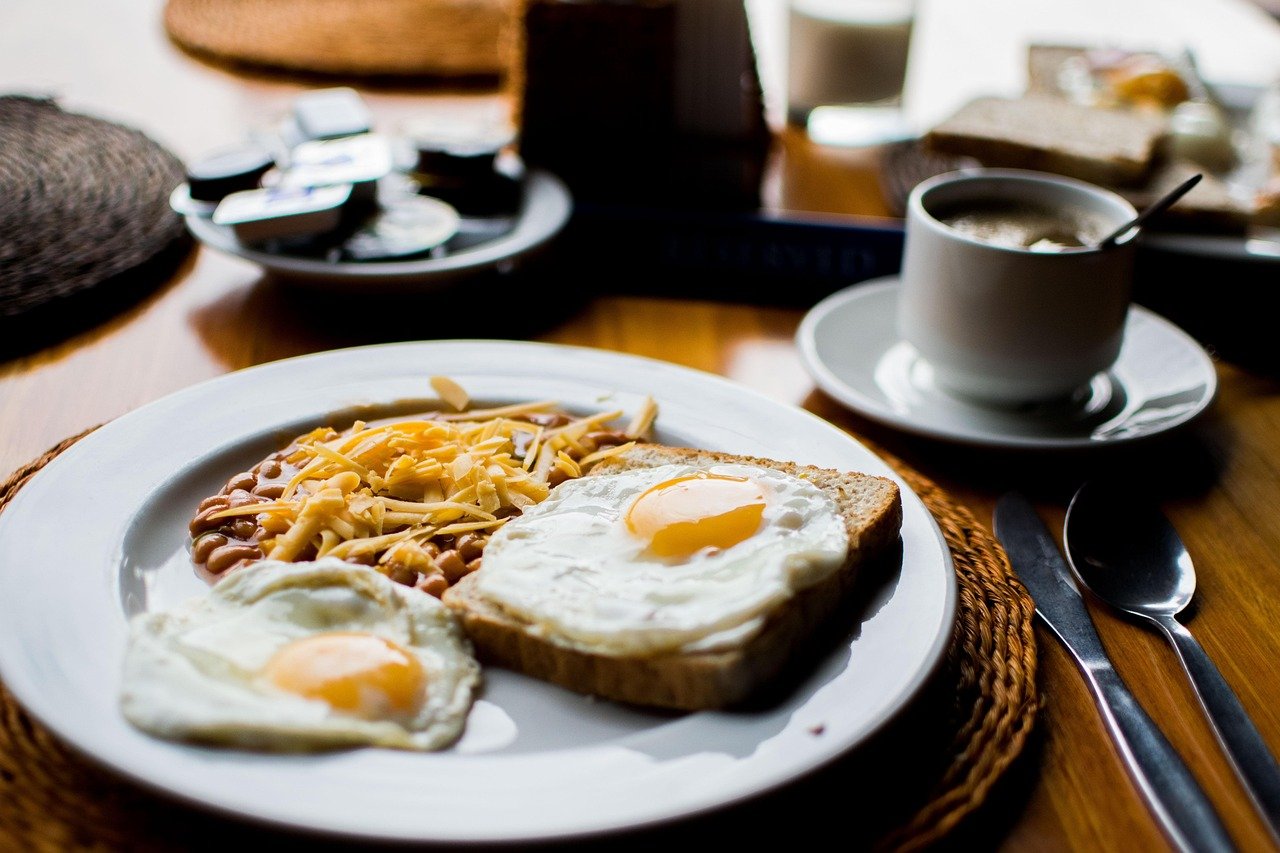
Ask someone from San Salvador what they ate at 7 a.m. and you’ll hear about beans long before you hear about pupusas.
The backbone of a Salvadoran breakfast is casamiento, which literally means “marriage” and refers to rice and beans cooked together until the grains stain dark and glossy. Around it you’ll find thick corn tortillas, crema (a tangy, loose sour cream), fried plantain, and a wedge of salty white cheese. Sometimes there’s a scrambled egg. Sometimes there’s nothing more than beans, crema, and tortillas, which is plenty.
The drink matters too. Atol is a warm, thickened corn drink, and champurrado is its chocolatey cousin. Both show up at breakfast stands and in markets, often served in a cup that’s too hot to hold comfortably. Coffee is everywhere, usually strong and sweet.
Here’s a practical tip: if a breakfast plate arrives with tortillas, use them as utensils. Scooping beans with a fork works, but folding a tortilla around them is how the meal is designed to be eaten, and it tastes better.
Lunch and Dinner: The Wider Salvadoran Menu
Beyond pupusas, Salvadoran meals lean on the same building blocks: corn, beans, plantain, cheese, and slow-cooked meat. The variety comes from how those pieces get assembled.
Yuca frita con chicharrón
Yuca (cassava) is boiled until tender, then fried until the edges crisp. It’s piled with chunks of chicharrón and topped with curtido and salsa. The texture is the point: soft inside, shatteringly crisp outside, and salty enough that you’ll want a cold drink nearby. This is street food and late-night food at once.
Sopa de pata and sopa de res
Sopa de pata is a beef-foot soup with corn, yuca, plantain, and herbs. It’s hearty, gelatinous in the way good bone broth is, and often eaten on weekends or as a hangover remedy. Sopa de res is the more approachable beef soup, a clear broth loaded with vegetables and large pieces of meat. Both come with tortillas and, usually, a lime wedge.
Panes con pollo
A panes con pollo is a chicken sandwich that shows up hard around Independence Day in September. The roll is soft, the chicken is stewed rather than grilled, and the whole thing is dressed with curtido and a tomato-based sauce. It’s messy in the best way, and it’s the kind of food that gets wrapped in paper and eaten standing up at a fair.
Tamales
Salvadoran tamales differ from Mexican versions in shape and wrapper. They’re often wrapped in banana leaves rather than corn husks, which gives them a softer, more vegetal flavor. Fillings range from chicken to beans to sweet corn, and they’re frequently eaten at breakfast or late at night.
Seafood and coastal cooking
Along the coast, meals shift toward fish, shrimp, and shellfish. Fried fish with lime, shrimp in a light tomato sauce, and ceviche made with fresh catch are common. The preparation stays simple because the ingredient is doing the work.
How Salvadoran Meals Are Structured
A typical Salvadoran plate follows a pattern that’s worth recognizing if you’re ordering for the first time.
| Component | What It Usually Is | Why It Matters |
|---|---|---|
| Starch base | Corn tortillas, rice, or pupusas | Corn is the foundation of nearly every meal |
| Protein | Beans, cheese, pork, chicken, or fish | Beans appear at almost every meal, as a side or in main dishes |
| Acid | Curtido or lime | Balances the richness of cheese and fried food |
| Sauce | Salsa roja or tomato sauce | Thin and bright, not smoky or heavy |
| Drink | Atol, champurrado, coffee, or fresh juice | Warm corn drinks are a breakfast staple |
Notice what’s missing: heavy cream sauces, complicated spice blends, and long lists of ingredients. Salvadoran cooking is not bland, but its flavor comes from fermentation (curtido), char (the comal), and salt rather than from a dozen spices.
Pupusas vs. Other Corn Flatbreads
People often confuse pupusas with other Latin American corn breads. They’re related, but they’re not the same thing, and knowing the difference helps you order well.
| Dish | Origin | Shape and Texture | Filling |
|---|---|---|---|
| Pupusa | El Salvador | Thick, round, stuffed before cooking | Cheese, beans, chicharrón |
| Arepa | Colombia and Venezuela | Thick, round, often split after cooking | Cheese, meat, avocado |
| Gordita | Mexico | Small, thick, pinched at the edges | Cheese, beans, meat |
| Tortilla | Mexico and Central America | Thin, flat, unstuffed | None |
The key distinction is that a pupusa is stuffed before it hits the griddle. The masa gets flattened, filled, sealed, and patted back into a disc, which is why the cheese stays inside instead of leaking out.
What to Order on a First Visit
If you’re standing in front of a pupusería menu for the first time, here’s a sequence that works.
- Start with one revuelta and one queso. The revuelta gives you the full flavor profile. The plain cheese shows you what the masa tastes like on its own.
- Get curtido on the side, then add it gradually. Some versions are sharply acidic, others mild. Taste before you commit.
- Order a second round only after the first. Pupusas are best within two minutes of leaving the comal. Stacking them on a plate steams the crust and turns it soft.
- Add a drink that isn’t too sweet. A tamarind or horchata-style drink works, but water or a light beer lets the food lead.
- Save room for a tamale if it’s a weekend morning. That’s when they’re most likely to be fresh.
A common mistake: treating pupusas as an appetizer. They’re the meal. Two or three per person is a normal portion, and ordering six for a table of four will leave you watching a cold pile of them go sad.
Salvadoran Food Beyond El Salvador
Large Salvadoran communities, especially in the United States, have carried these meals far from home. Los Angeles and the Washington, D.C. area are well known for dense clusters of pupuserías, and the dish has become a gateway for people who’ve never set foot in Central America. That diaspora effect matters: it means you can find a proper comal-cooked pupusa in cities where the local cuisine has nothing to do with corn masa.
It also means quality varies. A good sign is a menu that’s short. If a place sells pupusas, tacos, sushi, and pizza, the pupusas are probably not the priority. A place that sells only pupusas, curtido, and a couple of drinks is usually a place that has practiced one thing.
Curly and coily hair types may recognize the same logic in hair care communities, where specialists focus on one texture rather than everything at once. If you’ve read about 4c hair or 2b hair, you know the pattern: depth beats breadth. The same holds for a restaurant with a narrow, well-practiced menu.
Practical Tips That Actually Work
A few habits separate a good Salvadoran meal from a forgettable one.
Eat pupusas immediately. The crust is the whole point, and it dies fast. If you’re getting takeout, ask for the curtido and salsa in separate containers so nothing gets soggy on the drive home.
Don’t skip the crema. It’s thinner and tangier than sour cream, and it’s meant to be spooned over beans and plantain, not treated as a dip.
Learn the word revuelta. It’s the mixed filling, and it’s the best single order for a first-timer because it covers cheese, beans, and pork in one bite.
Ask what’s fresh. At markets, the answer changes by the hour. If the tamales came out twenty minutes ago, order them. If they’ve been sitting since dawn, order something off the comal instead.
Watch the griddle. A pupusa that puffs slightly and gets flipped by hand is being made properly. One that comes out of a warmer was made for volume, not for you.
If you’re comparing this to other regional cuisines, the closest reference point is the way the row of dishes at a market stall builds a full meal from small, cheap components. Salvadoran food works the same way: several modest items, eaten together, add up to something bigger than the sum of the parts.
Conclusion
Salvadoran meals are not complicated, and that’s exactly why they work. Corn becomes masa, masa becomes pupusas, and a handful of toppings turns a two-dollar flatbread into a full meal. Around that center sit beans at breakfast, soup on the weekend, yuca at night, and a sandwich in September. The cuisine rewards curiosity more than caution: order the revuelta, take the curtido, and eat it while it’s hot. You don’t need a guidebook to enjoy this food. You need an appetite and about ten minutes at the griddle.
What is the national dish of El Salvador?
Pupusas are widely described as El Salvador’s national dish. They’re thick corn flatbreads stuffed with cheese, refried beans, or pork, then cooked on a hot griddle called a comal. They’re served with curtido and salsa roja, and they’re eaten by hand.
What is a pupusa filled with?
The three classic fillings are queso (cheese), frijoles (refried beans), and chicharrón (ground pork). Ordering revuelta gets you all three in one pupusa. Rice flour versions exist too, but corn masa is the standard.
What is curtido and do I have to eat it?
Curtido is a pickled cabbage slaw, usually with carrot and oregano, served alongside pupusas. You don’t have to eat it, but it’s the acidity that balances the richness of melted cheese and fried masa. Most people who skip it once don’t skip it twice.
When is National Pupusa Day?
It’s celebrated on the second Sunday of November. The celebration was established by legislative decree, though the exact year is worth confirming against an official Salvadoran source if you plan to cite it.
What do Salvadorans eat for breakfast?
Beans are the anchor. A typical breakfast includes casamiento (rice and beans cooked together), thick corn tortillas, crema, fried plantain, and sometimes cheese or eggs. Atol or champurrado, both warm corn-based drinks, are common alongside.
Are pupusas the same as arepas?
No. Both are thick corn cakes, but a pupusa is stuffed before it’s cooked, while an arepa is usually split open after cooking and filled. Arepas come from Colombia and Venezuela; pupusas are Salvadoran. The technique changes the texture, so they don’t substitute for each other in a recipe.









