

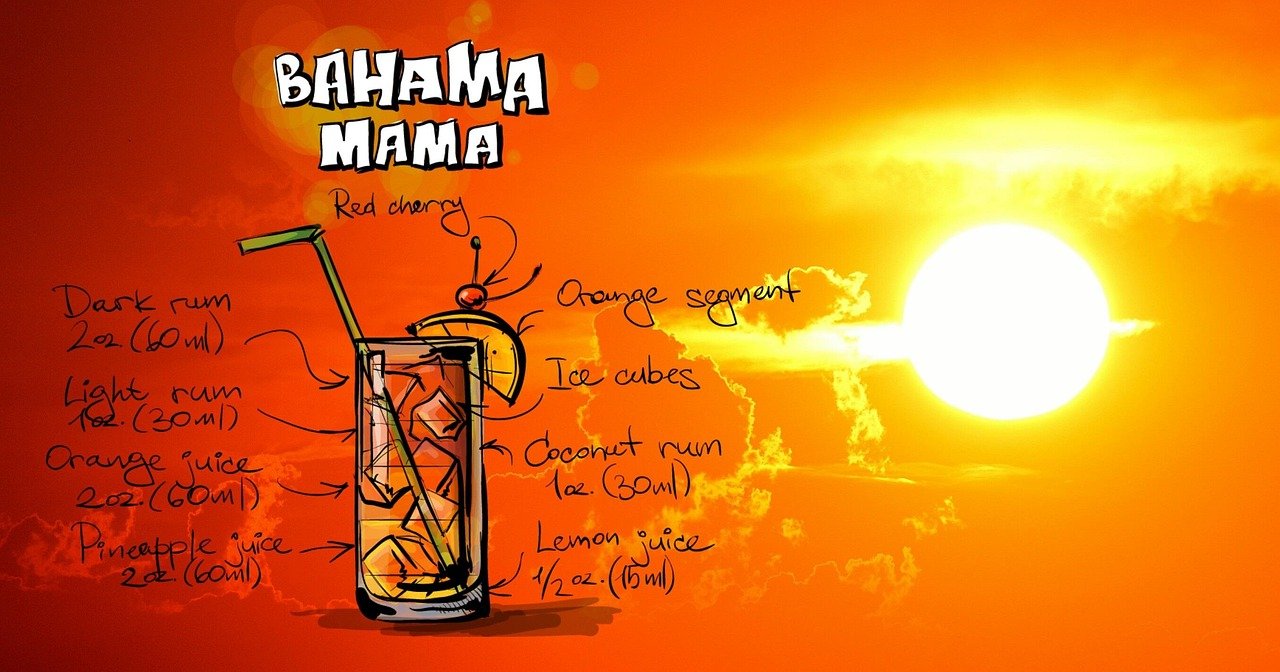
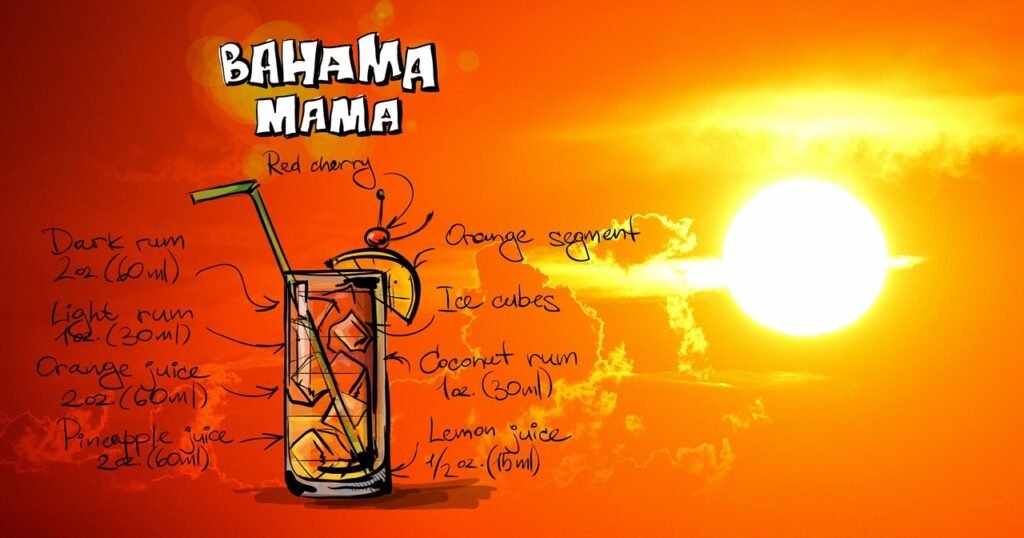
What if the most confusing cocktail order at any beach bar isn’t the one with twelve ingredients, but the one whose name people can’t even place? Ask for a Bahama Mama and you might get a fruity rum drink, a blank stare, or a story about a Bahamian musician from the 1950s. That confusion is exactly why the drink deserves a closer look.
The Bahama Mama is a tropical rum cocktail built on dark rum, coconut rum, coffee liqueur, and pineapple juice. It has no single official recipe, no confirmed inventor, and no place on the International Bartenders Association’s recognized list. Yet it survives on beach menus worldwide because it works: sweet, tart, boozy, and easy to drink too fast. This guide covers what actually goes into it, how to balance it, where it came from, and the mistakes that turn a good drink into a syrupy mess.
What Is a Bahama Mama, Exactly?
The name covers two different things. In food and drink writing, a Bahama Mama is a tiki-style rum cocktail. In Bahamian music history, “Bahama Mama” refers to a mid-twentieth-century Bahamian recording artist, E. “Bahama Mama” Johnson, who was active in the local music scene connected to junkanoo and goombay traditions. The two meanings get tangled online, which is why a search for the drink sometimes surfaces old record listings instead of recipes.
For practical purposes, the cocktail definition wins. It belongs to the same family as the Piña Colada, the Mai Tai, and the Jungle Bird: drinks that treat rum as a base and fruit juice as a partner rather than a mask. The Bahama Mama leans sweeter than a Mai Tai and lighter than a Piña Colada, with a coffee note that gives it an unexpected edge.
One important caveat up front: there is no canonical formula. Every bar, bottle brand, and recipe site offers its own version. Treat any single recipe, including the one below, as a starting point rather than a rule.
What Goes Into a Bahama Mama?
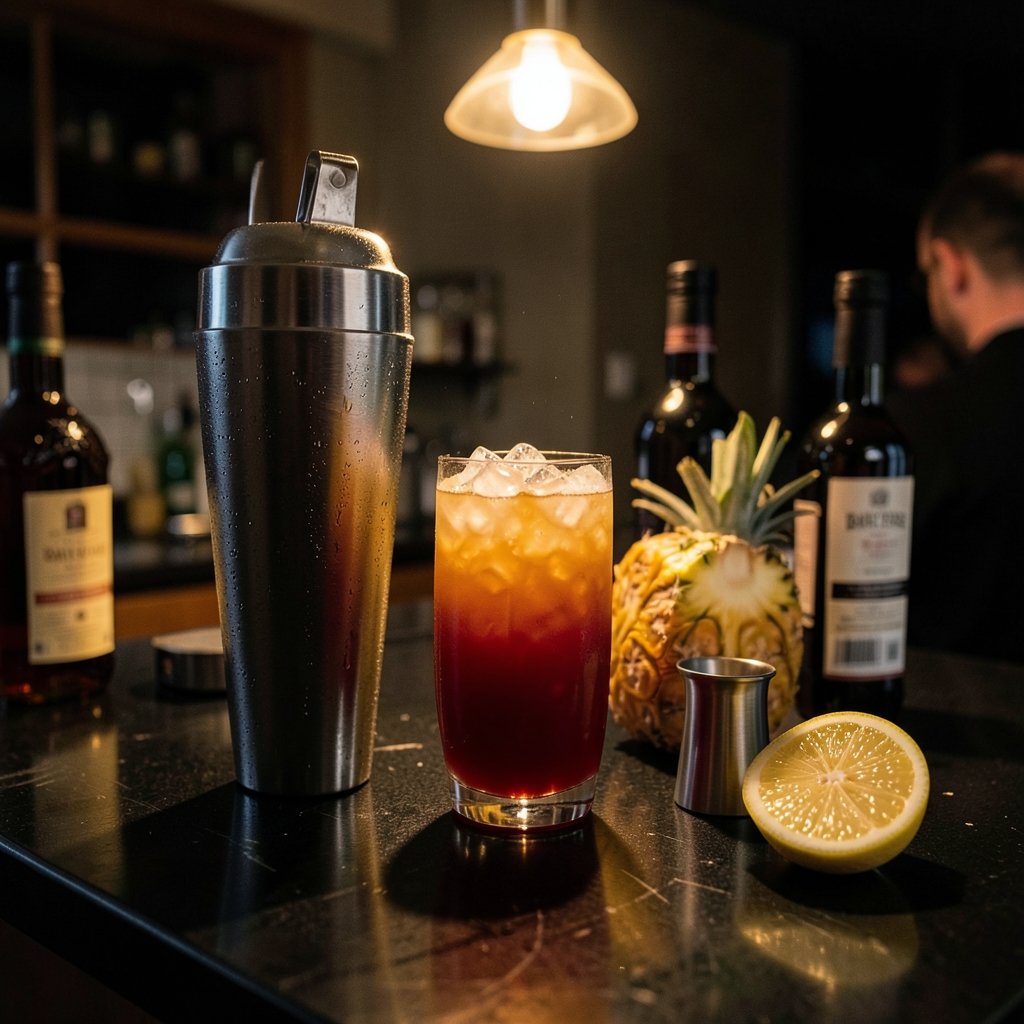
Most versions share a common skeleton. The proportions shift, but the building blocks stay remarkably consistent across sources.
| Component | Typical role | Common examples |
|---|---|---|
| Dark rum | Base spirit, depth | Aged Jamaican or Barbadian rum |
| Coconut rum or coconut liqueur | Sweetness, tropical aroma | Coconut-flavored rum |
| Coffee liqueur | Bitter counterweight | Coffee liqueur brands |
| Pineapple juice | Body and acidity | Fresh or canned, unsweetened |
| Lemon or lime juice | Brightness, balance | Fresh-squeezed only |
| Grenadine | Color and sweetness | Often optional, sometimes a float |
A workable middle-of-the-road build looks like this: 1 ounce dark rum, 1 ounce coconut rum, half an ounce coffee liqueur, 3 ounces pineapple juice, and half an ounce fresh lemon juice, shaken hard with ice and poured over fresh ice. A splash of grenadine can go in the glass first for a sunset gradient, or be left out entirely. (4c hair)
The coffee liqueur is the ingredient that separates a Bahama Mama from a generic rum punch. It adds a roasted, slightly bitter backbone that keeps the pineapple from running away with the drink. Skip it and you get something closer to a sweet vacation smoothie.
How to Make One That Actually Tastes Balanced
The biggest practical problem with the Bahama Mama is sweetness stacking. Coconut rum is sweet. Coffee liqueur is sweet. Pineapple juice is sweet. Grenadine is essentially sugar syrup with color. Add them all without thinking and you get a drink that tastes like dessert syrup with a rum afterburn.
Here is the sequence that works in practice:
- Chill the glass first. Fill a hurricane or highball glass with ice and set it aside while you build the drink. A warm glass flattens the carbonation-free texture and makes the first sip taste thin.
- Measure the sweet components before the juice. Pour the dark rum, coconut rum, and coffee liqueur into a shaker. Measuring the sweet spirits first means you commit to those amounts before the juice volume tempts you to loosen up.
- Add fresh citrus, not bottled. Half an ounce of freshly squeezed lemon or lime does more for balance than any amount of extra rum. Bottled juice tastes flat and metallic in a shaken drink.
- Shake with plenty of ice for 10 to 12 seconds. You want dilution and aeration. A quick swirl leaves the drink syrupy and warm.
- Strain over fresh ice. The ice you shook with is already melting and watery. Fresh cubes keep the drink cold without over-diluting it.
- Add grenadine last, if at all. Pour it slowly down the inside of the glass for the layered look, or stir it in for an even pink drink. Do not shake it with the rest unless you want a uniform color.
- Garnish with intent. A pineapple wedge and a cherry are standard. A lime wheel or a sprig of mint adds aroma that actually changes how sweet the drink reads.
A common mistake is treating the drink as a blender recipe. Blended versions exist and can be pleasant, but the crushed-ice texture mutes the coffee note and makes the whole thing taste like a slushie. Shaken is the better default.
Another mistake: using a premium aged rum in a drink this busy. The pineapple and coconut will bury the subtle barrel notes you paid for. A solid mid-range dark rum is the right call, and the same logic applies to the coffee liqueur.
Where Did the Bahama Mama Come From?
Honestly? Nobody can say with certainty. The drink is generally dated to the mid-twentieth century, and it is associated with Caribbean tourism and the tiki bar culture that popularized rum-and-fruit-juice drinks from the 1930s through the 1960s. Beyond that, the trail goes cold. There is no reliable primary source naming an inventor or a specific year.
That is not unusual for tropical cocktails. Many were created in bars that kept no written records, then spread through word of mouth, hotel menus, and eventually bottle-brand marketing. The Bahama Mama likely followed the same path: a bar drink that became a resort staple, then a packaged mixer, then a name people recognized without knowing its origin.
The tiki context matters because it explains the drink’s structure. Tiki bartenders of that era built complex, layered drinks using multiple rums and fresh juices, often with a sweet-and-bitter accent. The Bahama Mama fits that template closely, which is why it reads as a classic even though its exact lineage is murky. (The row)
Bahama Mama vs. Similar Tropical Drinks
If you know these neighboring cocktails, you can predict what a Bahama Mama will taste like before you order it.
| Drink | Base | Key difference |
|---|---|---|
| Bahama Mama | Dark rum plus coconut rum | Coffee liqueur adds bitterness; pineapple-forward |
| Piña Colada | Light rum | Cream of coconut makes it thicker and sweeter |
| Mai Tai | Two or three rums | Orange liqueur and almond syrup; less juice, more spirit |
| Rum punch | Any rum | Simpler build; often just juice, syrup, and lime |
| Jungle Bird | Dark rum | Campari and pineapple; distinctly bitter |
The closest cousin in spirit is the Jungle Bird, because both use dark rum with pineapple and a bittering agent. The Bahama Mama swaps Campari’s sharp grapefruit bite for coffee liqueur’s roasted sweetness, which makes it far more approachable for drinkers who find bitter cocktails challenging.
Variations Worth Trying
Because no official recipe exists, experimentation is fair game. A few adjustments that reliably improve the drink:
Lower the sugar, raise the acid. Cut the coconut rum to three-quarters of an ounce and add an extra quarter ounce of lime. The drink tastes brighter and you notice the rum more.
Swap the coffee liqueur for cold brew concentrate. Use a half ounce of strong cold brew plus a quarter ounce of simple syrup. The coffee flavor reads cleaner and less candy-like.
Try a float instead of a mix. Build the drink without grenadine, then float a quarter ounce of dark rum on top. The aroma hits before the sweetness does.
Go lighter for daytime drinking. Use one ounce of rum total, top with soda water, and serve in a taller glass. It becomes a spritz-adjacent drink that works in the afternoon heat.
Adjust the texture, not the flavor. For a frozen version, blend with a cup of crushed ice and a half banana. The banana adds body without adding much perceived sugar.
One caution on variations: the moment you remove the coffee liqueur and the citrus, you no longer have a Bahama Mama. You have rum and pineapple juice. The two accents are what make the drink recognizable.
Common Mistakes and How to Avoid Them
Beyond sweetness stacking, a few recurring errors show up whenever people make this drink at home.
Using too much ice in the shaker. A shaker packed solid with ice dilutes slowly and chills poorly. Fill it about two-thirds and shake vigorously.
Skipping the strain. Pulp and ice shards make the texture gritty. A Hawthorne strainer fixes this in two seconds.
Serving it in a warm glass. Glass conducts heat fast. Chilling the glass is the cheapest upgrade available.
Over-garnishing. A heavy-handed fruit arrangement looks festive but adds nothing to flavor. One wedge and one cherry is plenty.
Assuming the bottled mixer is equivalent. Pre-mixed versions vary wildly in sugar content and often taste artificial. If convenience matters, a good dark rum plus a quality pineapple juice gets you most of the way there in less time than reading the mixer label.
A Note on the Name
The spelling is consistently “Bahama Mama,” not “Bahamian Mama,” even though the drink is associated with the Bahamas. That quirk is a small reminder that cocktail names are marketing artifacts as much as descriptions. The name sounds like a vacation, and that is precisely the job it was hired to do.
Conclusion
The Bahama Mama is a drink with a murky past and a very clear present: it is a sweet, tart, rum-forward cocktail that rewards a little care and punishes laziness. There is no official version to memorize, which is liberating. Start with the standard build, taste it, then adjust the citrus and the coffee liqueur until the balance suits you. Keep the glass cold, the juice fresh, and the grenadine optional. Do that, and the drink stops being a beach-menu novelty and becomes something you can make well at home.
Frequently Asked Questions
What alcohol is in a Bahama Mama?
Most versions combine dark rum and coconut rum, plus a coffee liqueur. Some recipes add a splash of overproof rum for extra kick, but the core trio is dark rum, coconut rum, and coffee liqueur. (2b hair)
Is a Bahama Mama a strong drink?
It depends entirely on the pour. A standard build with two ounces of rum lands around the strength of a strong wine or a light cocktail. Many bar versions use more rum and less juice, which pushes it higher. Because the pineapple and coconut mask the alcohol, it drinks stronger than it tastes.
What does a Bahama Mama taste like?
Sweet pineapple and coconut up front, followed by a roasted coffee note and a tart citrus finish. The coffee liqueur keeps it from tasting like pure candy. It is fruit-forward but not cloying when made with fresh juice and enough lime.
Is a Bahama Mama the same as a Piña Colada?
No. A Piña Colada uses cream of coconut, which makes it thick and creamy. A Bahama Mama uses pineapple juice and coffee liqueur, so it stays thin and slightly bitter. They share a tropical profile but differ in texture and flavor.
Can I make a Bahama Mama without alcohol?
Yes. Use a dark rum alternative or strong brewed tea as the base, keep the pineapple juice and lime, and replace the coffee liqueur with cold brew concentrate plus a little syrup. The drink keeps its layered flavor without the alcohol.
Why is it called a Bahama Mama?
The name references the Bahamas and is generally understood as a playful, affectionate phrase rather than a formal title. It also overlaps with the nickname of a mid-twentieth-century Bahamian musician, which adds to the confusion around the drink’s origin. No reliable source confirms who coined the cocktail name or when.














