

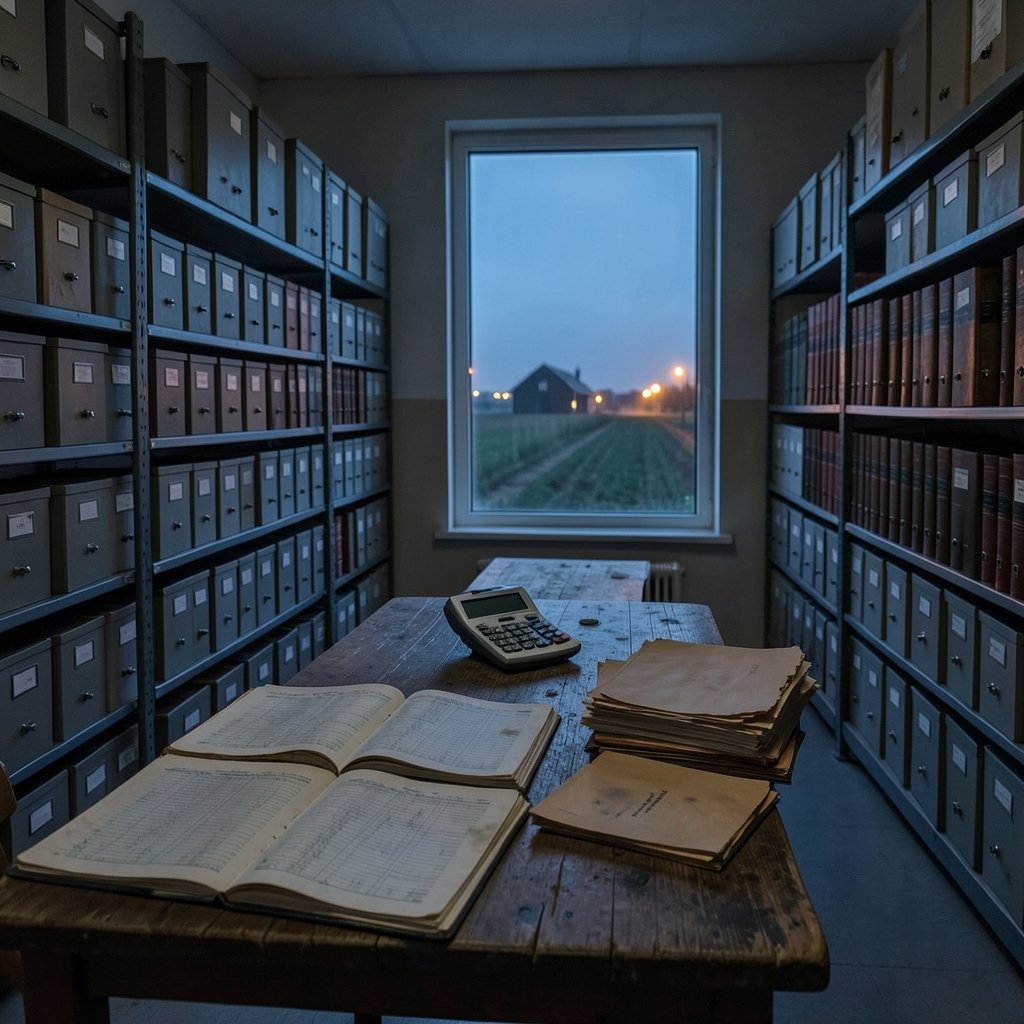
What happens to a research institute when its name disappears but its data keeps shaping policy? That is the strange afterlife of the Landbouw Economisch Instituut, known in English as LEI Wageningen UR. For decades, this Dutch agricultural economics institute turned farm-level bookkeeping into the numbers that governments, banks, and Brussels policymakers relied on. Then, in a quiet institutional merger, the name slipped out of use. The work did not stop. It simply changed address.
This article explains what LEI was, what it actually did, why the name still appears in old reports and citations, and how to find its successor today. It also flags the points where public sources disagree, so you do not repeat a shaky date in your own writing.
What was the Landbouw Economisch Instituut?
The Landbouw Economisch Instituut was the agricultural economics research institute of Wageningen University & Research in the Netherlands. In English-language publications it usually appeared as LEI Wageningen UR. Its job was not laboratory science. It was the economics of farming: what farms earn, what food chains cost, how trade flows move, and what rural policy actually delivers on the ground.
The institute was founded in 1940 as an agricultural economics body under the Dutch Ministry of Agriculture. That founding year is widely recalled, though the exact month and founding decree are harder to pin down in public sources. What matters more is the mandate. From the start, LEI existed to give Dutch agriculture something it had lacked: a rigorous, continuous economic picture of itself.
For readers who want to understand the wider Dutch institutional landscape LEI belonged to, it sat alongside other research groups covering very different subjects, from food systems to fibre and beauty science topics like 4c hair that appear in completely separate consumer research contexts. That contrast is a useful reminder: LEI was a specialised socio-economic institute, not a general-purpose one.
The farm accounting network that made LEI matter

If you want to understand LEI’s influence, start with the Bedrijven-Informatienet, usually shortened to BIN. This was the institute’s farm accounting network: a panel of real farms whose books were tracked year after year, producing micro-data on costs, revenues, and incomes.
Why does that matter? Because farm policy lives or dies on income figures. A government deciding on subsidies, or the European Commission assessing farm viability, needs more than averages. It needs to know which farm types in which regions are struggling. BIN supplied exactly that granular evidence.
Practical tip for researchers: when you find an old Dutch farm-income statistic from the 1980s or 1990s, check whether it traces back to BIN. The dataset is often the real source behind a policy document that cites no data at all. One caveat worth verifying: whether BIN still operates under the successor institute’s name today should be confirmed against current Wageningen pages, not assumed from older reports.
How LEI fitted into Wageningen University & Research
During the 1990s and 2000s, LEI was incorporated into Wageningen University & Research, then commonly called Wageningen UR. It became the university’s socio-economic research institute for agriculture, food, and rural areas.
This integration changed its character in subtle ways. A ministry institute answers to a ministry. A university institute answers to a broader research agenda, which means more academic collaboration, more international projects, and more emphasis on publication and methodology. LEI kept its applied focus but gained the credibility of a university brand behind it.
By the 2010s, its research scope had widened considerably. The portfolio covered farm economics, agri-food chains, international trade, fisheries economics, rural development, and sustainability indicators. That breadth is worth noting because people often assume LEI only counted cows and crop yields. In reality, it did chain analysis and trade economics that fed into European-level policy debates.
The merger: from LEI to Wageningen Economic Research
Here is the part that trips people up. Around 2016 to 2019, Wageningen UR merged LEI with other socio-economic units into Wageningen Economic Research, part of the Wageningen Social Sciences Group. The LEI name was phased out, with the transition usually dated to roughly 2019.
Two cautions. First, sources may give different years for the change, so state the range rather than a single date unless you have checked the institutional record. Second, older publications remain attributed to “LEI Wageningen UR” forever. That is normal in academic publishing and does not mean the institute still exists under that name.
A simple comparison helps clarify the relationship:
| Aspect | Landbouw Economisch Instituut (LEI) | Wageningen Economic Research |
|---|---|---|
| Status | Original institute name | Successor body after merger |
| Era | Founded 1940, name phased out around 2019 | Active from the merger onward |
| Scope | Farm economics, chains, trade, fisheries, rural development | Same broad socio-economic remit, wider organisational base |
| Attribution in literature | Older reports and datasets | Newer reports and current statistics |
| Branding | “LEI Wageningen UR” in English | “Wageningen Economic Research” |
If you are citing a source, the rule is straightforward: match the attribution to the publication date, not to whatever the institute is called now.
A naming trap: the institute versus its annual report
One confusion deserves its own section. The Landbouw-Economisch Bericht, abbreviated LEB, was the institute’s annual report on the state of Dutch agriculture. It is a publication, not an organisation.
People searching for the institute sometimes land on references to the Bericht and conclude they have found the institute’s official page. They have not. The report is one output among thousands. If a citation reads “Landbouw-Economisch Bericht 2008,” you are looking at a document produced by LEI, not at LEI itself. Getting this right matters for bibliographies and for anyone tracing a statistic back to its origin.
What LEI was known for internationally
LEI built a reputation for applied agri-food chain and trade economics. Its researchers contributed to work for the European Commission and the OECD, which is part of why its reports turn up in Brussels and Paris policy files as well as Dutch ones.
The international angle is often underestimated. Dutch agriculture is export-heavy, so questions about trade flows, chain margins, and competitiveness were never purely domestic. LEI’s trade work gave the Netherlands a seat at tables where food policy was being argued. Specific project attributions should be checked individually, though, because institutional memory in policy documents is patchy.
For readers coming from adjacent fields, the pattern is familiar across research worlds. A specialised institute builds authority in a narrow area, and that authority outlives its brand. You can see the same dynamic in completely unrelated niches, where a single technical term such as 2b hair carries a precise meaning that only insiders recognise. Specialisation creates durable vocabulary.
Where the data legacy lives now
The most useful thing about LEI for a modern reader is not its history. It is its data trail.
Current Dutch farm-economics statistics are published through the Agri & Food portal run by Wageningen Economic Research. If you want the modern equivalent of what LEI once produced, that is where to look. Original LEI reports and editions of the Landbouw-Economisch Bericht are archived in Wageningen’s publication repository, where searching “LEI” surfaces decades of material.
Practical guidance for anyone digging into this:
- Search the repository by institute name, not by topic, to catch reports whose titles are generic.
- Note the publication year before citing an institutional name, because the attribution changes across the merger.
- Cross-check any farm-income figure against the dataset description, since the same number can appear in a policy brief and in the underlying panel data with different caveats.
- Treat undated web pages about LEI with suspicion. Institutional pages get rewritten, and old URLs often redirect to successor content.
A common mistake is assuming that because the institute’s name vanished, its archives became inaccessible. The opposite is true. Mergers usually consolidate archives rather than scatter them, and Wageningen’s repository is unusually well maintained.
Why the institute still matters to researchers today
Three groups still have good reason to care about LEI.
Historians of agriculture use its reports to reconstruct Dutch farm economics across the post-war period. The continuity of the data is the point. Few countries have such a long, consistent farm-level record.
Policy analysts cite LEI work when explaining the evidence base behind Dutch and EU agricultural decisions. Knowing the institute existed, and what it measured, prevents the error of treating a policy claim as evidence-free.
Writers and editors run into the naming problem constantly. A draft says “according to LEI” in a sentence about 2023, which is anachronistic. The fix is small but important: name the successor body for recent work and reserve the LEI name for historical references.
There is also a broader lesson here about how research institutions age. The row of names on a university’s research institute page changes every decade or so, and each change leaves a sediment layer of citations behind it. Readers who understand that layering can date a document almost instantly from the institutional name alone. If you have ever skimmed a bibliography and spotted a the row of institute names shifting across years, you have seen the same effect at work.
Common mistakes when writing about LEI
A short list of errors that show up again and again, and how to avoid each:
- Using the wrong tense. LEI is not a current institute. Write “was” for the organisation and “is” only for its successor.
- Inventing a precise merger date. State the 2016 to 2019 range unless you have confirmed the exact date.
- Confusing the institute with the annual report. The Landbouw-Economisch Bericht is a publication.
- Assuming the English name was official. “LEI Wageningen UR” was the working English form; the Dutch name is the original.
- Treating the founding year as settled. 1940 is widely recalled but worth verifying against an official history before you publish it as fact.
- Linking to dead pages. Old institute URLs often redirect. Check before citing.
None of these are exotic. They are the ordinary friction of writing about an organisation that changed shape mid-stream.
Conclusion
The Landbouw Economisch Instituut is a case study in institutional afterlife. Founded in 1940, folded into Wageningen University & Research, and then merged into Wageningen Economic Research around 2019, it left behind something more durable than a name: a farm accounting tradition, a deep archive of applied economics, and a data legacy that still underpins Dutch and European agricultural policy discussion.
For anyone writing about it, the practical rules are simple. Use the LEI name for historical work and the successor name for current work. State the merger as a range, not a false precision. Keep the institute separate from its annual report. And when a statistic looks authoritative but unsourced, trace it back to the panel data that probably produced it. Do that, and you will handle this topic more accurately than most published references do.
Frequently Asked Questions
What does Landbouw Economisch Instituut mean in English?
It translates as “Agricultural Economics Institute.” In English-language publications, the organisation was usually called LEI Wageningen UR, reflecting its place within Wageningen University & Research.
Does the Landbouw Economisch Instituut still exist?
Not under that name. Around 2016 to 2019, Wageningen UR merged LEI with other socio-economic units into Wageningen Economic Research, part of the Wageningen Social Sciences Group. Older publications remain attributed to LEI Wageningen UR, which is why the name still circulates.
When was the Landbouw Economisch Instituut founded?
It was founded in 1940 as an agricultural economics institute under the Dutch Ministry of Agriculture. The exact month and founding decree are less firmly documented in public sources, so verify before publishing a specific date.
What was the Bedrijven-Informatienet?
It was LEI’s farm accounting network, often shortened to BIN. A panel of real farms was tracked year after year, producing micro-data on costs, revenues, and incomes that fed into Dutch and EU farm-income analysis. Whether it still runs under the successor name is worth confirming against current institutional pages.
Is the Landbouw-Economisch Bericht the same as the institute?
No. The Landbouw-Economisch Bericht, or LEB, was the institute’s annual report on Dutch agriculture. It is a publication produced by LEI, not the organisation itself. Confusing the two is one of the most common errors in citations.
Where can I find original LEI reports today?
Wageningen’s publication repository holds original LEI reports and editions of the Landbouw-Economisch Bericht. Current Dutch farm-economics statistics are published through the Agri & Food portal run by Wageningen Economic Research. Search the repository by institute name to catch reports with generic titles.









