

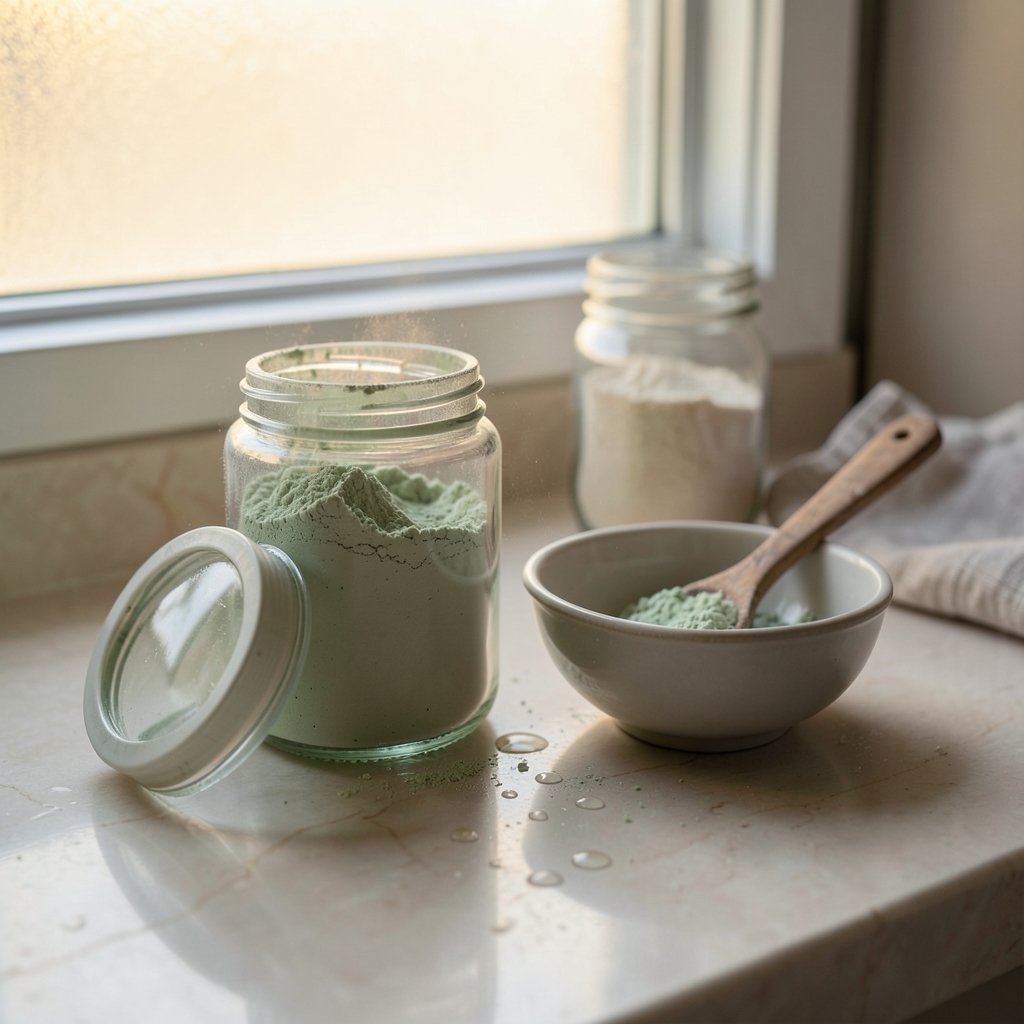
What happens when you mix a spoonful of clay or rice powder with water and paint it on your face? For some people, it is a ten-minute reset that leaves skin soft and matte. For others, it is a red, tight, itchy mess. The difference rarely comes down to the powder itself. It comes down to knowing what the powder is, what it can realistically do, and how to handle it without turning your bathroom into a small chemistry experiment gone wrong.
Face mask powder is one of those terms that sounds precise but is not. It covers everything from a bag of green clay to a jar of freeze-dried charcoal to a matcha blend marketed as a “detox” treatment. There is no industry standard defining the category, and no regulator treats it as its own product type. That looseness is exactly why a little knowledge pays off before you buy or mix anything.
What Face Mask Powder Really Means
In practice, the term describes a dry powder that you combine with a liquid at home to make a paste. The liquid might be water, toner, milk, yogurt, or honey. Once mixed, the paste goes on the face for a set time and then gets rinsed off.
The most common bases fall into a few groups:
| Type | Typical base | Main selling point | Realistic effect |
|---|---|---|---|
| Clay | Kaolin, bentonite | Oil control, pore appearance | Temporary matte finish |
| Charcoal | Activated charcoal | “Detox,” deep clean | Limited cosmetic evidence |
| Grain and rice | Rice, oat, barley | Gentle brightening, soothing | Mild exfoliation, softness |
| Herbal | Matcha, turmeric, neem | Antioxidant, calming | Varies widely by blend |
| Single-ingredient DIY | Cinnamon, citrus peel, coffee | Custom blends | High irritation risk |
Notice that the “realistic effect” column is modest. That is not cynicism. It is what the evidence supports. Clay masks, for example, are generally described as temporarily absorbing excess oil and improving the look of pores. They are not acne treatments, and no powder rubbed on at home will change that.
The Cosmetic Versus Drug Line Matters More Than the Ingredient
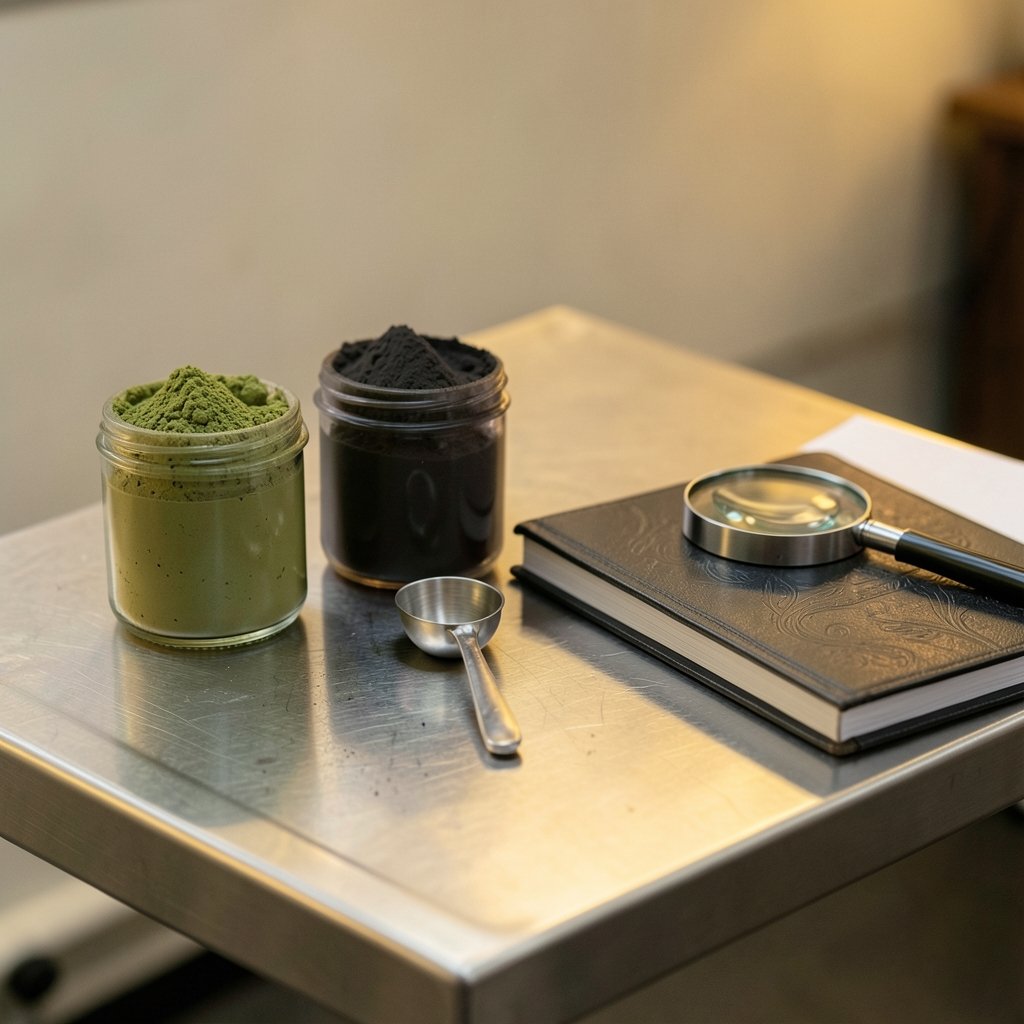
Here is a fact that surprises a lot of shoppers: whether a powder is a cosmetic or a drug depends on what the label claims, not on what is inside the jar. A product marketed to cleanse, beautify, or alter appearance is a cosmetic. The moment it claims to treat or prevent a disease, including “cures acne,” it crosses into drug territory and faces a different set of requirements.
This is why you will see powders described as “purifying” and “clarifying” rather than “acne-fighting.” The wording is not shyness. It is classification. Powders sold as cosmetics are also not approved by regulators before they hit shelves, so the burden of choosing wisely sits with the buyer.
In the European Union, the framework is different again. Cosmetics fall under Regulation (EC) No 1223/2009, which requires a safety assessment and a Cosmetic Product Safety Report before a product goes on the market. That regulation has been in force since 2013. If you are buying from an EU-based brand, that paperwork should exist behind the product, even if you never see it.
What Powders Can and Cannot Do
Setting expectations is the single most useful thing anyone can do before mixing a mask. Here is the honest split.
What powders can reasonably do:
- Absorb surface oil for a few hours, giving a temporary matte look
- Provide mild physical exfoliation when rinsed off carefully
- Deliver a cooling, soothing sensation that feels good and can calm the experience of a breakout
- Add a pleasant ritual to a routine, which has real value for consistency
What powders cannot reliably do:
- “Draw out toxins.” There is no defined mechanism or validated test behind detox claims, and regulators in both the US and EU require cosmetic claims to be substantiated. A mask cannot pull invisible poisons through your skin.
- Cure acne or rosacea
- Permanently shrink pores
- Replace prescription treatment for a diagnosed skin condition
Activated charcoal illustrates the gap nicely. It has legitimate medical uses, including certain poisoning cases and some wound dressings. Evidence for cosmetic skin “detox” is thin. That does not make charcoal powder useless, but it does mean the marketing has run well ahead of the science.
The DIY Mixing Problem Nobody Warns You About
Mixing powder with tap water or food introduces microbes, and the mixture has no preservative protection. Public health and dermatology guidance generally cautions that DIY masks are not sterile and should not be stored after mixing. This is the most common mistake people make, and it is entirely avoidable.
Practical rules that actually work:
- Mix only what you will use in one sitting. A single application is usually a teaspoon or two.
- Use clean hands, a clean bowl, and a clean spoon or spatula.
- Skip the milk, yogurt, and honey if you have sensitive or broken skin. Water or a simple toner is safer.
- Throw away the leftovers. Do not refrigerate them for later.
- Keep the dry powder sealed and dry between uses, since moisture in the jar invites growth.
There is a second, less obvious hazard: fine dry powders such as charcoal, clay, and diatomaceous earth can become airborne while you scoop and mix them. Silica-containing dusts carry inhalation concerns, which is a handling caution rather than a verdict on the product. Mix slowly, keep your face back from the bowl, and consider a dampened spoon to cut down on the puff of dust.
Irritation and Sensitization: The Real Risk
Aromatic oils from citrus, cinnamon, and turmeric appear often in DIY powder masks, and all are recognized contact allergens or irritants. Cinnamon and citrus peel are common offenders. Turmeric stains and can sting.
Patch testing is the standard advice, and it is worth doing properly rather than symbolically. Apply a small amount of the mixed paste to the inner forearm, leave it for the full intended wear time, rinse, and wait 24 to 48 hours. If there is redness, itching, or swelling, the face is not the place to test it next.
Signs you should rinse off immediately, not “wait it out”:
- Burning rather than a mild tingle
- Spreading redness
- Swelling or hives
- Any blistering
People with eczema, rosacea, or a compromised skin barrier should be especially cautious. So should anyone using retinoids, acids, or prescription actives, because a clay mask on top of an already-exfoliated barrier is a recipe for tight, flaky skin.
How to Build a Powder Mask Routine That Works
The best routine is boring and repeatable. A few principles carry most of the weight.
Match the powder to your skin type. Oily skin tends to do well with kaolin or bentonite. Dry skin often prefers oat, rice, or a clay blended with something emollient. Sensitive skin benefits from the shortest ingredient list you can find.
Keep wear time short. Ten minutes is plenty for most clay masks. Letting a mask dry to a crackly shell pulls moisture from the skin and defeats the purpose.
Do not overdo frequency. Once or twice a week is a sensible ceiling for most people. More frequent clay masking can leave skin tight and reactive.
Layer thoughtfully. If you use a powder mask, that is your treatment step for the evening. Skip the acid toner and the retinol on the same night, or at least alternate them.
Rinse with lukewarm water and follow with moisturizer. The mask is the setup. The moisturizer is what actually keeps the barrier happy.
If you are also managing hair and nail routines, the same logic of matching product to need applies elsewhere. A face shape frame guide helps when choosing glasses that suit your features, and a dip powder nails guide covers a different kind of powder entirely, one where application technique matters just as much as the product.
Reading a Powder Label Without Getting Fooled
Ingredient lists on powders are usually short, which makes them easy to scan once you know the order of operations.
- First ingredient is the base. If it is kaolin or bentonite, expect oil absorption. If it is rice or oat flour, expect something gentler.
- Watch for fragrance and aromatic oils near the top. They are common irritants and add nothing to function.
- Treat “detox,” “purifying,” and “drawing out impurities” as mood words, not mechanisms.
- Look for a full ingredient list and a batch number. A brand that hides its full list is telling you something.
- Check for preservatives in pre-mixed pastes. A dry powder needs none. A ready-made wet mask does, and if it does not list any, be suspicious.
That last point is a useful dividing line. Dry powder is shelf-stable by nature. The moment water enters the jar, you are dealing with a product that needs preservation, packaging, and a use-by date. This is why powders are popular with people who like to control the mix, and why ready-made pastes demand more trust in the manufacturer.
Powder Masks Versus Other Formats
Powder is not automatically better than a cream or sheet mask. It is a different tool with different tradeoffs.
| Format | Strength | Weakness |
|---|---|---|
| Powder | Customizable, long shelf life, no preservatives needed | Mixing effort, microbial risk if stored wet, dust |
| Cream or gel mask | Ready to use, consistent | Preservatives, shorter shelf life after opening |
| Sheet mask | Hydrating, low mess | Limited oil absorption, single use waste |
| Peel-off | Satisfying removal | Can tug and irritate sensitive skin |
For someone who wants a quick matte finish before an event, a clay powder is efficient. For someone who wants hydration and calm, a cream mask usually wins. Neither is wrong. The mistake is expecting one format to do everything.
Common Mistakes That Undo the Benefits
A short list of things that go wrong again and again:
- Mixing with hot water. Heat can degrade some botanical ingredients and feels harsh on skin. Lukewarm is fine.
- Letting the mask dry completely. Cracking means moisture is leaving your skin, not that the mask is “working.”
- Scrubbing the paste off. Rinse with water and gentle pressure. Friction adds irritation without adding benefit.
- Storing mixed paste in the fridge overnight. It is still unpreserved and still a microbial risk.
- Testing a new blend on the whole face. Patch test first, always.
- Buying based on the “detox” claim. Buy based on the base ingredient and the full list.
Where Powder Masks Fit in a Wider Routine
Think of a powder mask as a supporting player. It can absorb oil, add a bit of exfoliation, and make a routine feel like a ritual worth keeping. It cannot substitute for sunscreen, a gentle cleanser, a moisturizer, or a prescribed treatment for a real skin condition.
The same principle applies across beauty categories. A dip powder manicure is judged by prep and application discipline, not by the marketing on the jar. A hair mask for dry and damaged hair only delivers if you follow the timing and rinse instructions. Powders reward the same discipline: measure, mix fresh, apply briefly, rinse gently, moisturize.
If you are curious how a well-known bond-building treatment compares on technique and value, a K18 hair mask review covers the practical side, and the guidance on how to use a K18 hair mask is a good reminder that application details decide outcomes. The K18 hair mask tag page collects related coverage, and if you want a general primer, the guide on how to use a hair mask applies the same logic to a different product.
Conclusion
Face mask powder is a simple idea wrapped in a lot of loose language. It is a dry base, usually clay, grain, charcoal, or herb, that you mix with liquid and rinse off. It can leave skin temporarily matte, mildly exfoliated, and pleasantly soothed. It cannot detoxify your body, cure acne, or permanently shrink pores, and any label that promises otherwise is overselling.
The parts that actually determine whether a powder works for you are unglamorous: a short ingredient list, a patch test, a fresh mix every time, a ten-minute wear window, and a moisturizer afterward. Get those right and the powder becomes a reliable small tool in a routine. Get them wrong and the same powder becomes a red, tight reminder that skin is not a chemistry set. Choose the base for your skin type, keep the mixing clean, and let the modest benefits be enough. That is what a good mask looks like.









