

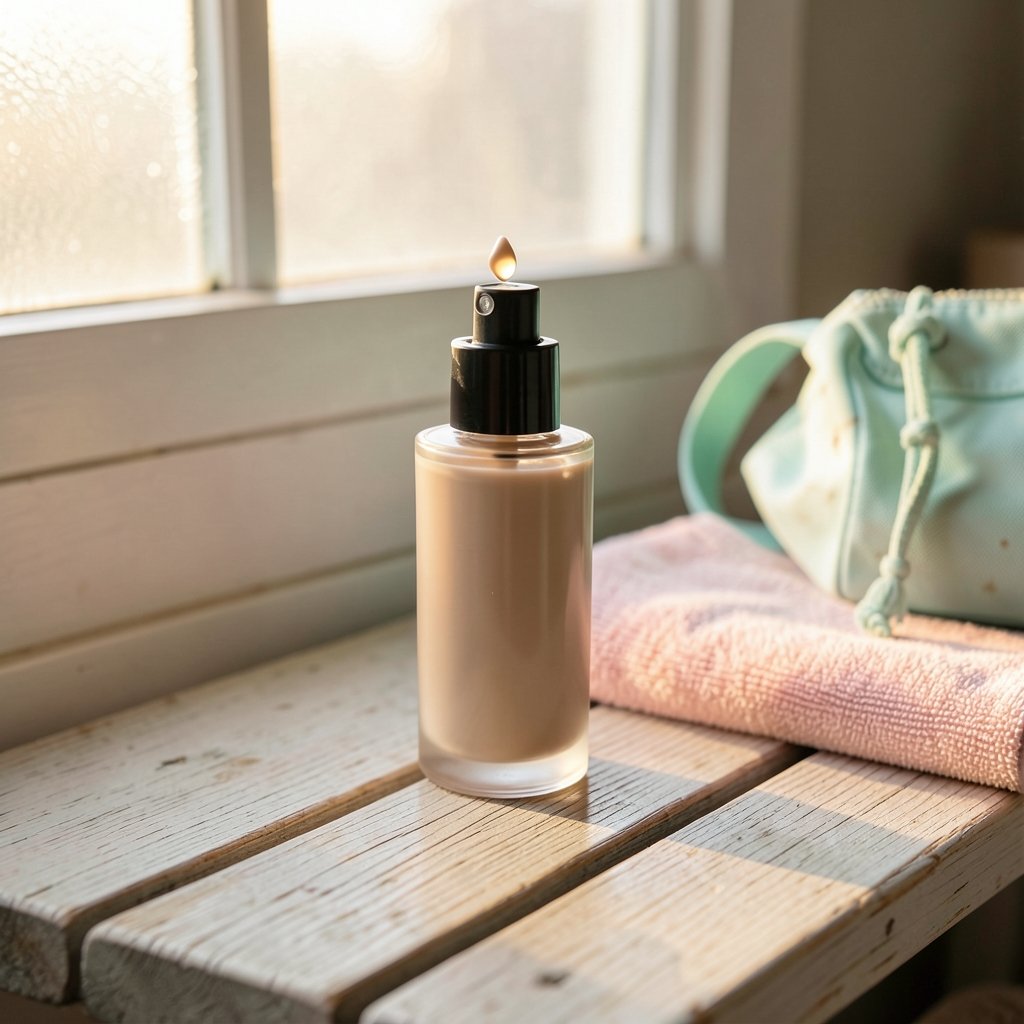
What if a foundation could clock a full workday, a commute, and dinner without sliding off your nose? That is the promise behind Diorskin Forever, Dior’s long-wear liquid foundation line. The pitch sounds great on paper. The real question is whether the formula, the finish, and the shade range actually hold up on normal skin in normal weather.
This guide breaks down what the product claims, what long-wear foundations of this type typically contain, where people go wrong when applying them, and how to decide if it belongs in your routine.
What Diorskin Forever Actually Is
Diorskin Forever is a liquid foundation from Parfums Christian Dior, first introduced around 2011. Dior positions it as a long-wearing, medium-to-full coverage formula with a matte or semi-matte finish. Marketing materials have at times claimed wear of up to 24 hours.
That last number deserves a caveat. Wear-time claims like “24H” are brand marketing claims, not independent clinical results. No third-party trial data backs them up. Treat them as a ceiling, not a guarantee. Real-world wear depends on your skin type, the primer underneath, humidity, and how much you touch your face.
Over the years the line has grown into a family. Variants have included Diorskin Forever Undercover (higher coverage), Diorskin Forever Perfect (a related fluid or cushion format in some markets), and Diorskin Forever Compact. Names and availability shift by region and year, so the version on a shelf in one country may not match another.
Dior has also reformulated the line at least once, with a notable update around 2019–2020 that touched both formula and packaging. Exact reformulation dates are hard to pin down without official documentation, and specific ingredient lists change with each version. Always check the carton in your hand rather than a review from three years ago.
The Anatomy of a Long-Wear Foundation

Understanding why these formulas behave the way they do helps you use them better. Long-wear foundations generally rely on a few building blocks:
- Film-forming polymers create a flexible layer that locks pigment in place.
- Silicones smooth texture and help the formula spread evenly.
- Pigments and fillers deliver coverage and blur the look of pores.
- Sunscreen filters appear in some variants, with SPF ratings that vary by version and country.
SPF labeling on foundations is regulated differently depending on where you shop. In the United States, sunscreen claims fall under the OTC drug monograph system, which is why a foundation with SPF is technically regulated as both cosmetic and drug. In the EU, the Cosmetics Regulation governs ingredient labeling and claims. The practical takeaway: never rely on foundation SPF as your only sun protection. You would need a thick, even layer to hit the labeled number, and most people apply far less.
If sun protection is a priority, a dedicated sunscreen under your base is the smarter play. There are good lessons in how to tan without wrecking your skin while keeping daily SPF in the mix, and sensitive-skin users may want to read up on Eltamd UV Clear SPF 46 as a layering option.
Shade Range: Broad, but Check Your Market
The Forever line has historically offered a wide shade range, often cited at 30+ shades in recent versions. The exact count varies by market and by which variant you buy. A number quoted in a US review may not match what is stocked in Asia or Europe.
A few practical notes on shade matching:
- Swatch on the jawline, not the hand. Hand skin runs darker and redder than the face for most people.
- Check in daylight. Store lighting flatters almost everything.
- Let it set for ten minutes. Long-wear formulas often dry down half a shade deeper than they look wet.
- Test the undertone as well as the depth. A perfect depth with the wrong undertone reads gray or orange by midday.
Because the line leans matte, shades can appear slightly lighter on dry skin and slightly deeper on oily skin as the day goes on. If you sit between two shades, a common trick is to buy the lighter one and warm it with bronzer rather than buying dark and fighting it.
How to Apply It So It Actually Lasts
Most complaints about long-wear foundation trace back to application, not the formula. Here is what works in practice.
Start with less product than you think you need. One pump covers most of the face. Two pumps is usually too much, and excess product is what creases, cakes, and separates first.
Prep according to your skin type. Oily skin does well with a mattifying primer on the T-zone only. Dry skin needs a hydrating layer underneath, because matte formulas will happily highlight every flake. If dryness is a recurring issue, the habits in this guide to hand creams for dry skin that actually work apply to the face too: hydrate before you mattify.
Use a damp sponge for a skin-like finish, or a dense brush for fuller coverage. Stipple, don’t sweep. Sweeping lifts the film-forming layer before it can set.
Powder selectively. A light dusting through the center of the face locks things down. Powdering the entire face flattens the finish and makes texture more visible.
Skip the setting spray if you already used a mattifying primer. Stacking mattifying products is the fastest route to a tight, mask-like look.
Common mistakes worth naming: applying over a rich, oily moisturizer that has not absorbed (the foundation slides), mixing in too much liquid highlighter (it breaks down the film), and touching up with more foundation instead of blotting paper. Blot first, then decide if you need product at all.
Who It Suits and Who Should Look Elsewhere
Long-wear matte formulas are not universal. A quick comparison helps set expectations.
| Skin situation | Likely experience | Better approach |
|---|---|---|
| Oily or combination skin | Strong match; controls shine through a long day | Apply thin layers, powder the T-zone |
| Normal skin | Good wear with light prep | Use a hydrating primer, skip heavy powder |
| Dry or flaky skin | Can cling to patches and look flat | Exfoliate gently, use a rich base layer, try a dewier formula |
| Mature skin | Matte finishes can emphasize fine lines | Sheer coverage, damp sponge, avoid powdering under the eyes |
| Acne-prone skin | Full coverage hides redness well | Patch test; remove thoroughly at night |
Texture concerns on the body follow similar logic. Just as resistance training and cellulite have a complicated relationship, foundation and skin texture have limits. No formula erases texture. It can blur it, but light and angle always win.
The Removal Rule People Ignore
Long-wear foundation is designed to stay put, which means it will not come off with a splash of water. Double cleansing is not a marketing gimmick here. An oil-based cleanser or cleansing balm breaks the film, and a water-based cleanser follows to remove residue.
Skipping this step is one of the most common causes of clogged pores and dullness among long-wear users. If you notice breakouts appearing along the jaw and hairline after switching foundations, removal is the first thing to audit, not the formula.
Changes in Skin Tone and What They Signal
Sometimes the foundation is not the problem. Skin that suddenly looks uneven, flushed, or mottled may be telling you something. A fishnet pattern on the skin is one example worth understanding before you try to cover it. Coverage is a tool, not a diagnosis.
Likewise, if you are considering a big color change, matching your base to your hair and skin undertone makes a real difference. Anyone weighing a warm-toned switch can look at this guide to auburn hair, shades, and skin tones for how undertone pairing works in practice. The same logic applies to nail color, which is why a green nails guide covers skin tone matching in detail. Color harmony across hair, base, and nails reads as intentional; mismatches read as accidental.
Availability and Reformulation: Verify Before You Buy
Here is the honest part. The beauty industry retires and renames lines constantly. Current availability of Diorskin Forever cannot be confirmed from older reviews alone. Before committing to a shade, check Dior’s official product page for your region, confirm the variant name, and read the ingredient list on the current packaging.
If the exact product is discontinued in your market, the practical questions stay the same: what coverage level do you want, what finish suits your skin, and what wear time do you actually need? A foundation you can buy in your shade today beats a perfect formula you can only find on resale sites at a markup.
Conclusion
Diorskin Forever earns its reputation as a serious long-wear foundation. Medium-to-full coverage, a matte finish, and a broad shade range make it a sensible pick for oily and combination skin, long days, and events where you cannot touch up. The 24-hour claim is marketing, not science, and the SPF in some variants is a bonus rather than real sun protection.
The bigger lesson applies to any long-wear base: prep for your skin type, apply thin layers, powder selectively, and remove it properly at night. Get those four habits right and most foundations perform better. Get them wrong and even a premium formula will let you down. Check the current lineup in your market, swatch in daylight, and let your own skin be the final judge.
Frequently Asked Questions
Is Diorskin Forever good for oily skin?
Yes, it is one of the better matches for oily and combination skin. The matte, long-wear formula controls shine and resists breaking down through a long day. Apply thin layers and powder only the T-zone to avoid a flat, heavy look.
Does Diorskin Forever really last 24 hours?
The 24-hour figure is a brand marketing claim, not an independently verified result. Real wear time depends on your skin type, primer, humidity, and how often you touch your face. Most users report solid all-day wear, but treat the number as a ceiling rather than a promise.
Can I use Diorskin Forever if I have dry skin?
It is possible, but it takes work. Matte long-wear formulas can cling to dry patches and emphasize flakiness. Exfoliate gently, use a hydrating primer or rich moisturizer underneath, apply with a damp sponge, and skip powder on dry areas. A dewier formula may simply suit dry skin better.
Does the SPF in Diorskin Forever replace sunscreen?
No. Even variants that carry an SPF rating are not a substitute for dedicated sun protection. You would need a thick, even layer to reach the labeled SPF, and most people apply far less foundation than that. Use a separate sunscreen underneath.
How many shades does Diorskin Forever come in?
The line has historically offered a broad range, often cited at 30 or more shades in recent versions. The exact count varies by market, by variant, and over time as the line is updated. Check the current official listing for your region before choosing.
How should I remove Diorskin Forever at night?
Use a double cleanse. Start with an oil-based cleanser or cleansing balm to break down the film-forming layer, then follow with a water-based cleanser to remove residue. Long-wear formulas do not come off with water alone, and incomplete removal is a common cause of clogged pores.
One last note on timing: foundation, like most cosmetics, has a shelf life. Most liquid foundations are best within 12 months of opening, and a matte, long-wear formula can separate or turn if stored in a hot bathroom. If the texture changes, the scent shifts, or it starts to oxidize on the skin, replace it. A foundation that no longer behaves is not saving you money.









