


What makes a small green-haired doll from the 1980s still worth hunting down four decades later? For longtime fans of Rainbow Brite, the answer sits on a shelf somewhere: Patty O’Green, the Color Kid tied to everything green, made as a fashion doll during the franchise’s mid-1980s merchandise boom. She is not the star of the line. She never got the biggest marketing push. Yet she has become one of the more quietly pursued figures among collectors who grew up with the rainbow and now want the full set.
This guide walks through who Patty O’Green actually is, how her doll fits into the wider Rainbow Brite toy story, what to inspect before buying, and where the honest uncertainties lie. If you have ever stared at a faded eBay listing and wondered whether that green dress and rooted hair are original, this is for you.
Who is Patty O’Green in the Rainbow Brite universe?
Patty O’Green is one of the Color Kids, the group of child characters in Hallmark’s Rainbow Brite franchise, which launched in the 1980s. Each Color Kid represents a single hue, and Patty’s job is green. In the fiction, the Color Kids help keep color flowing into the world, working alongside Rainbow Brite herself and the small, round Sprites that serve as companions and comic relief.
The character belongs to a very specific moment in children’s entertainment: the early-to-mid 1980s, when greeting-card companies realized that a cute character could become a cartoon, a plush line, a cereal box, and a bedroom wallpaper pattern all at once. Rainbow Brite followed that playbook closely. The franchise was built for licensing, and the dolls were the centerpiece of the merchandise plan.
One naming detail trips people up constantly. Collectors and sellers write the name both as Patty O’Green and as Patty O’ Green, with a stray space. You will see both spellings in listings, forums, and price guides. Neither spelling reliably signals a fake or a variant. It is simply inconsistent typing that has hardened into habit over forty years.
How the Patty O’Green doll fits into the toy line
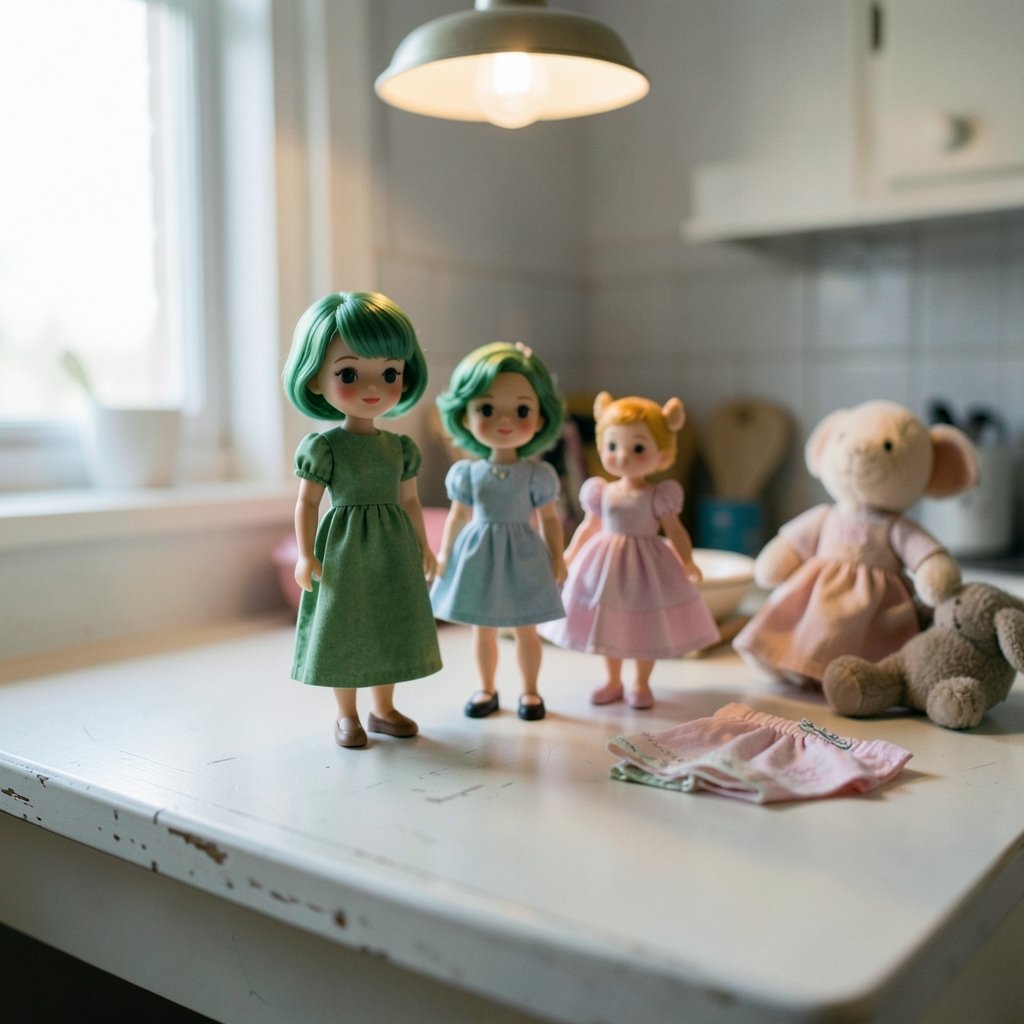
The Rainbow Brite fashion dolls were produced in the 1980s, with Mattel associated with the doll manufacturing side of the franchise. The line mixed formats: plush Sprites, larger plush Rainbow Brite figures, and the smaller fashion dolls with rooted hair and fabric outfits that kids could dress and restyle.
Patty O’Green followed the standard fashion-doll format used across the line. That means rooted hair rather than a wig, a green-themed outfit, and a scale consistent with her fellow Color Kids so that outfits and accessories could theoretically be swapped between dolls. For a child in 1985, that interchangeability was the whole point. For a collector today, it is a mixed blessing, because swapped pieces are almost impossible to detect after the fact.
A useful way to think about the hierarchy of the line:
| Tier | What it is | Collector appeal |
|---|---|---|
| Plush Sprites | Small round companions, often sold separately | High, because they are easily lost |
| Plush Rainbow Brite | Larger soft dolls | Moderate, condition-sensitive |
| Fashion dolls (Color Kids) | Rooted hair, fabric outfits, comb or brush | High when complete |
| Playsets and vehicles | Larger boxed items | Niche but rising |
Patty sits in the third tier, and that tier is where most of the current collector energy lives. She is small enough to display, distinctive enough to recognize instantly, and rare enough in good condition to feel like a find.
What actually shipped in the box
Here is where honesty matters. Sources disagree about which accessories shipped with which doll, and Rainbow Brite packaging varied by market and by production run. The franchise’s dolls of this era typically included a small sprite companion and a comb or brush. Whether Patty O’Green’s specific box included a named sprite, and which one, is the kind of detail that should be confirmed against a primary source: a box photo, a period catalog, or official brand material.
What this means in practice is simple. Do not treat any accessory list you read online, including this one, as gospel. Treat it as a checklist to verify.
Practical tips that save collectors real money:
- Photograph the box before you open it. If you buy a boxed doll, take detailed photos of every panel, the insert, and the accessories still wired in place. That photo set becomes your proof of completeness if you ever resell.
- Keep the insert and the tie-downs. The molded plastic insert and the original wire ties are worth more than most people expect, because they are the hardest parts to replace.
- Bag accessories separately. Tiny combs and sprite figures vanish into carpet and vacuum cleaners. A small zip bag labeled with the doll’s name prevents that.
- Do not wash the outfit first. Vintage fabric can bleed, and a green dress is a worst-case scenario for color transfer. Spot clean only, and test on a hidden seam.
- Store away from sunlight. Green dye is notoriously unstable. A doll displayed in direct sun for a decade will fade to a muddy olive that no buyer wants.
The most common mistake is assuming a doll is “complete” because the seller says so. Ask for a photo of the accessories laid out next to the doll. If the seller cannot provide one, price the doll as incomplete.
Condition, completeness, and what drives value
Rainbow Brite dolls, Patty O’Green included, are collected primarily as 1980s nostalgia items. That framing matters, because it explains the pricing pattern. These are not blue-chip antiques with published auction records. They are emotional purchases, and prices swing with whatever is trending on social media that month.
The factors that move value, roughly in order of importance:
- Completeness. Original outfit, original accessories, original box. Each missing piece cuts value.
- Hair condition. Rooted hair that has been cut, frizzed, or heat-styled is very hard to restore convincingly.
- Fabric integrity. Fading, staining, and stretched elastic are common on 1980s doll clothing.
- Box condition. A crushed box with water damage is worth far less than a crisp one, even with the same doll inside.
- Color accuracy. A faded green outfit is the single biggest silent value killer on this particular doll.
Buyers should also know that the franchise has seen later revivals and re-releases. Whether Patty O’Green appeared in each revival is not something to assume. Verify per release, because a 2000s or 2010s reissue can look similar at a glance and is generally worth less than an original 1980s piece. If a listing is vague about era, ask directly and ask for a photo of the copyright stamp.
For readers tracking how nostalgia-driven toy categories intersect with broader style cycles, the same forces that keep 1980s color palettes circulating in modern design also keep these dolls relevant. The revival of bold, saturated color in current collections is not a coincidence, and it feeds collector demand. You can see that pattern in coverage of Italian luxury fashion and in the way 2026 fashion trends female reporting keeps returning to playful, high-chroma palettes.
Why Patty O’Green appeals to a specific kind of collector
Not every Rainbow Brite fan wants Patty. The character who gets the spotlight tends to be Rainbow Brite herself, and the Sprites get the cute-factor attention. Patty attracts a narrower group: completionists building the full Color Kid roster, and green-specific collectors who pick one color and go deep.
That narrower demand has an interesting effect. Patty O’Green is not usually the most expensive doll in the line, but she is often the hardest to find in genuinely nice condition, because fewer were kept carefully. Scarcity of quality, not scarcity of quantity, is what makes her interesting.
There is also a design-appreciation angle. The Color Kids were built on a simple, readable visual system: one hue per character, applied to hair, outfit, and accessories. That is textbook character design, and it is the same discipline that makes runway looks instantly legible. If you enjoy seeing how a single color idea gets executed across an entire look, the craft behind these dolls is genuinely satisfying. The same pleasure shows up in Angelica Hicks’ fashion illustration work that turns runway moments into drawings, where one dominant color often does most of the storytelling.
How to display and preserve a vintage Patty O’Green doll
Display decisions made in the first week of ownership determine what the doll looks like in ten years. A few rules that experienced collectors follow:
- Use a glass or acrylic case with a UV-filtering front. Open shelving is fine for a year and damaging over a decade.
- Keep humidity stable. Attics and basements are the enemy. A steady indoor room is better than a “safe” storage space that swings from damp to dry.
- Support the doll upright or lying flat, never leaning. Leaning puts stress on the legs and warps the plastic over time.
- Avoid rubber bands and cheap tape. Both degrade and leave permanent marks on plastic and fabric.
- Handle with clean, dry hands. Oils from skin dull plastic and stain fabric, and neither damage reverses.
For anyone building a broader collection and looking for reliable reading material rather than hype, it helps to find sources that filter noise. A guide like this 2026 fashion trends guide: what’s in, out and worth wearing is a useful model for how to separate genuine shifts from marketing chatter, and the same skepticism serves toy collectors well. If you prefer newsletters over endless scrolling, there are ways to find the best fashion substacks without wasting your inbox, and the same curation logic applies to collector communities.
Common mistakes buyers make
The single most expensive error is buying on impulse from a blurry photo. Green fabric hides fading badly in low light, and rooted hair looks fine in a thumbnail when it is actually frizzed beyond repair.
The second most common error is over-restoring. Re-rooting hair, repainting faces, or replacing elastic all reduce originality. A doll with honest play wear is often more desirable than a doll that has been “fixed” with modern materials.
The third is trusting a seller’s era claim without a stamp photo. Production years for this line are not something to state casually, and sources genuinely disagree. Ask for the copyright mark. If the seller cannot or will not provide it, treat the era as unknown and price accordingly.
Finally, many buyers forget that the sprite companion is often the rarest piece. Dolls survive because they were loved. Tiny accessories disappear because they were played with. Budget for the accessory separately rather than assuming it will turn up.
Conclusion
Patty O’Green is a small doll with a specific charm: one color, executed completely, in a franchise that understood exactly what it was doing. She rewards careful buyers and punishes careless ones. The collectors who end up happiest are the ones who ask for extra photos, verify the era, accept honest wear, and store their finds away from sunlight and humidity.
If you take one thing from this guide, make it this: treat every accessory list and production year you encounter as unverified until you see the box or the stamp yourself. That single habit will save you more money than any price guide. And if you are drawn to the line because of its bold, unapologetic use of color, you are in good company. The same instinct that made these dolls appealing in the 1980s is driving fashion trends in 2026 and beyond, which means the little green Color Kid has a way of staying relevant long after her production run ended.
FAQ
Is Patty O’Green rare?
She is not the rarest doll in the Rainbow Brite line, but she is genuinely hard to find in excellent condition with her original outfit and accessories intact. Scarcity of quality, rather than overall quantity, is what makes her a challenge for collectors.
What accessories came with the Patty O’Green doll?
Rainbow Brite dolls of that era typically shipped with a small sprite companion and a comb or brush. Whether Patty’s specific box included a named sprite, and which one, should be confirmed against a box photo, a period catalog, or official brand material rather than assumed.
Is it spelled Patty O’Green or Patty O’ Green?
Both spellings appear in collector listings, forums, and price guides. The spacing is inconsistent typing rather than a meaningful variant, so neither form reliably indicates an original versus a reissue.
Should I restore a vintage Patty O’Green doll?
Generally, no. Re-rooting hair, repainting the face, or replacing elastic reduces originality, and many collectors prefer honest play wear to modern repairs. Clean gently, spot-test any fabric, and leave structural restoration to a professional if you attempt it at all.
How do I tell an original 1980s doll from a later reissue?
Ask the seller for a clear photo of the copyright stamp and the packaging. The franchise has seen later revivals, and reissues can look similar at a glance. If the era cannot be documented, treat the doll as unknown and price it accordingly.
How should I store a vintage Patty O’Green doll?
Keep her out of direct sunlight, in stable humidity, and supported upright or lying flat rather than leaning. Use a case with UV filtering, avoid rubber bands and tape, and handle with clean, dry hands to prevent oils from dulling the plastic or staining the fabric.














