


What do a flannel shirt, a slip dress, and a pair of chunky platforms have in common? They all came roaring out of the 1990s and never really left. The decade gets a reputation as fashion’s messy middle child, squeezed between the neon excess of the 80s and the bling of the early 2000s. But look closer and you’ll find one of the most influential style eras of the modern age. The 90s gave us grunge, minimalism, streetwear as high fashion, and a teenager’s bedroom aesthetic that still sells out today.
This guide breaks down what people actually wore, why it mattered, and how to wear it now without looking like you raided a costume box.
Why 90s fashion still refuses to die
Fashion runs on cycles, and the 90s have been cycling back for years. Designers keep pulling from the decade because it was genuinely revolutionary. Before the 90s, high fashion mostly trickled down from runways and couture houses. During the 90s, the flow reversed. Street style, youth culture, and music scenes pushed their way onto the runway.
That inversion is why 90s pieces feel so wearable today. They were designed for real life rather than for a magazine spread. A slip dress, a boxy blazer, a pair of baggy jeans: these are clothes people actually moved in. That practicality is a big reason the era’s looks keep resurfacing in modern trend reports, including the wider 2026 fashion trends guide where 90s minimalism continues to echo through new collections.
Grunge: when flannel went high fashion
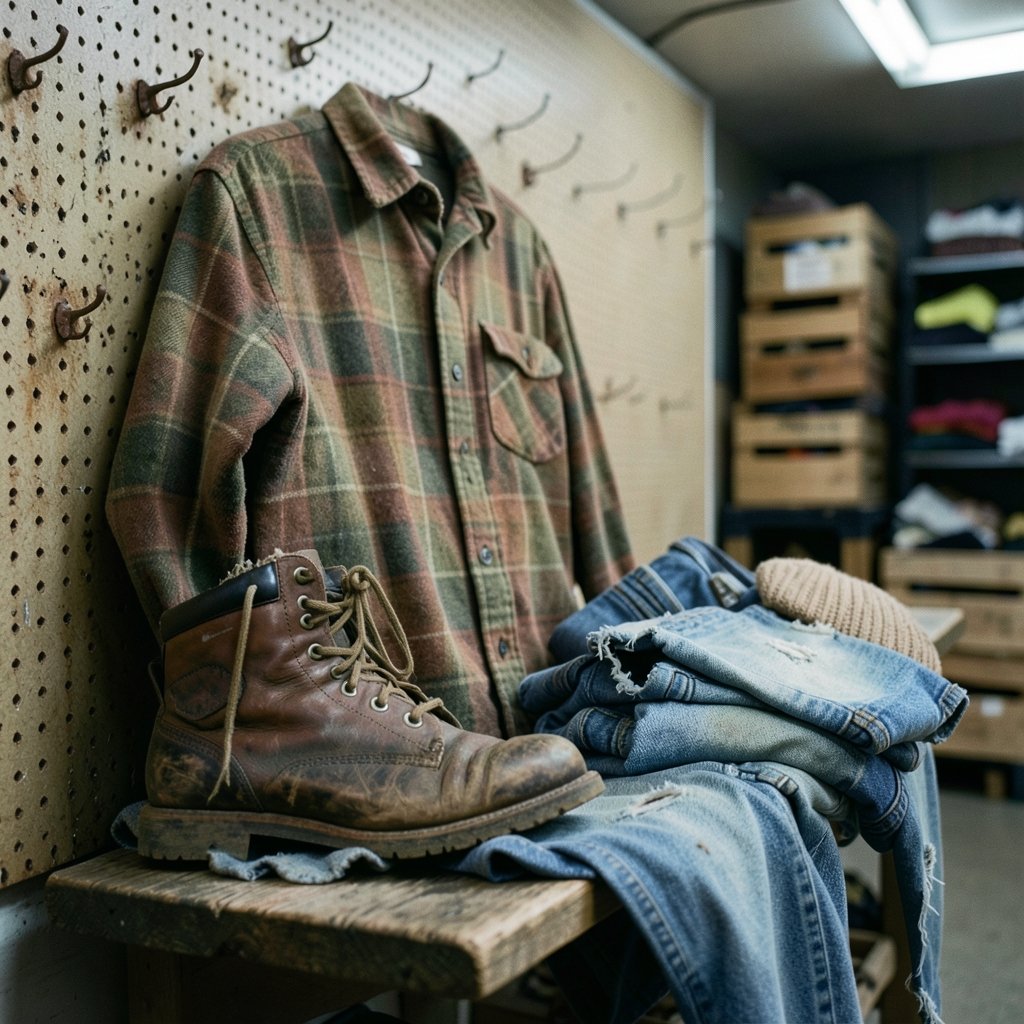
If you remember one 90s fashion moment, make it grunge. In late 1992, Marc Jacobs showed a collection for Perry Ellis that pulled directly from Seattle’s thrift-store scene: flannel shirts, slip dresses, beanies, and a deliberate scruffiness. The collection was commercially unsuccessful at the time, and Jacobs reportedly left the house soon after. Today, fashion historians treat it as a landmark that changed how the industry saw street style.
Grunge’s real-world uniform was simple and cheap:
- Oversized flannel shirts, often worn open over a band tee
- Ripped or distressed jeans
- Combat boots and canvas sneakers
- Messy, un-styled hair and minimal makeup
- Layered, thrifted pieces rather than new ones
The genius of grunge was its rejection of polish. It said that looking like you didn’t try was the whole point. That idea still powers plenty of modern casual dressing.
How to wear grunge now without the costume effect
The mistake people make is going full grunge: head-to-toe flannel, ripped everything, and heavy boots. It reads as a Halloween outfit rather than personal style. What works in practice is restraint. Pick one grunge element, like a flannel shirt or a faded band tee, and pair it with something clean and modern. A soft flannel over slim trousers and plain sneakers nods to the era without shouting. If you’re planning a themed event and want to lean harder into costume territory, the Halloween fashion show runway ideas and costume trends piece covers how to do it with intention.
Minimalism and the slip dress
Grunge had a quiet twin. While flannel ruled the streets, minimalism ruled the runways. Calvin Klein’s pared-back aesthetic, roughly 1994 to 1997, stripped fashion down to simple lines, neutral colors, and slip dresses worn alone or layered over a plain tee. Kate Moss’s Calvin Klein campaigns, starting around 1992, became the visual shorthand for the look.
The slip dress is the era’s most durable export. It’s a single piece of thin fabric, usually cut on the bias, with spaghetti straps. In the 90s it was worn with a chunky cardigan and combat boots by day and barely anything by night. Today it works the same way. The trick is balance: keep the dress delicate and make everything around it sturdy. A slip dress with a boxy blazer and flat shoes looks intentional. A slip dress with heels and heavy jewelry can tip into bridal territory.
Minimalism also gave us the capsule wardrobe idea. Fewer, better pieces in neutral tones. It’s a principle that shows up again and again in modern style advice, and it’s why 90s minimalism keeps appearing in fashion trends 2026 coverage.
Streetwear and hip-hop go mainstream
The 90s are when streetwear stopped being a niche and became a global force. Oversized silhouettes, sportswear, tracksuits, and sneakers moved from street culture into mainstream retail over the course of the decade. By the late 90s, brands like Tommy Hilfiger and FUBU had become crossover markers, worn by musicians and suburban teenagers alike.
The defining shapes were big. Baggy jeans, oversized jerseys, puffer jackets, and logo-heavy pieces. It was a direct contrast to minimalism’s clean lines, and both existed at the same time. That’s a key thing to understand about the decade: there was no single 90s look. There were several, running in parallel.
For anyone building a modern wardrobe, the streetwear lesson is proportion. Oversized works when one part is big and the rest is fitted. A boxy jersey with straight-leg jeans and clean sneakers is a solid formula. Everything oversized at once tends to swallow the wearer.
Teen mall culture and the Delia’s era
Not all 90s fashion came from runways or music videos. A huge chunk came from catalogs and mall stores aimed squarely at teenagers. Delia’s, a catalog founded in 1993, is one of the most commonly cited markers of 90s teen fashion retail. Its pages were full of baby tees, wide-leg jeans, platform sneakers, and chokers.
This was fashion as a shared experience. You didn’t need money for designer labels. You needed a mall and a catalog. That accessibility is a big part of why the era feels nostalgic to so many people, and why its pieces are easy to recreate today with thrifted finds.
The Rachel and other 90s hair moments
Fashion in the 90s wasn’t only about clothes. Jennifer Aniston’s layered cut on Friends, which premiered in September 1994, became one of the most copied hairstyles of the decade. The “Rachel” is a reminder that 90s style was a full package: hair, makeup, and accessories all worked together. Chokers, tiny sunglasses, and scrunchies finished the look.
Footwear: platforms, boots, and sneakers
Shoes did a lot of heavy lifting in the 90s. Chunky platforms, notably Buffalo boots associated with the Spice Girls around 1996 to 1998, are a standard example of late-90s footwear. Combat boots anchored grunge. Simple white sneakers carried the streetwear look.
| Shoe style | 90s context | Modern wear tip |
|---|---|---|
| Chunky platforms | Late-90s pop and club culture | Pair with slim or straight-leg trousers to balance the bulk |
| Combat boots | Grunge and alternative scenes | Works with slip dresses and midi skirts |
| White sneakers | Streetwear and everyday casual | Keep them clean for a sharper look |
| Square-toe boots | Minimalist and evening wear | Choose a low heel for all-day comfort |
The common mistake with platform shoes is overdoing the volume. If the shoe is huge, keep the hem narrow. If the trousers are wide, go for a flatter sole.
Y2K: the decade’s final chapter
As the 90s closed, around 1998 to 1999, a new aesthetic started forming. Metallic fabrics, futuristic accessories, and logomania crept in. This is the bridge into Y2K style, and it’s distinct from early-90s grunge. Fashion historians still debate exactly where the line falls, but the shift is clear: the scruffy, thrifted look gave way to something shinier and more tech-obsessed.
If you’re drawn to the late-90s end of the spectrum, think silver, tiny sunglasses, and logo prints. If you prefer the early 90s, stay with flannel, denim, and muted tones. Both are valid, and mixing them rarely works well.
Accessories that made the decade
Accessories were where 90s style got playful. The most recognizable pieces:
- Chokers, from thin plastic tattoos to velvet bands
- Tiny sunglasses, often oval or rectangular with colored lenses
- Scrunchies, worn in hair or on wrists
- Mini shoulder bags, usually in nylon or leather
- Bucket hats, especially in the streetwear scene
- Beaded and butterfly hair clips, a staple of teen style
The practical rule with 90s accessories is to pick one statement piece. A choker plus tiny sunglasses plus a bucket hat is a lot. One is a choice; three is a costume.
How to build a 90s wardrobe that actually works
The best approach is to treat the decade as a menu, not a uniform. Here’s a practical sequence that works in real life:
- Start with denim. One pair of straight or baggy jeans covers most 90s looks.
- Add a slip dress. Choose a midi length in a neutral tone so it layers easily.
- Get one oversized layer. A flannel shirt, boxy blazer, or puffer jacket.
- Pick your footwear. White sneakers for casual, combat boots for edge, platforms for drama.
- Finish with one accessory. A choker, a mini bag, or a bucket hat.
Common mistakes to avoid: buying cheap costume versions of 90s pieces instead of real vintage or well-made modern equivalents, and layering too many era-specific items at once. Thrift stores and vintage shops are your best source for authentic pieces, and they’re usually cheaper than reproductions.
If you want to see how these ideas translate into current styling, the breakdown of 2026 fashion trends female shows how 90s shapes get reinterpreted each season. And for anyone curious how a different decade handled menswear, the 1950s fashion trends men guide makes an interesting comparison: the 50s were about structure and polish, while the 90s were about ease and attitude. Even accessories followed the shift, and the eyeglass fashion trends piece shows how small frames went from nerdy to cool over the same period.
Conclusion
The 90s weren’t a single look. They were a argument between grunge and minimalism, between streetwear and mall culture, between scruffy and shiny. That tension is exactly why the decade keeps coming back. There’s a 90s style for almost every personality, and most of the pieces are comfortable, practical, and easy to find secondhand.
The smartest way to wear the era today is with restraint. Choose one or two elements, keep the proportions balanced, and let the rest of your outfit stay modern. Done that way, 90s fashion isn’t nostalgia. It’s just good dressing.
FAQ
What are the most iconic 90s fashion trends?
The biggest ones are grunge (flannel, ripped jeans, combat boots), minimalism (slip dresses, neutral tones), streetwear (oversized silhouettes, sneakers, tracksuits), and late-90s Y2K style (metallics, logomania, tiny sunglasses). Teen mall fashion, including baby tees and platform sneakers, was also huge.
Who made grunge fashion famous?
Marc Jacobs brought grunge to high fashion with his late-1992 collection for Perry Ellis, drawing on Seattle thrift-store style. The collection flopped commercially at the time but is now seen as a landmark. In everyday life, grunge spread through music scenes and thrift shopping rather than designer labels.
Why was the slip dress so popular in the 90s?
It was simple, affordable, and versatile. Calvin Klein’s minimalism, roughly 1994 to 1997, made the thin bias-cut dress a symbol of the era. People wore it alone or layered over a tee, which made it practical for both day and night.
When did Y2K fashion start?
Y2K style began emerging late in the decade, around 1998 to 1999, with metallic fabrics, futuristic accessories, and logo-heavy designs. It’s distinct from early-90s grunge, though fashion historians still debate the exact dividing line.
How can I wear 90s fashion without looking like I’m in costume?
Pick one or two era-specific pieces and keep everything else modern. A flannel shirt with slim trousers, or a slip dress with a blazer and flat shoes, reads as style rather than dress-up. Avoid stacking multiple statement 90s accessories at once.
Where can I find authentic 90s clothing today?
Thrift stores, vintage shops, and online resale marketplaces are the best sources. Look for real denim, genuine band tees, and well-made leather pieces rather than cheap costume reproductions, which rarely fit well or last long.














