

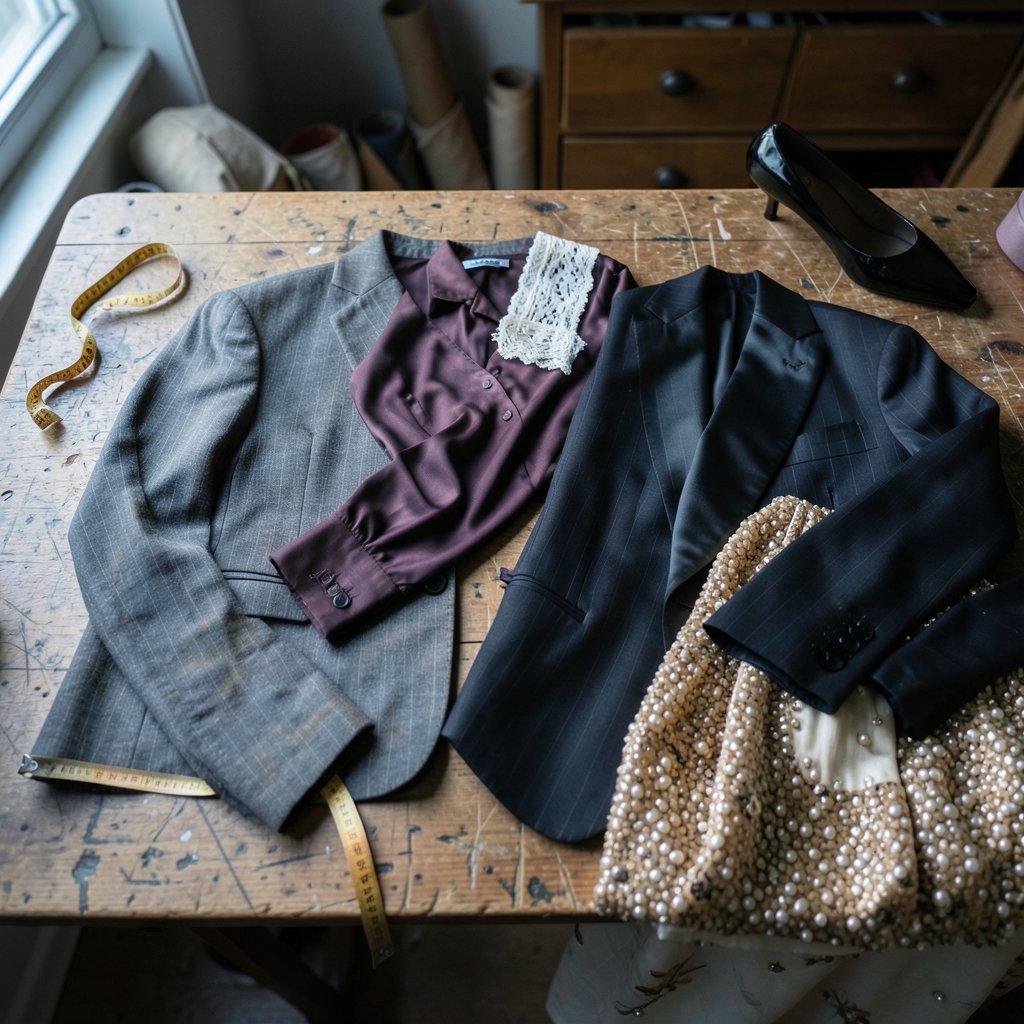
What do a 17th-century French courtier, a 1920s “garçonne,” Marlene Dietrich in a tuxedo, and Harry Styles in a dress have in common? More than you might think. Each one wore clothing that scrambled the usual signals of masculine and feminine, and each one caused a small cultural earthquake in the process. Androgynous fashion is often talked about as if it were invented yesterday, a byproduct of modern identity politics and social media. The historical record says otherwise. It is one of the most persistent ideas in dress history, resurfacing every few decades in a new silhouette, a new fabric, a new attitude.
This article traces where androgynous style came from, what it looks like now, and how to wear it without turning yourself into a costume. Along the way, it separates the related-but-different terms that fashion writing tends to mash together, and it flags the practical mistakes that trip up people trying the look for the first time.
What does “androgynous” actually mean in fashion?
The word comes from Greek roots: anēr, meaning man, and gynē, meaning woman. Put together, it describes something that blends or blurs masculine and feminine characteristics. In fashion, that usually means clothing, silhouettes, or styling that do not signal one gender exclusively. A sharp shoulder on a soft body. A fluid trouser on a tailored frame. A lace collar under a workwear jacket.
Here is where things get slippery. Androgynous, unisex, gender-neutral, and gender-fluid get used interchangeably in fashion coverage, but they are not the same thing. The distinctions matter if you are shopping, designing, or writing about the subject.
| Term | Core meaning | Typical example |
|---|---|---|
| Androgynous | Emphasizes mixed masculine and feminine signals | A woman in a men’s tuxedo jacket with a lace camisole |
| Unisex | One garment designed for everybody | A plain crewneck tee or straight-leg jean sold without gendered sizing |
| Gender-neutral | Not coded to either gender | A boxy coat with no waist shaping or gendered detailing |
| Gender-fluid | Style that shifts between masculine and feminine over time | The same person in a tailored suit one week, a slip dress the next |
The overlap is real, and nobody polices these borders. But the nuance is useful. Androgyny is about tension and mixing. Unisex is about sameness. A unisex hoodie is not automatically androgynous, because it makes no statement at all; it simply avoids the question.
The long history nobody credits

Claims that androgynous fashion is “new” or “a 2020s trend” fall apart quickly against the historical record. The look is recurring, not novel.
Start in the 1600s. Elite men in England and France wore lace, ribbons, wigs, and high heels. Gendered dress codes were far less fixed than they became in the 19th and 20th centuries. What reads today as flamboyant was, in its moment, simply aristocratic. The rigid “men wear this, women wear that” framework is the historical anomaly, not the blurring.
Fast-forward to the 1920s. Coco Chanel’s sportswear-influenced designs and the garçonne look, with its short hair, dropped waist, and flattened chest, popularized a boyish women’s silhouette. The word itself means “boyish” in French. This was a deliberate aesthetic choice, and it stuck.
Then came Hollywood. Marlene Dietrich wore men’s tailoring and a tuxedo in the 1930 film Morocco, and was reportedly warned it would damage her career. The anecdote gets repeated constantly, though its primary source is hard to pin down, so treat it as lore rather than documented fact. The film, at least, is real, and so is the image.
By the late 1960s and 1970s, unisex clothing had become an actual retail category, with unisex boutiques and jeans marketed to both sexes. Exactly who first used “unisex” in a retail context is uncertain, but the category itself is well documented.
Runway rebellion and red-carpet visibility
Designers pushed the idea further in the 1980s and 1990s. Jean Paul Gaultier and Yohji Yamamoto put men in skirts and blurred tailoring in ways that made fashion editors pay attention. Gaultier’s menswear collections of the mid-1980s are often cited as a turning point, though specific collection dates deserve verification before you quote them in a piece of your own.
The 2010s and 2020s moved androgyny from the runway to the mainstream feed. Billy Porter’s tuxedo gown in 2019 and Harry Styles in a dress on the cover of Vogue in December 2020 brought gender-fluid red-carpet dressing into ordinary fashion media. Whatever you think of celebrity styling, the effect was measurable: the conversation moved into living rooms as well as showrooms.
Retail followed. Zara launched an “Ungendered” line in 2016, one of several mainstream brands to test gender-neutral merchandising. If you want a sense of how quickly the broader mood shifted, the industry’s current obsession with fluid silhouettes shows up across the 2026 fashion trends female conversation, where oversized tailoring and borrowed-from-the-boys shapes keep resurfacing. The 2026 Fashion Trends Guide: What’s In, Out & Worth Wearing is a useful benchmark for how those ideas get translated for real wardrobes.
Why the look keeps returning
Androgyny tends to surge when gender roles are being renegotiated. That is not a coincidence. Clothing is the most visible signal we send about who we are, so when ideas about masculinity and femininity shift, hemlines, lapels, and silhouettes shift with them.
There is also a purely aesthetic engine at work. Androgynous dressing is visually interesting because it creates friction. A softened shoulder line. A corseted waist under a boxy jacket. A menswear fabric cut on a curve. Designers return to it because it gives them something to play with.
And there is a practical appeal that rarely gets mentioned: borrowing from the “other” side of the shop doubles your wardrobe options. A woman who buys a men’s overcoat gets better pockets, heavier wool, and a longer line. A man who tries a women’s knit gets softer yarns and closer fits. Once you stop treating the department divide as a rule, shopping gets more interesting.
How to wear androgynous fashion without looking like a costume
Here is where theory meets the fitting room. The most common mistake is going all-in at once: full tux, slicked hair, dramatic makeup. That reads as fancy dress, not personal style. The second mistake is buying oversized everything, which swallows the body instead of playing with proportion.
What actually works is a single deliberate contrast, held steady by the rest of the outfit. Practical guidance:
- Change one axis at a time. If you are adding a masculine element, keep the rest of the look familiar. A structured blazer over your usual jeans and tee is a gentler move than a full three-piece suit.
- Play with proportion as well as size. A boxy top with a slim bottom, or a fluid trouser with a fitted knit, creates the tension that makes androgyny read as deliberate.
- Use fabric as the signal. Crisp poplin and heavy wool lean masculine in our cultural shorthand; silk, fine gauge knits, and lace lean feminine. Mixing them is the fastest route to the look.
- Get the tailoring right. This is the step people skip. A men’s jacket on a narrower frame usually needs the sleeves shortened and the waist taken in. A women’s blazer on a broader frame often needs the shoulders let out. Budget for alterations; they are what separate “borrowed” from “belongs to me.”
- Keep shoes and accessories in conversation. A chunky Derby shoe under a slip dress, or a delicate chain over a workwear jacket, does more work than any single garment.
- Test the outfit in motion. Sit, walk, reach. Androgynous silhouettes often fail in the fitting-room mirror and succeed or collapse once you move.
One more tip from watching people try this: start with outerwear. Coats and jackets carry the strongest gender coding and the most visual impact per dollar, and they are the easiest place to experiment without rebuilding your whole wardrobe.
Androgyny in the wider culture
Fashion does not happen in a vacuum, and androgynous style has always traveled alongside music, film, and art. The 1980s pop landscape made theatrical gender play a mainstream visual language. Illustration and editorial art have done similar work, translating runway moments into images that reach people who never open a fashion magazine. If that crossover interests you, this piece on how Angelica Hicks turns runway moments into something more playful is a good example of how androgynous styling gets absorbed into visual culture.
The same pattern shows up in how subcultures get mainstreamed. The 2010s fashion athleisure streetwear Instagram rewrote rules story is instructive: once a style becomes legible on a screen, it becomes shoppable, and once it is shoppable, it stops being transgressive. Androgyny has followed that arc repeatedly, which is why it never quite disappears and never quite shocks the way it once did.
For readers tracking how the broader industry is handling gender now, the fashion trends 2026 coverage is worth a look. And if you want to follow the conversation as it develops week to week, there are worse habits than learning to find the best fashion substacks without wasting your inbox; independent writers tend to cover gender and dress with more nuance than brand marketing does.
It is also worth noting how Italian houses have handled the tension. The Italian luxury fashion tradition built its reputation on precise tailoring, and that precision is exactly what makes a borrowed silhouette read as elegant rather than sloppy. Good androgynous dressing is, at heart, a tailoring problem.
Common myths worth retiring
A few ideas about androgynous fashion deserve a quiet retirement.
Myth one: it is only for young people or only for one gender. The historical record shows men, women, and people across the gender spectrum wearing it for centuries. It is not a youth trend.
Myth two: it means dressing “like a man” or “like a woman.” That misses the point. Androgyny is about mixing signals, not swapping one set for another.
Myth three: it requires a specific body. It requires good fit, which is available to most bodies with the right alterations. The silhouette adapts; the person does not need to.
Myth four: it is inherently political. For some wearers it is. For many, it is simply a style preference, and treating every androgynous outfit as a statement can be condescending.
Conclusion
Androgynous fashion is not a novelty and it is not going away. It is a recurring answer to a permanent question: how do we signal who we are through what we wear, and what happens when those signals stop lining up neatly? From 17th-century lace and ribbons to 1920s boyish silhouettes to a tuxedo gown on a red carpet, the impulse is the same. People have always used clothing to complicate the categories they were handed.
The practical takeaway is refreshingly simple. Start with one contrast. Get it tailored. Let the rest of the outfit stay quiet so the tension can do its work. Whether you call it androgynous, gender-neutral, or just a good jacket, the result is the same: a wardrobe with more range, more personality, and considerably better pockets.
FAQ
What is the difference between androgynous and unisex clothing?
Unisex means one garment is designed for everybody, usually with a simple, unshaped cut. Androgynous describes styling that deliberately mixes masculine and feminine signals. A plain unisex tee avoids the gender question; an androgynous outfit answers it in an interesting way.
Is androgynous fashion a modern trend?
No. It has appeared repeatedly across centuries, from lace and high heels on 17th-century aristocratic men to the 1920s garçonne look and 1980s runway experimentation. It resurfaces in new forms rather than being invented once.
Can anyone wear androgynous fashion?
Yes, with one condition: fit. The look depends on proportion and tailoring rather than body type. A jacket that fits the shoulders and is altered at the waist or sleeve will work on most frames.
What is the easiest way to start with an androgynous style?
Begin with outerwear. Coats and jackets carry the strongest gender coding and the biggest visual impact. Add one contrasting piece, such as a structured blazer over a soft knit, and keep the rest of the outfit familiar.
Why does androgynous fashion keep coming back?
It tends to surge when ideas about gender roles are being renegotiated, and it offers designers a rich source of visual tension. It also doubles a wearer’s wardrobe options, which gives it staying power beyond any single trend cycle.
Does androgynous fashion have to make a political statement?
Not necessarily. For some wearers it expresses identity or politics; for others it is purely an aesthetic choice. Treating every androgynous outfit as a manifesto can miss what the wearer actually intended.














