

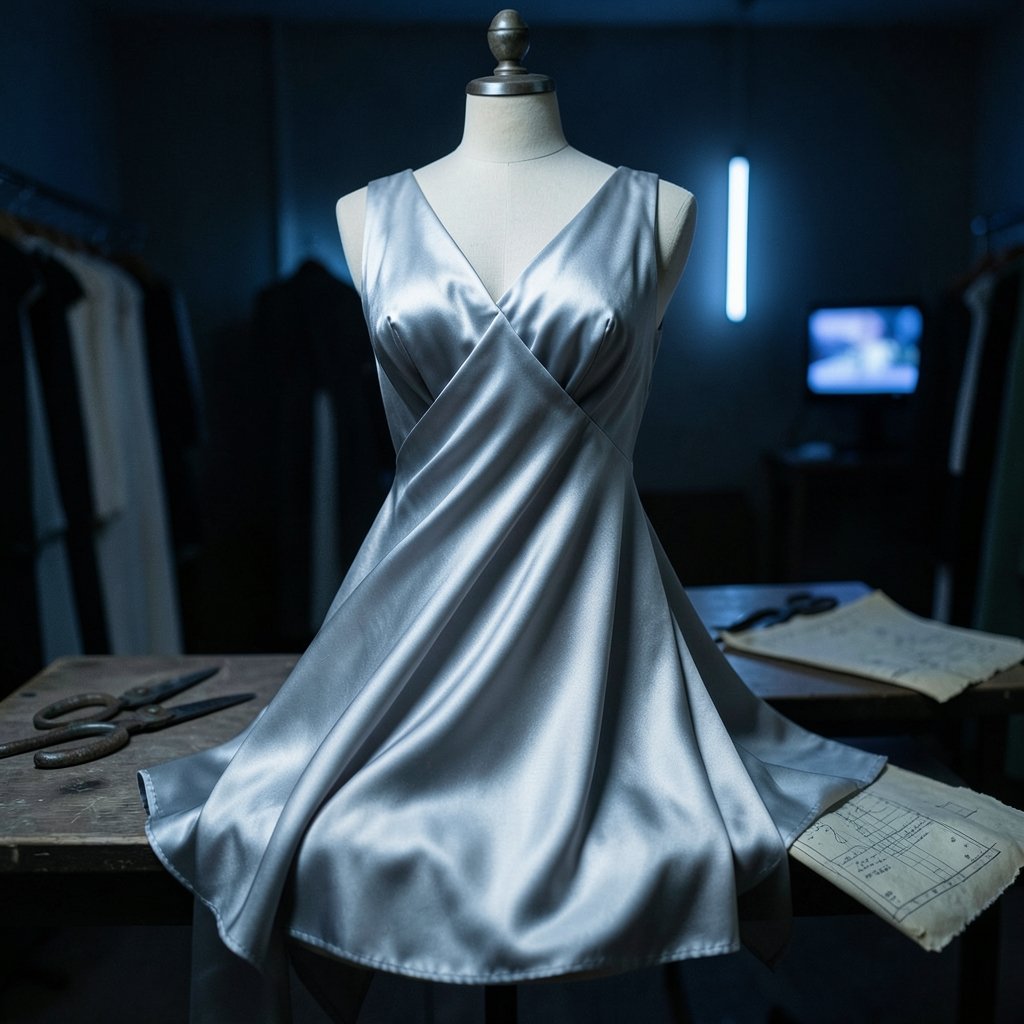
What happens to style when the world is broke? That question shapes 1930s fashion. The decade opened with economies in freefall and closed with the outbreak of a second world war, yet the clothes in between were some of the most elegant ever made. Hemlines dropped, waistlines came back, and a dressmaking trick called the bias cut let fabric move like water.
This guide walks through what people actually wore in the 1930s, why it looked the way it did, and how to spot the real thing if you shop vintage today. It also covers the practical side: what holds up, what falls apart, and where modern buyers get tripped up.
The silhouette that replaced the flapper
If the 1920s were about hiding the body in a straight tube, the 1930s did the opposite. The natural waist returned, marked by belts, seams and sashes. Hems fell to mid-calf and sometimes lower. Shoulders widened slightly, often with a puff or a small pad. The overall line was long and lean, and it was built to be seen in motion.
That shift did not happen by accident. The decade’s fashion responded to two forces pulling in opposite directions: a desire for glamour and escape, and a hard limit on what anyone could afford. The result was a style that looked expensive but was often cleverly made from cheaper cloth.
Three shapes dominated:
| Shape | Key features | Where it was worn |
|---|---|---|
| Bias-cut gown | Clingy, fluid, diagonal grain | Evening, film premieres |
| Day dress | Belted waist, mid-calf hem, small print | Street, office, shopping |
| Tailored suit | Broad lapel, nipped waist, long jacket | Travel, work, daytime events |
Why the bias cut changed everything

The bias cut is the single most important technical idea in 1930s dressmaking. Instead of cutting fabric along the straight grain, a dressmaker turns the pattern 45 degrees. The cloth then stretches and drapes, skimming the body without darts or tight seaming. On silk, satin or crepe, the effect is liquid.
Madeleine Vionnet is usually credited with developing and patenting the technique in the 1920s. By the 1930s it was everywhere, from Paris couture to department-store copies. Vionnet closed her house in 1939 as war approached.
Here is what practical buyers should know: bias-cut garments are beautiful and unforgiving. They grow. A bias dress hung on a hanger for months can lengthen by a noticeable amount, and a vintage piece that fit its original owner may hang differently today. If you handle 1930s pieces, store them flat and folded, not on a hanger, and check the hem before you buy.
Hollywood, the Hays Code, and the birth of screen glamour
Film did more to spread 1930s style than any magazine. Costume designers such as Adrian at MGM became household names in their own right, dressing stars whose on-screen wardrobes were copied within weeks by pattern companies and ready-to-wear manufacturers.
There was a twist. The Hays Code, enforced from 1934, restricted what could be shown on screen, including clothing and behaviour. Costume designers responded by making garments that suggested rather than revealed. Backs were bared while fronts stayed covered. Fabric was cut close but not tight. The result was a kind of dressed-up sensuality that still reads as sophisticated today.
This is also why 1930s fashion photographs so well. The clothes were designed for movement and for the camera, and the best of them look modern in a way that 1920s beadwork does not. If you want to see how contemporary illustrators translate that runway-to-image energy, the work of Angelica Hicks, whose fashion illustrations turn runway moments into sharp visual commentary, shows the same instinct at work nearly a century later.
Dressing through the Depression
The Great Depression shaped what people could buy. US unemployment peaked around 25% in 1933, though exact figures vary by source and method. Spending on clothes collapsed for many households, and two things filled the gap: cheaper ready-to-wear and home sewing.
Ready-to-wear expanded fast in the 1930s. Manufacturers standardized sizes, used cheaper fabrics, and copied couture shapes at speed. Home sewing grew too, helped by pattern companies and by a culture of mending and remaking. A 1930s housewife might unpick a worn collar and turn it, or recut a dress into a child’s garment.
Two material changes made cheap clothes better:
- The zipper entered mainstream clothing during the 1930s. The word had been trademarked by B. F. Goodrich back in 1923, but the fastener only became common in women’s and men’s garments a decade later. It replaced buttons on side seams and fronts, which made fitted dresses easier to get into.
- Rayon, marketed as artificial silk, was already widely used. It gave ordinary buyers a shiny, draping fabric at a fraction of silk prices. Nylon arrived at the very end of the decade, with DuPont beginning commercial production in 1939. Nylon stockings did not go on sale until 1940, after the decade closed.
The practical lesson for anyone buying 1930s clothing today is blunt: rayon from that era is fragile. It weakens with age, sunlight and washing, and it splits at stress points like underarm seams. Silk holds up better but water-spots. Wool is the most durable survivor by far.
Men’s fashion: conservative with a few loud exceptions
Men’s clothing in the 1930s was far less adventurous than women’s. The double-breasted suit dominated, with wide lapels and a high button stance. Trousers sat high on the waist, and the very wide “Oxford bags” style was current among younger men. Hats were still standard outdoors.
The decade’s most famous menswear rebellion came late. The zoot suit, with its exaggerated shoulders, long jacket and high-waisted peg trousers, emerged in the late 1930s among young men, particularly in Black and Mexican American communities. It became a flashpoint in the 1943 Zoot Suit Riots, which fell after the decade ended. That history matters because menswear writing often skips it, treating the 1930s as uniformly sober.
Couture’s two poles: Chanel and Schiaparelli
Paris still set the tone, but the 1930s saw couture split between restraint and surrealism.
Coco Chanel continued her influence through the decade before closing her couture house in 1939 at the outbreak of war. Her knitwear, simple suits and jersey daywear pushed toward ease and comfort.
Elsa Schiaparelli went the other way entirely. Her surrealist designs, including a 1937 collaboration with Salvador Dalí, produced hats shaped like shoes and prints that played tricks on the eye. She was the decade’s great counter-current, and her work is a reminder that 1930s fashion was not a single look.
This split still shapes how people talk about Italian luxury fashion and its French rivalries: the quiet, wearable school versus the theatrical one. Both traditions trace a line back to this decade.
How 1930s style still shapes what we wear
Look at any 2026 fashion trends female roundup and you will find 1930s DNA: slip dresses cut on the bias, wide-leg high-waisted trousers, longline blazers, midi hems. The decade’s shapes keep returning because they solve a real problem. They flatter without constriction.
There is a useful comparison to make with more recent revivals. The 2010s fashion wave of athleisure and Instagram streetwear rewrote the rules around comfort and speed, and the reaction against it has pushed designers back toward drape and tailoring. If you want a broader map of where those cycles are heading, the 2026 Fashion Trends Guide: What’s In, Out & Worth Wearing is a good place to start, and the fashion trends 2026 tag collects the running coverage.
Buying 1930s pieces today: what actually works
Vintage shopping for this era is a skill, not a mood. A few practical rules save both money and heartbreak.
- Check the seams first. 1930s garments often have narrow, hand-finished seams. If the thread is brittle and snaps when you tug gently, the whole piece is fragile.
- Look at the underarms and side seams. These are where rayon and silk fail first. A small split is repairable; a shattered underarm panel usually is not.
- Test the hem. Bias-cut hems drop over time. Measure before you commit, and budget for a re-hem.
- Inspect the fastenings. Original zippers from the 1930s are collectible and often seized. A replaced zipper is normal and not a dealbreaker.
- Ask about storage history. A dress that lived folded in a dark drawer will outlast one that hung in sunlight for decades.
- Be skeptical of “1930s style” labels. Modern reproductions borrow the shapes without the fragility, which is often what you actually want for daily wear.
The most common mistake is buying a bias-cut gown for the look and then hanging it up. That single habit can wreck the fit within a season. The second most common mistake is washing a rayon piece. Cold hand-washing is gentler, but many 1930s rayons should not be washed at all.
The decade’s legacy in one line
The 1930s proved that constraint and glamour can coexist. With money tight and war approaching, designers made clothes that moved, flattered and lasted. The bias cut, the natural waist and the long lean line all came out of that pressure, and all of them are still in circulation today. For a wider view of how the decade sits in the longer cycle, the 2026 fashion trends coverage keeps tracking where those shapes resurface. And if you want to see how film and fashion keep feeding each other, the story of how a Barbie world tour book delivers the fashion the movie only hinted at is a good modern parallel to 1930s screen glamour.
Conclusion
1930s fashion was shaped by scarcity and built for beauty. A natural waist, a long hem and a bias-cut drape turned limited fabric into something that looked expensive. Hollywood sold the dream, the Hays Code forced designers to be clever, and ready-to-wear plus home sewing made the shapes reachable for ordinary households. New fastenings and cheaper fabrics did the rest.
Nearly a century on, the decade’s clothes still work because they were designed around the body in motion rather than around a trend cycle. Whether you are shopping vintage, studying the period, or just noticing why so many modern dresses are cut on the diagonal, the 1930s are the answer more often than people expect.
FAQ
What is the bias cut and why does it matter?
The bias cut means cutting fabric at a 45-degree angle to the straight grain, so it stretches and drapes over the body without darts. Madeleine Vionnet is usually credited with developing and patenting it in the 1920s, and it became the defining dressmaking technique of the 1930s. It matters because it created the fluid, body-skimming look the decade is known for.
What did women wear in the 1930s?
Daywear was usually a belted dress with a mid-calf hem, a natural waist and a small print or plain wool. Evening wear was a long bias-cut gown in silk, satin or rayon. Tailored suits with long jackets were common for travel and work. Shoulders were slightly widened, and hats and gloves were standard outdoors.
How did the Great Depression change 1930s fashion?
It pushed clothing toward cheaper materials and smarter construction. Ready-to-wear expanded, home sewing and mending grew, and rayon replaced silk for many buyers. US unemployment peaked around 25% in 1933, though exact figures vary by source and method, so spending on clothes fell sharply for many households.
Did the Hays Code affect what people wore on screen?
Yes, indirectly. The Hays Code was enforced from 1934 and restricted what could be shown on film, including clothing and behaviour. Costume designers responded with garments that suggested rather than revealed, which is part of why 1930s screen fashion looks covered but still glamorous.
When did zippers become common in clothing?
The zipper spread into mainstream women’s and men’s garments during the 1930s. The word itself had been trademarked by B. F. Goodrich in 1923, but the fastener only became a normal feature of dresses and trousers about a decade later. It made fitted 1930s silhouettes far easier to put on.
Is 1930s vintage clothing wearable today?
Sometimes, with care. Wool holds up best, silk survives but water-spots, and rayon from the era is fragile and splits at stress points like underarm seams. Bias-cut pieces should be stored flat rather than hung, because the fabric grows and the hem drops. Modern reproductions are often the safer choice for regular wear.














