

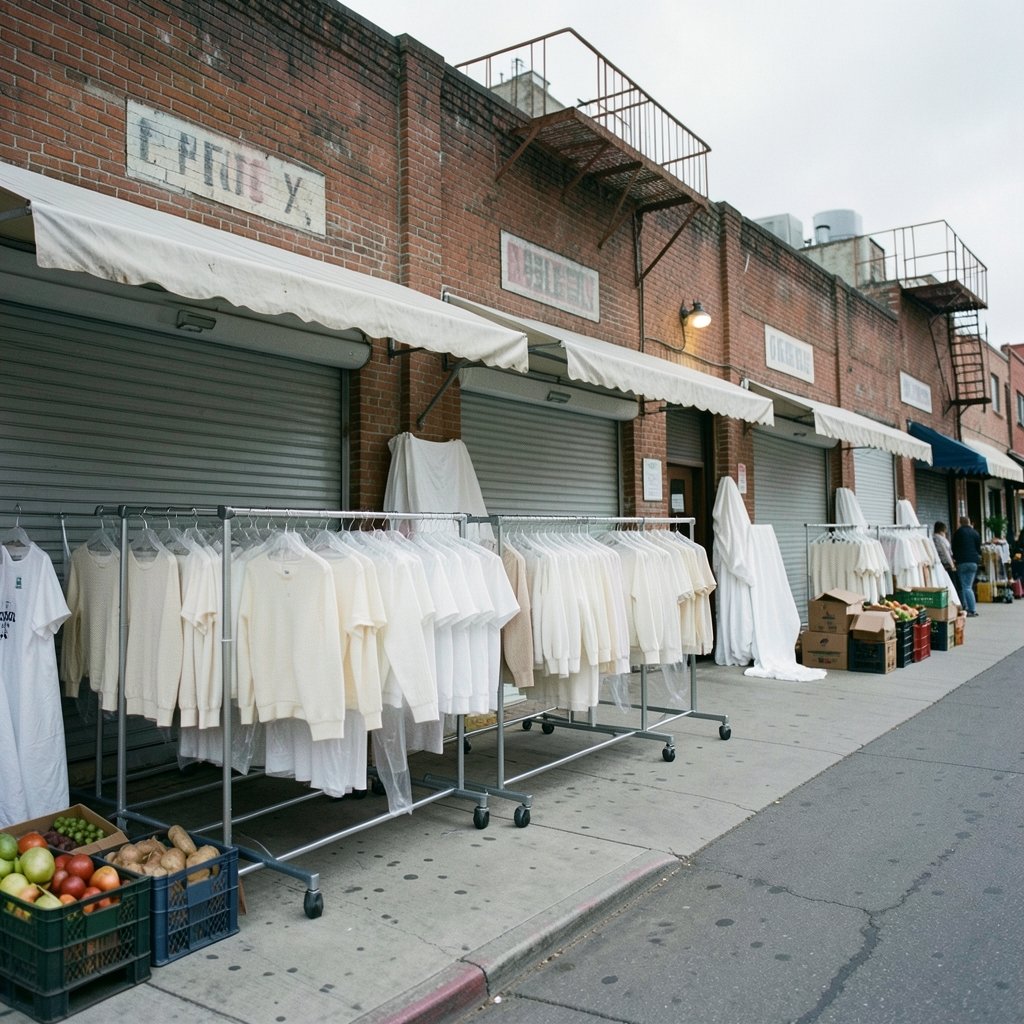
What if one of the largest wholesale clothing hubs in the United States sat just a few blocks from Skid Row, hidden in plain sight between produce markets and fabric warehouses? That’s the strange, energetic reality of the Fashion District in downtown Los Angeles. It’s a place where designer hopefuls hunt for deadstock fabric, bargain shoppers dig through bins of $5 tops, and factory workers stitch garments that end up in stores across the country. It is not glamorous. It is not quiet. But it is one of the most fascinating retail landscapes in California, and it rewards visitors who know what they’re walking into.
This guide covers the district’s layout, its history, what it actually sells, how to shop it smartly, and the labor story behind the racks. It also covers the practical stuff: transit, timing, and the mistakes that trip up first-timers.
Where the Fashion District Actually Is
The district covers roughly 100 blocks of downtown Los Angeles, centered on Santee Alley and the grid of numbered streets running from about 7th to 16th, between Main Street and San Pedro Street. The area has its own property-based business improvement district, the Fashion District BID, formed in 1996, which handles cleaning, safety, and marketing for the neighborhood.
That matters for visitors because the district is not a single mall or a fenced campus. It’s a working commercial neighborhood. Streets are open to traffic, sidewalks are crowded with rolling racks and hand trucks, and the good stuff is often on the second or third floor of a building with a modest sign.
The adjacent LA Flower District, along Wall Street between 7th and 8th, is a separate market that visitor guides often lump in. It’s worth a detour, but don’t confuse the two when you’re planning a route.
A Quick History of How It Got Here

The garment trade in this part of downtown grew from the early 20th century, but the district’s modern identity as a wholesale apparel hub consolidated in the 1970s and 1980s, when manufacturers moved into former dry-goods and produce buildings. The brick warehouses and loading docks you see today were built for a different economy and repurposed for clothing.
California’s apparel manufacturing has shrunk since the 1990s as production moved offshore. That shift changed the district’s mix. Some buildings still run sewing floors. Others have converted to retail, food service, and event space. The result is a neighborhood that feels half factory, half flea market, and increasingly a little bit of both at once.
Anyone interested in how fashion districts and trend cycles reshape each other might enjoy reading about how Italian luxury fashion built its own manufacturing clusters, or how the 2010s fashion athleisure streetwear Instagram boom rewrote the rules for small apparel labels. The LA district sits at the opposite end of that spectrum: fast, cheap, and close to the customer.
What You Can Actually Buy There
The district is the largest concentration of apparel wholesale in the western United States, with estimates of roughly 4,000 to 5,000 wholesale and retail businesses and tens of thousands of jobs. Those figures vary by source and year, so treat them as a range rather than a census.
Here’s a rough breakdown of what different parts of the district offer:
| Area or type | What you’ll find | Best for |
|---|---|---|
| Santee Alley | Accessories, knockoff-adjacent trend pieces, sunglasses, jewelry, socks | Cheap impulse buys, souvenirs, people-watching |
| Wholesale showrooms | Bulk apparel, sample sizes, seasonal closeouts | Boutique owners, resellers, stylists |
| Fabric and trim shops | Deadstock fabric, buttons, zippers, lace, ribbon | Sewists, costume makers, small brands |
| Jobber and closeout stores | Mixed lots, overruns, brand-adjacent goods | Bargain hunters willing to dig |
| Food stalls and carts | Tacos, fruit cups, aguas frescas | Refueling mid-hunt |
Santee Alley is the district’s best-known retail strip, a narrow pedestrian passage between Santee Street and Maple Avenue running roughly from Olympic to 12th Street. It’s a private alley, not a public street, which is why vendors can set their own rules about photography and haggling. It’s open daily and busiest on weekends.
How to Shop the District Without Wasting a Day
First-timers usually make the same three mistakes: arriving late, expecting fixed prices, and assuming everything is retail. Here’s what actually works.
- Go early on a weekday. Wholesale buyers start before 9 a.m. By midday, the good closeout bins are picked over and the aisles are packed. Weekend crowds are heaviest, which is fun for atmosphere but terrible for focused shopping.
- Bring cash in small bills. Many vendors take cards now, but small stalls and alley carts often prefer cash, and a $20 bill moves faster than a card reader with bad signal.
- Ask about minimums before you fall in love. A wholesale showroom might require six pieces per style. A retail stall might sell you one. Knowing which you’re in saves a lot of awkwardness.
- Wear comfortable shoes and carry a tote. The blocks add up fast, and plastic bags tear on the walk back to the train.
- Check seams, zippers, and labels. Quality varies wildly. Turn the garment inside out. If the stitching is loose or the label is sewn over another label, price accordingly.
- Don’t photograph vendors without asking. Some alley stalls post signs against it, and it’s just good manners.
A practical tip that rarely gets mentioned: map your route before you go. The district is big enough that wandering aimlessly burns an hour. Pick two or three anchor streets, hit those, then let yourself get lost. If you’re planning a fuller wardrobe refresh around the trip, the 2026 fashion trends guide is a useful pre-read so you know what silhouettes and colors to look for in the bins.
The Labor Story Behind the Racks
You can’t write honestly about the Fashion District without mentioning who makes the clothes. The Garment Worker Center, founded in 2001, has spent decades organizing in this neighborhood, and the 2001 El Monte sweatshop case, in which Thai garment workers were held in captivity in a Los Angeles-area factory, remains one of the most-cited episodes in accounts of local labor conditions.
California responded with SB 62, the Garment Worker Protection Act, signed in September 2021 and effective January 1, 2022. The law bans piece-rate pay in garment manufacturing and makes brands jointly liable for wage theft in their supply chains. It’s a significant shift for a district built on contract sewing.
For shoppers, the practical takeaway is simple: cheap clothing has a cost somewhere, and the district is one of the few places in America where you can see the whole chain in a single afternoon. That’s not a reason to avoid it. It’s a reason to shop it thoughtfully and to ask questions when a price seems impossibly low.
Getting There and Timing Your Visit
The district is well served by LA Metro rail. The Pico and San Pedro stations on the A Line put you within a few blocks of the wholesale core, and the A Line connects to Union Station and Long Beach. Buses run throughout downtown as well.
A few timing notes:
- Weekday mornings are best for wholesale business and quiet browsing.
- Saturday is peak Santee Alley energy, with the widest retail selection and the biggest crowds.
- Sunday is quieter but some wholesale businesses close.
- Late afternoon on any day means markdowns at some retail stalls, but also picked-over inventory.
If you’re building a trip around style research rather than shopping, the 2026 fashion trends female roundup and the broader fashion trends 2026 archive are good places to sketch a wish list before you arrive. And if you’d rather study how runway looks get translated into illustrations and mood boards, Angelica Hicks turns runway moments into a genuinely fun read on that creative process.
Common Mistakes and What to Skip
Not everything in the district is worth your time. A few honest cautions:
- Skip the obvious counterfeit stalls if you care about quality or legality. They’re a small slice of the district and not representative of the wholesale trade.
- Don’t expect air conditioning everywhere. Many older buildings run warm, especially in summer.
- Don’t plan a leisurely lunch at peak hours. Popular food spots near Santee Alley get slammed between noon and 2 p.m.
- Don’t assume returns exist. Most stalls are final sale. Try things on when a fitting room is offered.
- Don’t bring a stroller on a Saturday. The alley is too narrow for it to be pleasant.
One more: parking is expensive and stressful. Rideshare or transit usually beats driving, and the walk between stations and the district is short.
Who the District Is Really For
The Fashion District serves several very different audiences, and being clear about which one you are will shape your whole visit.
Boutique owners and resellers come for wholesale pricing, minimums, and sample hunting. They arrive early, bring a business license or resale certificate, and often work with a regular set of suppliers.
Sewists and costume makers come for fabric and trim, especially deadstock and closeout materials that are hard to find elsewhere in the city.
Casual shoppers and tourists come for the spectacle, the bargains, and the food. Santee Alley delivers all three.
Fashion students and trend watchers come to see what’s actually selling at the low end of the market, which often previews what trickles up into mainstream retail a season later.
If you fall into the last group, the 2026 fashion trends guide and the Barbie world tour book coverage make good companion reading for understanding how commercial fashion narratives get built. And for anyone who wants to keep up with industry chatter without drowning in newsletters, there’s a solid method for finding the best fashion substacks without wasting your inbox.
Conclusion
The Fashion District in Los Angeles is not a polished shopping destination, and that’s precisely the point. It’s a working neighborhood where wholesale and retail blur, where a $4 t-shirt sits two doors down from a fabric shop selling silk by the yard, and where the entire lifecycle of a garment is visible in a few blocks. Go early, bring cash, wear good shoes, and keep your expectations honest. You’ll leave with a heavier bag and a sharper sense of how clothing actually gets made and sold in America.
Frequently Asked Questions
Is the Fashion District in Los Angeles safe to visit?
It’s a busy commercial neighborhood with a visible security presence from the BID, and daytime visits are generally fine. Stay aware of your surroundings, keep bags zipped in crowds, and avoid wandering far east or into industrial blocks after dark.
What are the best days to shop the Fashion District?
Weekday mornings are best for wholesale business and calm browsing. Saturdays offer the widest retail selection on Santee Alley but come with the biggest crowds. Sundays are quieter, though some wholesale businesses close.
Do I need a business license to buy wholesale there?
Many showrooms ask for a resale certificate or business license to access wholesale pricing and minimums. Retail stalls and Santee Alley vendors will sell to anyone. Call ahead if you’re targeting a specific showroom.
How do I get to the Fashion District by public transit?
Take LA Metro’s A Line to the Pico or San Pedro stations, both within a few blocks of the wholesale core. The A Line connects to Union Station and Long Beach, and several downtown bus lines serve the area.
Is Santee Alley open every day?
Yes, Santee Alley is generally open daily, with the busiest traffic on weekends. Hours vary by vendor, so mid-morning to early evening is the safest window.
What is the Garment Worker Protection Act?
SB 62, signed in September 2021 and effective January 1, 2022, bans piece-rate pay in California garment manufacturing and makes brands jointly liable for wage theft in their supply chains. It directly affects how factories in the district operate.














