


What if the hardest part of a shopping day at one of Southern California’s best-known open-air centers isn’t finding a parking spot, but choosing where to eat? Fashion Island, the sprawling retail and dining destination in Newport Beach, packs dozens of food options into a few walkable blocks. The catch is that the lineup changes constantly. Leases turn over, chefs move on, and a restaurant that anchored the dining scene two years ago may now be a construction fence.
This guide focuses on what actually helps: how the dining areas are laid out, what kinds of meals you can expect, how to plan around crowds and reservations, and the mistakes visitors make most often. It deliberately avoids printing a fixed list of restaurant names and opening dates, because that kind of detail goes stale fast and a wrong name wastes your evening. Instead, it teaches you how to read the center like a local and verify anything time-sensitive before you drive over.
Why Fashion Island’s Dining Scene Is Harder to Pin Down Than It Looks
Fashion Island opened in 1967 as an open-air shopping center developed by The Irvine Company, and it has been evolving ever since. That long history is exactly why static restaurant lists fail. Retail centers of this type re-tenant continuously, and dining is often the first thing to shift when a center renovates or repositions itself.
The practical takeaway: treat any restaurant directory as a snapshot, not a permanent fact. A confident-sounding list published a year ago may already be wrong in three places. Before a special-occasion dinner, confirm the restaurant is open and still operating under the same concept by checking the center’s official dining directory directly. It takes two minutes and saves an evening.
How the Dining Areas Are Organized
Fashion Island is not a single food court. It is a collection of zones, and understanding them is the single biggest time-saver for a first visit.
The central garden and courtyard edges
The heart of the property is a landscaped central area surrounded by shops and restaurants. Dining here tends to be full-service, with patios that face the gardens. This is where you go for a sit-down lunch with a glass of wine, not a quick bite between stores.
The perimeter and view-facing spots
Because the center sits near the coast, some dining rooms and terraces catch ocean breezes and, in places, water views. If a view matters to you, say so when you book. “Patio” and “view” are not the same request, and staff will place you differently depending on which you ask for.
Casual and quick-service pockets
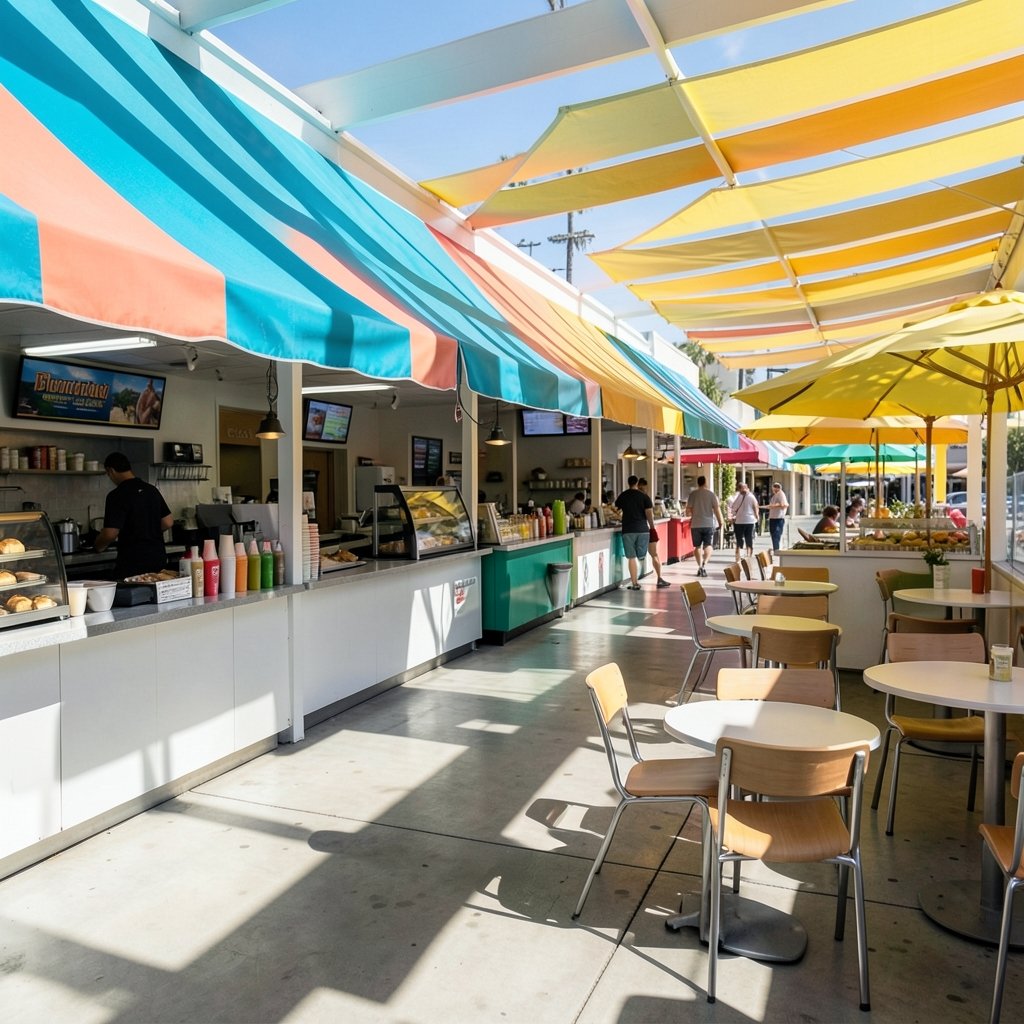
Scattered through the property are faster options: coffee, baked goods, juice, and counter-service meals. These are the workhorses of a shopping day. They are also where lines spike hardest at midday.
Nearby alternatives worth knowing
If the on-site options are packed or you want a change of scenery, Newport Beach itself is dense with dining. Waterfront spots with boat access are a category unto themselves; a roundup of waterfront restaurants with yacht docks shows how many choices sit a short drive away. For a full-day itinerary that pairs shopping with coastal exploring, a local’s guide to Sullivan’s Island in South Carolina offers a useful template for how to structure beach-plus-food days, even though it covers a different coast entirely.
Matching the Restaurant to the Occasion
The most common planning error is treating Fashion Island as one dining experience. It is at least four.
| Occasion | What to look for | Practical tip |
|---|---|---|
| Quick lunch mid-shopping | Counter service, cafés, grab-and-go | Eat before noon or after 2 p.m. to skip the worst lines |
| Business or family dinner | Full-service with reservations | Book 3 to 7 days ahead for weekend evenings |
| Special celebration | View tables, quieter dining rooms | Request the specific seating area; don’t ask only for “a nice table” |
| Coffee and a break | Bakeries, espresso bars | Mid-afternoon is calmer than the morning rush |
Write down which of these four you actually need before you arrive. Groups that haven’t agreed on this end up circling the property while everyone gets hungrier and less reasonable.
What to Expect From the Food Itself
Dining at a center like this skews toward crowd-pleasing, well-executed categories rather than experimental tasting menus. In practice you will find:
- California-leaning seasonal cooking with produce-forward plates and lighter entrées.
- Steakhouses and grill concepts built for celebrations and larger parties.
- Coastal and seafood menus that lean on the region’s access to fresh fish.
- Global casual options including Asian, Mediterranean, and Mexican-influenced kitchens.
- Bakery and coffee culture that runs from early morning through the afternoon.
Quality varies, as it does anywhere. The reliable signal is turnover: a dining room that stays busy on a Tuesday night is usually busy for a reason. A nearly empty room at 7 p.m. on a Friday tells you something too.
Practical Tips That Actually Work
These are the habits that separate a smooth visit from a frustrating one.
- Reserve before you shop, not after. Book the table first, then build the shopping day around it. Restaurant availability constrains your schedule far more than store hours do.
- Park once, near your dinner reservation. Fashion Island is walkable but not small. Parking near your final destination saves a long trek at the end of the day.
- Check hours on the day of your visit. Weekend brunch hours, holiday schedules, and seasonal patio closures all differ from standard listings.
- Ask about patio heaters and shade. Coastal evenings cool down quickly, and midday sun on an exposed patio is no joke.
- Confirm dietary needs in advance. Large, busy kitchens handle allergies well when warned ahead; they handle them less gracefully when you mention it at the table.
- Have a backup within walking distance. Popular spots fill up. Know a second option before you need one.
Common mistakes to avoid
The biggest one is arriving at peak dinner hour without a plan and assuming a table will materialize. The second is trusting a restaurant list from an old article or a social post without checking. The third is underestimating how much walking a full shopping-plus-dinner day involves; comfortable shoes matter more than most people expect.
Fashion, Style, and the Shopping-Day Rhythm
Food is only half the reason people come. Fashion Island’s retail mix is a major draw, and the crowd reflects it. If you are planning an outfit for a day that moves from boutiques to a long lunch to an evening table, the current season’s fashion trends for women offer a useful starting point for what reads well in photos and in person. The center’s setting also explains why so many visitors treat it as a style-watching exercise: Italian luxury fashion houses and contemporary labels sit alongside each other, and the parade of shoppers is part of the experience. Even illustrators have built followings translating runway moments into drawings, which says something about how seriously this corner of California takes its style.
If your trip extends beyond Newport Beach, the same planning logic applies elsewhere. A practical guide to Martha’s Vineyard covering towns and ferries is a good example of how island destinations reward advance logistics, and the private island resorts category shows the high end of that same instinct to plan ahead.
How to Verify Anything Before You Go
Because restaurant details shift, build a quick verification habit:
- Use the official dining directory for the current list of food tenants.
- Cross-check hours on the day of your visit, especially around holidays.
- Read recent reviews for service and wait-time signals in addition to food quality.
- Call for reservation policies if you have a large party or a celebration.
- Check for renovation notices before a special trip; construction can change access and ambiance.
For broader seasonal context, a 2026 fashion trends guide to what’s in and out is a reminder that even the shopping itself shifts year to year, and dining rosters move on a similar rhythm.
Frequently Asked Questions
What kinds of restaurants are at Fashion Island?
The mix leans toward full-service dining with garden or coastal-view patios, plus a solid layer of casual counter-service spots, cafés, and bakeries. Expect California-style seasonal cooking, steakhouses, seafood, and global casual options rather than a single food-court format. Because tenants change, check the official directory for the current lineup.
Do I need reservations for Fashion Island restaurants?
For weekend dinners and any special occasion, yes. Book three to seven days ahead, and longer for holidays or large parties. Weekday lunches are usually more forgiving, but popular patios fill quickly on sunny afternoons regardless of the day.
When is the best time to eat to avoid crowds?
Arrive before noon for lunch or before 6 p.m. for dinner. Mid-afternoon is the calmest window for coffee and baked goods. Weekend brunch is the single busiest period, so either book ahead or shift your meal earlier.
Is Fashion Island good for families and dietary restrictions?
Generally yes. The range of casual options helps with kids, and full-service kitchens can usually accommodate allergies and dietary needs when told in advance. Mention restrictions when you book rather than at the table, and confirm specific menu details with the restaurant directly.
Can I walk between the shops and restaurants?
Yes. The center is open-air and designed for walking, with dining clustered around the central gardens and along the perimeter. Distances are manageable, but a full day involves real mileage, so plan parking near your final stop and wear comfortable shoes.
How do I find out which restaurants are currently open?
Check the center’s official dining directory, then confirm hours by phone or on the restaurant’s own page on the day you plan to visit. Avoid relying on older articles or social posts, since closures, renovations, and concept changes happen regularly at centers like this.
The Bottom Line
Fashion Island works best when you treat it as a place to explore rather than a checklist to complete. Decide what kind of meal you want, reserve accordingly, verify the details close to your visit, and keep a backup option in your pocket. Do that, and the dining side of the day becomes the easy part. Skip it, and you will spend the best hour of the evening comparing wait times instead of enjoying the coast. The center has been drawing Southern California shoppers for more than half a century precisely because it keeps reinventing itself, and its restaurants are no exception. Go with a little flexibility, confirm before you commit, and let the day unfold from there.
One last habit worth adopting: book your table for the time you actually want to eat, not the time you think you should. Diners often reserve at 7 p.m. out of convention, then arrive tired and rushed after hours on their feet. An earlier seating at 5:30, or a late lunch that carries into the afternoon, frequently suits a shopping day better. Staff will not judge you for it, and the room is calmer besides.
It also helps to think about the day in reverse. Decide where you want to end up, then work backward through parking, the last shops you want to hit, and the walk in between. A little reverse engineering removes most of the friction that makes people irritable by evening.
Finally, leave room for the unplanned. The best meal of a Fashion Island day is sometimes the one you did not research: a quiet corner table, a plate of something seasonal, the light coming off the water. Plan enough to avoid the queues, then stop planning and enjoy it.














