

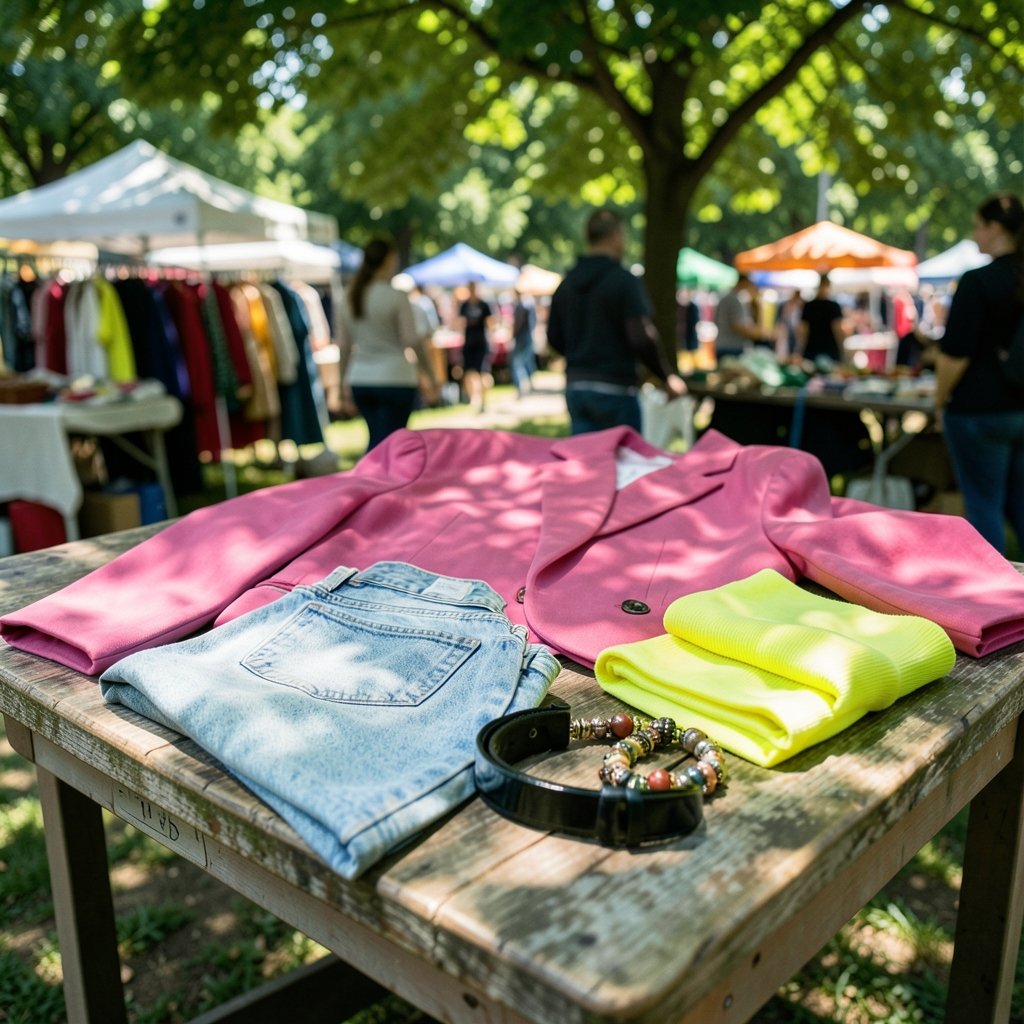
What do padded shoulders, leg warmers, and acid-washed denim have in common? They all exploded out of the 1980s and refused to stay buried. Four decades later, designers keep pulling them back onto runways, and shoppers keep buying. The decade’s style was loud, confident, and a little chaotic, and that is exactly why it still works.
This guide breaks down the defining 80s fashion trends, explains why they happened, and shows how to wear them today without looking like a costume rental.
Why 80s Fashion Looked So Bold
The 1980s were a decade of visible ambition. More women entered corporate jobs, and their wardrobes changed to match. Fitness culture went mainstream, and gym clothes walked straight out of the studio and onto the street. Music television put performers’ looks in front of millions of viewers at once.
That combination of work, workout, and music produced a style with big shapes, bright colors, and heavy branding. It was the opposite of quiet. Clothes were meant to be seen from across a room, and often from across a parking lot.
One important caveat: the boundaries are blurry. Many so-called 80s looks, including neon, shoulder pads, and leg warmers, actually started in the late 1970s and hung on into the early 1990s. Historians disagree on exact start and end dates, so treat decade labels as shorthand rather than strict rules.
The Power Suit and the Rise of Big Shoulders

If one garment sums up the decade, it is the power suit. Designers including Giorgio Armani and Claude Montana pushed shoulders wider and wider, creating a strong, almost architectural silhouette for women.
The logic was simple. Broad shoulders read as authority in a corporate room. Women entering management roles adopted the shape en masse, and it trickled down from designer labels to mall stores within a season or two.
How to wear it now
The mistake most people make is buying a vintage power suit that fits like a costume. Real 80s jackets were cut with deep armholes and heavy shoulder pads, and they swallow a modern frame.
- Look for jackets where the shoulder pad is removable, then swap in a thinner pad.
- Pair an oversized blazer with slim trousers or straight-leg jeans to balance the volume.
- Keep the rest of the outfit simple. One big shape per look is enough.
A single strong-shouldered blazer over a plain tee reads modern. A full matching suit in bright red reads like a theme party. The difference is usually styling, not the garment itself.
Aerobics, Leg Warmers, and Gym-to-Street Dressing
The fitness boom of the early 1980s pushed leotards, headbands, high-cut bodysuits, and leg warmers into everyday fashion. Exercise stopped being private and became something people dressed for in public.
This is where the decade’s most misunderstood trend lives. Leg warmers were not a random accessory. They kept dancers’ muscles warm, then became a style statement once workout culture went mainstream.
Practical tips for wearing athleisure-inspired 80s looks
- Choose one athletic piece per outfit, not three. A bodysuit with tailored trousers works; a bodysuit with leg warmers, a headband, and high-tops looks like a costume.
- Skip neon leg warmers unless you are actually heading to a dance class or a themed event.
- Modern fabrics beat vintage ones here. Old leotards have often lost their stretch.
This is also the era that gave us branded sportswear as daily wear, a habit that never went away. If you want to see how athletic influence keeps cycling back, the current 2026 fashion trends guide tracks the same sportswear-to-street pipeline in today’s market.
Madonna, MTV, and the Pop Star Effect
MTV launched on 1 August 1981, and it changed how fast trends traveled. Instead of waiting months for a magazine to cover a look, teenagers saw it in a three-minute video and copied it the next weekend.
Madonna’s mid-1980s style, with lace, layered skirts, crucifix jewelry, and fingerless gloves, became a mass-market phenomenon. Her Like a Virgin era and the film Desperately Seeking Susan are usually credited with pushing the look into every shopping mall in the country.
The lesson for anyone styling these trends today is that layering was the point. The look was built from many cheap pieces stacked together, not one expensive item. That makes it one of the easier 80s trends to recreate on a budget.
Denim, Branding, and Status Dressing
Denim in the 1980s was about the label. Designer jeans from Calvin Klein, Jordache, and Gloria Vanderbilt turned a workwear fabric into a status symbol, with the brand name often stitched right on the back pocket.
Then came the washes. Stone-washed and acid-washed denim spread widely by the mid-1980s, giving jeans a faded, mottled finish that looked deliberately worn.
What actually works in practice
Vintage acid-wash denim is tricky. The treatment weakened the cotton, so forty-year-old pairs often have thin spots and brittle seams. Check the inner thigh and back pocket area before buying, and give the fabric a firm stretch test.
A safer route is one acid-wash piece paired with clean modern basics. Jackets hold up better than jeans and are easier to work into a wardrobe. If you want a broader view of how denim and other staples are being reworked this season, the roundup of fashion trends 2026 shows which revivals have real staying power.
Neon, Geometric Prints, and Memphis Design
The Memphis Group, a design collective founded in Milan in 1981, had an outsized influence on the decade’s visual language. Clashing colors, bold geometry, and playful asymmetry moved from furniture and graphics into clothing, accessories, and even bed linen.
By the mid-to-late 80s, neon yellow, hot pink, and electric blue were everywhere, often combined with black-and-white geometric patterns.
The styling rule that saves this trend
Neon is unforgiving. Worn head to toe, it overwhelms almost everyone. The fix is proportion. A neon belt, a single bright earring, or a geometric print scarf delivers the reference without the glare.
Also think about skin tone and lighting. Acid brights look different in a fitting room than in daylight, so check a piece near a window before committing. This is one of the most common mistakes people make with 80s color: buying under warm store lighting and discovering the shade clashes at home.
Punk, Hip-Hop, and Preppy: Three Styles, One Decade
The 1980s were not a single look. At least three distinct style tribes ran in parallel, and each one still shapes fashion today.
| Style | Key pieces | Where it came from | Modern wearability |
|---|---|---|---|
| Punk and post-punk | Leather jackets, tartan, safety pins, Mohawks | Late-1970s London scene, carried into 80s high fashion through Vivienne Westwood and Malcolm McLaren | High, if you pick one element at a time |
| Hip-hop | Tracksuits, Adidas, gold chains, branded sportswear | Mid-to-late 1980s urban music culture | Very high, now a mainstream staple |
| Preppy | Polo shirts, khakis, loafers, Izod Lacoste | Popularized partly by the 1980 Official Preppy Handbook | Very high, easy to blend with tailoring |
Punk’s influence ran through high fashion rather than the mall. Leather, tartan, and hardware were absorbed by designers and reappeared as expensive ready-to-wear.
Hip-hop fashion grew into a distinct style through the mid-to-late 80s, built on tracksuits, sneakers, and visible branding. That DNA is now so embedded in mainstream fashion that most people wear it without thinking of the decade at all.
Preppy style was the respectable counterpoint, and it never really left. Polo shirts and loafers have stayed in rotation for forty years.
How to Wear 80s Trends Without Looking Dated
The single biggest mistake is wearing a full outfit from one era. Head-to-toe 80s reads as fancy dress. One strong reference point reads as style.
A workable approach:
- Pick one 80s element: a blazer, a denim jacket, a bold earring, or a graphic print.
- Build the rest of the outfit from modern, well-fitting basics.
- Check the fit first. Vintage sizing runs small, and 80s cuts assume different body proportions.
- Inspect condition. Old elastic, faded neon, and brittle denim are common and rarely worth repairing.
- Test the look in daylight before you wear it out.
Fit matters more than authenticity. A vintage blazer that pulls across the back will never look intentional, no matter how good the label is.
If you want to see how these revivals are being styled by gender and season, the breakdown of 2026 fashion trends female is a useful cross-reference, and the deep dive into 2026 fashion trends for women shows how 80s shapes get softened for current silhouettes.
Accessories: The Decade’s Real Signature
Clothing gets the attention, but accessories carried the 80s personality. Oversized earrings, chunky plastic bangles, layered chains, scrunchies, and wide belts did most of the heavy lifting.
Eyewear was its own category. Big frames, tinted lenses, and bold shapes were everywhere, and that influence is still visible in current eyeglass fashion trends, where oversized shapes keep returning in updated materials.
The practical takeaway is that accessories are the cheapest and safest way into the decade. A single pair of statement earrings costs little, works with modern clothes, and can be removed in seconds if the room calls for restraint.
Where the 80s Still Show Up
Look closely at current retail and you will find the decade everywhere. Oversized blazers, bike shorts, logo belts, chunky sneakers, and bright color blocking all trace back to it.
The difference is construction. Modern versions use lighter shoulder pads, stretch fabrics, and softer washes, which makes them far easier to wear than the originals. That is why buying new interpretations often beats hunting for authentic vintage, especially for anything with elastic or heavy shoulder structure.
For a wider view of how these revivals sit alongside other current movements, the overview of the biggest fashion trends of 2026 puts the 80s comeback in context. And if you are curious how a specific decade gets reinterpreted for performance and party dressing, this piece on Halloween runway and costume trends shows the same borrowing process in action. For contrast, the complete guide to 1950s men’s style shows how a very different decade handled tailoring and restraint.
Conclusion
The 80s endure because the decade’s clothes were built to be noticed. Broad shoulders signaled ambition, workout wear signaled energy, and neon signaled confidence. Those ideas still translate, even if the execution has softened.
The trick is restraint. Choose one reference, get the fit right, and let modern basics do the rest. Wear the decade, do not reenact it, and the look will feel current rather than costume-like. That balance is what separates a good 80s revival from a bad theme party, and it is the reason these trends keep coming back.
Frequently Asked Questions
What were the most popular 80s fashion trends?
The defining looks were the power suit with padded shoulders, aerobics-inspired pieces like leotards and leg warmers, designer and acid-washed denim, neon colors with geometric prints, and Madonna-influenced layering with lace and fingerless gloves. Punk, hip-hop, and preppy styles also ran in parallel throughout the decade.
Who influenced 80s fashion the most?
Music and fitness culture drove most of it. MTV, which launched on 1 August 1981, spread musician looks to a mass audience almost instantly, and Madonna’s mid-1980s style became a global trend. Designers including Giorgio Armani and Claude Montana shaped the power suit, while the Memphis Group influenced the decade’s colors and graphics.
Are 80s fashion trends back in style?
Yes, in modified form. Oversized blazers, bike shorts, chunky sneakers, bold eyewear, and color blocking all appear regularly in current collections. Modern versions usually use lighter shoulder pads, stretch fabrics, and softer washes, which makes them easier to wear than original vintage pieces.
How do I wear 80s fashion without looking like I’m in costume?
Pick one 80s element and build the rest of the outfit from modern basics. A single strong-shouldered blazer over a plain tee works; a full matching neon outfit does not. Get the fit right, check the piece in daylight, and avoid stacking multiple decade-specific accessories at once.
Is vintage 80s clothing worth buying?
It depends on the item. Jackets, blazers, and accessories often hold up well and are worth buying. Anything with elastic, neon dye, or acid-washed denim is riskier because the treatments weakened the fabric over time. Always check seams, stretch, and fading before purchasing.
What colors were popular in 80s fashion?
Neon yellow, hot pink, and electric blue dominated, often paired with black and white in bold geometric patterns. Bright color blocking was common, and the Memphis Group’s influence pushed clashing, playful combinations into mainstream clothing and accessories.














