

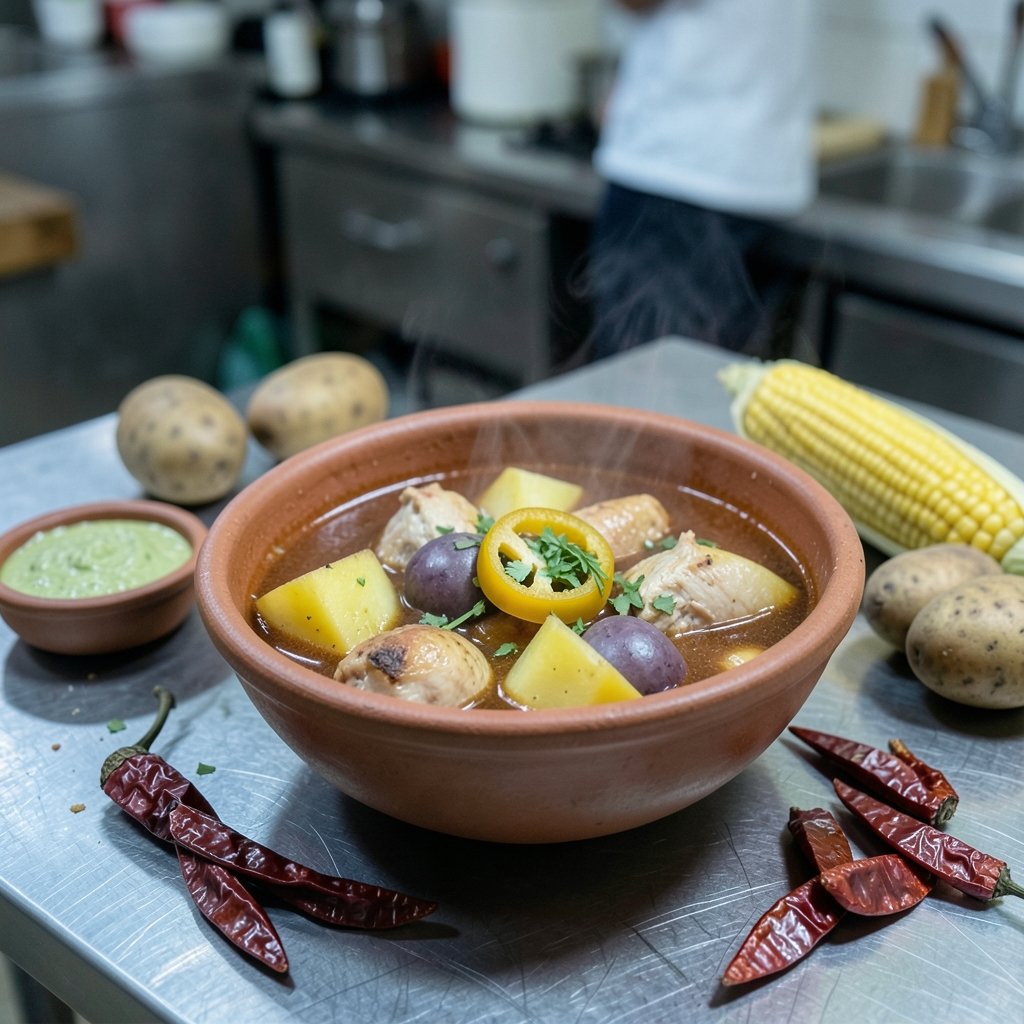
Can you really find a bowl of ajiaco boliviano near you, or are you about to order Colombian chicken soup with a Bolivian name? That question matters more than it sounds, because the two dishes share a word but almost nothing else. One is a Bogotá classic built on three kinds of potato and a wild herb called guascas. The other is a Bolivian comfort stew with a different chili, a different condiment, and a different set of rules entirely.
This guide cuts through the confusion. It explains what the dish actually is, why the name trips up search engines and diners alike, and how to judge a restaurant before you sit down. It also covers the mistakes people make when hunting for it, plus the practical signals that separate a real Andean kitchen from one that just borrowed the wording.
What Is Ajiaco Boliviano, Really?
Here is the honest starting point: ajiaco boliviano is not a standard, widely documented dish name the way Colombian ajiaco santafereño is. The closest well-documented Bolivian relative is sajta de pollo, sometimes spelled sajta or sajhta. It is a chicken stew associated especially with La Paz and Cochabamba, built on potato, onion, and tomato, seasoned with ají amarillo or rocoto, and often rounded out with chuño or tunta, the traditional freeze-dried Andean potatoes.
That distinction is not nitpicking. If you walk into a restaurant asking for ajiaco boliviano and get a blank look, the sajta is probably what you want. Some Bolivian sources also describe a sajta variant thickened with peanut, which gives it a rounder, nuttier body than the Colombian soup.
The Colombian version, by contrast, is a chicken and potato soup tied to Bogotá. It uses three potato varieties (criolla, pastusa, and sabanera), corn, capers, and cream. Its defining ingredient is guascas, an herb botanically known as Galinsoga parviflora. Without guascas, most cooks would say it is not authentic ajiaco at all.
So the term you searched for may be a regional coinage, a diaspora shorthand, or simply a misspelling that drifted. Either way, knowing both dishes means you can order confidently wherever you end up.
Why the Name Confuses Everyone

Search engines are not good at this dish. Type “ajiaco boliviano near me” and you will get a mix of Colombian restaurants, generic Latin American menus, and recipe blogs that use the words interchangeably. The dish name is frequently misspelled, and the two cuisines get conflated constantly.
This is an editorial reality rather than a documented statistic, but it plays out predictably. A restaurant may list “ajiaco” on its menu because that word gets searched. What arrives at the table might be Colombian, Bolivian, or something in between. The word on the menu is a starting point, not a guarantee.
The practical fix is to search for the dish and the country together. Try “sajta de pollo” plus your city, or “Bolivian restaurant” plus your neighborhood, then check the menu yourself. That small change in phrasing does more work than any review score.
If you are comparing how people search for regional food in general, the same logic applies to other cuisines. Finding a specific dish nearby is a skill, and it works the same way whether you are hunting for a bowl of stew or figuring out how to find a good Chinese restaurant fast without wasting an evening on guesswork.
The Building Blocks That Signal a Real Andean Kitchen
You can judge a Bolivian kitchen before the food arrives by looking at what it keeps on the table and how it describes its ingredients. These are the markers worth knowing.
Rocoto and Llajwa
Rocoto, also called locoto, is Capsicum pubescens, a chili species distinct from the common peppers in most kitchens. It is central to Bolivian and Peruvian cooking and brings a fruity, sharp heat. Llajwa (also spelled llajua) is the fresh Bolivian table salsa of tomato and locoto. If a restaurant serves llajwa, that is a strong signal. If it offers generic hot sauce instead, temper your expectations.
Chuño and Tunta
Chuño and tunta are traditional freeze-dried potatoes, an Andean preservation method with deep roots. They show up in Bolivian stews, though which stews use which type varies by region. A menu that names them is usually a menu written by someone who cooks this food regularly rather than someone copying a description.
The Potato Itself
Bolivia and Peru are potato heartlands. A stew built on good potatoes, cooked until they partly break down and thicken the broth, is doing the dish correctly. Thin, watery broth with undercooked chunks is a warning sign no amount of garnish fixes.
How to Vet a Restaurant Before You Go
Most disappointment happens before you order. A few minutes of checking prevents a wasted meal.
- Read the menu, not the reviews. Look for sajta, llajwa, chuño, tunta, rocoto, or ají amarillo. Specific ingredient names beat five-star averages.
- Check whether the cuisine is actually Bolivian. A menu that lists ajiaco next to tacos, paella, and sushi is a fusion kitchen. That is fine, but it is not the place for a regional specialty.
- Look at the photos for texture. The stew should look thick and slightly uneven, with visible potato pieces and a deep color from the chili. Uniform, pale soup usually means a shortcut.
- Call ahead for the specialty. Ask whether the stew is made fresh or reheated. A kitchen that makes it in batches daily will tell you so without hesitation.
- Ask which region the cook is from. La Paz and Cochabamba both have strong sajta traditions, and the answer tells you a lot about what will land on your plate.
- Go at lunch. In Bolivia, the main meal is often midday. A restaurant serving its specialty at lunch is more likely to be cooking it properly than one pushing it at 9 p.m.
One more tip that saves time: search by neighborhood rather than by city. “Bolivian food near me” in a metro area of millions returns noise. Add the district, and you get a short list you can actually visit. The same narrowing trick applies to any local search, including something as simple as laser hair removal near me where proximity matters far more than brand.
Common Mistakes People Make
Ordering by name alone. The single biggest error is assuming “ajiaco” on a menu means the Bolivian dish. Ask what is in it. The answer takes ten seconds and settles everything.
Skipping the condiment. Llajwa is not decoration. It is the acid and heat that balance the stew. Spoon a little in, taste, adjust. Diners who ignore it miss the point of the dish.
Expecting Colombian flavors. If you arrive wanting guascas, capers, and cream, a Bolivian sajta will taste wrong to you through no fault of the kitchen. Know which dish you are ordering.
Judging heat by appearance. Rocoto looks like a small bell pepper and can be far hotter than it seems. Start small.
Ignoring the sides. Rice and llajwa are standard alongside sajta. A kitchen that gets the sides right usually gets the stew right.
Trusting a menu translation. English menus sometimes render sajta as “Bolivian chicken soup” or even “ajiaco” for searchability. The translation is marketing, not a recipe.
A Side-by-Side Comparison
The table below shows why these two dishes get confused and how to tell them apart at the table.
| Feature | Colombian ajiaco santafereño | Bolivian sajta de pollo |
|---|---|---|
| Home region | Bogotá | La Paz and Cochabamba especially |
| Base | Chicken and potato soup | Chicken stew |
| Potatoes | Three varieties (criolla, pastusa, sabanera) | Potato, often with chuño or tunta |
| Defining seasoning | Guascas herb | Ají amarillo or rocoto |
| Signature condiment | Capers and cream | Llajwa (tomato and locoto) |
| Texture | Thick soup, potato breaks down | Stew, sometimes thickened with peanut |
| Served with | Avocado, rice, cream | Rice and llajwa |
Print that table in your head before you go. It is the fastest way to know what you are eating.
If You Cannot Find a Restaurant
Sometimes the honest answer is that no Bolivian kitchen is within reasonable distance. In that case, cooking it yourself is a legitimate path, and it teaches you what to look for later.
The core method is straightforward. Brown chicken pieces, then build a base of onion and tomato with ají amarillo or a small amount of rocoto. Add potatoes and enough liquid to cover, and simmer until the potato starts to break down and thicken the broth. Finish with llajwa on the side and rice alongside. If you want the peanut variant, stir in a spoonful of ground peanut toward the end.
The one ingredient worth seeking out is rocoto. Substituting a generic chili changes the dish, but it will still be good. What you should not do is substitute guascas and call it ajiaco, because that is a different recipe from a different country.
For readers comparing local service searches more broadly, the same rule holds: verify the specifics before committing. A guide to choosing a clinic for laser hair removal near me makes the point well, because the right choice depends on details, not on the label on the door.
Conclusion
The best ajiaco boliviano near you is probably listed under a different name. Look for sajta de pollo, check whether the kitchen keeps llajwa on the table, and confirm the stew is built on real potatoes and Andean chili rather than a generic recipe with a borrowed title. The search term got you here, but the ingredient names will get you fed.
Treat the menu as a set of clues. Rocoto, chuño, tunta, and llajwa tell you more than any star rating. And if the only ajiaco in town turns out to be Colombian, order it anyway, enjoy it for what it is, and keep the Bolivian version on your list for the next trip. Both dishes are worth the hunt, as long as you know which one you are hunting.
What is the difference between ajiaco and sajta de pollo?
Ajiaco usually refers to the Colombian dish from Bogotá, a chicken and potato soup made with three potato varieties, corn, capers, cream, and the herb guascas. Sajta de pollo is the Bolivian chicken stew, seasoned with ají amarillo or rocoto and served with rice and llajwa. They are different dishes from different countries that sometimes share a menu label.
Is ajiaco boliviano a real dish name?
It is not a widely documented standard name the way Colombian ajiaco is. The closest well-documented Bolivian dish is sajta de pollo, associated especially with La Paz and Cochabamba. The phrase may be a regional variation, a diaspora shorthand, or a misspelling, so it is worth asking what is actually in the bowl.
What should I order if I want the Bolivian version?
Ask for sajta de pollo. If the kitchen does not recognize the term, describe what you want: chicken stew with potato, onion, tomato, and Andean chili, served with rice and llajwa. A Bolivian cook will know immediately what you mean.
What is llajwa and do I have to eat it?
Llajwa is a fresh Bolivian salsa made from tomato and locoto chili, and it is a standard table condiment. You do not have to eat it, but it provides the acid and heat that balance the stew. Add a little at a time and taste as you go, since rocoto can be much hotter than it looks.
How can I tell if a restaurant makes the dish properly?
Look for specific ingredient names on the menu, such as rocoto, chuño, tunta, or ají amarillo. Check that the stew looks thick with visible potato rather than thin and pale. Confirm the restaurant actually serves Bolivian food rather than a broad Latin American fusion menu, and visit at lunch when the specialty is more likely to be cooked fresh.
Can I make it at home if there is no restaurant nearby?
Yes. Brown chicken, build a base of onion and tomato with ají amarillo or a little rocoto, add potatoes and liquid, and simmer until the potato thickens the broth. Serve with rice and llajwa. Rocoto is the ingredient worth seeking out, though a substitute chili will still produce a good stew.














