


Quick Answer: Why is my car making a clicking noise?
A clicking noise usually comes from one of a handful of systems: a weak battery or failing starter when you turn the key, worn CV joints when you turn, low oil pressure inside the engine, a tired serpentine belt pulley, or hot metal parts cooling down after you park. Where and when the click happens narrows the list fast.
A rhythmic click that speeds up with the wheels points to the drivetrain or brakes, while a single loud click on startup points to the starter motor. A soft ticking after shutdown is usually harmless thermal contraction.
Before booking a garage, note the timing, the location, whether it changes with speed or steering, and whether any warning light is on, then compare those clues against the common causes below.
A Small Sound That Tells a Big Story
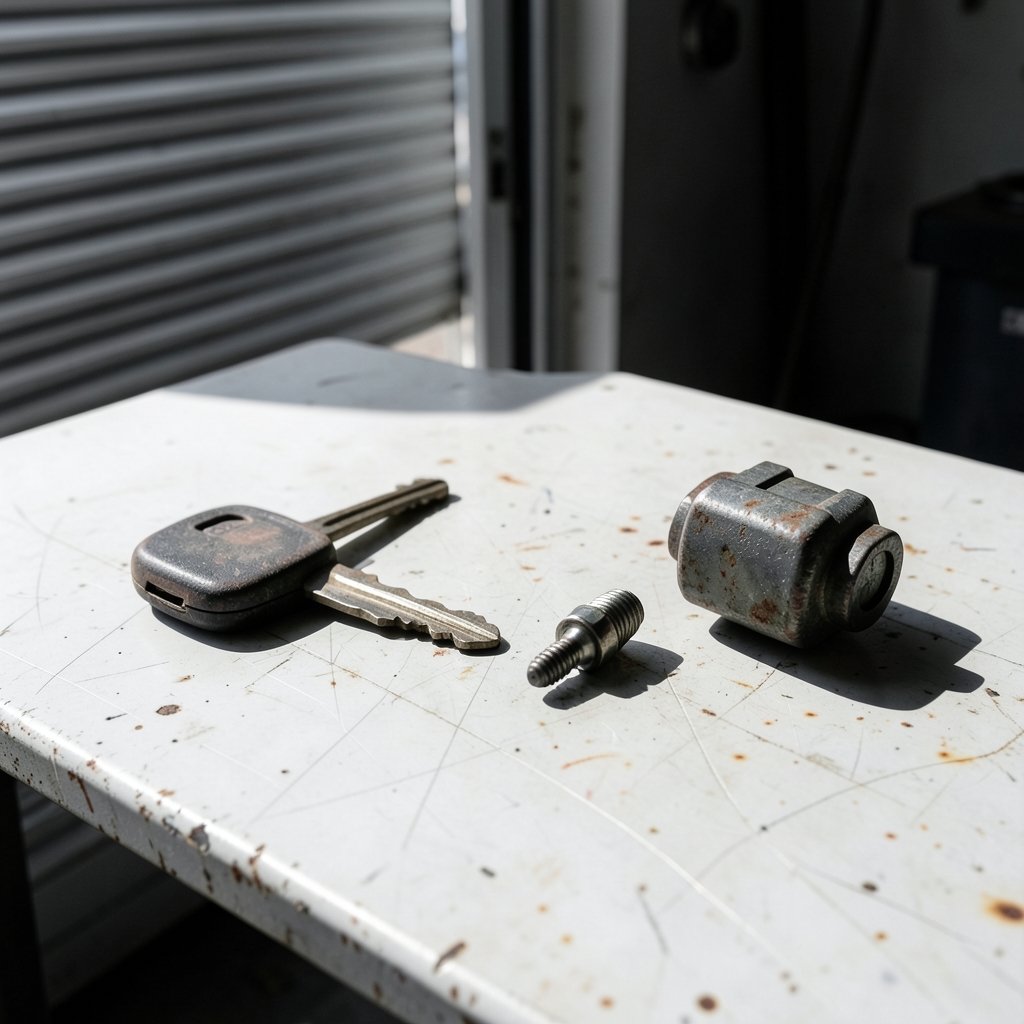
You turn the key, and instead of a healthy crank you get click-click-click. Or you pull out of a parking space and hear a steady tick-tick-tick that seems to follow the wheels. Either way, the question is the same: what is that noise, and is it going to cost a fortune?
Here is the good news. Clicking is one of the most diagnosable car sounds there is. It is rarely random. The pitch, rhythm, and timing of the click usually point to a specific part, and a mechanic can often confirm the culprit in minutes. The trick is learning to read the clues before you hand over the keys.
This guide walks through the causes in the order most drivers encounter them, from the click you hear at startup to the one that shows up only in tight turns.
Start With Timing: When Does the Click Happen?
The single most useful question is not what the noise sounds like, but when it appears. Timing splits the suspects into neat groups.
| When you hear it | Most likely systems | Urgency |
|---|---|---|
| Turning the key, engine will not start | Battery, starter relay, starter motor | High, car may not start |
| While idling or revving | Engine oil pressure, valvetrain, belt pulleys | Medium to high |
| Only in tight turns at low speed | CV joints, axle shafts | High, safety risk |
| Rhythmic, rises with road speed | Wheel bearings, brakes, tires, hubcaps | Medium to high |
| After you switch off and walk away | Exhaust and heat shields cooling | None, normal |
Get that far and you have already eliminated most of the list. Now let us go through each group properly.
Clicking When You Try to Start the Car
This is the classic dead-battery scenario, and the type of click tells you a lot. A rapid, repeated clicking while the engine refuses to catch usually means a low battery. There is enough juice to engage the starter relay but not enough to spin the starter motor, so the relay chatters.
A single loud click, followed by nothing, points somewhere else: a faulty starter motor or a poor connection at its terminals. If the lights are bright and the radio works but you still get one heavy clunk, the battery is probably not the problem.
What actually works in practice is simple. Check the battery terminals for corrosion and tightness first, because a loose or furred clamp mimics a dead battery almost perfectly. Then try a jump start. If the car fires up and keeps running, the battery or charging system needs testing. If it clicks just the same with a donor battery attached, suspect the starter.
The mistake people make here is buying a new battery before testing. A free battery check at most garages takes minutes and saves the guesswork.
Clicking While the Engine Idles or Revs
If the click continues after the engine has settled into an idle, the engine itself is the place to look. According to the RAC’s guide to unusual vehicle noises, a clicking sound that carries on once the car has been sitting for a while can signal low oil pressure, which needs professional attention sooner rather than later.
Low or dirty oil is one of the most commonly cited causes of engine clicking, and it makes sense. Oil is the cushion between moving metal parts. When it is thin, old, or low, the valvetrain gets noisy. A quick dipstick check costs nothing and tells you whether the oil is at the right level and still the right colour.
A clicking that sharpens when you press the accelerator can also come from worn valves or tired engine bearings. The serpentine belt is another candidate: a worn pulley or tensioner can produce a rhythmic rattle or click as the belt turns, and since that belt drives the alternator, power steering pump, and air conditioning compressor, it is worth checking early.
One practical tip: use a long screwdriver or a mechanic’s stethoscope to localise the sound. Touch the tip to the engine casing in different spots and listen at the handle. The click gets loudest nearest its source. It feels old-school, but it works.
Clicking in Turns: The CV Joint Story
A rhythmic click that appears only when you turn, especially at low speed in a car park or during a U-turn, is the textbook signature of a worn constant velocity (CV) joint. These joints sit at the ends of the driveshafts and transfer power to the wheels while allowing them to steer and move with the suspension.
The failure usually starts with a torn CV boot. Once the rubber boot splits, grease escapes and grit gets in. The joint wears quickly after that, and the clicking gets louder in sharp turns. Left alone, a fully failed CV joint means losing drive to that wheel, which is why mechanics treat this noise as urgent rather than cosmetic.
There is a cheap check you can do yourself. Park with the wheels straight and look behind each front wheel for a ribbed rubber boot. If it is split, weeping grease, or coated in black sludge, you have found your problem. Replacing a boot early is far cheaper than replacing a whole axle later.
Drivers who like to understand the mechanical side of their cars often enjoy digging into how suspension and steering geometry interact with wear parts, much like the explanation in this guide to tire alignment and those three angles that actually do your car justice. Misaligned geometry accelerates tire and joint wear, and worn joints are exactly what make the clicking.
Rhythmic Clicking That Follows Road Speed
When the click speeds up as you accelerate and slows as you brake, the source is rotating with the wheels. That narrows things down to a few parts.
Wheel bearings usually produce more of a hum or growl that changes pitch in corners, but a badly worn bearing can click. Brakes are a frequent culprit: a stone trapped in the caliper, a worn pad, or a loose retaining clip can all tick with each rotation. A scraping or clicking brake needs a professional look to rule out a damaged component.
Do not overlook the simple stuff. A loose hubcap or a wheel weight that has started to lift can click rhythmically at low speed and then go quiet at higher speed as centrifugal force pins it down. Cupped or unevenly worn tires can also produce a repeating thump or tick. If the noise arrived right after a tire change or a pothole, start there.
Clicking After You Park: Usually Nothing to Worry About
Here is the one that causes the most unnecessary panic. You switch off the engine, step out, and hear a series of small metallic ticks from underneath the car. Is it about to explode? No.
What is happening is thermal contraction. The drivetrain and exhaust get extremely hot while driving, and different metals expand at different rates. Once the car stops, those parts cool and shrink at different speeds, rubbing against bolts, brackets, and heat shields. Those tiny frictional movements are the clicks you hear. It is not mechanical failure, and it stops within a few minutes.
The exception worth noting is a click that continues long after the car should be cold, or one accompanied by a rattle from a loose heat shield. That is worth a glance underneath, but the ordinary post-park tick is normal behaviour.
When a Clicking Noise Is Actually Something Else
Not every noise described as a click is a click. Drivers often use the word loosely, and the distinction matters for diagnosis.
- A tick that rises and falls with engine speed is usually valvetrain or oil related.
- A knock deep in the engine is more serious and should be checked immediately.
- A chirp or squeal from the belt area suggests a slipping belt or worn pulley.
- A pop or clunk over bumps points to suspension components rather than the drivetrain.
If you are unsure which category your noise falls into, record it on your phone. Ten seconds of audio is often enough for a mechanic to give you a preliminary opinion before you even book the car in.
What to Check Yourself Before Booking a Garage
A few minutes of basic inspection can save you a diagnostic fee and help you describe the problem accurately.
- Note exactly when the click happens: startup, idle, turning, driving straight, or after shutdown.
- Check the engine oil level and condition with the dipstick.
- Look at the battery terminals for corrosion or looseness.
- Inspect the front CV boots for splits or grease leaks.
- Check tire pressures and look for uneven tread wear.
- Make sure wheel nuts and hubcaps are tight.
That list covers the majority of clicking causes and takes under fifteen minutes. If everything looks fine and the noise persists, a garage can take it from there.
It also helps to know what kind of car you are dealing with. Luxury models sometimes hide noises behind extra sound insulation until a part is quite worn, and their repair costs climb accordingly. Owners of premium vehicles may find background reading on luxury car brands useful for understanding typical service expectations, while those considering a switch to electric power can compare Mercedes electric car 2026 models, range and features to see how much simpler the drivetrain becomes without a combustion engine, exhaust, or starter motor to click.
Is It Safe to Keep Driving?
It depends entirely on the cause. A post-park thermal tick is harmless. A clicking CV joint is not, because a joint that fails completely can leave you without drive to one wheel. A brake-related click risks damaging the disc and reducing stopping power. Low oil pressure can turn an inexpensive fix into an engine rebuild.
The sensible rule: if the click is rhythmic and follows wheel speed, or if it appears in turns, get it looked at promptly. If it is a single click at startup and the car still starts reliably, you have a little more time but should still book it in. And if any warning light accompanies the noise, stop driving and get advice.
Conclusion
A clicking car is rarely a mystery for long. The sound is the symptom, and timing is the map. Clicking at the key points to the battery or starter, clicking at idle points to oil pressure or the belt system, clicking in turns points to CV joints, and clicking after you park is usually just hot metal cooling down.
The practical approach is to observe before you act. Note when the noise appears, check the simple things yourself, and describe what you find clearly when you speak to a mechanic. That small amount of preparation turns a worrying noise into a straightforward repair, and it keeps small problems from growing into expensive ones.
FAQ
Why does my car click once when I turn the key but still start?
A single click followed by a normal start often means the starter solenoid is engaging but the starter motor is slow to respond, or a connection is marginal. It can also be the beginning of a failing starter. If it happens consistently, have the starter and battery tested before it leaves you stranded.
Can low oil really cause a clicking sound?
Yes. Oil cushions the moving parts in the engine, and when the level is low or the oil is old and thin, the valvetrain becomes noisy. A persistent click at idle is a good reason to check the dipstick immediately and top up or book an oil change.
Why does my car click only when I turn the steering wheel?
That pattern strongly suggests a worn CV joint on the side you are turning toward. The joint wears faster once its rubber boot splits and loses grease. Have the boots inspected, because replacing a boot early is much cheaper than replacing the whole axle.
Is clicking after I park the car a sign of a problem?
Usually not. Metal components in the exhaust and drivetrain cool and contract at different rates after shutdown, producing small ticks as they rub against brackets and heat shields. The noise should stop within a few minutes. A click that continues long after the car is cold is worth checking.
How can I tell whether the click is coming from the engine or the wheels?
Watch the rhythm. If the click speeds up with the engine when you rev in neutral, it is engine-related. If it speeds up with road speed and stays the same when you rev in neutral, it is wheel, brake, or drivetrain related. That single test narrows the search dramatically.
Can a loose hubcap sound like a mechanical fault?
Absolutely. A loose hubcap or a lifting wheel weight can produce a rhythmic click at low speed that fades at higher speed. Before assuming the worst, check that hubcaps are secure and wheel nuts are tight. It is a two-minute check that has saved plenty of unnecessary garage visits.











