


What if the best TV of 2027 is one you can see straight through? That is not a riddle. It is the direction the market is heading, and the award season that just wrapped up tells a surprisingly clear story about which screens deserve your attention next year.
The short version: 2027 is shaping up as a battle between OLED panels that get brighter and stranger, MiniLED sets that chase extreme brightness, and a major corporate alliance that could quietly reshape how TVs get built. Here is what the evidence actually shows, what to ignore, and how to choose without regret.
Why the 2027 TV Race Already Has Winners
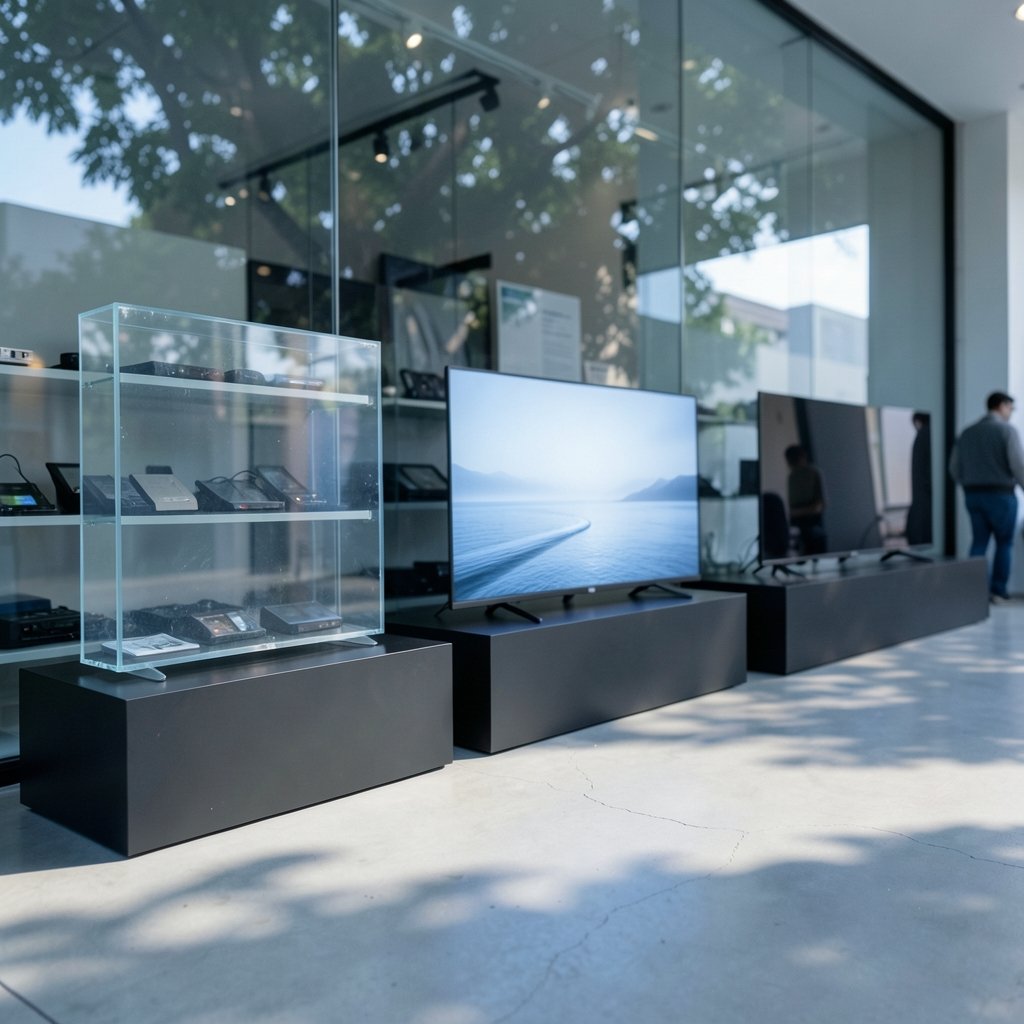
Award season for 2026–2027 models is essentially done, and the results are more revealing than most buyers expect. The Expert Imaging and Sound Association (EISA) handed out 111 awards across five expert groups in its 44th edition, including 32 in home theater and video. Of the fourteen awards given to TVs and projectors, ten went to Hisense, TCL and XGIMI. LG and Panasonic did not appear in the rankings at all.
That is a genuine shift. For years, the premium conversation revolved around a handful of legacy brands. The 2027 cycle suggests the Chinese manufacturers have moved from value players to category leaders, at least in the eyes of European reviewers.
Meanwhile, the Consumer Technology Association (CTA) announced its CES 2027 Innovation Awards, and LG came out swinging. LG’s transparent, wireless Signature OLED T won a Best of Innovation award in the Art Tech category, its second consecutive top honor. LG OLED TVs have now taken CES Best of Innovation awards five years running, starting with OLED Flex in 2023, wireless OLED in 2024, OLED evo in 2025, Signature OLED T in 2026, and again into 2027.
So the two stories that matter most for 2027 buyers are brightness (MiniLED and RGB backlights pushing hard) and form factor (OLED going transparent and wireless). Everything else is detail.
OLED in 2027: Transparent Panels and Wireless Everything


The most talked-about set of the cycle is the LG Signature OLED T, a 77-inch 4K transparent OLED that switches between a normal black screen and a see-through display with the remote. In black screen mode it behaves like a conventional TV. In transparent mode the space behind the panel stays visible, creating an open, augmented-reality-style viewing experience.
The companion piece, the LG Signature OLED W, is a wireless wallpaper TV that won an Innovation Award in the Video Displays category. Every component, from panel to mainboard to speaker, uses ultra-slim engineering, and video and audio transmit without loss or delay so the set needs almost no cabling.
One detail worth flagging for spec-watchers: the 2027 wireless wallpaper model is reported with a 165Hz refresh rate, 4,000 nits peak brightness, 83% BT.2020 color coverage, 1.1% reflectivity, and virtual 11.1.2 surround sound, with a carbon fiber back panel at 15.7mm thick and 40kg. Those are genuinely aggressive numbers for an OLED, and they show how far brightness engineering has come.
The practical takeaway is less glamorous. Transparent TVs are statement pieces for open-plan rooms and design-led spaces. If your living room has a bright window wall and you mostly watch sports at midday, a transparent panel is not automatically the better buy. What actually works in practice is matching the panel type to your room’s light, not to the award shelf.
MiniLED and RGB Backlights: The Brightness War
If OLED is chasing novelty, MiniLED is chasing raw output. The 2026–2027 cycle saw RGB-based LCD screens challenge OLED with extreme brightness and stronger colors, and reviewers have clearly rewarded that push.
Sony’s Bravia 9 II took a best LCD TV honor in the high-end class, praised for its advanced True RGB backlight system. TCL’s X11L picked up its own award in the same season. Those two names appear repeatedly in 2027 coverage for a reason: they represent the two philosophies of LCD done well, one leaning on processing and color accuracy, the other on brightness and value.
For buyers, the trade-off is straightforward:
| Priority | OLED tends to win | MiniLED tends to win |
|---|---|---|
| Black levels in dark rooms | Yes | Close, not equal |
| Peak brightness in bright rooms | Improved, still behind | Yes |
| Viewing angles | Yes | Moderate |
| Resistance to image retention | Lower | Higher |
| Price for a given size | Higher | Lower |
| Best for gaming motion | Excellent | Excellent on high-refresh models |
A common mistake is buying the brightest set available and then watching it in a dark room with the backlight cranked. You get halos around bright objects and eye strain. The reverse mistake is buying a dim panel for a sunlit room and living with reflections forever. Measure your room before you measure your budget.
The Sony-TCL Alliance and What It Means for 2027 Sets
Here is the story most buyers will miss but should not. From 2027, Sony and TCL will cooperate through a joint venture called Bravia Inc. Both companies just won major awards for their own 2026–2027 sets, and now they are pooling resources.
That matters because Sony brings processing and color science, while TCL brings panel supply and manufacturing scale. If the partnership delivers, mid-range buyers could see better image processing at lower prices, and premium buyers could see faster trickle-down of high-end backlight technology. If it stalls, you get badge engineering and confusing model lineups.
The honest answer is that nobody knows yet. What a careful buyer should do is check the actual model number and panel type on any 2027 set, rather than assuming a brand name guarantees a specific technology. Joint ventures are exactly when spec sheets start to blur.
Hisense, TCL and the 100-Inch Question
The other big 2027 conversation is size. Chinese manufacturers have pushed 100-inch class TVs from fantasy into showroom reality, and the buying advice has shifted accordingly. Reviewers now argue that choosing a 100-inch set should not rely on spec sheets alone, because the real deciding factors are anti-reflection performance, color clarity, and dark-scene detail in an actual living room.
Three approaches stand out in that discussion. Hisense’s U7T Pro uses a full-chain RGB MiniLED system, a true-color screen treatment, wide viewing angles and a broad color gamut for balanced all-round performance. Xiaomi’s S Pro RGB MiniLED 2027 pairs strong configuration with aggressive value and the advantage of smart-home integration. Skyworth’s QX emphasizes natural-light eye comfort, which suits households with older adults or young children, though its pricing runs higher.
The practical advice that comes out of that comparison is simple and worth repeating: go see the TV in person. Judge it under the lighting, decor and viewing habits you actually have. A set that looks spectacular in a dark demo room can look washed out in a glass-walled apartment, and vice versa.
If your 2027 plans stretch beyond the living room, the same logic about matching hardware to real use applies to leisure purchases generally. The thinking behind 8 new superyacht concepts redefining luxury in 2027 is a good parallel: specification lists impress, but lived experience decides.
Gaming, Refresh Rates and the Specs That Matter
Gaming has become the tail that wags the TV dog, and 2027 hardware reflects it. LG’s UltraGear gaming monitor won a CES 2027 Innovation Award for being the first in the world to combine a 1,000Hz refresh rate with Full HD resolution simultaneously, aimed squarely at players who need split-second response.
For TVs, the useful framing is this: a 120Hz or 144Hz panel with proper variable refresh rate support will serve almost every console and PC gamer better than a headline number on a spec sheet. The 165Hz figure on LG’s 2027 wallpaper OLED shows where premium sets are heading, but the practical benefit above 120Hz is small for most content.
What actually works in practice, according to the patterns in this year’s reviews:
- Check that every HDMI input supports the refresh rate and features you need.
- Confirm low input lag in game mode rather than in the marketing mode.
- Look for anti-reflection coating if the set faces a window.
- Verify the panel type instead of the brand before comparing prices.
- Sit at your real viewing distance before deciding on size.
Common mistakes here are buying a 100-inch set for a room that seats you eight feet away, or paying for a 1,000Hz-class feature that no console can feed. Match the spec to the source.
How to Choose the Best TV for 2027 Without Regret
The 2027 lineup rewards a specific kind of buyer: one who knows their room. Here is a decision path that holds up across the award winners.
Start with light. A bright, glass-heavy room favors MiniLED and RGB-backlit LCD sets with strong anti-reflection treatment. A dedicated dark room favors OLED for black levels and viewing angles.
Then decide on form. If design matters as much as picture, the transparent and wireless OLED sets are genuinely new options rather than gimmicks, and the wireless transmission on the 2027 wallpaper models removes a real installation headache.
Then set your size ceiling by seating distance, not by ambition. The 100-inch class is now real, but it is not right for every wall.
Finally, check compatibility with your smart-home setup. If you already use a smart-home platform, a set that integrates cleanly saves daily friction. That same principle of fitting the purchase to the lifestyle shows up in 9 best all inclusive yacht charters in 2027 and what the price really covers — the headline price rarely tells the whole story.
And if you are the type who plans purchases around events, the timing logic in 10 best party yachts to book for New Year’s Eve 2027 applies to TVs too: buy before the big moment, not during it.
Conclusion
The best TV for 2027 is not a single model. It is the set that matches your room’s light, your seating distance, your gaming needs and your tolerance for new technology. The award season gives us real signal: LG’s transparent and wireless OLEDs are pushing form factor forward, Sony’s Bravia 9 II and TCL’s X11L are pushing LCD brightness and color, and Hisense, TCL and XGIMI dominated EISA’s video categories in a way that would have seemed unlikely a few years ago.
The Sony-TCL venture through Bravia Inc. is the wildcard to watch. It could mean better processing at lower prices, or it could mean confusing lineups. Either way, the buyer who checks the panel type, the room conditions and the real refresh rate support will come out ahead of the buyer who chases the badge.
FAQ
What is the best TV technology to buy in 2027?
There is no universal winner. OLED remains strongest for dark rooms, viewing angles and design-led setups, especially with the transparent and wireless models arriving in 2027. MiniLED and RGB-backlit LCD sets win on peak brightness and price for a given size. The right choice depends on your room’s lighting and your viewing habits.
Did LG really win a CES 2027 award for a transparent TV?
Yes. LG’s Signature OLED T, a 77-inch 4K transparent and wireless OLED, won a Best of Innovation award in the Art Tech category at CES 2027, its second consecutive top honor. LG OLED TVs have now received CES Best of Innovation awards five years in a row.
What is Bravia Inc. and why does it matter for 2027 TVs?
Bravia Inc. is a joint venture through which Sony and TCL will cooperate starting in 2027. Sony brings processing and color expertise, while TCL brings panel supply and manufacturing scale. It could improve mid-range picture quality and speed up trickle-down of high-end technology, but the practical results are not yet known.
Which brands dominated the EISA 2026-2027 TV awards?
Hisense, TCL and XGIMI took ten of the fourteen awards given to TVs and projectors in EISA’s 2026-2027 edition. LG and Panasonic did not appear in the rankings. That marks a notable shift toward Chinese manufacturers in European expert judging.
Should I buy a 100-inch TV in 2027?
Only if your seating distance supports it. Reviewers stress that large-screen buying should focus on anti-reflection performance, color clarity and dark-scene detail in a real living room rather than spec sheets. See the set in person under lighting similar to your own before committing.
What refresh rate actually matters for gaming on a 2027 TV?
For most console and PC gamers, a 120Hz or 144Hz panel with proper variable refresh rate support delivers the real benefit. Higher figures exist, including a 1,000Hz Full HD gaming monitor from LG, but the practical gain above 120Hz is small for typical content. Check that your HDMI inputs support the features you need.











