

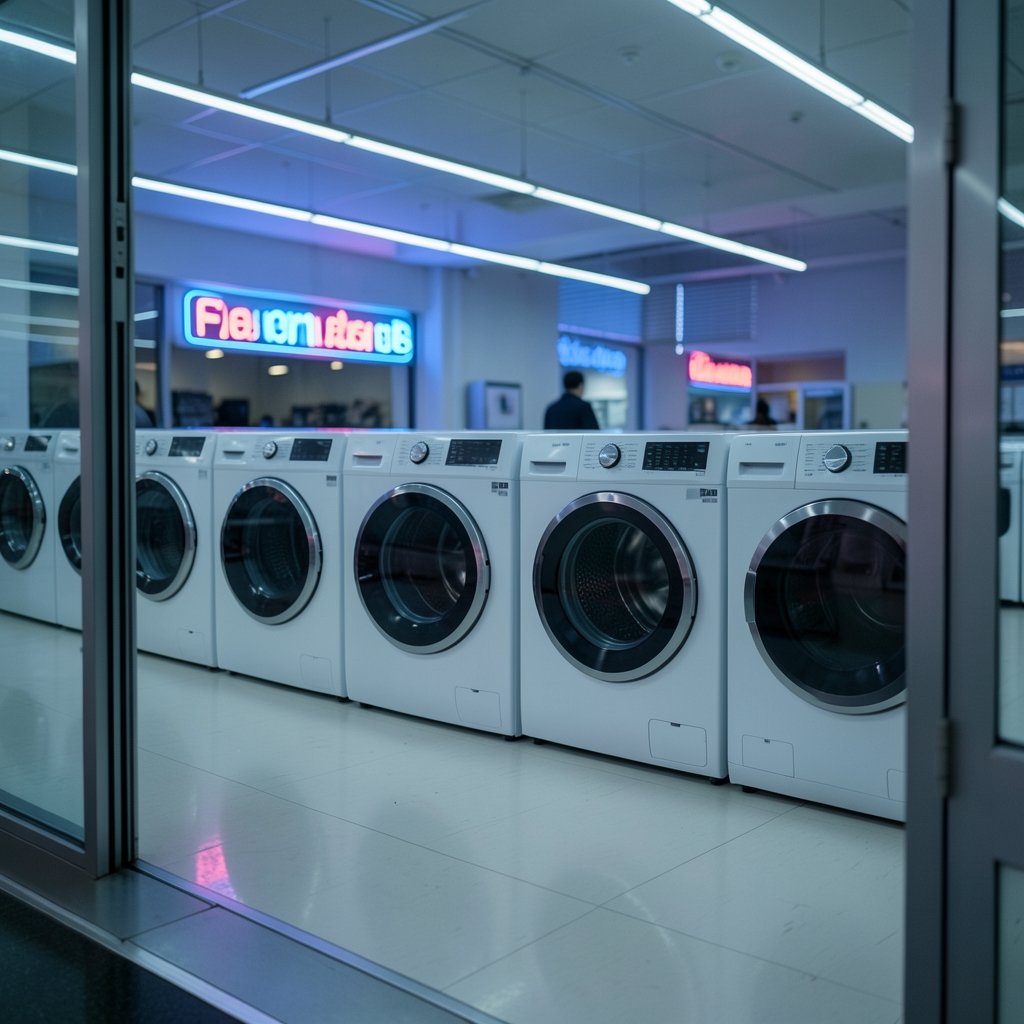
What if the hardest part of laundry day isn’t the folding, but figuring out which washing machine deserves a spot in your home? Walk into any appliance showroom and you’ll see rows of shiny drums, blinking dials, and price tags that swing from budget-friendly to eye-watering. The labels all promise cleaner clothes, gentler fabric care, and lower bills. Few deliver on all three.
That’s why a shortlist beats a showroom tour. Independent test labs run stained swatches through dozens of cycles, measure energy draw, and track how fabrics hold up after repeated washes. Their results point to a handful of machines that separate themselves from the pack. Below are the models worth knowing about, organized by who they suit, along with the trade-offs you’ll live with every week.
Quick Comparison of the Top Washers

| Model | Best for | Standout strength | Main limitation |
|---|---|---|---|
| Samsung Bespoke AI WF90F09C4SU1 | Stain removal on tough messes | Excellent cleaning even on Eco mode; very low running costs | High upfront price |
| Miele WQ 1000 WPS | Delicate and expensive garments | Rib-less drum is gentle on fabric; exceptional low-temperature cleaning | Premium price bracket |
| LG Signature WM9900HSA | Large households | 5.8 cu ft capacity; AI Wash 2.0 sets cycles automatically | Big footprint and big investment |
| Hisense WF5I9043BWFS | Small homes and tight spaces | Slim 470mm depth; 9kg drum; 14p Eco cycle | Shallow drum struggles with duvets |
| Samsung Bespoke AI Laundry Vented Combo | Saving floor space | Washes a full cotton load in 42 minutes | One unit to replace if either half fails |
| LG WashTower | Easy loading for shorter users | Single stacked unit; learns your favorite cycles | Whole tower must be replaced if one part breaks |
Samsung Bespoke AI WF90F09C4SU1: The Stain-Fighting Workhorse


If grass stains, cooking oil, and dried mud are regular guests in your laundry basket, this Samsung front-loader earns its keep. In lab testing, it lifted everything from juice spills to dried muck with ease, and it managed that on the Eco cycle rather than only on power-hungry settings. Running costs came in remarkably low too, with the Cotton 30°C wash costing about 21p and the Eco 40-60 cycle about 19p per load.
Who it suits: households with kids, pets, or outdoor hobbies, plus anyone who wants smart features without sacrificing cleaning power. Samsung also placed third in the front-load washer category for reliability in a recent J.D. Power appliance study, so the brand’s track record holds up beyond the marketing.
The limitation: there’s no polite way to say it. This machine is expensive. The cleaning performance justifies the outlay for heavy users, but light users may not extract enough value from it. If you’re pairing it with a dryer, it’s worth reading up on how to choose a washer dryer without regrets so the two appliances work as a team rather than two separate purchases.
Miele WQ 1000 WPS: The Fabric Guardian
Some people wash clothes. Others protect investments. If your wardrobe includes wool, silk, or anything with a care label that reads like a legal warning, the Miele WQ 1000 WPS is built for you. Its standout feature is a rib-less drum, a design that’s noticeably gentler on clothes than traditional drums with raised paddles. In testing, it delivered some of the best stain removal results seen at lower temperatures, which matters for anyone who washes cold to protect colors.
The TwinDos system automatically dispenses the right amount of detergent at the right moment in the cycle, so you stop guessing whether you’ve added too much or too little. That consistency adds up over years of washes.
Who it suits: people with delicate or expensive garments, and anyone who wants a machine built to last a long time. Miele designs its machines with a long service life in mind.
The limitation: this is a high-end machine with a high-end price. Budget shoppers should look elsewhere. Also, automatic dispensing means buying detergent in the formats the system supports, which narrows your shopping options slightly.
LG Signature WM9900HSA: The Mega-Capacity Option
For big families, the drum size question ends the debate fast. This LG model pairs a 5.8-cubic-foot drum with automation that does the thinking for you. Its AI Wash 2.0 system uses built-in sensors to pick wash settings based on fabric texture and load size, and TurboWash 360° fires five high-pressure jets to handle large loads in under half an hour. Consumer Reports testing ranked it the best front-load washer it evaluated, which is about as strong an endorsement as the category gets.
Who it suits: households running multiple loads a week, families with teenagers, and anyone who wants to set a cycle and walk away.
The limitation: capacity cuts both ways. The machine needs real floor space, and the price reflects its flagship status. One independent review also noted that AI-driven cycles can underwhelm compared with manual settings on stubborn stains, so don’t abandon your stain-treatment habits entirely.
Hisense WF5I9043BWFS: The Small-Space Specialist
Not every laundry corner is a laundry room. This Hisense model is just 470mm deep, roughly half the depth of a standard machine, which makes it a genuine option for small homes, galley kitchens, and closets pressed into laundry duty. The 9kg drum handles everyday washing comfortably for a smaller household, and the cycle range includes an Eco mode costing about 14p per run plus a 59-minute full load for busy days. Like other Hisense washers, it connects to the ConnectLife app for remote monitoring and control.
Who it suits: apartment dwellers, renters, and anyone whose “laundry room” is really a cupboard.
The limitation: the drum is shallow. Large loads and bulky items like duvets are a struggle to fit, so plan on a laundrette trip for bedding season. If you’re fitting out a compact kitchen at the same time, the same space-first thinking applies when you pick a dishwasher 2025 without overpaying.
Samsung Bespoke AI Laundry Vented Combo: Two Machines, One Footprint
Combination units used to be the compromise choice: slower, weaker, and forgettable. This vented combo changes that math. It washed a full cotton load in 42 minutes and a smaller load in just 28, earning strong marks for speed, capacity, and overall performance in independent testing.
Who it suits: anyone short on space who refuses to accept weak cleaning as the trade-off, and households that want one appliance instead of a stacked pair.
The limitation: it’s a single unit. If either the washer or dryer side needs replacement, the entire appliance goes. That’s a real long-term cost consideration that separate machines don’t carry.
LG WashTower: The Ergonomic All-in-One
The WashTower stacks a washer and dryer into one integrated column, and testers found it incredibly easy to load and unload, especially for people under five feet tall. That sounds like a small thing until you’ve spent years stretching to reach a top-loading drum. Steam functions freshen lightly worn items for another wear, and the unit learns your most-used cycles and pre-selects them when you switch it on.
Who it suits: shorter users, anyone with back or shoulder issues, and households that want a tidy, matched laundry column.
The limitation: same structural catch as the combo above. Because it’s a single unit, a failure in either half means replacing the whole tower. Buyers should weigh that against the convenience.
How to Choose the Right Washer for Your Home
Once you’ve narrowed the field, a few practical checks separate a good purchase from a regret. Start with the boring stuff, because the boring stuff is what you’ll live with.
- Measure the space, including the door swing. A machine that fits the gap but not the doorway is a very expensive hallway ornament. Depth matters most in tight kitchens, which is why slim models like the Hisense earn their niche.
- Match drum size to your actual loads. A 9kg drum suits a smaller household’s typical load. Oversizing means running half-empty cycles and paying for water you didn’t need.
- Check running costs alongside the sticker price. A cheap machine with thirsty cycles can cost more over a decade than a pricier efficient one. Eco cycle costs in the region of 14p to 19p per wash add up to annual savings that matter.
- Decide how much smart capability you need. App connectivity and auto-dosing are genuinely useful for some people and completely unused by others. One review noted that many buyers never touch the smart features they paid for.
- Look at reliability data as well as feature lists. Brand rankings for reliability don’t always match brand rankings for cleaning performance, and a machine you’ll keep for many years should score well on both.
- Think about the full laundry setup. A washer is one piece of a system. If you’re also replacing the dishwasher, the same logic applies when you find the best dishwasher for your kitchen budget, and that reasoning also applies to pairing laundry appliances sensibly.
Common mistakes show up again and again in owner forums and test labs alike. People buy on capacity alone and then discover the drum is too shallow for a duvet. They chase discounts on discontinued models without checking parts availability. They skip the vibration check and end up with a machine that walks across the floor during spin cycles. And they overlook the door swing, which turns a tidy utility room into an obstacle course.
One more practical tip: budget for installation and removal of the old unit. Delivery teams won’t always disconnect and haul away your old machine for free, and a surprise fee on delivery day sours an otherwise good purchase.
Conclusion
The best washer for most households is the one that matches your real laundry habits, not the one with the longest feature list. Heavy stain loads point toward the Samsung Bespoke AI WF90F09C4SU1. Delicate wardrobes point toward the Miele WQ 1000 WPS. Big families should look hard at the LG Signature WM9900HSA, while small-space dwellers will get more out of the slim Hisense. Combination units like the Samsung vented combo and the LG WashTower trade replacement flexibility for floor space, and that’s a trade worth making deliberately rather than by accident.
Measure first, check running costs second, and buy for the laundry you actually do. Do that, and the machine will quietly disappear into the background of your week, which is exactly where a great appliance belongs.
Frequently Asked Questions
What is the best washer overall?
For raw cleaning performance and low running costs, the Samsung Bespoke AI WF90F09C4SU1 stands out, with excellent stain removal even on Eco mode and cycle costs around 19p to 21p. The “best” choice still depends on your priorities: fabric care, capacity, or footprint.
Is a front-load or top-load washer better?
Front-loaders generally clean more efficiently and stack well, while top-loaders are easier to load for some users. The models covered here are front-loaders and stacked units, which dominate current testing rankings for cleaning and efficiency.
How much does it cost to run a washing machine?
Cycle costs vary widely by model and program. In testing, efficient machines ran Eco cycles for roughly 14p to 19p per wash, while a standard cotton cycle on a premium model came in around 21p. Multiply by your weekly load count to estimate annual costs.
How big a drum do I need?
Match capacity to your household. A 9kg drum suits a smaller household’s everyday washing. Larger households or anyone washing bedding regularly should look at bigger drums, such as the 5.8-cubic-foot capacity on the LG Signature WM9900HSA.
Are washer-dryer combos as good as separate machines?
Modern combos have closed much of the gap, with one vented model washing a full cotton load in 42 minutes. The catch is structural: if either half fails, the whole unit must be replaced. Separate machines offer more flexibility at replacement time.
How long should a washing machine last?
Service life varies by brand and build quality. Some manufacturers design machines with a 20-year lifespan in mind, while budget models typically have shorter expected lives. Checking reliability rankings alongside cleaning scores gives a fuller picture before you buy.











