


What happens when the taxi pulls up and there is simply no way to get a wheelchair inside? For hundreds of thousands of people, that moment is the difference between making a medical appointment and missing it. A wheelchair accessible taxi solves that problem, but only if you know how to find one, how to book it, and what to ask before the vehicle arrives.
This guide walks through the practical side of accessible point-to-point transport: vehicle types, booking channels, costs, common mistakes, and the small details that turn a stressful trip into a smooth one.
What Makes a Taxi Wheelchair Accessible?
Not every large vehicle qualifies. A genuine wheelchair accessible taxi (often shortened to WAT) is fitted with either a ramp or a mechanical lift, plus a securement system that locks the wheelchair to the floor during travel. The passenger usually rides in the wheelchair itself rather than transferring to a seat.
That distinction matters. A maxi cab with a big boot is spacious, but spacious is not the same as accessible. Without a ramp or lift and proper tie-downs, a driver cannot legally or safely carry someone who stays in their chair.
In Singapore, the government keeps a formal register of these vehicles. A published order lists wheelchair-accessible taxis by registration number, which tells you the category is regulated rather than left to operators to self-declare. If you want certainty, ask the operator directly whether the dispatched car is on that list.
Why Accessible Taxis Matter More Than People Realise
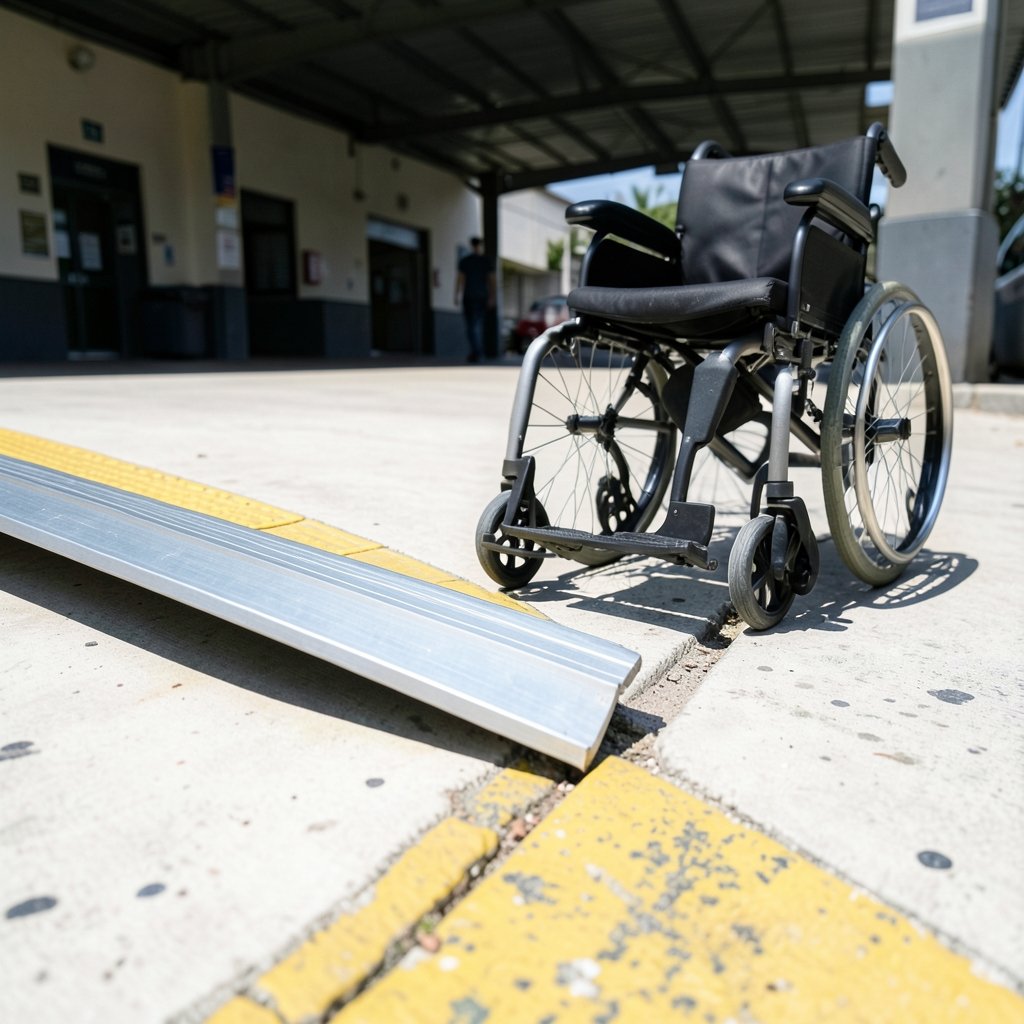
Singapore’s buses and trains are fully wheelchair accessible, so the network itself is not the barrier. The gap is the last mile — the stretch between an MRT station and a clinic door, a hotel lobby, or a relative’s flat. That final leg is exactly where an accessible taxi earns its keep, especially for anyone travelling with a motorised wheelchair that is too heavy for a standard vehicle.
The Ministry of Transport has acknowledged this directly, noting that point-to-point operators offer wheelchair-accessible vehicles, including retrofitted models with ramps for motorised wheelchairs, to meet the travel needs of persons with disabilities. Financial support exists too: the Taxi Subsidy Scheme and the Enabling Transport Subsidy Scheme, both administered by SG Enable, help offset costs for people who depend on these rides for necessary trips.
The practical takeaway is simple. Accessible transport is not a luxury add-on in Singapore; it is a supported public service with schemes designed to keep it affordable.
The Main Types of Accessible Vehicle
Three broad options show up again and again, and they suit different passengers.
| Vehicle type | How you board | Best for | Watch out for |
|---|---|---|---|
| Wheelchair-accessible taxi (WAT) | Ramp, passenger stays in chair | Solo trips, medical appointments, short city hops | Limited fleet, so book ahead |
| Wheelchair-accessible maxi cab | Ramp or lift, 7 to 9 seats | Families, airport runs, group outings | Higher minimum spend on charters |
| Private accessible transport | Ramp or lift, trained driver | Door-to-door assistance, hospital visits, tours | Pricier than a metered taxi |
A standard saloon taxi with a folding wheelchair in the boot is a fourth possibility, but only if the passenger can transfer into a seat. Never assume this is acceptable — confirm it when booking, because a driver who arrives expecting a folding chair and finds a motorised one cannot simply improvise.
How to Book a Wheelchair Accessible Taxi
Booking channels have improved a lot, and most passengers now have several routes to a confirmed ride.
- Use the operator’s app. The most reliable method is the dedicated app from a taxi company, where you can flag that you need a wheelchair-accessible vehicle. Do this rather than hailing on the street.
- Call the hotline. Every major operator runs a booking line, and some, like SMRT, maintain a separate hotline for passengers with special needs that may mean shorter waits. State clearly that you require a wheelchair-accessible vehicle.
- Book a maxi cab for groups. ComfortDelGro, for instance, takes bookings for its seven-seater MaxiCabs for wheelchair passengers, with drivers trained for the job.
- Use a specialist private operator. Companies such as Flexi Transport & Services run wheelchair-accessible maxi cabs alongside standard vehicles, with 24/7 booking by hotline and WhatsApp and islandwide arrivals typically within 5 to 20 minutes.
- Book online for airport transfers. Several limousine and maxi cab firms cater specifically to passengers with limited mobility arriving at Changi, which is useful if you are landing with luggage and a chair.
One rule of thumb from regular users: book at least an hour ahead, and much further ahead for peak hours, public holidays, or early-morning hospital slots. Same-day bookings are often possible, but availability tightens fast.
What It Costs and How to Keep It Affordable
Fares for accessible taxis generally follow the operator’s metered structure, while maxi cabs and private accessible vehicles often work on fixed pricing or hourly charters. Charter bookings frequently carry a three-hour minimum, so a quick clinic run in a maxi cab can cost more than the trip itself warrants. For a single passenger going a short distance, a metered WAT is usually the cheaper choice.
Subsidies change the maths. If you rely on accessible transport for necessary trips — dialysis, regular therapy, work — check whether you qualify for the Taxi Subsidy Scheme or the Enabling Transport Subsidy Scheme through SG Enable. Many families pay full fare for months before discovering these schemes exist.
For airport trips, ask for a fixed quote in writing before confirming. That avoids the awkward conversation at the kerb when the meter and the quoted price disagree.
Common Mistakes Passengers Make
Even experienced travellers trip up on the same handful of details. Avoiding these saves real time.
- Booking a “big car” instead of an accessible one. Size is not access. Say the words “wheelchair-accessible vehicle” every single time.
- Forgetting to mention a motorised chair. A heavy power chair needs a ramp rated for its weight. A folding chair does not. The dispatcher needs to know which.
- Not confirming the pickup point. A ramp needs space to deploy. Narrow lanes, covered walkways with low clearance, and basement carparks with tight turns can all block boarding. Mention landmarks and ask the driver to call on arrival.
- Assuming the driver will lift the passenger. Trained drivers assist with ramps and securement, but manual lifting is not part of the job and is unsafe for everyone.
- Leaving the return trip unbooked. The ride home is the one people forget. Book it before you leave, or at least save the hotline in your phone.
- Travelling without a backup plan. Fleets are limited. Have a second operator’s number ready, particularly for time-critical appointments.
What a Good Accessible Ride Looks Like
The best rides feel unremarkable, which is the point. A trained driver arrives, deploys the ramp, checks that the chair is locked and the belts are fastened, and confirms the destination before moving off. Boarding should take a few minutes, not a negotiation.
Passengers should expect the driver to know how to secure the chair to the floor anchors. If a driver seems unsure, speak up — a properly secured chair is non-negotiable. It is also reasonable to ask whether the vehicle has a lift rather than a ramp if the passenger cannot manage an incline, since some motorised chairs and some passengers need the flatter option.
For longer journeys, comfort details matter more than people expect. Ask about air conditioning, luggage space, and whether a companion can ride along. On airport runs, some operators build in meet-and-greet assistance from the arrival hall, which is genuinely useful when one person is managing both a chair and suitcases.
Accessible Transport Beyond the Taxi
It helps to see the accessible taxi as one piece of a wider picture. Public buses and trains cover the trunk routes. Accessible taxis and maxi cabs handle the door-to-door legs. Specialist services fill in for medical appointments, tours, and cross-border trips to Malaysia.
If you are also planning personal grooming or appointments around a hospital visit, timing matters. A hair appointment after a hair transplant recovery period, for example, is easier to schedule when transport is confirmed and comfortable, rather than squeezed into a rushed cab ride. The same logic applies to any appointment where you would rather not arrive flustered.
Readers who like to plan their whole look around an event may also enjoy browsing ideas on blonde hair shades or checking a hair cuttery near their destination before booking the ride. Small comforts add up on a long day out.
Booking Accessible Transport for Events and Occasions
Weddings, family dinners, and celebrations bring their own transport puzzles. Groups are bigger, venues are unfamiliar, and timing is tight. This is where the accessible maxi cab shines: seven to nine seats, room for a wheelchair, and space for the rest of the family in the same vehicle.
For anyone coordinating a group outing, it pays to treat accessible transport as the first booking, not the last. Confirm the venue’s drop-off point, ask whether the ramp can deploy at the entrance, and check the charter minimum before you commit. A little planning here is worth more than any last-minute scramble.
The same care applies to personal preparation. If the day includes a salon visit, knowing how long hair tinsel removal takes, or how a stylist handles wavy hair types, helps you build a realistic schedule around the ride. It sounds trivial until you are the one waiting at the kerb.
Even the small cultural moments connect. When a driver’s look draws attention — the way Carlos Sainz’s hair gets noticed on race weekends — it is a reminder that presentation and confidence matter to everyone, including passengers heading to a big event. Accessible transport is partly about dignity: arriving composed, on time, and ready.
Conclusion
A wheelchair accessible taxi is not a niche luxury. It is the practical link between an accessible city and an accessible day. The formula is straightforward: know which vehicle type you need, book through an app or hotline rather than the street, mention a motorised chair every time, confirm the pickup point, and check whether a subsidy applies to your trip.
The fleets are limited, so planning beats hoping. Book early, keep a second operator’s number handy, and ask the questions that matter before the car arrives. Do that, and the ride stops being the hard part of the day.
Frequently Asked Questions
How far in advance should I book a wheelchair accessible taxi?
At least one hour ahead is the common recommendation, and same-day bookings are often possible. For peak hours, public holidays, or early hospital appointments, book further ahead. Fleets are smaller than standard taxi fleets, so the earlier the better.
Can a wheelchair accessible taxi carry a motorised wheelchair?
Yes. Many accessible vehicles are retrofitted with ramps specifically to accommodate motorised wheelchairs. Always tell the operator the type and approximate weight of the chair when booking, because a heavy power chair needs a vehicle rated for it.
Do I have to transfer out of my wheelchair into a seat?
No. In a properly equipped accessible taxi, the passenger stays in the wheelchair, which is secured to the floor with tie-downs. A standard taxi with a folding chair in the boot is different — that option only works if the passenger can transfer into a seat.
Is there financial help for wheelchair taxi fares?
Yes. In Singapore, the Taxi Subsidy Scheme and the Enabling Transport Subsidy Scheme, both administered by SG Enable, help people who rely on wheelchair-accessible vehicles for necessary transport needs. Eligibility and application details should be checked with SG Enable directly.
How do I book an accessible taxi if I do not use a smartphone?
Phone booking remains available. Each taxi operator runs a booking hotline, and some maintain a separate line for passengers with special needs that may offer shorter wait times. When calling, state clearly that you need a wheelchair-accessible vehicle and give the pickup point in detail.
What should I do if the driver seems unsure how to secure my wheelchair?
Speak up calmly and ask the driver to check the floor anchors and belts before moving off. Proper securement is not optional. If the driver cannot secure the chair safely, do not travel and contact the operator to request a trained driver or a different vehicle.











