

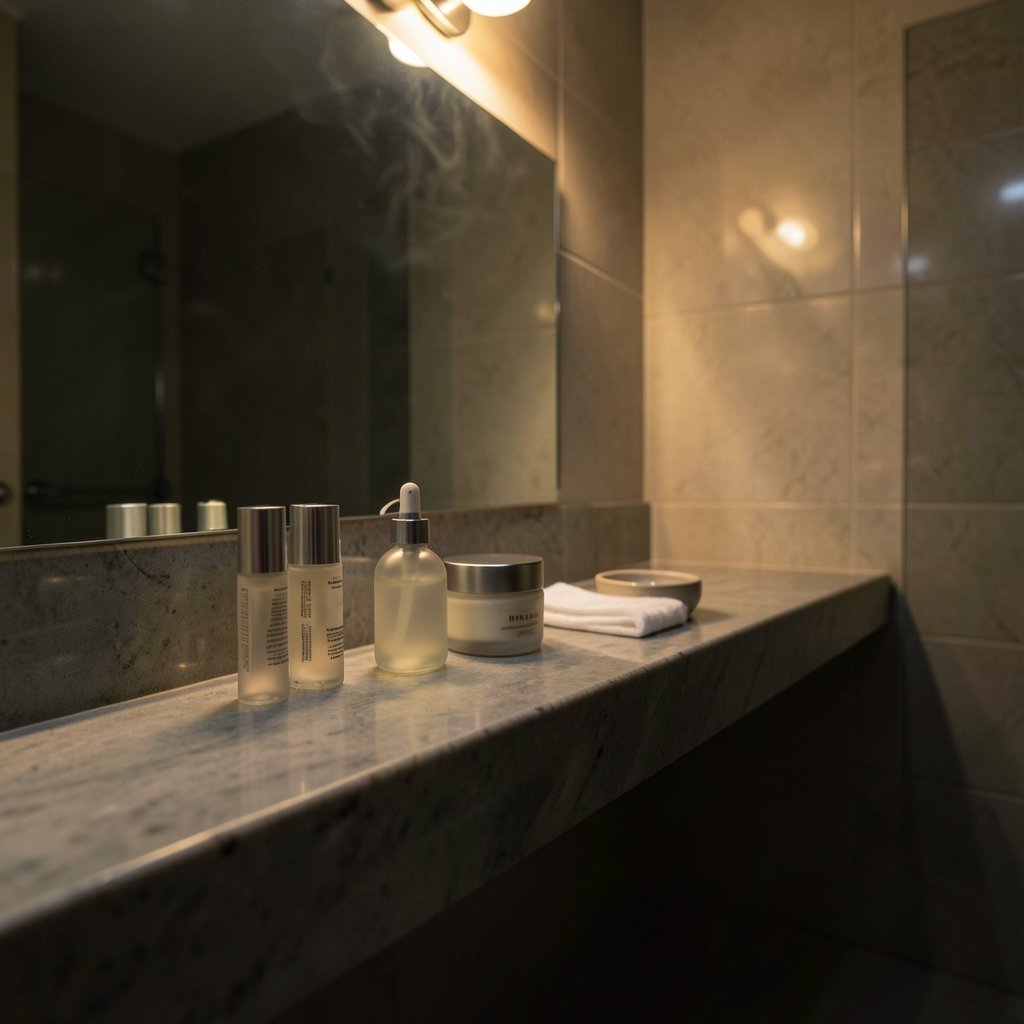
Can a skincare routine really make skin look lit from within, or is that glow just a very good filter? Anyone who has scrolled past a glass skin video knows the look: smooth, even, almost translucent, like light is passing through the surface rather than bouncing off it. The good news is that the effect is real, and it is built with products, not editing apps. The better news is that it does not require ten steps, forty minutes, or a bathroom shelf that looks like a boutique exploded.
What follows is a practical, ordered routine for anyone who wants the finish without the theatre. It covers what to gather before starting, the steps in the order they happen, what each step should deliver, and the mistakes that quietly wreck the whole thing.
What glass skin actually is (and is not)
Strip away the marketing and glass skin is a hydration goal. It describes skin that is well hydrated, smooth in texture, and even in tone, so the surface reflects light cleanly. It is not the same as dewy skin, which is a finish created with primer, oil, or highlighter and can be added in minutes. Glass skin is a quality of the skin itself, built over weeks. (Find best foundation your skin finish routine)
That distinction matters because it changes what to buy. A luminous highlighter can fake a glow for an evening. A barrier-friendly routine changes what the skin looks like without makeup. The routine below is built for the second outcome.
It is also worth saying plainly: glass skin does not mean flawless. It means healthy-looking, plump, and comfortable, even with a few freckles or a healing spot in the frame.
What to gather before the first step

Before layering anything, the routine needs the right categories, not the right brand names. A workable luxury shelf looks like this:
| Category | What it does | What to look for |
|---|---|---|
| Oil-based cleanser | Lifts sunscreen and makeup without stripping | Melts fully, rinses without a film |
| Water-based cleanser | Clears sweat and residue | Low-foam, non-squeaky finish |
| Hydrating toner or essence | Adds the first layer of water | Lightweight, no sting |
| Hydrating serum | Draws and holds moisture | Hyaluronic acid, glycerin, panthenol |
| Barrier moisturiser | Seals everything in | Ceramides, squalane, fatty acids |
| SPF | Prevents the uneven tone that kills glow | Broad spectrum, comfortable enough to use daily |
| Gentle exfoliant | Smooths texture once or twice a week | PHA or similar mild acid |
Two optional extras earn their place: a caffeine eye cream for mornings when the eye area looks tired, and a hydrating mist, ideally kept in the fridge, which turns an ordinary spritz into a cooling, de-puffing refresh on flat-looking mornings.
One caution before buying anything new: if a retinol is already in the routine, it should not share a night with other actives. Alternate across the week instead, giving each active its own evening. That is not caution for its own sake. It is the difference between a routine that works and one that produces two weeks of irritation followed by a month of recovery.
The routine, step by step
The order below is the order the products are used. Each step lists what it should achieve, so it is obvious when something is not pulling its weight.
Step 1: Double cleanse in the evening
Start with the oil-based cleanser on dry skin, massaging for about thirty seconds to dissolve sunscreen and makeup. Follow with the water-based cleanser. In the morning, the water-based cleanser alone is enough for most skin types.
Expected result: skin that feels clean but not tight, squeaky, or stripped. If the face feels dry within a minute of patting dry, the second cleanser is too harsh.
Step 2: Add water with a toner or essence
While the skin is still slightly damp, press in a hydrating toner or essence with the palms rather than a cotton pad. Two thin layers beat one flooded one.
Expected result: skin that looks plumper and drinks in the next step faster. This is the least dramatic step and the one most people skip. It is also the cheapest way to build the watery base that glass skin depends on.
Step 3: Layer a hydrating serum
Apply a hydrating serum, then give it thirty to sixty seconds before the next layer. This pause is not fussiness. Layering wet products on top of each other dilutes them and makes everything pill under makeup.
Expected result: a comfortable, slightly tacky finish that settles. If the serum stings, stop and reassess the barrier before adding anything else.
Step 4: Seal with a barrier moisturiser
Press, do not rub, a moisturiser with ceramides or squalane over the serum. In the evening, a slightly richer layer is fine. In the morning, keep it light enough that makeup sits on top without sliding.
Expected result: skin that stays comfortable for hours rather than tightening by mid-afternoon.
Step 5: Protect in the morning
Broad-spectrum sunscreen is the step that protects every result earned above it. Uneven tone, dark marks, and rough texture are what make skin look dull, and sun exposure drives all three.
Expected result: over months, a more even baseline tone. This is the slowest payoff in the routine and the one that matters most.
Step 6: Exfoliate once or twice a week
Use a gentle exfoliant such as a PHA toner once or twice a week, never daily. Smooth texture is one of the four pillars of a glass-like finish, alongside hydration, even tone, and a calm barrier.
Expected result: makeup that sits flatter and light that reflects more evenly. Overuse produces the opposite: redness, sensitivity, and a permanently irritated look.
The weekly extras that cost nothing
Three habits lift the routine without adding a product.
First, use the oil cleansing balm as a ten-minute mask. Apply a generous layer, leave it for ten minutes, then remove as normal. It is a genuinely nourishing hydration boost from something already on the shelf.
Second, keep a face mist in the fridge. The cold turns it into a de-puffing refresh, particularly good on tired mornings when skin looks flat.
Third, alternate actives across the week rather than stacking them. A retinol night, a gentle exfoliation night, and several plain hydration nights is a schedule skin can actually keep up with.
Building the routine around your skin type
Glass skin is not one routine. It is one goal reached by different routes.
| Skin type | The adjustment that matters most |
|---|---|
| Dry | Layer moisture generously and seal it in; go easy on anything stripping |
| Sensitive or reactive | Fewer steps, gentler formulas; a calm barrier produces the glow |
| Combination | Keep the morning light; save richer textures for evening |
| Oily | Hydrate rather than strip; over-cleansing triggers more shine |
For reactive skin, the fewer, gentler steps genuinely work better. The luminous look comes from a calm, well-hydrated barrier, so a pared-back version of this routine will outperform a long one that keeps provoking the skin.
For dry skin, the challenge is the advantage: a lack of moisture is exactly what a hydration-led routine fixes, provided the final sealing step is rich enough.
Common mistakes that quietly kill the glow
Most failed glass skin attempts are not product problems. They are sequencing and patience problems.
Doing too much at once. Starting six new products in the same week makes it impossible to know what works and what caused the breakout. Add one product at a time and give it two weeks.
Exfoliating daily. Smoothness comes from gentle, regular exfoliation, not from scrubbing the barrier off. Once or twice a week is the ceiling for most people.
Skipping sunscreen and expecting even tone. No serum outruns daily sun exposure. This is the single most common reason a routine looks stuck.
Layering wet products without pauses. Products dilute, pill, and underperform. Thirty seconds between layers fixes it.
Chasing shine instead of hydration. A wet-look finish in harsh office lighting reads as greasy, not glassy. The goal is skin quality, not surface gloss.
Expecting a two-week transformation. Barrier repair and tone evening are slow. Judging the routine at day ten is judging it too early.
There is a practical shortcut for anyone unsure where to start: get the base right first. A good foundation sits better on hydrated, even skin, so the makeup conversation and the skincare conversation are really the same conversation. If the finish still looks flat after a month of consistent steps, the issue is usually the base routine, not the last product added. (What Is a Tenancy Agreement? 2026 Guide to Renting)
Where luxury actually earns its price
Price is not the same as performance, and the routine above works at several budgets. Luxury earns its keep in three specific places: texture that makes daily use pleasant, formulation stability that keeps actives effective to the last drop, and sunscreen elegant enough that it actually gets worn every day. The step people skip is almost always the one that feels unpleasant, so texture is not vanity. It is compliance.
Everything else, from cleanser to mist, can be judged on how the skin behaves after four weeks. If a product is not moving hydration, texture, or tone, it is decoration.
Conclusion
Glass skin is a hydration goal dressed up as a trend. The routine that delivers it is short: cleanse gently, layer water, seal it in, protect it daily, and exfoliate lightly once or twice a week. The extras, from a balm mask to a chilled mist, are pleasant bonuses rather than requirements.
What separates a routine that works from one that stalls is rarely the products. It is the order, the pauses between layers, the discipline of not stacking actives on the same night, and the patience to judge results at four weeks rather than four days. Get those right and the glow stops being something applied in the morning. It becomes something the skin does on its own.
FAQ
How long does glass skin take to achieve?
Most people see better hydration and a smoother surface within two to three weeks of consistent use. Even tone takes longer, often two to three months, because it depends on daily sun protection and gentle exfoliation rather than a single product. Judging the routine before four weeks is judging it too early.
Can sensitive skin get glass skin?
Yes, and often more easily than expected, provided the approach is gentler rather than longer. The luminous look comes from a calm, well-hydrated barrier, so a pared-back routine with fewer steps and no harsh actives tends to outperform an elaborate one that keeps provoking the skin.
Do I need ten steps to get the glass skin look?
No. The core routine is six steps in the evening and three or four in the morning. Double cleansing, hydration layers, a sealing moisturiser, sunscreen, and light exfoliation do the work. Extra steps are optional refinements, not requirements.
Is glass skin the same as dewy skin?
No. Dewy skin is a finish created with makeup, primer, or oil and can be added in minutes. Glass skin is a quality of the skin itself, built over time with skincare. Makeup can enhance glass skin, but it cannot replace the routine that creates it.
Can I use retinol and exfoliating acids in the same routine?
They can live in the same routine, but not on the same night. Alternate them across the week, giving each active its own evening. Stacking them is the fastest route to irritation, followed by weeks of recovery during which the glow disappears entirely.
What is the single most important step for glass skin?
Daily broad-spectrum sunscreen. Hydration and exfoliation smooth the surface, but uneven tone and dark marks are what make skin look dull, and sun exposure drives both. A routine without daily SPF will plateau no matter how good the serums are.











